Vercel Skill Packs: The Distribution Layer for Agent Skills Just Landed
TL;DR
skills.sh now lets you bundle multiple agent skills into a shareable, unlisted pack and install it with one command. Packs mix public directory skills, private local files, and GitHub repos, then sync with a single update command. Here is how they work, what they mean for team standardization, and where the trust questions are.
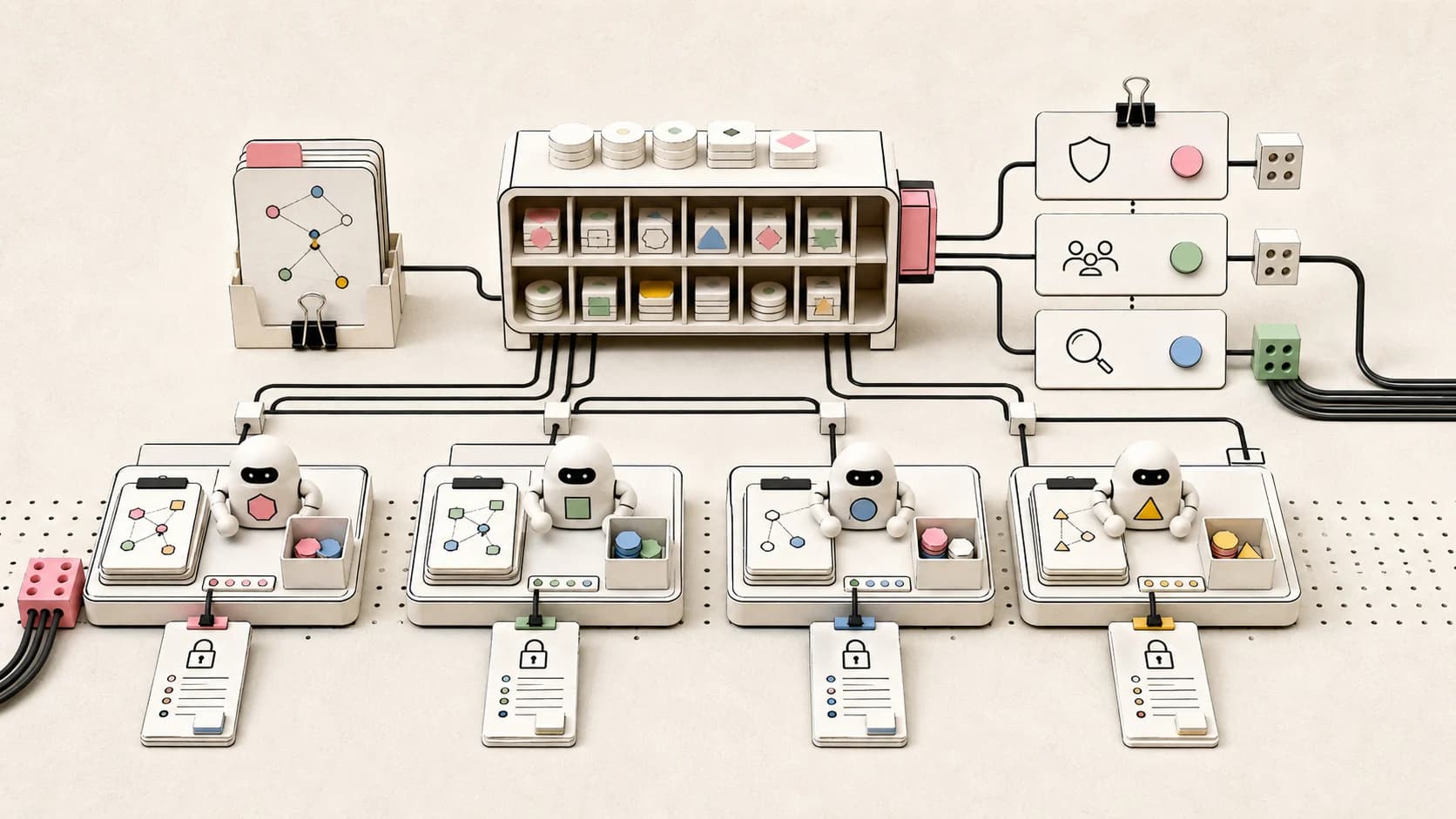
On August 7, 2026, Vercel shipped skill packs on skills.sh, its open-source agent skills directory (github.com/vercel-labs/skills). A pack is a bundle of skills with its own URL, installed in one command and updated with another. It is a small change with an outsized signal: after a year of single-skill installs, the skills ecosystem now has a distribution unit bigger than one file, and a way to standardize agent behavior across a team.
Here is what packs do, how they work, and where the trust questions are.
What shipped#
Packs let you combine skills from three sources into one installable bundle:
- public skills already listed on skills.sh
- private skills from your own files, folders, or zip archives
- skills from GitHub repositories you can access, public or private
A folder, archive, or repo does not have to contain exactly one skill: every valid SKILL.md in it is included. Validity is defined mechanically - a SKILL.md needs name and description frontmatter - and the builder skips invalid files, binary files, and anything over 2 MB.
Every pack is unlisted by default with its own URL:
Terminal
npx skills add https://skills.sh/p/<pack-id>
No authentication is required to install. Updating a pack is a separate command:
Terminal
npx skills update
Creation runs through skills.sh/packs/create with a Vercel account: give the pack a name and optional description, choose the Vercel team to share it with, add the skills, and copy the install command. The Packs page groups your packs by team, and the creator can delete a pack at any time, which disables its install link.
The package-manager arc completes#
For the last year, the de facto distribution pattern for skills has been npx skills add <owner>/<skill-name>, a direct install from a GitHub repo. That works for one skill per repo, which forced maintainers into a choice: one tiny repo per skill, or a monorepo with a weaker install story. Packs remove the tradeoff. They are the bundling step in the package-manager evolution, the point where a directory of files becomes a shareable, named unit with an install command. We called this arc back in May: agent skills were becoming package managers, and the question was always distribution, not authoring. Anyone can write a SKILL.md; the hard part is moving a set of them to a team intact.
That is exactly the internal scenario packs are built for. Unlisted-by-default is not a compromise, it is the product decision: packs are designed for sharing with a single person or a whole team, not for public publishing. The trust surface is different from the public directory. A team can ship its own standards - deploy runbooks, review checklists, domain procedures - as one URL, and npx skills update keeps every machine on the current version. For teams already treating skills as the way agents learn their job, this is the missing sync mechanism.
From the archive
DeepMind Open-Sources WeatherNext Cyclones After a Nature-Verified Breakthrough
Aug 8, 2026 • 8 min read
Cloudflare Ships Behavioral Trust for the Agentic Internet: 206M Events, 73K Zones
Aug 7, 2026 • 7 min read
Cloudflare's Agentic Internet: Readable, Discoverable, Callable, and Payable
Aug 7, 2026 • 7 min read
Cloudflare Radar Researcher: A Plain-Language Agent Over 500 Live API Endpoints
Aug 7, 2026 • 7 min read
The trust questions#
Unlisted is not private. The docs are explicit: packs are not access-controlled, anyone with the URL can view and install the pack, and the instructions warn not to include secrets or credentials. A pack URL is a capability - share it like a token, and treat the pack as revoked only when it is deleted.
The harder question is mutation. npx skills update pulls the latest version of the pack, which means the contents behind a stable URL can change under you. There is no lockfile in the published workflow and no version pinning in the install command. For teams, that is a feature (standards propagate) and a risk at the same time (your agents start following a changed procedure the moment someone edits the pack, with no diff review in between). The 2 MB file cap and binary filter are quiet supply-chain hygiene: packs cannot smuggle executable payloads, only instructions.
That last point matters more than it looks. Skills are the part of an agent's context that persists, and research this month is starting to measure which lines inside a skill actually do work, while other work shows agents follow only a fraction of the steps their skills mandate. Distribution is the layer that decides how many agents see a skill at all, and packs just made that layer fast and team-scoped. The next question - which version of the pack is on which machine - is the same question npm spent a decade answering.
Continue Reading#
- Agent Skills Are Becoming Package Managers - the governance and dependency story behind the trend packs are the distribution step of
- Skills Are How Agents Learn the Job - what a skill actually is and why packaging them changes agent behavior
- MCP vs Agent Skills - where skills sit relative to tools and live data access, and why both standards ship together
- Best Claude Code Skills in 2026 - the install patterns and directory landscape packs build on
- SkillSV: Valuing the Lines Inside a Skill - what research says about which parts of a skill deserve distribution at all
Sources#
Read next
The v0 API Is GA: Vercel Just Made Its App-Building Agent a Headless Service
The v0 API is now generally available: programmatic, headless access to v0's app-building agent. Send a prompt, get a running app with a live preview URL you can embed, then deploy to Vercel in one call. Here is what changed, how the sync/async/streaming model works, and how it fits in an agent loop.
6 min readAgent Plugins 1.0.0: One Package Format for Agent Skills and MCP Servers
Vercel, OpenAI, GitHub, Microsoft, AWS, and Cursor collaborated on Agent Plugins 1.0.0, an open standard that packages Agent Skills and MCP servers into one portable plugin. ChatGPT, Codex, Cursor, GitHub Copilot, Kiro, and VS Code load the format on day one.
7 min readChat SDK Adds Durable Approvals: Agent Workflows That Wait For a Human
Vercel's Chat SDK can now suspend a Workflow SDK run until someone clicks Approve in a chat thread. One requestApproval call replaces the approvals table, the onAction handler, and the polling loop - with verified decisions, scoped approvers, and a wait that survives deploys.
6 min readShare
Developers Digest
Technical content at the intersection of AI and development. Building with AI agents, Claude Code, and modern dev tools - then showing you exactly how it works.
300+ videos30K+ GitHub stars850+ articles
Related Tools
AI FrameworksEssential

Vercel AI SDK
The TypeScript toolkit for building AI apps. Unified API across OpenAI, Anthropic, Google. Streaming, tool calling, stru...
View ToolAI Coding

v0
Vercel's generative UI tool. Describe a component, get production-ready React code with shadcn/ui and Tailwind. Iterate...
View ToolAI Frameworks
C
Composio
Gives AI agents access to 250+ external tools (GitHub, Slack, Gmail, databases) with managed OAuth. Handles the auth and...
View ToolAI Frameworks

OpenAI Agents SDK
Lightweight Python framework for multi-agent systems. Agent handoffs, tool use, guardrails, tracing. Successor to the ex...
View ToolApps from Developers Digest
Developer ToolsIn Progress
Skill Builder Hub
Author, test, score, and govern reusable AI agent skills before production registry.
View AppDeveloper ToolsIn Progress
Skill Builder
Turn a one-liner into a working Claude Code skill. From idea to installed in a minute.
View AppSaaS Products
Overnight Agents
Spec out AI agents, run them overnight, wake up to a verified GitHub repo.
View AppRelated Guides
Guide
Subagent Frontmatter - Claude Code
Configure model, tools, MCP, skills, memory, and scoping.
Claude CodeGuide
Writing Your First Claude Code Skill
A practical walk-through of how to design, write, and ship a Claude Code skill - from choosing when to trigger, through allowed-tools, to the steps the agent will actually follow.
Getting StartedGuide
AGENTS.md - Claude Code
Define custom subagent types within your project's memory layer.
Claude CodeRelated Videos

Buzz: Open-Source Collaboration for Humans + AI Agents
Buzz by Block: Open-Source Slack-Style Collaboration for Humans + AI Agents (Demo & Setup) Check out Arcade: https://arcade.dev.plug.dev/xiDRwlA Repo: https://github.com/block/buzz The video introd...
Video·
Agents 101: How to Build and Deploy Anything with AI Agents
Build Anything with Vercel, the Agentic Infrastructure Stack Check out Vercel: https://vercel.plug.dev/cwBLgfW The video shows a behind-the-scenes walkthrough of how the creator rapidly builds and d...
Video·
Self-Improving Skills in Claude Code
Setting Up Self-Improving Skills in Claude Code: Manual & Automatic Methods In this video, you'll learn how to set up self-improving skills within Claude Code. The tutorial addresses the key problem
Video·
Related Posts
7 min read
News
Agent Plugins 1.0.0: One Package Format for Agent Skills and MCP Servers
Vercel, OpenAI, GitHub, Microsoft, AWS, and Cursor collaborated on Agent Plugins 1.0.0, an open standard that packages A...

6 min read
News
Chat SDK Adds Durable Approvals: Agent Workflows That Wait For a Human
Vercel's Chat SDK can now suspend a Workflow SDK run until someone clicks Approve in a chat thread. One requestApproval...
6 min read
News
Vercel Sandbox Gets a Real Network Boundary: Why Egress Control Is the Missing Half of Agent Security
Vercel Sandbox now polices all outbound traffic on the host, outside the microVM, with SNI-based domain policies, CIDR r...
8 min read
News
SkillSV: A Shapley Framework That Values the Lines Inside an Agent Skill
Automated skill optimizers write long SKILL.md files whose credit is a black box. SkillSV attributes value to rules, exa...
6 min read
News
The v0 API Is GA: Vercel Just Made Its App-Building Agent a Headless Service
The v0 API is now generally available: programmatic, headless access to v0's app-building agent. Send a prompt, get a ru...
7 min read
News
Vercel MCP Ships the 2026-07-28 Spec: The MCP Migration Clock Starts
Vercel MCP now serves both the stateless 2026-07-28 protocol and the 2025 protocol from one endpoint, with mcp-handler 2...
Build with the member tools

Get Smarter About AI Dev
New tutorials, open-source projects, and deep dives on coding agents - delivered weekly.
One email per weekReal code, not theoryFree forever