Vercel Sandbox Gets a Real Network Boundary: Why Egress Control Is the Missing Half of Agent Security
TL;DR
Vercel Sandbox now polices all outbound traffic on the host, outside the microVM, with SNI-based domain policies, CIDR rules, host-level credential injection, and a deny-all default. Here is why a network boundary is the half of agent isolation that VM escapes missed.
Vercel shipped an update to Vercel Sandbox this week that is easy to read as an incremental feature and hard to overstate: the sandbox now enforces a network boundary for every workload, on the host, outside the microVM. The post announcing it, "A sandbox without a network boundary is only half a sandbox," is the clearest statement yet of a security model shift that has been building all year.
What changed, concretely#
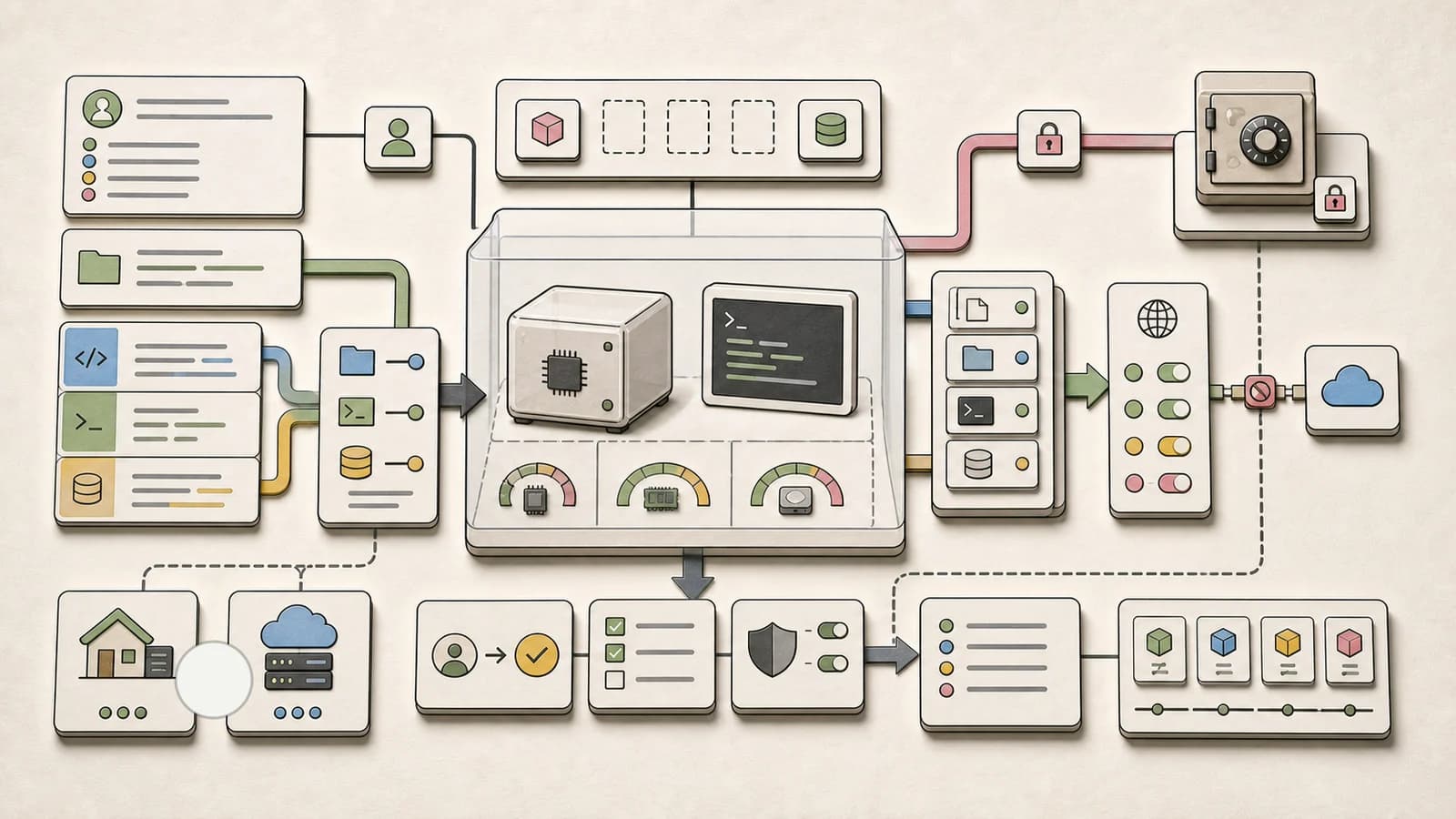
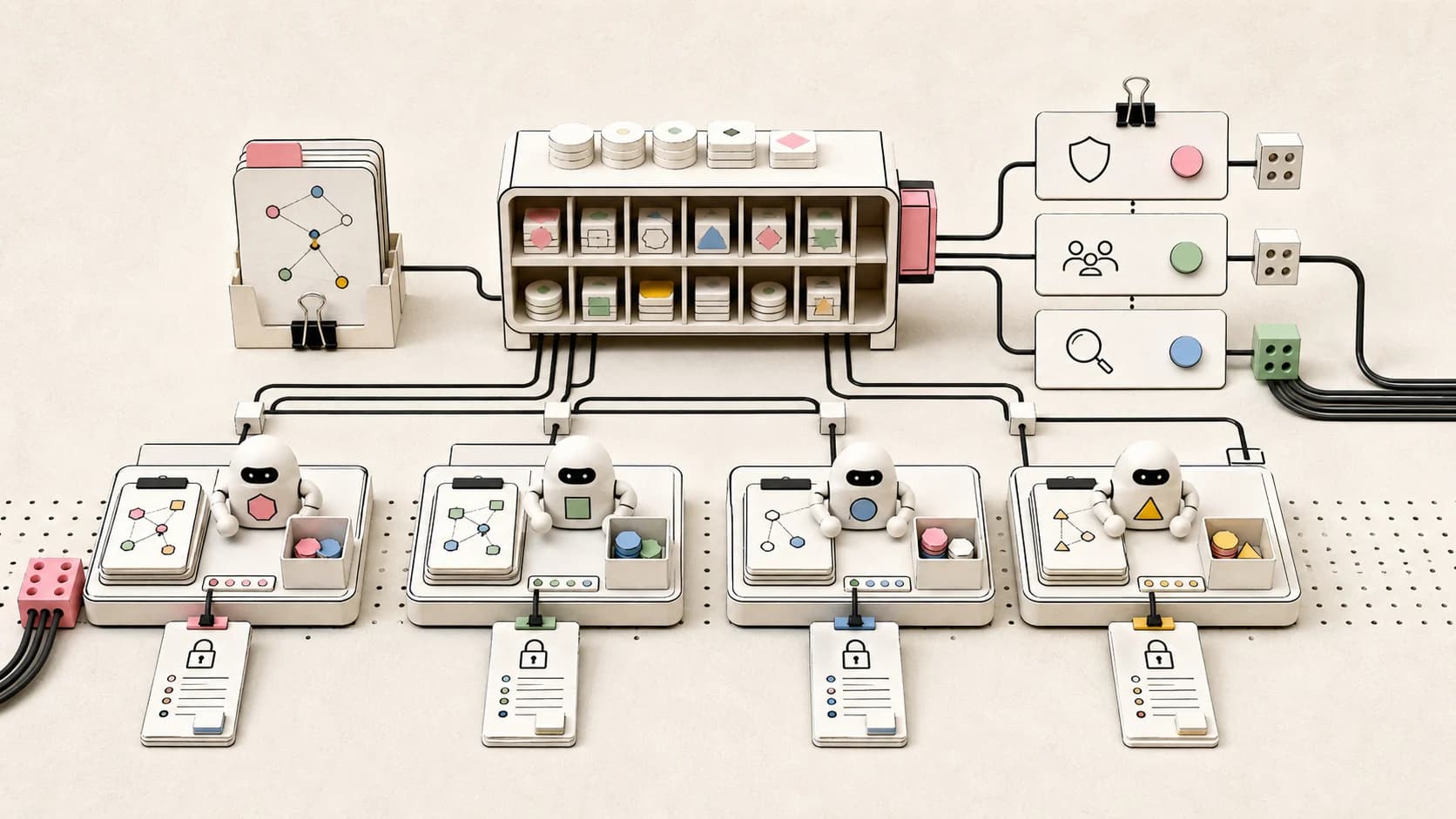
The Sandbox firewall runs on the host, not inside the microVM, so code inside the sandbox cannot modify or disable it. Linux networking transparently redirects outbound TCP connections and DNS queries through the firewall. Workloads need no proxy configuration, and the firewall retains each connection's original destination.
Policy enforcement works like this:
- For domain-restricted connections, the firewall reads the Server Name Indication (SNI) at the start of the TLS handshake, checks the hostname against the sandbox's domain policy, and checks the destination address against its CIDR policy. Ordinary allowed traffic passes through undecrypted.
- DNS queries are filtered with the same domain policy.
- For configured domains only, the firewall can selectively terminate TLS using a certificate authority unique to the sandbox, then match requests by hostname, path, method, query, or headers before injecting a credential or forwarding the request to a trusted endpoint.
- The same policy can be replaced while the sandbox runs. A workflow can start with package-registry access, narrow to deny-all before generated code executes, then reopen one output endpoint, all without restarting the workload.
The standout piece is credential injection at the boundary. Instead of putting an API key in an environment variable, you configure the destination and the firewall creates a just-in-time certificate authority, adds it to the sandbox's trusted certificates, terminates TLS, injects or replaces the authentication header, and establishes a fresh upstream connection. The credential never enters the microVM, never leaves the host unencrypted, and the CA is disposed when the sandbox stops. Uploading the sandbox's files or environment to a third-party service does not transfer that authority, because the credential only exists at the host boundary.
The policy object is small. The entire example from the announcement is a networkPolicy with an allow rule for one hostname and a header transform, plus sandbox.update({ networkPolicy: 'deny-all' }) to lock it down mid-run.
From the archive
AgentChaos: Fault Injection Shows Agent Robustness Is a Systems Problem, Not a Model Problem
Aug 10, 2026 • 6 min read
Distilling an LLM on One GPU: Offline Top-K Logits and a Fused Chunked KL Loss
Aug 10, 2026 • 7 min read
LivePlan: Monitoring and Corrective Steering for Coding Agents, Without the LLM Tax
Aug 10, 2026 • 7 min read
Muse Glimmer 30B: Meta's Open-Weight Local Agent Model, Benchmarks, and Hardware Reality
Aug 10, 2026 • 8 min read
Why this matters to developers building agents#
The framing in the post matters more than the feature list. Isolation without egress control "contains the process, not its consequences." A prompt injection hidden in an issue, log entry, dependency, or source file can instruct generated code to upload private data. The program does not need to escape its microVM to do that. With unrestricted outbound traffic, it just sends whatever it can read to an external server.
This matches the pattern that has dominated agent security reporting all summer: the failure mode is rarely a VM escape, and almost always a network path the security model did not account for. A DNS resolver left available in an otherwise disconnected environment. An empty allowlist that fails open. A hostname interpreted differently by a policy engine and a proxy. A trusted package service turned into a relay. Every one of those is a containment failure with the compute boundary still intact.
For teams running agents that clone repos, install dependencies, and call model APIs, the practical consequence is that "sandboxed" now means something testable: which destinations can this sandbox reach, which private ranges are unavailable, which requests can use credentials, and when does all communication stop. Those are exactly the questions the containment work we have been tracking says teams should be able to answer.
The credential injection design is the part I would copy even if you are not on Vercel. A bearer token in an environment variable is transferable authority. Any program in the sandbox can read it, and malicious code can copy it somewhere it will outlive the sandbox. Injecting the credential only when a request matches a configured destination, and only at the host boundary, turns the token from a file into a capability with a scoped lifetime. The same idea is why we have argued that agent security needs capability ledgers rather than another prompt hardening pass.
How it fits the rest of the agent stack#
This is the second Vercel agent-security move in a week, after full egress firewall on the Hobby plan and the Sandbox terminal backend for Hermes Agent. Together with Cloudflare's identity-aware AI Gateway and WriteGuard's per-request MCP controls, the direction is consistent: the sandbox is no longer a compute boundary, it is an authority boundary, and the interesting controls live in the network path, not the VM.
For your own setups, the transferable lessons are:
- Assume a prompt injection can turn any tool into an exfiltration channel, and scope network access accordingly.
- Treat credentials as transferable until proven otherwise. Injection at the host boundary is stronger than env-var storage.
- Make policies mutable mid-run. Trust at setup time is not trust at execution time.
- Default to deny, and log what gets blocked.
Continue Reading#
- AI Agent Containment Needs a Capability Ledger
- Agent Sandbox Architecture: How to Choose the Right Runtime Boundary
- AI Coding Agent Firewalls and Security Layers Compared 2026
- Sandboxed Agents Are Becoming the Team Control Plane
- Hermes Agent Gains Vercel AI Gateway and Sandbox Backends
Sources#
Read next
Cloudflare Gateway Can Now Detect MCP Traffic on the Wire: Shadow MCP Gets a Network Boundary
Cloudflare Gateway now classifies MCP traffic by protocol headers instead of hostname heuristics, ships a shadow-MCP dashboard, and lets admins block any MCP connection that does not arrive through an approved portal. The 2026-07-28 stateless spec is what made it possible.
7 min readHermes Agent Gains Vercel AI Gateway and Sandbox Backends: The Agent Stack Goes Plug-and-Play
Vercel added Hermes Agent to AI Gateway and made Vercel Sandbox a terminal backend for the open-source agent. Hermes is now fully BYO: your own model routing through 200+ models at no markup, and your own cloud microVM for every agent command. Here is what that unlocks and why the agent control plane is consolidating.
5 min readVercel Skill Packs: The Distribution Layer for Agent Skills Just Landed
skills.sh now lets you bundle multiple agent skills into a shareable, unlisted pack and install it with one command. Packs mix public directory skills, private local files, and GitHub repos, then sync with a single update command. Here is how they work, what they mean for team standardization, and where the trust questions are.
6 min readShare
Developers Digest
Technical content at the intersection of AI and development. Building with AI agents, Claude Code, and modern dev tools - then showing you exactly how it works.
300+ videos30K+ GitHub stars850+ articles
Related Tools
InfrastructureOpen source

E2B
Open-source cloud sandboxes for AI agents. Isolated environments that start in under 200ms, run code in Python, JavaScri...
View ToolAI FrameworksEssential

Vercel AI SDK
The TypeScript toolkit for building AI apps. Unified API across OpenAI, Anthropic, Google. Streaming, tool calling, stru...
View ToolAI Coding

v0
Vercel's generative UI tool. Describe a component, get production-ready React code with shadcn/ui and Tailwind. Iterate...
View ToolAI Coding

Devin
Cognition Labs' autonomous software engineer. Handles full tasks end-to-end - reads docs, writes code, runs tests, and...
View ToolApps from Developers Digest
SaaS Products
Overnight Agents
Spec out AI agents, run them overnight, wake up to a verified GitHub repo.
View AppDeveloper ToolsPlus $20/mo
Cost Tape Cloud
Know what each agent run cost before the bill arrives. Budgets and alerts included.
View AppDeveloper ToolsPlus $20/mo
Agent Eval Bench Plus
Score every coding agent on your own tasks. Catch regressions in CI.
View AppRelated Guides
Guide
Claude Code Complete Course
A complete, citation-backed Claude Code course with setup, prompting systems, MCP, CI, security, cost controls, and capstone workflows.
ai-developmentGuide
Chronicle Research Preview Setup Guide
Set up Codex Chronicle on macOS, manage permissions, and understand privacy, security, and troubleshooting.
Getting StartedGuide
Sandboxing - Claude Code
Filesystem and network isolation for Bash tool calls on Linux and macOS.
Claude CodeRelated Videos

Buzz: Open-Source Collaboration for Humans + AI Agents
Buzz by Block: Open-Source Slack-Style Collaboration for Humans + AI Agents (Demo & Setup) Check out Arcade: https://arcade.dev.plug.dev/xiDRwlA Repo: https://github.com/block/buzz The video introd...
Video·

Agents 101: How to Build and Deploy Anything with AI Agents
Build Anything with Vercel, the Agentic Infrastructure Stack Check out Vercel: https://vercel.plug.dev/cwBLgfW The video shows a behind-the-scenes walkthrough of how the creator rapidly builds and d...
Video·
TRAE: Custom AI Agents That Actually Understand Your Codebase
Check out Trae here! https://tinyurl.com/2f8rw4vm In this video, we dive into @Trae_ai a newly launched AI IDE packed with innovative features. I provide a comprehensive demonstration...
Video·
Related Posts
7 min read
News
Cloudflare Gateway Can Now Detect MCP Traffic on the Wire: Shadow MCP Gets a Network Boundary
Cloudflare Gateway now classifies MCP traffic by protocol headers instead of hostname heuristics, ships a shadow-MCP das...
6 min read
News
Stop Means Stop: New Paper Finds Agent Approval Gates and Cancellation Leak in Six Frameworks
A new arXiv paper probes six widely used open-source agent frameworks and finds the barrier semantics of approval gates,...
6 min read
News
Vercel Skill Packs: The Distribution Layer for Agent Skills Just Landed
skills.sh now lets you bundle multiple agent skills into a shareable, unlisted pack and install it with one command. Pac...

7 min read
News
Cloudflare Ships Behavioral Trust for the Agentic Internet: 206M Events, 73K Zones
Cloudflare's Web Integrity team published the framework behind its agent traffic posture: continuous behavioral trust in...
7 min read
News
Agent Plugins 1.0.0: One Package Format for Agent Skills and MCP Servers
Vercel, OpenAI, GitHub, Microsoft, AWS, and Cursor collaborated on Agent Plugins 1.0.0, an open standard that packages A...

6 min read
News
Chat SDK Adds Durable Approvals: Agent Workflows That Wait For a Human
Vercel's Chat SDK can now suspend a Workflow SDK run until someone clicks Approve in a chat thread. One requestApproval...
Build with the member tools

Get Smarter About AI Dev
New tutorials, open-source projects, and deep dives on coding agents - delivered weekly.
One email per weekReal code, not theoryFree forever