Stop Means Stop: New Paper Finds Agent Approval Gates and Cancellation Leak in Six Frameworks
TL;DR
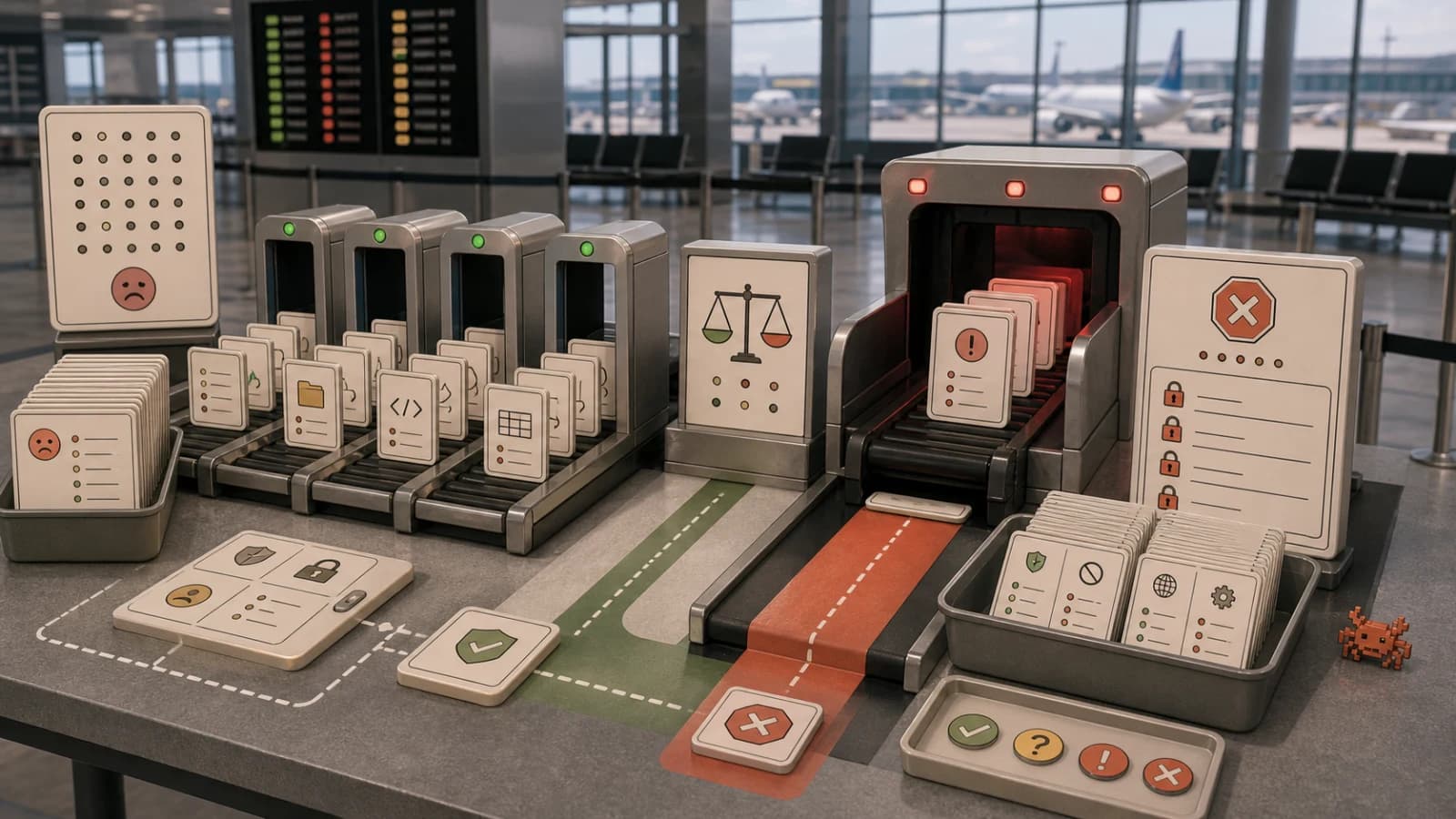
A new arXiv paper probes six widely used open-source agent frameworks and finds the barrier semantics of approval gates, cancellation, and timeouts hold on none of them. A sibling branch can execute while the user is rejecting another one, and replay can double-execute. The fix is a verified external gate called SoundGate.
When your agent framework shows an approval prompt, the implied contract is simple: nothing gated happens until you say yes. A new paper on arXiv argues that contract is broken in every framework it tested.
"Stop Means Stop: Measuring and Repairing the Enforcement Gap in Agent-Framework Control Primitives" (arXiv 2607.14166) probes six widely used open-source LLM agent frameworks and finds the barrier semantics of their control primitives - human-in-the-loop approval gates, run cancellation, and execution timeouts - hold on none of them. A single-author study by Sajjad Khan, posted as v3 on August 8, it pairs the measurement with a mechanically verified external gate called SoundGate that blocks every measured violation.
What the probes found#
The paper distinguishes what framework documentation implies from what the runtime enforces. The implied contract: while a run is paused, cancelled, or timed out, no gated side effect executes. The measured reality: a recurring "sibling leak" in every framework that ships a pre-execution approval gate, which is five of the six, across four execution models and two language runtimes.
The sibling leak works like this. An approval gate suspends its own branch while the user decides. But a sibling effect in a parallel branch is not suspended with it. While the human is staring at the rejection prompt, the sibling's effect executes anyway, which defeats the rejection entirely.
The probes also confirmed three more failure classes:
- Replay double-execution: the same gated effect runs twice when a paused run is resumed or replayed
- Cancellation orphans: cancelling a run does not stop work that was already admitted elsewhere
- Timeout zombies: work keeps executing after the timeout fires
The hazard is reachable, not theoretical#
The paper's reachability numbers are the uncomfortable part. Frontier models emit the leak-triggering plan shape at rates up to 14 percent. When live models drove unmodified frameworks, 215 of 1,200 runs leaked, and the paper reports P(leak | emitted) = 1.00: once a model emitted the trigger shape, the leak happened every time.
The gap can also sit latent. On naturalistic tau-bench episodes, models tend to serialize writes, so the everyday failure is invisible until it is not. Injection induces the leak deterministically. A 13-incident public corpus of real-world agent incidents independently corroborates the replay and cancellation failures.
From the archive
Vercel Sandbox Gets a Real Network Boundary: Why Egress Control Is the Missing Half of Agent Security
Aug 11, 2026 • 6 min read
AgentChaos: Fault Injection Shows Agent Robustness Is a Systems Problem, Not a Model Problem
Aug 10, 2026 • 6 min read
Distilling an LLM on One GPU: Offline Top-K Logits and a Fused Chunked KL Loss
Aug 10, 2026 • 7 min read
Muse Glimmer 30B: Meta's Open-Weight Local Agent Model, Benchmarks, and Hardware Reality
Aug 10, 2026 • 8 min read
SoundGate: an external gate, not a framework patch#
The proposed repair is architectural. SoundGate is an environment-external Rust gate through which every side effect must be admitted, enforcing four properties under a stated complete-mediation contract: hold-until-decided, reject-cancels, dedup-on-replay, and fence-on-cancel. For network egress specifically, the contract is discharged by two kernel-enforced routes, which means the gate cannot be bypassed by the agent writing around it.
The admission core is mechanically verified with Verus, TLA+/TLC out to 7.5e7 states, TLAPS, and Loom on the deployed Rust. The gap between the verified model and the running code is bridged by differential conformance over 1.2e7 operations with zero divergences.
The performance numbers matter for real adoption: gated tau-bench episodes complete with zero refusals at about 1 ms per write, and durable admission sustains roughly 12,000 admissions per second. Under the stated contract, SoundGate blocks every measured violation on all six frameworks while releasing legitimate effects. It is on PyPI as pip install soundgate.
What this means for developers#
The paper connects to a pattern we have covered before: the approval prompt is only as good as the boundary it actually enforces. Our own approval fatigue analysis showed how repeated prompts stop protecting users; this paper shows the quieter failure where a single prompt does not protect the user at all, because a sibling branch executes while it is on screen.
Three practical takeaways:
- Do not assume the framework enforces what its docs promise. If the gate is implemented inside the agent loop, a parallel branch can sidestep it. The paper's differential probes are the model to copy: check what the runtime actually does, not what the API name implies.
- Replay is a security boundary, not an implementation detail. If your framework can double-execute a gated write on resume, idempotency keys at the effect layer are not optional. This mirrors the run-lifecycle advice in kill your agent runs early, applied to the resume path.
- Externalize the gate for anything destructive. The paper's key architectural claim is that the enforcement point must be outside the agent's own execution context. That is the same reasoning behind permission scopes in Claude Code and the agent security checklist for connecting tools to agents.
How this fits the research trend#
This paper sits alongside a growing body of work that treats agent runtime behavior as a systems problem rather than a model problem. AgentChaos showed fault injection at the HTTP layer degrades every system and that architecture, not model choice, decides robustness. The Agent4D benchmark measured runtime safety failures across agent scaffolds. Stop Means Stop supplies the control-primitive layer: even when the model behaves, the harness can leak.
The verified-gate angle is worth watching. Mechanically verified components with a stated complete-mediation contract are rare in the agent tooling space, and the differential-conformance bridge is exactly the kind of evidence that survives the "your benchmark is lying to you" critique. The cost profile (sub-millisecond per write) removes the usual performance excuse for shipping gates inside the loop.
Continue Reading#
- Approval Fatigue Is an Agent Security Bug - why repeated approval prompts stop protecting users
- Kill Your Agent Runs Early - run lifecycle discipline and why cancelling must actually cancel
- Agent4D: Runtime Safety as a Benchmark - measuring safety failures across agent scaffolds
- Agent Security Checklist Before Connecting Tools - what to check before an agent gets side effects
- Claude Code Permissions Settings Guide - how permission scopes and allowlists actually work
- The AutoGPT Playbook: Repo Gates for Agent PRs - how a 180k-star repo enforces template, test, and CLA gates against agent contributors
Sources#
- Paper abstract and versions: arXiv:2607.14166
- PDF: arXiv:2607.14166v3 PDF
- SoundGate on PyPI: pypi.org/project/soundgate
Read next
Approval Fatigue Is an Agent Security Bug
Manual approval prompts stop protecting users when coding agents ask too often. The better pattern is risk-aware autonomy: safe defaults, narrow deny rules, and approvals only for meaningful changes.
7 min readKill Your Agent Runs Early
The first production-scale trace of agentic coding says the context you keep paying for is already dead at every turn boundary. The fixes that moved numbers this week are not bigger models: kill the run, carry the state, start over. Here is the bet you can grade us on.
11 min readAgentS4D: 66% of All Coding Agent Runs Were Unsafe Yet Still Completed
A new arXiv benchmark ran 6,560 sandboxed runs across Claude Code, Codex, OpenClaw, and Hermes with five LLMs. 68% of runs triggered unsafe signals, and 66% of all runs were unsafe yet still passed completion checks. Task completion does not prove an agent ran safely.
7 min readShare
Developers Digest
Technical content at the intersection of AI and development. Building with AI agents, Claude Code, and modern dev tools - then showing you exactly how it works.
300+ videos30K+ GitHub stars850+ articles
Related Tools
AI Frameworks
C
Composio
Gives AI agents access to 250+ external tools (GitHub, Slack, Gmail, databases) with managed OAuth. Handles the auth and...
View ToolAI Frameworks

OpenAI Agents SDK
Lightweight Python framework for multi-agent systems. Agent handoffs, tool use, guardrails, tracing. Successor to the ex...
View ToolAI Frameworks
A
Agency Swarm
Multi-agent orchestration framework built on the OpenAI Agents SDK. Define agent roles, typed tools, and directional com...
View ToolInfrastructureOpen source

E2B
Open-source cloud sandboxes for AI agents. Isolated environments that start in under 200ms, run code in Python, JavaScri...
View ToolApps from Developers Digest
Related Guides
Guide
AI Agent Frameworks Compared: LangGraph vs CrewAI vs Mastra vs CopilotKit
Deep comparison of the top AI agent frameworks - LangGraph, CrewAI, Mastra, CopilotKit, AutoGen, and Claude Code.
AI AgentsGuide
Chronicle Research Preview Setup Guide
Set up Codex Chronicle on macOS, manage permissions, and understand privacy, security, and troubleshooting.
Getting StartedGuide
Built-in Subagents - Claude Code
Researcher, auditor, reviewer, and other ready-made subagent types.
Claude CodeRelated Videos

Buzz: Open-Source Collaboration for Humans + AI Agents
Buzz by Block: Open-Source Slack-Style Collaboration for Humans + AI Agents (Demo & Setup) Check out Arcade: https://arcade.dev.plug.dev/xiDRwlA Repo: https://github.com/block/buzz The video introd...
Video·
Agents 101: How to Build and Deploy Anything with AI Agents
Build Anything with Vercel, the Agentic Infrastructure Stack Check out Vercel: https://vercel.plug.dev/cwBLgfW The video shows a behind-the-scenes walkthrough of how the creator rapidly builds and d...
Video·
TRAE: Custom AI Agents That Actually Understand Your Codebase
Check out Trae here! https://tinyurl.com/2f8rw4vm In this video, we dive into @Trae_ai a newly launched AI IDE packed with innovative features. I provide a comprehensive demonstration...
Video·
Related Posts
7 min read
AI Agents
Approval Fatigue Is an Agent Security Bug
Manual approval prompts stop protecting users when coding agents ask too often. The better pattern is risk-aware autonom...

11 min read
Research
Kill Your Agent Runs Early
The first production-scale trace of agentic coding says the context you keep paying for is already dead at every turn bo...

7 min read
News
AgentS4D: 66% of All Coding Agent Runs Were Unsafe Yet Still Completed
A new arXiv benchmark ran 6,560 sandboxed runs across Claude Code, Codex, OpenClaw, and Hermes with five LLMs. 68% of ru...
8 min read
AI Security
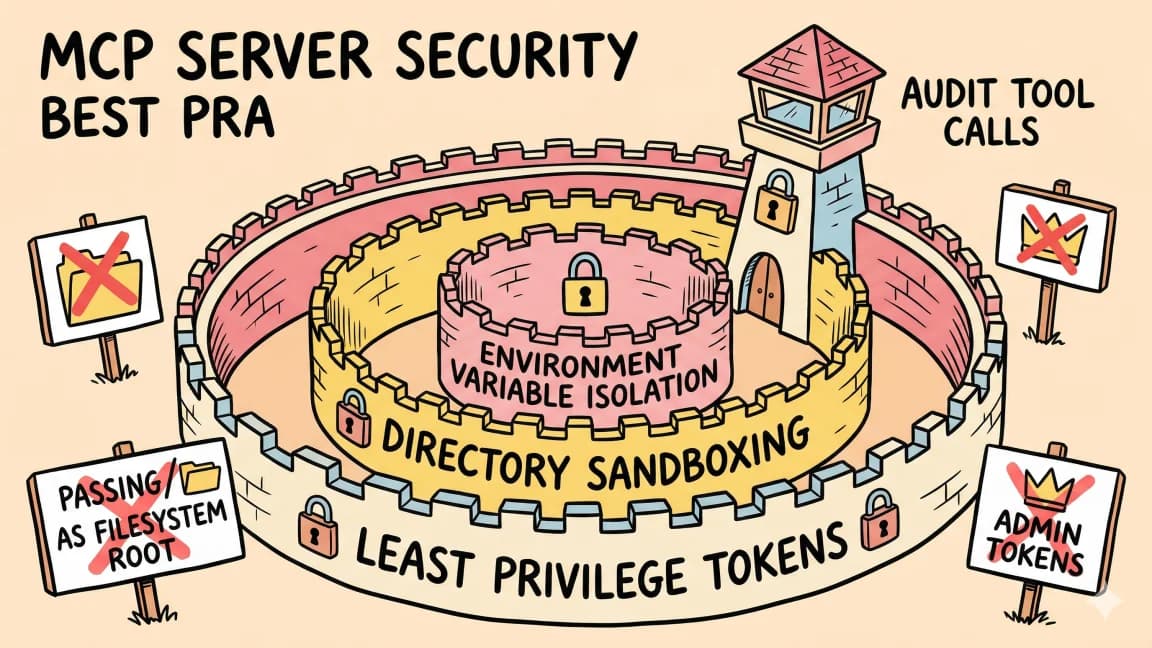
The Agent Security Checklist I Use Before Connecting Tools
Before an AI agent gets tools, files, APIs, MCP servers, or deployment access, decide what it can read, write, call, log...
11 min read
claude-code
Claude Code Permissions: A Practical settings.json Guide for Allow, Deny, and Ask Rules
Stop the approval-fatigue prompts without going full YOLO mode. A hands-on guide to Claude Code's permission system - se...
6 min read
News
AgentChaos: Fault Injection Shows Agent Robustness Is a Systems Problem, Not a Model Problem
A new ASE 2026 framework injects server errors, truncated responses, and corrupted tool calls into live agent systems at...
Build with the member tools

Get Smarter About AI Dev
New tutorials, open-source projects, and deep dives on coding agents - delivered weekly.
One email per weekReal code, not theoryFree forever