Cloudflare Gateway Can Now Detect MCP Traffic on the Wire: Shadow MCP Gets a Network Boundary
TL;DR
Cloudflare Gateway now classifies MCP traffic by protocol headers instead of hostname heuristics, ships a shadow-MCP dashboard, and lets admins block any MCP connection that does not arrive through an approved portal. The 2026-07-28 stateless spec is what made it possible.
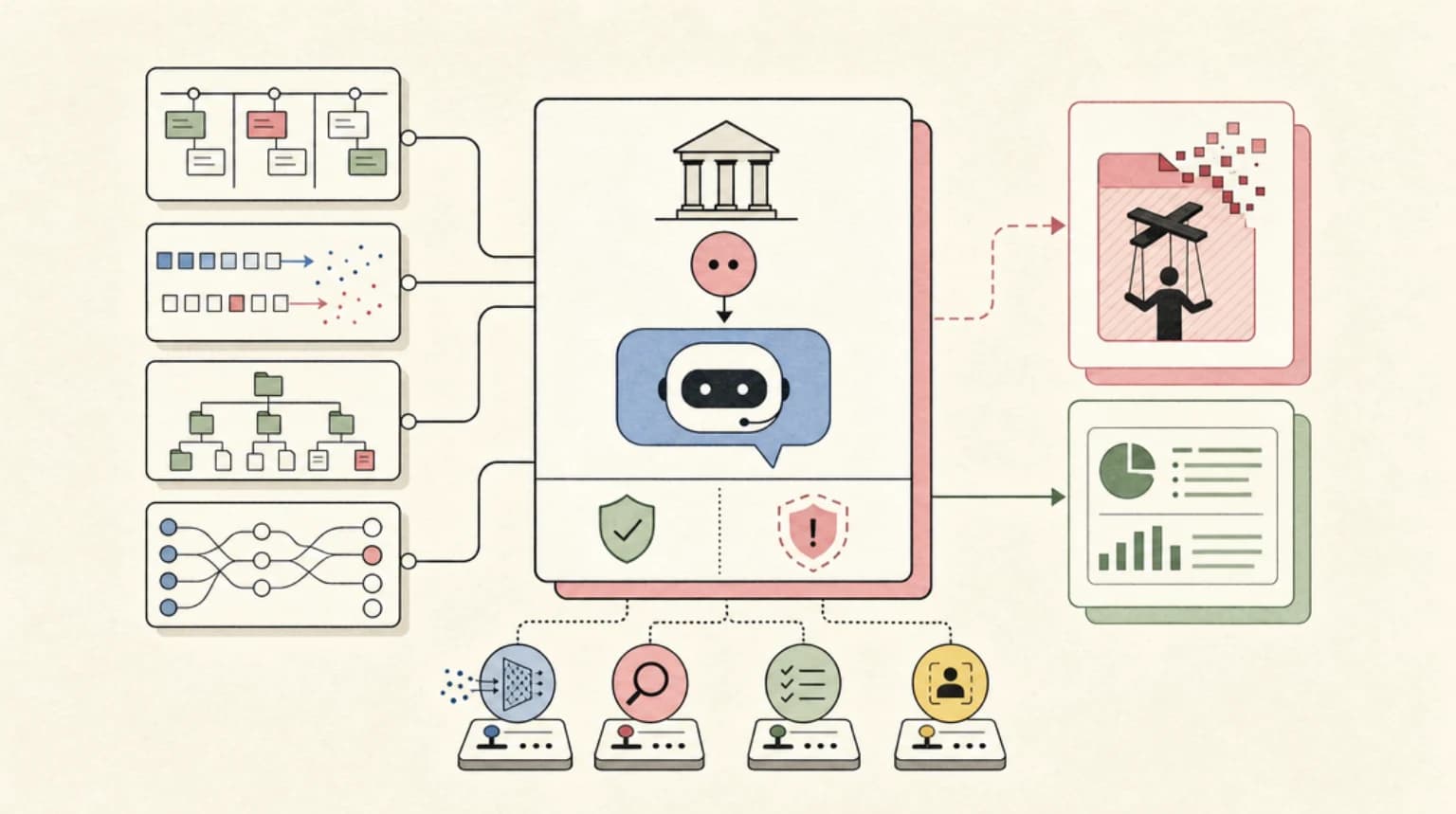
On August 14, Cloudflare shipped the missing layer of its MCP governance stack: network-level MCP traffic detection. Until now, an employee could point Claude Code, Codex, Cursor, or any other harness at an MCP server with one line of configuration, and security teams had no reliable way to see it. Cloudflare Gateway now classifies MCP traffic from protocol headers, exposes a dedicated MCP dashboard, and lets administrators block any MCP connection that does not arrive through an approved MCP Portal.
The story is not just another Cloudflare control panel feature. It is the first real-world payoff of the 2026-07-28 stateless MCP spec: the protocol finally carries enough identifying information on every request that ordinary HTTP infrastructure can see it.
What shipped#
Four capabilities landed together.
Protocol-level detection in Gateway. Gateway previously needed hostname or path heuristics (mcp in a URL, /mcp in a path) to guess at MCP traffic, which missed servers at ordinary URLs and produced false positives. Now it inspects the MCP-Protocol-Version header on every TLS-inspected request. Any Cloudflare Zero Trust customer gets a new Gateway selector, experimental.is_mcp == true, usable in Allow or Block policies without maintaining a list of MCP-looking domains.
An MCP traffic dashboard. Total requests, unique users, unique servers, per-server request counts, and a breakdown by on-ramp: traffic through an MCP Portal versus direct device connections. The "top MCP servers seen outside your Portals" list is the shadow MCP inventory, which is the part security teams had no visibility into before.
Portal-only enforcement. Traffic routed through an MCP Portal now carries an mcp_portal Traffic Source, so Gateway policies can distinguish proxied requests from direct ones. The baseline rule is one line:
experimental.is_mcp == true and not traffic.onramp in ("mcp_portal")
Action: Block
Any detected MCP traffic that did not come through a Portal gets blocked; Portal traffic passes through untouched.
Pre-registered OAuth clients for Portals. MCP Portals can now hold manually configured OAuth credentials (client ID, secret, callback URL) instead of relying on Dynamic Client Registration, which the 2026-07-28 spec deprecated. Each user still authorizes their own upstream data sources; the stored client secret is used to fetch tool and prompt lists.
The Agents SDK also moved: v0.20.0 supports the stateless 2026-07-28 protocol as both client and server, probing with server/discover first and falling back to the legacy initialize handshake, so one client can serve both eras.
Why the 2026-07-28 spec made this possible#
The interesting technical detail is what changed between the two protocol generations. Under the legacy flow, the first request does not carry a protocol version header; the signal only appears after an initialize handshake completes. Under the 2026-07-28 spec, the core protocol is stateless: every POST must carry MCP-Protocol-Version, and new headers Mcp-Method and Mcp-Name name the operation and tool on the wire.
That is a security property, not just an API design change. A network gateway can now identify a tools/call without parsing a JSON-RPC body, route, rate-limit, and enforce policy on the headers alone. Load balancers and rate limiters can separate tools/list from tools/call. This is the same architecture our Bun stateless MCP experiment demonstrated: the protocol finally behaves like the rest of the web, which means the rest of the web's infrastructure can see it.
The header is not a complete detector. Cloudflare is explicit about the gaps: legacy clients' first requests, pre-2025-06-18 protocol versions, stdio (local) servers, custom transports, and traffic that skips TLS inspection never carry the signal. Its presence is a strong positive indicator; its absence proves nothing.
The three control points, and where each fails#
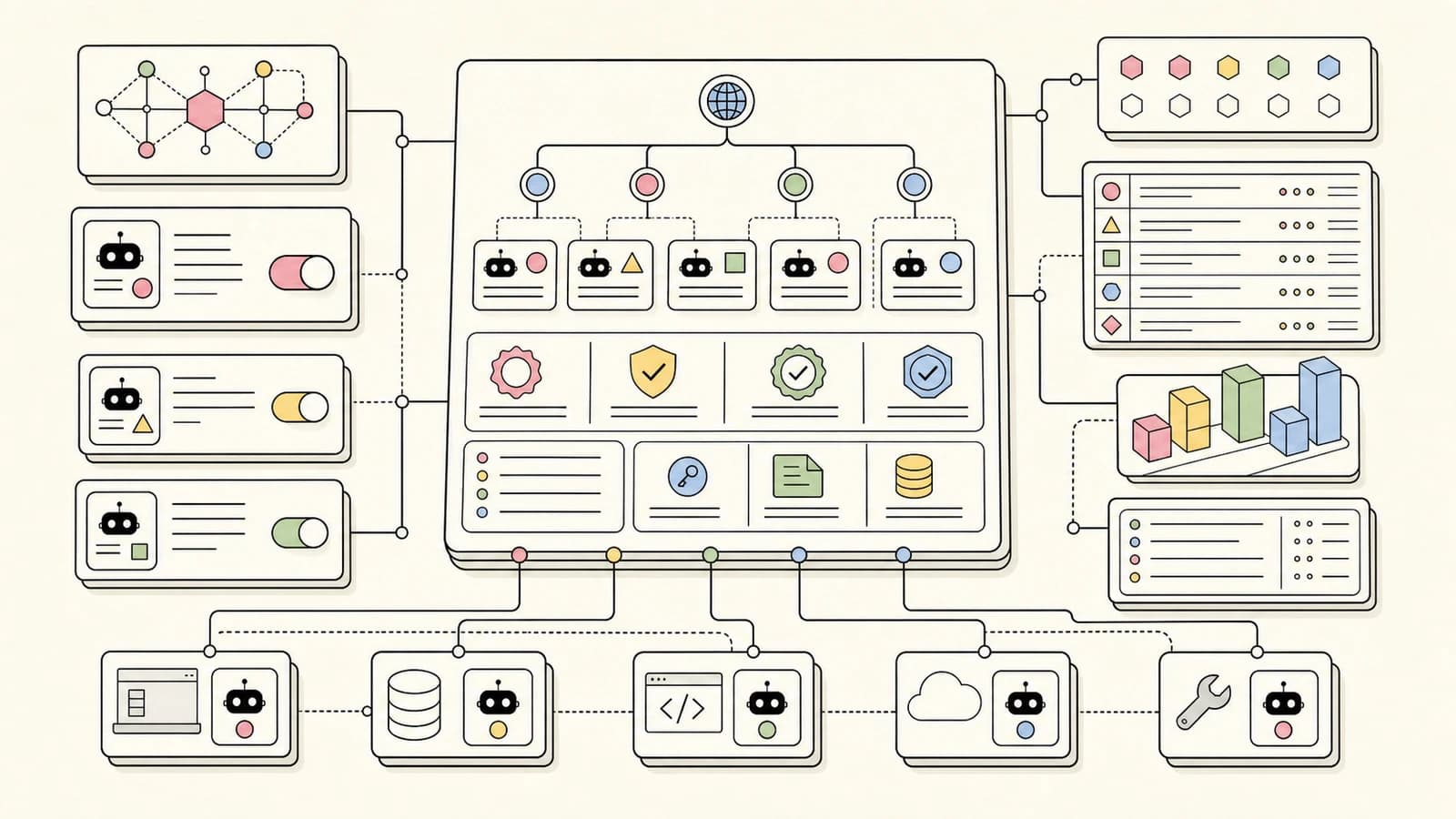
Cloudflare frames MCP security as three places to act, and the framing is the most useful part of the announcement.
Inside the client (hooks, allowlists) has the deepest request context and can cover local stdio servers, but you must reproduce the controls in every harness every employee uses, and telemetry from one client is never a complete inventory.
At the network boundary (Gateway) sees the widest set of remote connections and works regardless of client, but requires TLS decryption and cannot see stdio or off-network traffic.
At the MCP server (WriteGuard-style middleware) has the richest execution context and cannot be bypassed by switching clients, but only protects servers that implement it.
Shadow MCP and Portal bypass are different problems, and the new tooling treats them that way. Shadow MCP is a connection to a server nobody approved; the dashboard surfaces it. Portal bypass is an employee connecting directly to an approved server's upstream URL, skipping the Portal's Access policy, tool catalog, and audit trail; the mcp_portal Traffic Source plus an origin-side rejection handles that.
What this means for developers#
If you run an agent harness at work, assume your org's managed network can now see your MCP traffic and differentiate Portal-approved calls from direct ones. The practical consequence: point your tools at the approved Portal endpoint, not the upstream URL. Organizations get a discovery-to-governance path they did not have a week ago: find the server in the dashboard, decide whether to approve it, move it behind a Portal, and investigate the traffic that keeps going around it.
If you build or host MCP servers, the bar for "approved" just got mechanical. A server that supports manual OAuth registration is substantially easier to put behind a Portal than one that only does dynamic registration, which the 2026-07-28 spec formally deprecated. Cloudflare is also working on private-network MCP servers: Portals currently reach only public-Internet upstreams, with private routing on the roadmap.
The honest caveats: this is Gateway-only detection, meaning orgs without TLS inspection get nothing, and the strict version of the policy (block anything not Portal-arriving) will flag every rogue personal MCP server someone plugged in last quarter. That is the point of the dashboard: observe first, enforce after the inventory is real. It is the same "declare yourself or be detected" trajectory as Cloudflare's agent behavioral trust work and the Agent Access Model: the agentic internet is being given infrastructure that assumes agents are first-class, identifiable traffic. MCP finally has a wire-level identity to match.
Continue Reading#
- The MCP 2026-07-28 Rewrite: What Breaks and How to Migrate - the breaking-change list, including dynamic registration deprecation
- MCP Goes Stateless: Our Bun Fleet Experiment - the header mechanics that make wire-level detection possible
- Vercel MCP Ships the 2026-07-28 Spec - the platform-side adoption checkpoint
- Zero-Touch OAuth for MCP - the authorization model Portals now plug into
- Cloudflare Ships Behavioral Trust for the Agentic Internet - the same detect-and-govern pattern applied to traffic
- Cloudflare Adaptive Intelligence: Bot Scores That Retrain Weekly Instead of Quarterly - the observe, train, deploy, validate loop applied to bot traffic
Sources#
- Cloudflare: How Cloudflare detects MCP traffic and helps secure it (August 14, 2026)
- MCP 2026-07-28 specification: Streamable HTTP transport - the protocol-version header requirement
- MCP Portal documentation - OAuth configuration and Gateway routing
- Cloudflare Agents SDK - v0.20.0 stateless protocol support
Get the next deep dive like this in your inbox
One email a week on News and the rest of the AI dev stack. Free.
Read next on AI coding tools
The MCP 2026-07-28 Rewrite: What Breaks and How to Migrate
The 2026-07-28 Model Context Protocol spec is the largest revision since launch: a stateless core, deprecated Roots/Sampling/Logging, MCP Apps, Tasks, and tougher OAuth. Here is what breaks, what to adopt, and a migration checklist for server authors and client integrators before the July 28 deadline.
11 min readStateless MCP Is Here: What the 2026-07-28 Spec Changes and How to Host a Fleet of Servers on One Bun Process
MCP just dropped sessions entirely. Every request is now one self-contained POST. Here is what changed in the 2026-07-28 spec and a Bun + Hono pattern for hosting many MCP servers on a single process.
7 min readVercel MCP Ships the 2026-07-28 Spec: The MCP Migration Clock Starts
Vercel MCP now serves both the stateless 2026-07-28 protocol and the 2025 protocol from one endpoint, with mcp-handler 2.x handling the negotiation. The first major hosted MCP server has crossed over - here is what it means for server authors and clients.
7 min readNew here? Start with
Technical content at the intersection of AI and development. Building with AI agents, Claude Code, and modern dev tools - then showing you exactly how it works.