Stateless MCP Is Here: What the 2026-07-28 Spec Changes and How to Host a Fleet of Servers on One Bun Process
TL;DR
MCP just dropped sessions entirely. Every request is now one self-contained POST. Here is what changed in the 2026-07-28 spec and a Bun + Hono pattern for hosting many MCP servers on a single process.
The Model Context Protocol just went through its biggest revision since launch. The 2026-07-28 spec - informally "MCP 2.0" - removes protocol-level sessions entirely. No more initialize handshake, no more Mcp-Session-Id header, no more GET stream endpoint. Every request is now a single, fully self-contained HTTP POST.
Simon Willison has an excellent writeup on why this matters in Stateless MCP, along with a set of small tools he built against the new spec (a uvx-runnable MCP explorer, a Datasette plugin, and an LLM client integration). His framing is the right one: statelessness "greatly decreases the complexity of implementing both clients and servers." This post covers what actually changed on the wire, and a server pattern the new spec unlocks - hosting a whole fleet of MCP servers on one Bun process.
What changed on the wire#
Under the old Streamable HTTP transport (2025-03-26 through 2025-11-25), a client had to initialize first, hold on to a server-minted session ID, and echo it on every request. Servers had to route requests back to session state, which made horizontal scaling and serverless deployment awkward. That tradeoff is part of why we compared CLIs and MCPs as complementary interfaces rather than interchangeable ones.
Under 2026-07-28, one tools/call is one POST:
HTTP
POST /mcp HTTP/1.1
Content-Type: application/json
MCP-Protocol-Version: 2026-07-28
Mcp-Method: tools/call
Mcp-Name: get_weather

{
  "jsonrpc": "2.0",
  "id": 1,
  "method": "tools/call",
  "params": {
    "name": "get_weather",
    "arguments": { "location": "Seattle, WA" },
    "_meta": {
      "io.modelcontextprotocol/protocolVersion": "2026-07-28",
      "io.modelcontextprotocol/clientInfo": { "name": "ExampleClient", "version": "1.0.0" },
      "io.modelcontextprotocol/clientCapabilities": {}
    }
  }
}
The interesting details:
- Client metadata rides in the body. Protocol version, client info, and capabilities live in
params._metaunderio.modelcontextprotocol/*keys. There is no handshake to carry them anymore. - Selected fields are mirrored into headers.
MCP-Protocol-Version,Mcp-Method, andMcp-Nameduplicate body values so load balancers and gateways can route on them without parsing JSON. Servers must validate that headers match the body and reject mismatches with a400and JSON-RPC error-32020(HeaderMismatch) - otherwise an intermediary routing on a header and a server executing on the body could disagree, which is a security hole. - Tool parameters can become headers too. A tool schema can annotate a parameter with
x-mcp-header, and conforming clients mirror that value into anMcp-Param-{Name}header. That means a gateway can rate-limit or route by tenant without ever reading a request body. - Server-initiated requests are gone. Sampling and elicitation are now handled by the server returning an
InputRequiredResult, and the client retrying the original call with the answers attached (the spec calls this MRTR - multi round-trip requests). Long-lived notifications moved to an explicitsubscriptions/listenSSE stream.
If you have deployed MCP servers behind a load balancer, you already know why this is a big deal: session affinity is gone as a requirement. Any replica can answer any request. This is the same property that made plain REST APIs easy to scale, applied to the agent tool ecosystem.
From the archive
The Fix for Broken Benchmarks Is Architecture, Not Smarter Models
Aug 1, 2026 • 11 min read
Vercel AI Gateway Adds Team and Project Spend Budgets: The Cost-Cap Math for Agent Builders
Aug 1, 2026 • 5 min read
Your Benchmark Is Lying to You
Aug 1, 2026 • 10 min read
Agent Memory Is Moving Into the Model
Jul 31, 2026 • 8 min read
The pattern this unlocks: an MCP fleet on one process#
Once a server is a pure function of the request, hosting many MCP servers stops being an infrastructure problem and becomes a routing problem. We built this out as a small Bun + Hono + Commander repo, and the core of it is genuinely tiny. It fits the same practical “choose the right server for the job” workflow behind our MCP server guide.
An MCP server is just data - a name and a list of tools:
TypeScript
import { defineMcp } from "../mcp/types.ts";

export const mathMcp = defineMcp({
  name: "math",
  version: "0.1.0",
  description: "Arithmetic tools - add, multiply, power",
  tools: [
    {
      name: "add",
      description: "Add two numbers",
      inputSchema: {
        type: "object",
        properties: { a: { type: "number" }, b: { type: "number" } },
        required: ["a", "b"],
      },
      handler: (args) => [{ type: "text", text: String(Number(args.a) + Number(args.b)) }],
    },
  ],
});
A registry maps mount paths to servers - nested paths included:
TypeScript
export const registry: Record<string, McpServerDef> = {
  time: timeMcp,
  math: mathMcp,
  "labs/math": mathMcp,
};
And one Hono app serves the whole fleet:
TypeScript
const app = new Hono();

for (const [path, mcp] of Object.entries(registry)) {
  app.all(`/${path}`, (c) => {
    const toolsParam = c.req.query("tools");
    const allowedTools = toolsParam ? toolsParam.split(",") : undefined;
    return handleMcpRequest(mcp, c.req.raw, { allowedTools });
  });
}

export default { port: 3100, fetch: app.fetch };
handleMcpRequest is the only part with real spec surface area: it validates the three mirrored headers against the body, answers tools/list and tools/call, returns 404 with -32601 for unknown methods, and 405 for the legacy GET/DELETE verbs. It is around a hundred lines total, with zero session bookkeeping. That is the whole point.
Query parameters as capability scoping#
The ?tools= parameter in that route is the detail we like most. Because every request is self-contained, the URL itself can carry policy:
/mathexposesadd,multiply, andpower/math?tools=addexposes onlyadd- it disappears fromtools/listand calling anything else fails
You can hand different agents different URLs to the same server and get different capability surfaces, with no auth framework and no per-client configuration. Under the stateful spec this would have been fragile - the filter would have had to live in session state. Statelessly, it is just a query string. That kind of deliberately scoped tool surface pairs well with the UI patterns in our Apps SDK and MCP UI guide.
Trying it against a live server#
The repo ships a Commander CLI that speaks the new wire format (correct headers, _meta block, base64 sentinel encoding for non-ASCII tool names):
Shell
bun run cli list http://localhost:3100/math
bun run cli call http://localhost:3100/math add -a '{"a":2,"b":3}'
bun run cli call "http://localhost:3100/math?tools=add" power -a '{"a":2,"b":8}'
# -> error: Unknown tool: power
And the header-validation rule in action - send an Mcp-Name that does not match the body and the server must refuse:
Shell
curl -s -X POST localhost:3100/math \
  -H 'MCP-Protocol-Version: 2026-07-28' \
  -H 'Mcp-Method: tools/call' \
  -H 'Mcp-Name: wrong' \
  -d '{"jsonrpc":"2.0","id":1,"method":"tools/call","params":{"name":"add","arguments":{"a":1,"b":1}}}'
# -> {"error":{"code":-32020,"message":"Header mismatch: Mcp-Name 'wrong' does not match body value 'add'"}}
Deployment is equally boring, in the best way: one small Dockerfile on the oven/bun image, one container, any number of MCP endpoints. Adding a new experiment is scaffolding a file and adding one registry line.
Should you migrate?#
If you maintain an MCP server today: yes, start now. The spec has a defined backward-compatibility story - modern clients probe with a stateless request first and fall back to initialize on a legacy error - so you can support both eras during the transition. The old HTTP+SSE transport is formally deprecated and eligible for removal. For the production edge, pair the migration with the auth considerations in our zero-touch OAuth guide.
If you are building new agent infrastructure, the calculus is simpler. Stateless MCP servers deploy like ordinary web handlers: they scale horizontally, they work on serverless platforms, and a whole catalog of them can share one process until traffic says otherwise. The protocol finally matches how the rest of the web is built.
Worth reading alongside this: Simon's original post, the 2026-07-28 Streamable HTTP transport spec, and the changelog for the full delta.
Continue Reading#
- Zero-Touch OAuth for Enterprise MCP
- Cloudflare Gateway Can Now Detect MCP Traffic - why the per-request headers this post uses became a network security signal
- The Best MCP Servers in 2026
- CLIs Over MCPs
- Apps SDK and MCP UI
- Browse more posts tagged MCP and AI Agents
Read next
MCP Goes Stateless: The 2026-07-28 Migration Guide
The MCP 2026-07-28 final spec is here - sessions are gone, the protocol is stateless. Here is what changed, what broke, and how to finish migrating your MCP servers.
9 min readThe MCP 2026-07-28 Rewrite: What Breaks and How to Migrate
The 2026-07-28 Model Context Protocol spec is the largest revision since launch: a stateless core, deprecated Roots/Sampling/Logging, MCP Apps, Tasks, and tougher OAuth. Here is what breaks, what to adopt, and a migration checklist for server authors and client integrators before the July 28 deadline.
11 min readVercel MCP Ships the 2026-07-28 Spec: The MCP Migration Clock Starts
Vercel MCP now serves both the stateless 2026-07-28 protocol and the 2025 protocol from one endpoint, with mcp-handler 2.x handling the negotiation. The first major hosted MCP server has crossed over - here is what it means for server authors and clients.
7 min readShare
Developers Digest
Technical content at the intersection of AI and development. Building with AI agents, Claude Code, and modern dev tools - then showing you exactly how it works.
300+ videos30K+ GitHub stars850+ articles
Try These Tools
Related Tools
MCP Tools

MCP Inspector
Visual testing tool for Model Context Protocol servers. Like Postman for MCP - call tools, browse resources, and view...
View ToolMCP Tools
MCP Hub
Centralized manager for MCP servers. Connect once to localhost:37373 and access all your servers through a single endpoi...
View ToolMCP Tools

Smithery
Registry and hosting platform for MCP servers. 6,000+ servers indexed. One-command install and configuration via CLI. Su...
View ToolProductivityNew
A
AgentCanvas
A hosted infinite canvas your headless AI agents drive over MCP. Any MCP-speaking agent - Claude Code, Codex, Cursor, or...
View ToolApps from Developers Digest
Developer ToolsPlus $20/mo
MCPaaS Plus
Run any MCP server without running infra. Private endpoints, no DevOps.
View AppSaaS Products
Overnight Agents
Spec out AI agents, run them overnight, wake up to a verified GitHub repo.
View AppDirectories
MCP Directory
Find an MCP server, copy the install line, you're done.
View AppRelated Guides
Guide
MCP Servers Explained
What MCP servers are, how they work, and how to build your own in 5 minutes.
AI AgentsGuide
Subagent MCP Scoping - Claude Code
Route specific MCP servers only to specific subagents.
Claude CodeGuide
Claude Code Setup Guide
Configure Claude Code for maximum productivity -- CLAUDE.md, sub-agents, MCP servers, and autonomous workflows.
AI AgentsRelated Videos
Related Posts

9 min read
MCP
MCP Goes Stateless: The 2026-07-28 Migration Guide
The MCP 2026-07-28 final spec is here - sessions are gone, the protocol is stateless. Here is what changed, what broke,...

5 min read
MCP
What Is MCP (Model Context Protocol)? A TypeScript Developer's Guide
MCP lets AI agents connect to databases, APIs, and tools. Here is what it is and how to use it in your TypeScript projec...
8 min read
AI Coding
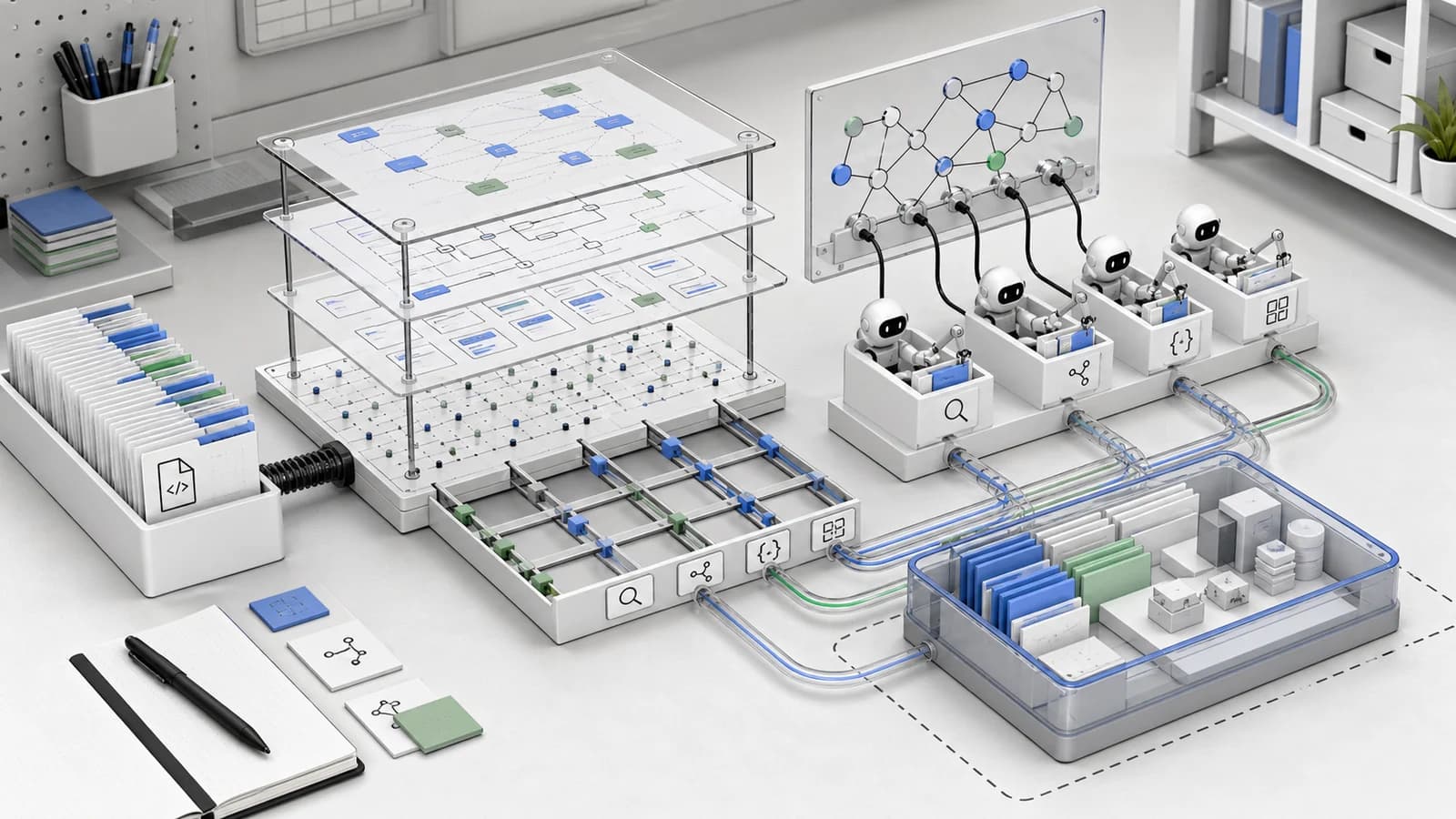
CodeNib Makes Repository Context a Data System
CodeNib's July paper argues that coding agents should stop rediscovering the same repo through grep and reads. Repositor...
7 min read
News
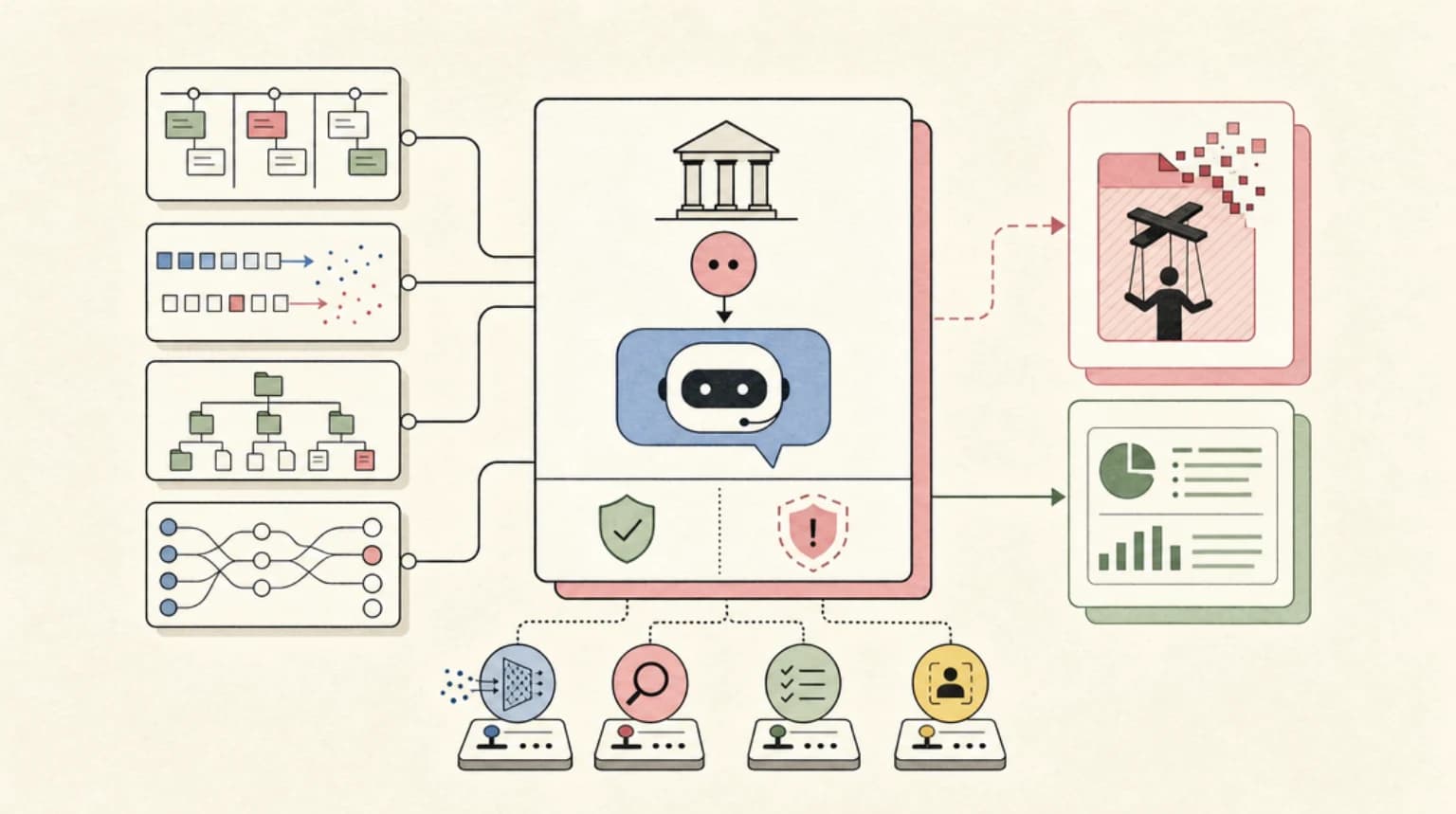
Cloudflare Gateway Can Now Detect MCP Traffic on the Wire: Shadow MCP Gets a Network Boundary
Cloudflare Gateway now classifies MCP traffic by protocol headers instead of hostname heuristics, ships a shadow-MCP das...
7 min read
News
Cloudflare Radar Researcher: A Plain-Language Agent Over 500 Live API Endpoints
Cloudflare shipped Radar Researcher, a natural-language agent that answers questions about global internet traffic with...
7 min read
News
Agent Plugins 1.0.0: One Package Format for Agent Skills and MCP Servers
Vercel, OpenAI, GitHub, Microsoft, AWS, and Cursor collaborated on Agent Plugins 1.0.0, an open standard that packages A...
Build with the member tools

Get Smarter About AI Dev
New tutorials, open-source projects, and deep dives on coding agents - delivered weekly.
One email per weekReal code, not theoryFree forever