Agent Plugins 1.0.0: One Package Format for Agent Skills and MCP Servers
TL;DR
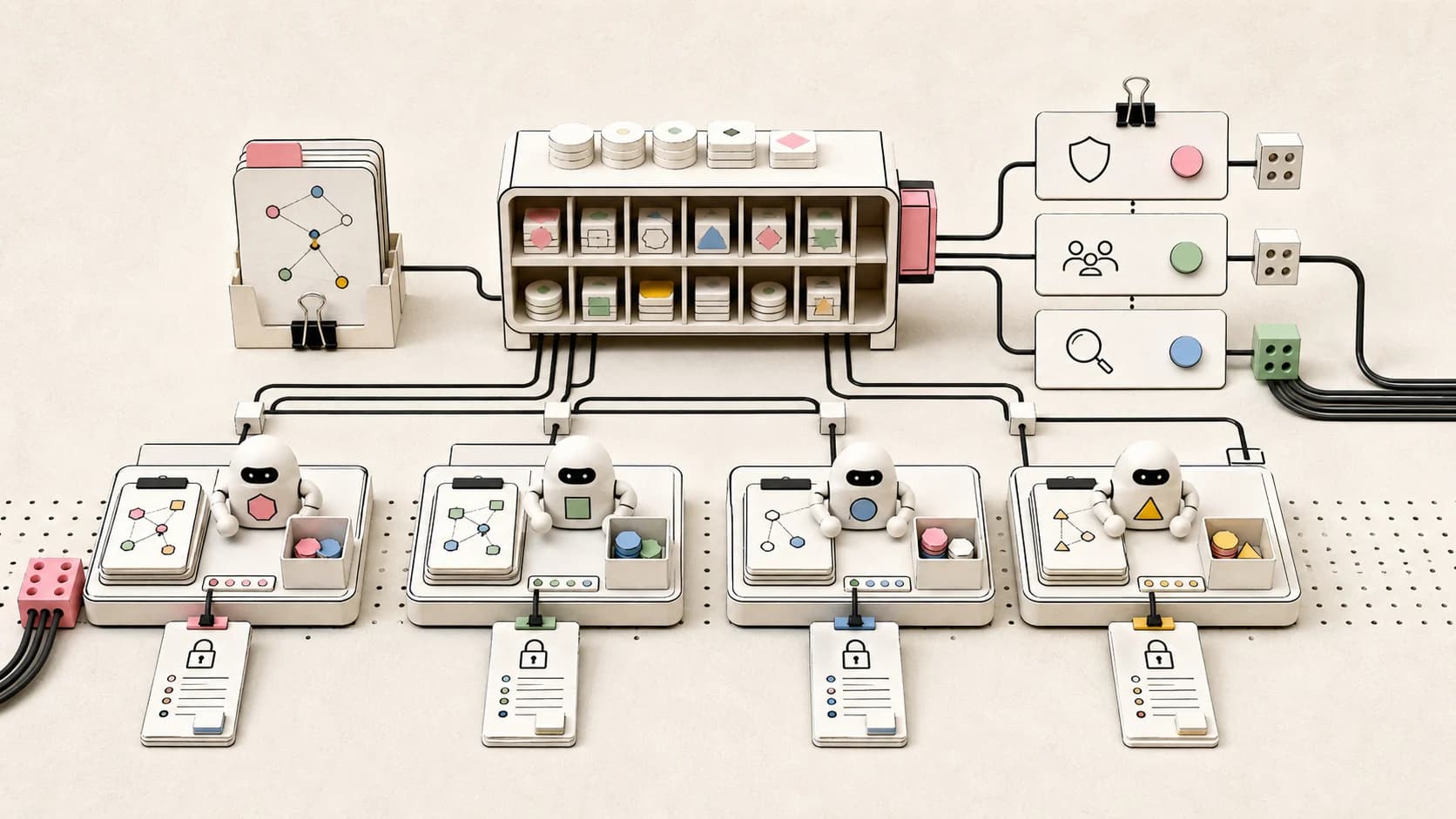
Vercel, OpenAI, GitHub, Microsoft, AWS, and Cursor collaborated on Agent Plugins 1.0.0, an open standard that packages Agent Skills and MCP servers into one portable plugin. ChatGPT, Codex, Cursor, GitHub Copilot, Kiro, and VS Code load the format on day one.
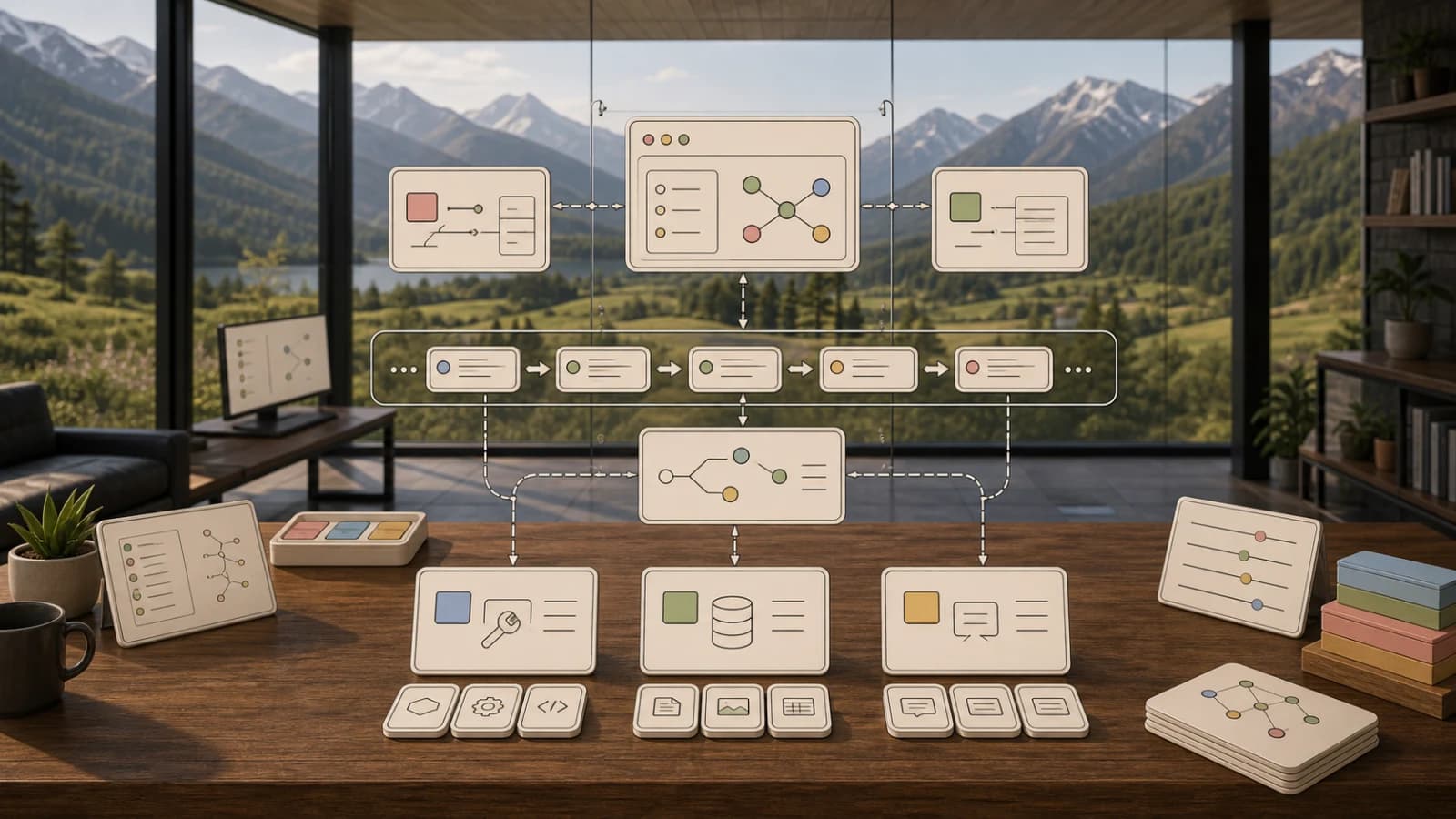
On August 6, Vercel published Agent Plugins 1.0.0, an open, vendor-neutral standard for packaging Agent Skills and MCP servers into distributable plugins. The format is deliberately tiny: a directory with a plugin.json manifest and fixed locations for components. Six agent clients ship support at launch - ChatGPT and Codex, Cursor, GitHub Copilot, Kiro, and VS Code - and all of them can load both component types on day one.
The project is as notable for who is in it as for what it does. Vercel initiated the proposal; representatives from AWS, Anysphere, GitHub, Microsoft, and OpenAI refined it into the 1.0.0 release. The Technical Steering Committee lists core maintainers from Amazon, Cursor, Microsoft, OpenAI, and Vercel, and the project claims no single company's product roadmap sets the format's direction. Governance is public: the specification repo has been developed in the open since April 2026, material changes begin as GitHub Discussions, and the docs are licensed CC BY 4.0.
The format in one directory#
An Agent Plugin is a directory with a required manifest and optional components in fixed locations:
Code
my-plugin/
├── plugin.json
├── skills/
│   └── summarize/
│       ├── SKILL.md
│       ├── scripts/
│       └── references/
├── mcp.json
└── com.example.client/
    └── hooks/
plugin.json identifies the plugin and targets a spec version. The minimum manifest is two fields:
JSON
{
  "$schema": "https://agent-plugins.org/schemas/1.0.0/plugin.schema.json",
  "name": "my-plugin"
}
Everything else is file structure. skills/ holds Agent Skills in the existing Agent Skills specification format - SKILL.md with name and description frontmatter, plus optional scripts/ and references/. mcp.json describes MCP servers over stdio, Streamable HTTP, or the legacy HTTP+SSE transport. Clients check for plugin.json at the root, discover the components they support, and validate each component independently, so one invalid component does not disable the rest of the plugin.
Client-specific behavior lives in reverse-domain namespaces such as com.example.client/. Other clients ignore those namespaces, which keeps vendor features from leaking into the portable contract. A client can support either component type or both - the spec defines what is portable, not which parts a given client must load.
From the archive
Cloudflare Adds Identity-Aware AI Gateway Analytics: Behavioral Baselines for Every Agent and Employee
Aug 6, 2026 • 6 min read
Kitesurf: Cloudflare's Agent-First Browser Runs in V8 Isolates on Workers
Aug 6, 2026 • 7 min read
GitHub Malware Advisories Now Cover Eight Package Ecosystems
Aug 6, 2026 • 6 min read
Meta Ships Muse Code and Muse Spark 1.2: A Terminal Agent With a 12x Cheaper Contributor Tier
Aug 6, 2026 • 7 min read
What it deliberately leaves out#
Version 1 is a small interoperability floor, not a marketplace. Distribution, installation, permissions, policy, and user experience all stay under each client's control. The scope covers exactly two component types, Agent Skills and MCP servers, both of which already have their own mature specifications - Agent Plugins does not redefine either. Commands, hooks, and agents remain client-specific for now; the Technical Steering Committee may add component types in future versions only when a demonstrated portability need and implementer support exist.
Why the launch support matters#
The same clients that each invented their own plugin conventions are the ones agreeing on this one. The practical effect for authors is the end of the repackaging tax: today a skill or MCP server with identical content needs client-specific metadata, discovery paths, and MCP configuration per target. Our coverage of the skills versus MCP split and the case for skills over prompts kept circling the same friction: the underlying component is portable, the packaging is not. Agent Plugins targets exactly that seam.
It is also the direct continuation of two trends we have been tracking. The skill registry and package-manager trajectory we covered in May assumed the ecosystem would converge on governance and dependency handling for agent instructions; a shared package format is the structural prerequisite for that to happen across vendors rather than inside one client. And the standard ships in the same month the MCP 2026-07-28 spec went live in production servers like Vercel MCP - the tooling ecosystem is consolidating around a small set of shared contracts for the first time.
Honest caveats#
The standard is young and deliberately thin. There is no distribution or discovery mechanism in v1 - no canonical registry, no install command, no marketplace. "Portable" means a client that implements the conformance checklist can load your plugin; it does not mean your users can find it. ChatGPT and Codex support MCP over stdio and Streamable HTTP but not the legacy HTTP+SSE transport, so a plugin targeting every launch client should pick modern transports. And because each client controls installation and UX, the experience of installing the same plugin still differs by client even when the payload does not.
What to do now#
If you author skills or MCP servers: the cheap first step is a directory restructure - plugin.json at the root, SKILL.md files under skills/, servers described in mcp.json. The manifest schema is public, and the spec's author guide walks through a minimal plugin with one skill. If you build an agent client, the conformance checklist defines the minimum for discovering and loading plugins, and you can support components incrementally.
The things to watch: whether plugin registries and marketplaces emerge on top of the format, whether the TSC adds component types in 1.1, and how quickly the six launch clients converge on install and permission flows. A standard this small is easy to implement; the hard part is the ecosystem actually using it.
Continue Reading#
- Agent Skills Are Becoming Package Managers - why governance, not prompts, is the pattern that wins
- MCP Servers vs Agent Skills in 2026 - the two component types Agent Plugins packages, compared
- Why Skills Beat Prompts for Coding Agents - the case for skills as the portable unit of agent behavior
- Vercel MCP Ships the 2026-07-28 Spec - the protocol momentum Agent Plugins builds on
- What Is the Model Context Protocol - the MCP primer for anyone new to the stack
- Vercel Sandbox Gets a Real Network Boundary: Why Egress Control Is the Missing Half of Agent Security
Sources#
- Vercel blog: Introducing Agent Plugins (August 6, 2026)
- Vercel changelog: Agent Plugins 1.0.0 (August 6, 2026)
- Agent Plugins specification and compatible clients (agent-plugins.org, accessed August 6, 2026)
- agentplugins/agent-plugins-spec repository (governance and contribution process)
Read next
Agent Skills Are Becoming Package Managers
GitHub trending is full of agent skill registries. The winning pattern is not more prompts. It is dependency governance for the instructions your coding agents inherit.
8 min readMCP Servers vs Agent Skills: Which to Build in 2026
A decision framework for 2026: MCP servers give an agent access to a live system, Agent Skills teach it how to do a task. Here is when to build each, when to build both, and the criteria that actually decide it, grounded in the MCP spec and Anthropic's skills docs.
10 min readWhy Skills Beat Prompts for Coding Agents in 2026
The coding-agent workflow is maturing past giant hand-written prompts. The winning pattern in 2026 is a control stack: project rules, reusable skills, bounded sub-agents, and deterministic tools around the model.
9 min readShare
Developers Digest
Technical content at the intersection of AI and development. Building with AI agents, Claude Code, and modern dev tools - then showing you exactly how it works.
300+ videos30K+ GitHub stars850+ articles
Related Tools
AI CodingOpen source

DeepSeek-TUI
Open-source terminal agent runtime with approval modes, rollback snapshots, MCP servers, LSP diagnostics, and a headless...
View ToolAI Frameworks
C
Composio
Gives AI agents access to 250+ external tools (GitHub, Slack, Gmail, databases) with managed OAuth. Handles the auth and...
View ToolProductivityNew
A
AgentCanvas
A hosted infinite canvas your headless AI agents drive over MCP. Any MCP-speaking agent - Claude Code, Codex, Cursor, or...
View ToolAI FrameworksEssential

Vercel AI SDK
The TypeScript toolkit for building AI apps. Unified API across OpenAI, Anthropic, Google. Streaming, tool calling, stru...
View ToolApps from Developers Digest
Developer ToolsIn Progress
Skill Builder Hub
Author, test, score, and govern reusable AI agent skills before production registry.
View AppSaaS Products
Overnight Agents
Spec out AI agents, run them overnight, wake up to a verified GitHub repo.
View AppDeveloper ToolsIn Progress
Skill Builder
Turn a one-liner into a working Claude Code skill. From idea to installed in a minute.
View AppRelated Guides
Guide
Claude Code Setup Guide
Configure Claude Code for maximum productivity -- CLAUDE.md, sub-agents, MCP servers, and autonomous workflows.
AI AgentsGuide
MCP Servers Explained
What MCP servers are, how they work, and how to build your own in 5 minutes.
AI AgentsGuide
Subagent Frontmatter - Claude Code
Configure model, tools, MCP, skills, memory, and scoping.
Claude CodeRelated Videos

Buzz: Open-Source Collaboration for Humans + AI Agents
Buzz by Block: Open-Source Slack-Style Collaboration for Humans + AI Agents (Demo & Setup) Check out Arcade: https://arcade.dev.plug.dev/xiDRwlA Repo: https://github.com/block/buzz The video introd...
Video·
Agents 101: How to Build and Deploy Anything with AI Agents
Build Anything with Vercel, the Agentic Infrastructure Stack Check out Vercel: https://vercel.plug.dev/cwBLgfW The video shows a behind-the-scenes walkthrough of how the creator rapidly builds and d...
Video·
TRAE: Custom AI Agents That Actually Understand Your Codebase
Check out Trae here! https://tinyurl.com/2f8rw4vm In this video, we dive into @Trae_ai a newly launched AI IDE packed with innovative features. I provide a comprehensive demonstration...
Video·
Related Posts
8 min read
AI Coding
Agent Skills Are Becoming Package Managers
GitHub trending is full of agent skill registries. The winning pattern is not more prompts. It is dependency governance...

10 min read
MCP
MCP Servers vs Agent Skills: Which to Build in 2026
A decision framework for 2026: MCP servers give an agent access to a live system, Agent Skills teach it how to do a task...

9 min read
AI Coding
Why Skills Beat Prompts for Coding Agents in 2026
The coding-agent workflow is maturing past giant hand-written prompts. The winning pattern in 2026 is a control stack: p...
7 min read
News
Vercel MCP Ships the 2026-07-28 Spec: The MCP Migration Clock Starts
Vercel MCP now serves both the stateless 2026-07-28 protocol and the 2025 protocol from one endpoint, with mcp-handler 2...
12 min read
MCP
What Is the Model Context Protocol? A 2026 Primer
MCP isn't just a plugin format - it's a full JSON-RPC protocol for connecting LLMs to tools, resources, and prompts. Her...
6 min read
News
Vercel Skill Packs: The Distribution Layer for Agent Skills Just Landed
skills.sh now lets you bundle multiple agent skills into a shareable, unlisted pack and install it with one command. Pac...
Build with the member tools

Get Smarter About AI Dev
New tutorials, open-source projects, and deep dives on coding agents - delivered weekly.
One email per weekReal code, not theoryFree forever