Cloudflare's Agentic Internet: Readable, Discoverable, Callable, and Payable
TL;DR
Cloudflare's Agents Week finale frames agents as a new kind of web visitor with four primitives: readable, discoverable, callable, payable. Here is what that architecture means for developers building and monetizing agent-facing services.
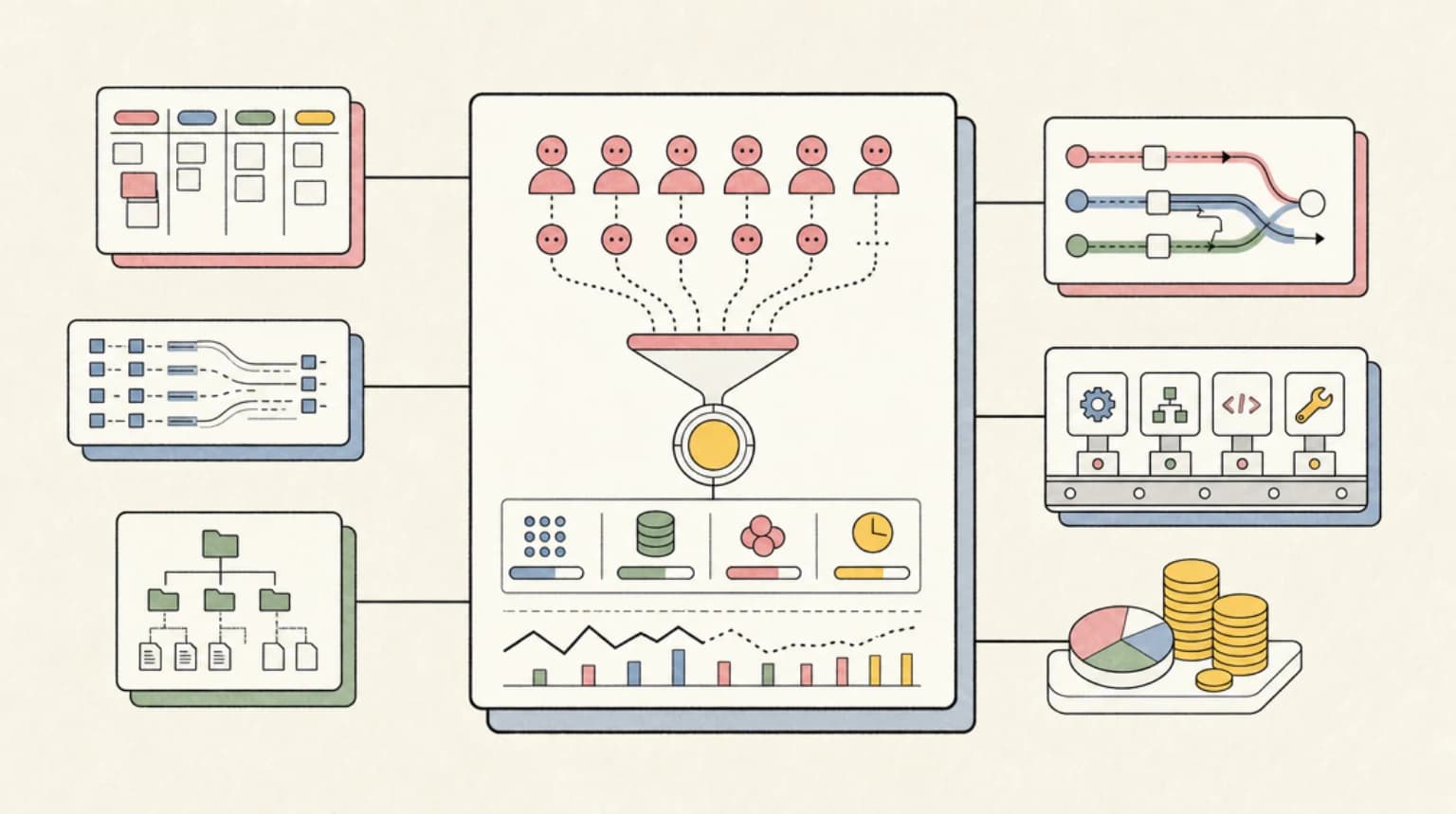
Cloudflare closed Agents Week with its most important post of the series: a framework for what it calls the Agentic Internet. The claim is straightforward: agents are not a new kind of software, they are a new kind of visitor to the web. They do not render CSS, see hero images, or click ads, but they have a paying human on the other end. Block them and you block your customer.
The post, published August 6, lays out four primitives for a web that works for this new visitor: readable, discoverable, callable, and payable. Each maps to tools Cloudflare shipped this week and in recent months, all built on open standards the company does not own: MCP, x402, Web Bot Auth, and PACT.
Why the web needs rethinking#
Cloudflare's starting evidence is operational: a large share of bot traffic is re-fetching pages that have not changed, at billions of requests per month. That is machine effort with no outcome on either side. A domain owner pays to serve it, an agent pays to fetch it, and nothing comes of it. That is the signature of a web built for humans being visited by something else.
The economic point matters more than the waste. Every agent request now costs someone money and carries a purpose, because every agent runs for a paying person or business. The web's current model funds itself with pageviews and ads, neither of which an agent produces. Ad models are breaking, and seat-based pricing does not work when the user is a program. Cloudflare's bet is that per-fetch micropayments replace both: a recipe site that never turned a profit on ads can charge a fraction of a cent per fetch and be profitable at agent scale.
The four primitives#
Readable is about token economics. Every HTML tag rendered for a human who never looks at it is context-window pollution the agent has to pay to ignore. Cloudflare addresses this server-side with Markdown for Agents, which lets sites serve a token-cheap markdown view, and client-side with Kitesurf, its browser built for agents that runs in V8 isolates on Workers.
Discoverable is where the economic moment begins: an agent cannot read, call, or pay for a resource it cannot find. This is the part of the stack aimed at measuring and improving agent visibility, so content owners know how visible they are to the models and agents their customers actually use.
Callable is where agents stop reading and start doing. Today an agent that needs to add an item to a todo list parses HTML, guesses which button is "Add", synthesizes a click, and hopes the DOM did not change. WebMCP replaces that with an explicit tool contract: a site registers document.modelContext.registerTool(...) and agents call actions directly, reusing the user's existing session and state. No parsing, no guessing.
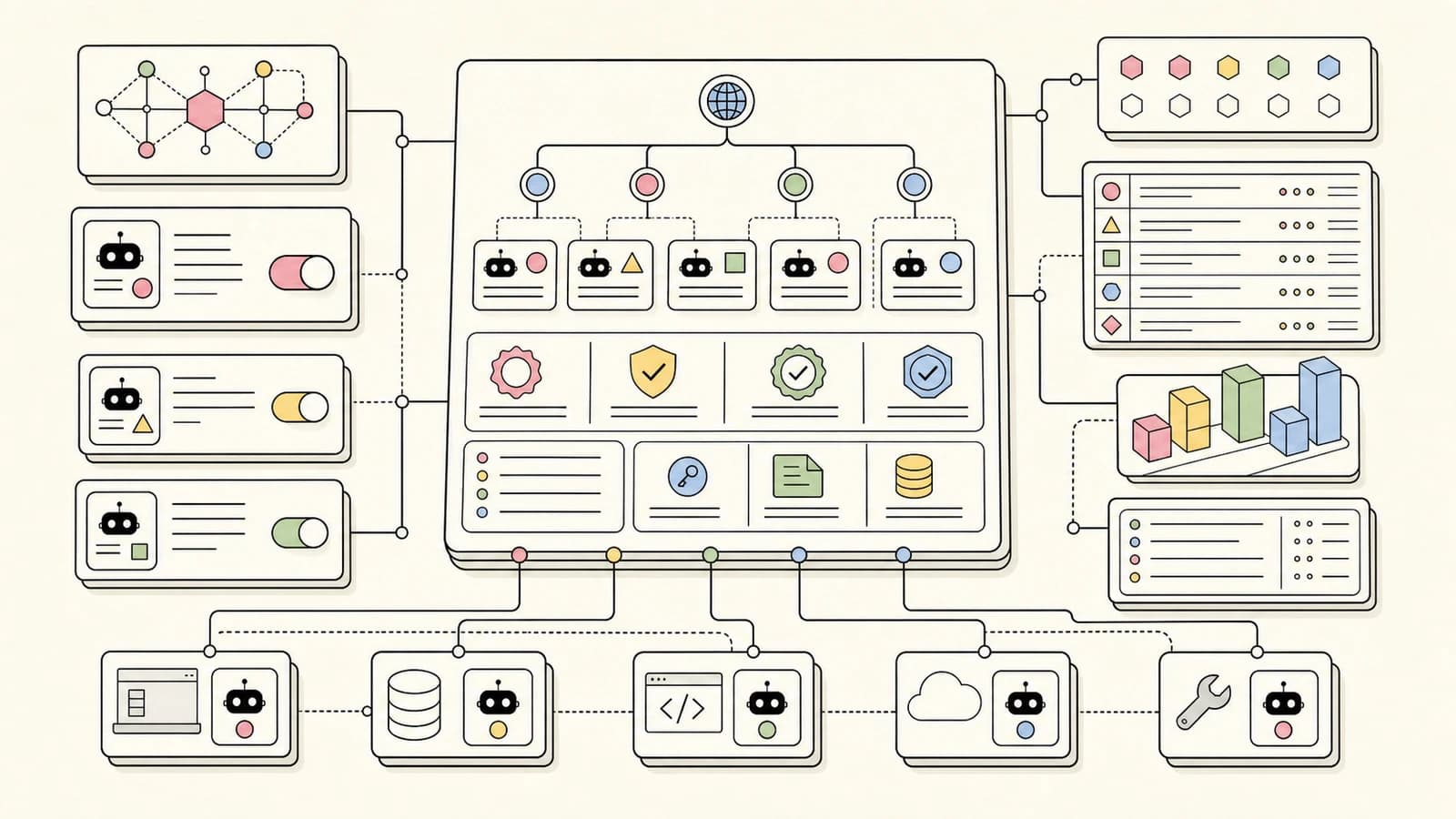
Payable is the primitive Cloudflare believes the future runs on. Wallets let agents pay for content and APIs with a budget the human set once, and the Monetization Gateway lets domain owners set up agent payments in a few clicks. Every paid interaction leaves a receipt: the publisher can prove which agent fetched which page, the agent can prove it paid for what it used.
Identity sits underneath all four. Web Bot Auth lets a bot cryptographically identify itself to any site it visits, replacing guessed user agents. PACT (Private Access Control Tokens), announced with Mozilla, Google, Microsoft, and Shopify, lets a site vouch anonymously for a request so legitimate agents get in with less friction.
From the archive
Cloudflare Radar Researcher: A Plain-Language Agent Over 500 Live API Endpoints
Aug 7, 2026 • 7 min read
Cloudflare Folds Workers AI Into AI Gateway: One Control Plane for Every Model Provider
Aug 7, 2026 • 6 min read
DCAS: Why Fine-Tuned Coding Agents Fall Apart When You Switch Scaffolds
Aug 7, 2026 • 8 min read
Anthropic Cuts Fable 5 Biology Fallbacks by 85%: What the Safeguard Tuning Means for Developers
Aug 7, 2026 • 5 min read
What is genuinely different here#
The framing matters more than any single product. Cloudflare is arguing for a web where agents and domain owners cooperate through standards, not walls: domain owners pick their own identity providers, payment processors, and agent partners, with Cloudflare as one option, not the whole stack. The company says it is Customer Zero of the same rails, with no privileged path or early-access API.
The alternative it is arguing against is concrete: a future where a handful of stacks own discovery, identity, and payments, and everyone else routes through them. That is the same open-versus-walled battle as the human web, but with more at stake because agents make every request a microtransaction. For developers, the practical takeaway is that this is the first time a major platform has shipped identity, payment, and interaction primitives for agent traffic in a single coherent architecture. If you run an API, a docs site, or any content worth fetching, the question is not whether agents visit it, it is whether your stack has a story for them: what do they pay, how do they prove who they are, and how do they call your actions without breaking your site.
The experiments are live: Cloudflare's AI Playground lets you try the week's tools, and the agent-readiness dashboard shows how visible your own site is to agents. The cheapest thing to do this week is to look at your analytics through the "new kind of visitor" lens, and check whether your content would survive contact with a wallet.
Continue Reading#
- Kitesurf: Cloudflare's Agent-First Browser Runs in V8 Isolates on Workers
- WebMCP: Google's Browser Standard That Lets AI Agents Use Websites as Tools
- Cloudflare's x402 Monetization Gateway Brings Micropayments to the Edge
- Cloudflare Wallets Bring Agentic Commerce to the Edge
- The Agent Access Model: Securing Task-Scoped Agents
- RFC 10008: The New HTTP QUERY Method Explained
Sources#
- Building an open Agentic Internet: readable, discoverable, callable, and payable (Cloudflare Blog, August 6 2026)
- Web Bot Auth: giving bots a way to prove who they are (Cloudflare Blog)
- Cloudflare Collaborates With Leading Browsers on PACT (Cloudflare)
- x402 HTTP payment protocol
- Markdown for Agents (Cloudflare Docs)
Read next
Kitesurf: Cloudflare's Agent-First Browser Runs in V8 Isolates on Workers
Cloudflare shipped Kitesurf, an agent-first browser that runs entirely on Workers: Rust and WebAssembly rendering, per-page isolates, CDP compatibility, and 3-7x less memory and CPU than Chromium for common agent tasks. Free in beta in Browser Run.
7 min readWebMCP: Google's Browser Standard That Lets AI Agents Use Websites as Tools
Chrome 149 ships an origin trial for WebMCP - a proposed web standard that lets developers expose JavaScript functions and HTML forms to AI agents. Here is what it does, how to implement it, and why it matters for the future of agentic browsing.
8 min readCloudflare's x402 Monetization Gateway Brings Micropayments to the Edge
Cloudflare announces native support for the x402 HTTP payment protocol, letting developers charge for API calls and web resources with stablecoin micropayments - no accounts or API keys required.
6 min readShare
Developers Digest
Technical content at the intersection of AI and development. Building with AI agents, Claude Code, and modern dev tools - then showing you exactly how it works.
300+ videos30K+ GitHub stars850+ articles
Related Posts
7 min read
News
Kitesurf: Cloudflare's Agent-First Browser Runs in V8 Isolates on Workers
Cloudflare shipped Kitesurf, an agent-first browser that runs entirely on Workers: Rust and WebAssembly rendering, per-p...
8 min read
WebMCP
WebMCP: Google's Browser Standard That Lets AI Agents Use Websites as Tools
Chrome 149 ships an origin trial for WebMCP - a proposed web standard that lets developers expose JavaScript functions a...

6 min read
News
Cloudflare's x402 Monetization Gateway Brings Micropayments to the Edge
Cloudflare announces native support for the x402 HTTP payment protocol, letting developers charge for API calls and web...
7 min read
News
Cloudflare Wallets Gives Agents a Credit Card, an ID, and a Spending Cap
Day three of Agents Week brought Cloudflare Wallets: Account Wallets for humans and Virtual Wallets for agents, x402 sta...
7 min read
News
Cloudflare's Agent Access Model: Zero Trust for Task-Scoped Agent Runs
On August 5 Cloudflare published the Agent Access Model: a reference architecture where credentials are short-lived and...
7 min read
News
Cloudflare Gateway Can Now Detect MCP Traffic on the Wire: Shadow MCP Gets a Network Boundary
Cloudflare Gateway now classifies MCP traffic by protocol headers instead of hostname heuristics, ships a shadow-MCP das...
Build with the member tools

Get Smarter About AI Dev
New tutorials, open-source projects, and deep dives on coding agents - delivered weekly.
One email per weekReal code, not theoryFree forever