Kitesurf: Cloudflare's Agent-First Browser Runs in V8 Isolates on Workers
TL;DR
Cloudflare shipped Kitesurf, an agent-first browser that runs entirely on Workers: Rust and WebAssembly rendering, per-page isolates, CDP compatibility, and 3-7x less memory and CPU than Chromium for common agent tasks. Free in beta in Browser Run.
Cloudflare's Agents Week closed its run with its most ambitious claim yet: a browser built from scratch for AI agents, with no Chromium at all. Kitesurf is a stateless, agent-first browser that runs entirely on Cloudflare Workers, announced August 6 and available free in beta through the Browser Run API. It is 12 weeks old, passes more than 215,000 Web Platform Tests, and does not execute a single line of browser-engine C++.
What shipped#
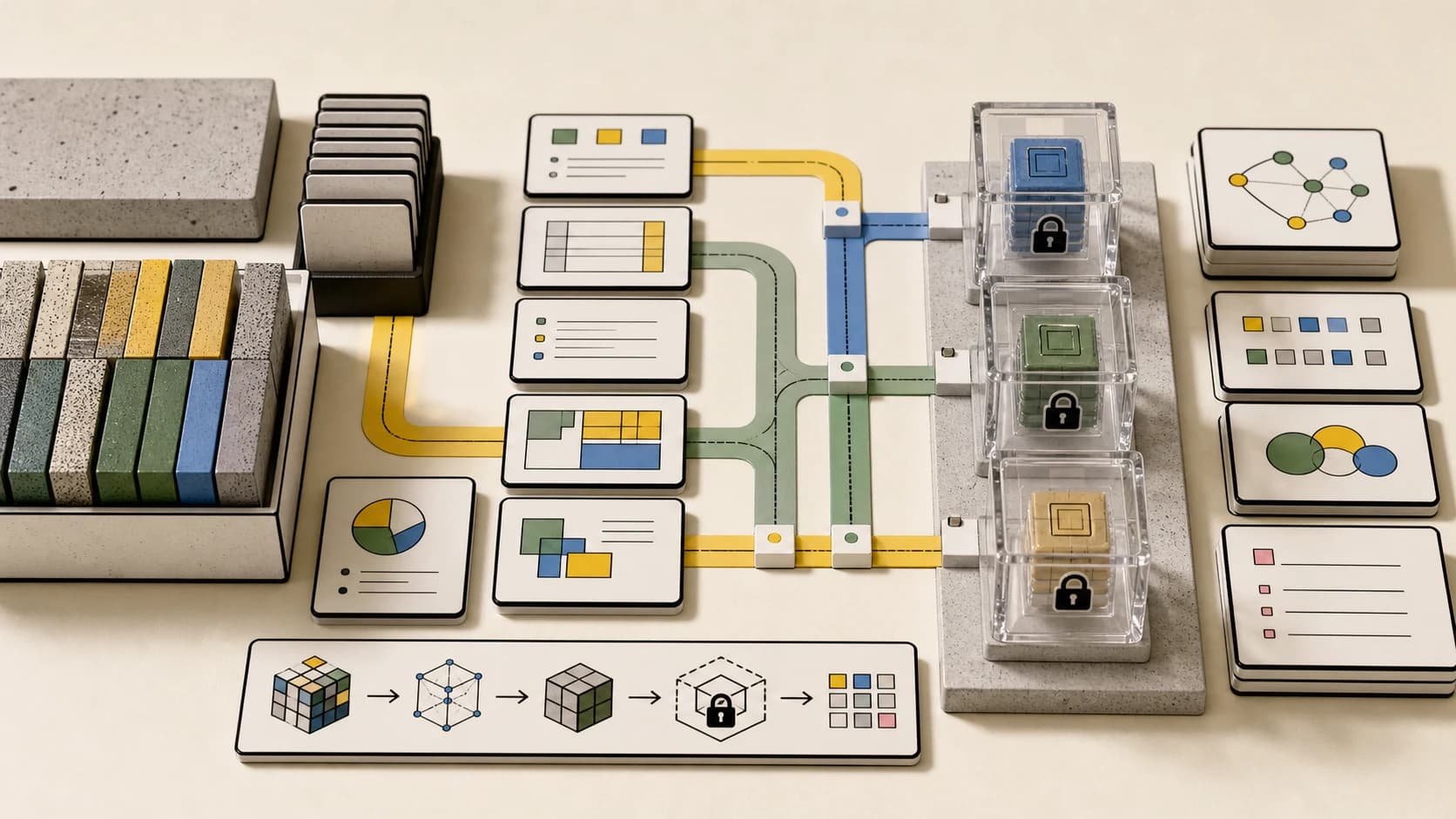
Kitesurf is a rendering engine that speaks the same protocol agents already use. It implements the Chrome DevTools Protocol (CDP) WebSocket and REST interfaces, so existing clients work unchanged: Puppeteer, Playwright, chrome-remote-interface, and the Chrome DevTools frontend. You opt in with one parameter on Browser Run endpoints: browser=kitesurf. An MCP client setup is documented using chrome-devtools-mcp pointed at Kitesurf's WebSocket endpoint, so agent harnesses that speak MCP and CDP can drive it today.
Inside, the browser is a set of Workers components:
- The Engine is the only public-facing piece. It serves CDP, stores session state, and coordinates the others.
- PageScript runs the page. Every page or out-of-process iframe spins up a long-lived isolate via Dynamic Workers, with a clean
globalThisand a DOM populated by parsing HTML and executing JavaScript. Parsing uses parts of Blitz (a modular rendering engine from DioxusLabs) and Stylo, Firefox's CSS parser, both Rust. - PageRenderer turns the computed page object into pixels, rasterizing frames with the blitz-paint module and Parley for text shaping.
- SandboxOutbound is the only component allowed to touch the network. It enforces CORS, injects browser-shaped headers, filters responses, and gives each page its own cookie jar. Everything else gets a 403.
Because Workers does not support eval, page scripts that use it run through Boa, a Rust ECMAScript engine, as a stopgap until native eval support lands. Every failure degrades to a blank frame or missing element rather than a dead session, and every component except the Engine is stateless: kill it, relaunch it, replay the request.
From the archive
GitHub Malware Advisories Now Cover Eight Package Ecosystems
Aug 6, 2026 • 6 min read
Meta Ships Muse Code and Muse Spark 1.2: A Terminal Agent With a 12x Cheaper Contributor Tier
Aug 6, 2026 • 7 min read
OpenAI Retunes GPT-5.6 Sol in ChatGPT and Makes Luna the Free Tier Default
Aug 6, 2026 • 7 min read
SkillSV: A Shapley Framework That Values the Lines Inside an Agent Skill
Aug 6, 2026 • 8 min read
The numbers that matter#
Cloudflare benchmarked Kitesurf against a warm-pool Chromium across a 14-URL corpus, medians of five Browser Run quick-action runs:
- CPU for a screenshot: 380 ms vs 1,173 ms, 3.1x less
- CPU for HTML extraction: 229 ms vs 877 ms, 3.8x less
- Memory for a screenshot: 57.8 MiB vs 271.0 MiB, 4.7x less
- Memory for HTML extraction: 39.4 MiB vs 273.7 MiB, 7.0x less
- Wall time is the one loss: 1,148 ms vs 637 ms for screenshots, about 1.8x slower, because a JIT that has already seen the page beats a cold software renderer
The trade is deliberate: memory and CPU drive the bill in agent workloads, so Cloudflare took a hit on wall time to cut the dominant cost by 3-7x. Fewer resources per session means more concurrent agent browsers per account and cheaper screenshots, HTML extraction, and PDF generation at scale.
Compatibility is early but real. TodoMVC (vanilla, React, Vue, Angular, Preact), Wikipedia, Hacker News, and the Cloudflare blog render correctly. What it cannot do yet: video, WebGL, bot-challenge handshakes that need real TLS fingerprints, and long authenticated sessions that require persistent state. Those go to the default Chromium path in Browser Run.
Why this matters for developers#
The argument behind Kitesurf is that Chromium is over-specified for agents. Agents do not need tabs, themes, extensions, or 60fps scrolling. They need low token cost, cheap context, fast startup, and isolation against pages that are untrusted input. A browser purpose-built for that trade-off changes the economics of anything that renders the web at scale: screenshot pipelines, PDF generation, content extraction, and computer-use loops.
This is the same bet Cloudflare has been making all week, from the container-as-tool argument in its agent runtime to stateless everything. Kitesurf is the strongest version of it because a browser is the hardest component to replace, and the architecture leans on primitives that did not exist until recently: Dynamic Workers, Worker-to-Worker RPC, SQLite-backed Durable Objects, and mature Wasm support. The project started as a port of obscura, an open-source Rust headless engine with no Chrome, no Node.js, and no dependencies, and an AI agent did much of the porting, with Web Platform Tests as the goalposts that kept it honest.
For developers, the practical takeaway is that agent web interaction now has a third shape next to full Chromium and the DOM-only approaches: a cheap, CDP-compatible, serverless renderer that speaks the protocol your Puppeteer or Playwright code already uses. If your agent workload is one-shot screenshots or structured reads of compatible sites, browser=kitesurf is worth a benchmark run today, because the per-session resource curve is the part of your bill you can actually move.
Cloudflare says Kitesurf will be open sourced once ready, so teams could eventually run their own instance on their own account. Until then, the playground at kitesurf.cloudflare.app lets you point it at any URL and watch DOM, console, and memory per isolate.
Continue Reading#
- @cloudflare/computer: an Agent Runtime That Treats a Container as a Tool, Not a Home
- StateAct: Program State as the Interface for Computer-Use Agents
- WebMCP: Google's Browser Standard That Lets AI Agents Use Websites as Tools
- Agent Sandbox Architecture: Isolating Untrusted AI Workloads
- Claude Computer Use: How the Model Operates a Desktop
Sources#
Read next
@cloudflare/computer: an Agent Runtime That Treats a Container as a Tool, Not a Home
Cloudflare's Agents Week opens with @cloudflare/computer, an open-source agent runtime where an SQLite-backed workspace gives every agent a shared filesystem and lets the model pick between fast isolates and full Linux containers per task. The bet: containers for under 10% of agent work.
7 min readStateAct Shows Computer-Use Agents Need Program State, Not Just Pixels
Salesforce's StateAct paper argues that long-horizon computer-use agents should inspect files, DOM, and saved outputs directly instead of treating screenshots as the whole world.
8 min readWebMCP: Google's Browser Standard That Lets AI Agents Use Websites as Tools
Chrome 149 ships an origin trial for WebMCP - a proposed web standard that lets developers expose JavaScript functions and HTML forms to AI agents. Here is what it does, how to implement it, and why it matters for the future of agentic browsing.
8 min readShare
Developers Digest
Technical content at the intersection of AI and development. Building with AI agents, Claude Code, and modern dev tools - then showing you exactly how it works.
300+ videos30K+ GitHub stars850+ articles
Related Tools
InfrastructureThis Site

Cloudflare
CDN, DNS, DDoS protection, and edge computing. Free tier handles most needs. This site uses Cloudflare for DNS and analy...
View ToolInfrastructure
B
Browser Harness
Self-healing browser automation harness that lets LLMs complete any browser task. 5,000+ stars in under a week.
View ToolAI CodingDaily Driver

Claude Code
Anthropic's agentic coding CLI. Runs in your terminal, edits files autonomously, spawns sub-agents, and maintains memory...
View ToolAI CodingAgent

OpenAI Codex
OpenAI's coding agent for terminal, cloud, IDE, GitHub, Slack, and Linear workflows. Reads repos, edits files, runs comm...
View ToolApps from Developers Digest
Related Guides
Guide
Subagents - Claude Code
Spawn isolated workers with independent context windows.
Claude CodeGuide
Claude Code Setup Guide
Configure Claude Code for maximum productivity -- CLAUDE.md, sub-agents, MCP servers, and autonomous workflows.
AI AgentsGuide
MCP Servers Explained
What MCP servers are, how they work, and how to build your own in 5 minutes.
AI AgentsRelated Posts
7 min read
News
@cloudflare/computer: an Agent Runtime That Treats a Container as a Tool, Not a Home
Cloudflare's Agents Week opens with @cloudflare/computer, an open-source agent runtime where an SQLite-backed workspace...
8 min read
AI Agents
StateAct Shows Computer-Use Agents Need Program State, Not Just Pixels
Salesforce's StateAct paper argues that long-horizon computer-use agents should inspect files, DOM, and saved outputs di...
8 min read
WebMCP
WebMCP: Google's Browser Standard That Lets AI Agents Use Websites as Tools
Chrome 149 ships an origin trial for WebMCP - a proposed web standard that lets developers expose JavaScript functions a...
8 min read
AI Agents
Agent Sandbox Architecture: How to Choose the Right Runtime Boundary
AI agents are getting their own computers. Here is how to choose a sandbox architecture: filesystem isolation, network p...
6 min read
Claude Code
Claude Computer Use: AI That Controls Your Desktop
Anthropic's computer use feature lets Claude see your screen, move the cursor, click, and type. Here is how it works, wh...

6 min read
News
Cloudflare Billable Usage API: Programmatic Cost Visibility for Agent-Run Accounts
Cloudflare launched a single endpoint that returns account usage and cost per product in a FOCUS-aligned shape. For team...
Build with the member tools

Get Smarter About AI Dev
New tutorials, open-source projects, and deep dives on coding agents - delivered weekly.
One email per weekReal code, not theoryFree forever