@cloudflare/computer: an Agent Runtime That Treats a Container as a Tool, Not a Home
TL;DR
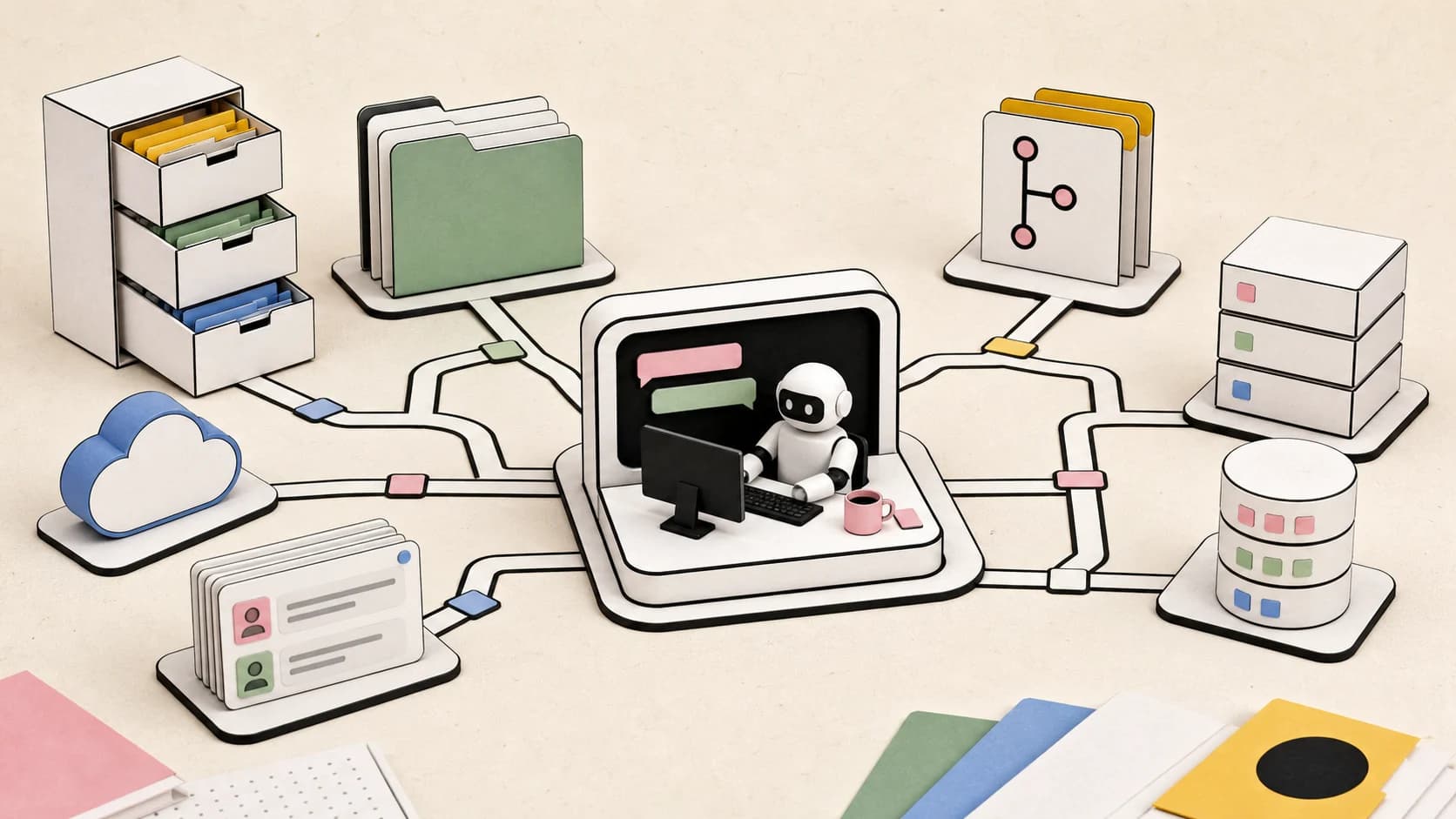
Cloudflare's Agents Week opens with @cloudflare/computer, an open-source agent runtime where an SQLite-backed workspace gives every agent a shared filesystem and lets the model pick between fast isolates and full Linux containers per task. The bet: containers for under 10% of agent work.
Cloudflare opened its Agents Week on August 3 with a different bet than its peers: instead of giving every agent a container, it gave every agent a filesystem and a choice of execution engines. The early preview of @cloudflare/computer, an open-source agent runtime, is built around one argument: the world does not have enough container compute for billions of concurrent agents, so the container should be the occasional tool, not the permanent home.
The package is installed with npm install @cloudflare/computer and runs on any Durable Object. Its centerpiece is a Workspace: a virtual filesystem backed by SQLite that can be populated from git repos, storage buckets, or plain files. All read, write, edit, and shell operations on that filesystem are gated, audited, and observed, so the agent leaves a paper trail of what it changed.
The brain/hands split, made literal#
The key architectural move is separating the agent loop from its execution environment. The harness runs in an isolate (the "brain"), and two execution backends provide the "hands":
- An isolate-based runtime that compiles shell commands to JavaScript via just-bash and runs them in a dynamic worker, with the filesystem available directly through worker bindings.
- A container backend using Cloudflare Containers, which gives a full Linux userland with npm, node, native binaries, and test runners. Files reach the container through a FUSE mount, and changes sync back to the shared workspace.
Both backends implement the same exec(string, options) interface, and both work against the same files. The agent is handed an AI SDK-compatible toolset (read, write, edit, ls, exec), where exec takes a backend argument. The tool description tells the model when to reach for the container: file manipulation, data processing, and git operations run in the cheap isolate; anything that needs a real Linux userland falls back to the container. Cloudflare says frontier models are "very good" at making that call correctly.
The positioning is explicit about the cost logic. Spinning up a container per user per agent "will not scale to hundreds of millions, then billions, of concurrent agents" - which is why the industry is scrambling for CPU compute, not just GPUs. Cloudflare's answer is the bet it has been making since Workers: isolates that spin up fast, hibernate when idle, store state, and scale horizontally. Last year it gave isolates the ability to attach container sandboxes on demand; @cloudflare/computer is the packaging of that pattern into a reusable runtime. Their stated target: a container is needed for less than 10% of an agent's work, with coding tasks, document creation, and media manipulation handled by isolates.
From the archive
Cloudflare Runs Kimi and GLM at Scale: FP8 KV Caches, INT4 Weights, and a Cache Safety Net
Aug 3, 2026 • 7 min read
Workers Can Now Accept Inbound TCP and Serve gRPC: Cloudflare Closes the HTTP-Only Gap
Aug 3, 2026 • 6 min read
Workers RPC Now Bridges Python and JavaScript: No Schemas, No Serialization Code
Aug 3, 2026 • 6 min read
Octane: Inferno's Successor Compiles React's Programming Model Ahead of Time
Aug 3, 2026 • 7 min read
What this says about the agent infrastructure race#
This is the second major "sandbox as a product" play in a week, and the philosophies are nearly opposite. Vercel's sandbox multi-agent isolation starts from containers and isolates agents inside them; @cloudflare/computer starts from isolates and treats the container as a fallback runtime. Both are answering the same question: what does an agent actually need to act on the world? Cloudflare's answer is a filesystem contract plus pluggable execution, which is a deliberately thin abstraction - the workspace API is a node:fs-compatible wrapper, so third-party JavaScript libraries can use it without adapters.
Two details are worth watching. First, the workspace is durable by default because it lives in Durable Object storage, which removes the cold-start state problem that plagues ephemeral sandboxes. Second, the whole thing is open source from day one, positioned explicitly as "an experiment to learn with our customers," which suggests Cloudflare is gathering usage data on what percentage of agent work actually needs containers before committing to primitives.
The developer takeaway#
If you build agents on Workers, this replaces a chunk of custom plumbing: instead of writing your own sandbox orchestration, you get the workspace, the toolset, and the backend selection in one package, with examples for wiring it into @cloudflare/think agents and raw model loops. If you build agents elsewhere, the idea is the portable one: a shared, audited filesystem with a graded set of execution runtimes is a cheaper default than a container per agent. Given container boot times, per-second billing, and the horizontal-scaling ceiling, the "container only when needed" pattern is likely to show up in more harnesses over the next few quarters - the compute constraint is real for anyone running agents at scale, not just Cloudflare.
Continue Reading#
- Agent Workspaces Need Filesystem Contracts - why a defined filesystem boundary is the core of agent reliability
- AI Agent Code Sandbox Comparison 2026 - how the sandbox-as-a-service players stack up
- Agent Sandbox Architecture Guide - the tradeoffs in designing an agent execution environment
- Cloudflare Agent Memory Primitive - Cloudflare's previous agent-state play, also built on Durable Objects
- Vercel Durable Execution Programming Model - the competing durable-execution approach to long-running agent work
- Workers Can Now Accept Inbound TCP and Serve gRPC: Cloudflare Closes the HTTP-Only Gap
Sources#
Read next
Agent Workspaces Need Filesystem Contracts
GitHub's latest agent workspace trend points at a boring but important primitive: agents need explicit filesystem contracts before they get more tools.
8 min readWhere Should Your AI Agent Run Code: E2B vs Daytona vs Modal vs Cloudflare vs Vercel Sandbox
A builder's guide to picking a code-execution sandbox for AI agents - E2B, Daytona, Modal, Cloudflare Sandbox, and Vercel Sandbox compared on isolation, latency, state, and pricing model.
7 min readAgent Sandbox Architecture: How to Choose the Right Runtime Boundary
AI agents are getting their own computers. Here is how to choose a sandbox architecture: filesystem isolation, network policy, secrets boundaries, snapshots, and when shell access is overkill.
8 min readShare
Developers Digest
Technical content at the intersection of AI and development. Building with AI agents, Claude Code, and modern dev tools - then showing you exactly how it works.
300+ videos30K+ GitHub stars850+ articles
Related Tools
AI CodingOpen source

DeepSeek-TUI
Open-source terminal agent runtime with approval modes, rollback snapshots, MCP servers, LSP diagnostics, and a headless...
View ToolAI FrameworksAgent UI

CopilotKit
Frontend stack for agent-native apps. React hooks, prebuilt copilot UI, AG-UI runtime, frontend tools, shared state, and...
View ToolInfrastructure
B
Browser Harness
Self-healing browser automation harness that lets LLMs complete any browser task. 5,000+ stars in under a week.
View ToolInfrastructureOpen source

E2B
Open-source cloud sandboxes for AI agents. Isolated environments that start in under 200ms, run code in Python, JavaScri...
View ToolApps from Developers Digest
Developer ToolsIn Progress
agentfs
Give your agents a filesystem that branches like git. Crash-safe by default.
View AppSaaS Products
Overnight Agents
Spec out AI agents, run them overnight, wake up to a verified GitHub repo.
View AppSaaS Products
Auto Company
Describe your company and agent teams handle operations.
View AppRelated Guides
Guide
Subagents - Claude Code
Spawn isolated workers with independent context windows.
Claude CodeGuide
Claude Code Setup Guide
Configure Claude Code for maximum productivity -- CLAUDE.md, sub-agents, MCP servers, and autonomous workflows.
AI AgentsGuide
MCP Servers Explained
What MCP servers are, how they work, and how to build your own in 5 minutes.
AI AgentsRelated Videos
TRAE: Custom AI Agents That Actually Understand Your Codebase
Check out Trae here! https://tinyurl.com/2f8rw4vm In this video, we dive into @Trae_ai a newly launched AI IDE packed with innovative features. I provide a comprehensive demonstration...
Video·

I Gave My Agents a Voice… And It’s Wildly Useful
Make Your AI Coding Agents Talk: Natural Voice Replies with the Rime CLI Check out Rime: https://rime.plug.dev/u8AOkAH The video demonstrates a simple way to make AI coding agents respond in human-s...
Video·

Buzz: Open-Source Collaboration for Humans + AI Agents
Buzz by Block: Open-Source Slack-Style Collaboration for Humans + AI Agents (Demo & Setup) Check out Arcade: https://arcade.dev.plug.dev/xiDRwlA Repo: https://github.com/block/buzz The video introd...
Video·
Related Posts
8 min read
AI Agents
Agent Workspaces Need Filesystem Contracts
GitHub's latest agent workspace trend points at a boring but important primitive: agents need explicit filesystem contra...
7 min read
AI Agents
Where Should Your AI Agent Run Code: E2B vs Daytona vs Modal vs Cloudflare vs Vercel Sandbox
A builder's guide to picking a code-execution sandbox for AI agents - E2B, Daytona, Modal, Cloudflare Sandbox, and Verce...
8 min read
AI Agents
Agent Sandbox Architecture: How to Choose the Right Runtime Boundary
AI agents are getting their own computers. Here is how to choose a sandbox architecture: filesystem isolation, network p...

9 min read
Cloudflare
Cloudflare Agent Memory: A Developer's Guide to the New Primitive
Cloudflare's Agent Memory primitive. What it stores, latency profile, how it compares to mem0, and how to wire it into y...
10 min read
Vercel
Vercel's New Durable Execution Programming Model: A Developer's Guide
Durable execution lands on Vercel. What it means for agents, long-running flows, and indie dev stacks - with code, gotch...
7 min read
News
Kitesurf: Cloudflare's Agent-First Browser Runs in V8 Isolates on Workers
Cloudflare shipped Kitesurf, an agent-first browser that runs entirely on Workers: Rust and WebAssembly rendering, per-p...
Build with the member tools

Get Smarter About AI Dev
New tutorials, open-source projects, and deep dives on coding agents - delivered weekly.
One email per weekReal code, not theoryFree forever