Agent Workspaces Need Filesystem Contracts
TL;DR
GitHub's latest agent workspace trend points at a boring but important primitive: agents need explicit filesystem contracts before they get more tools.
Official Sources#
| Source | Description |
|---|---|
| Mirage GitHub repository | Newly popular unified virtual filesystem for AI agents, with TypeScript and Python SDKs |
| Kun GitHub repository | Agent workspace project with code and writing modes embedded into applications |
| Microsoft AI Engineering Coach | Local VS Code extension that analyzes AI coding assistant usage and workspace context quality |
| Claude Code changelog | Current release notes covering background agents, settings, allowlists, hooks, worktrees, and remote control fixes |
| OpenAI Codex releases | Current Codex release cadence for the local agent runtime |
| Hacker News recent AI discussion | Recent HN story stream used to check whether the trend had a public-discussion hook |
The most interesting AI developer trend today is not another model release.
It is the filesystem.
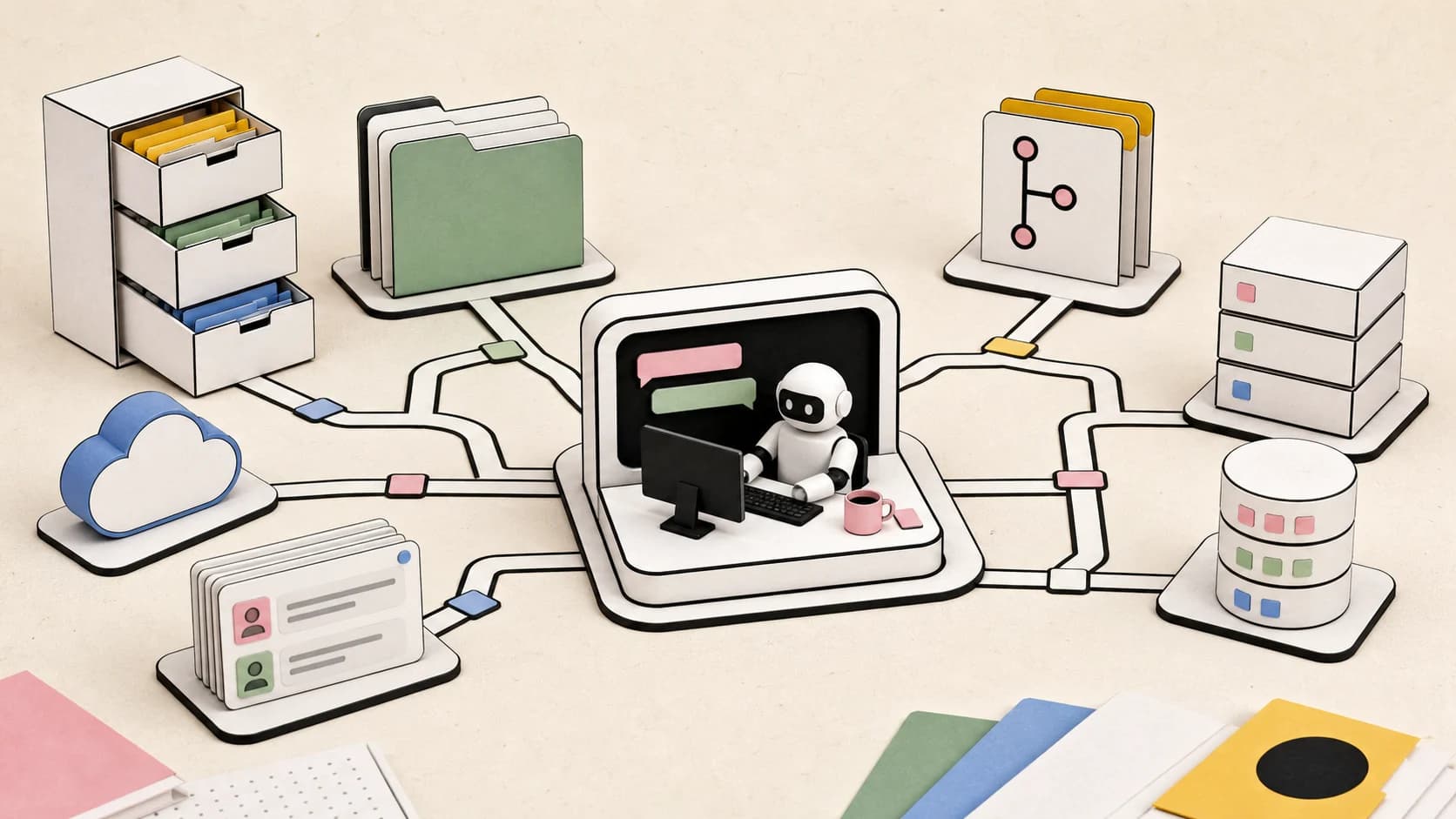
GitHub's recent agent-workspace repos are full of the same shape: Mirage mounts S3, Slack, Gmail, Redis, GitHub, databases, and local resources into one bash-addressable workspace. Kun is an AI agent workspace with code and writing modes. Microsoft's AI Engineering Coach reads local agent session logs and scores context health, skill opportunities, and workspace readiness.
At the same time, the latest Claude Code changelog is mostly about boring runtime edges: background sessions, model allowlists, hook path matching, symlinked settings, worktree branch reporting, remote control session identity, cloud session authentication, and project settings isolation.
That combination is the signal.
Agents are leaving chat and becoming workspace software. Once that happens, the real primitive is not "more tools." It is a filesystem contract.
We have already written about AgentFS, context reduction, and sandboxed agents as a control plane. Today's trend compresses those ideas into one practical rule: every serious agent runtime needs to say exactly what the workspace is, what can be mounted into it, what persists, what is visible, and what a reviewer can replay later.
Why Filesystem Shape Keeps Winning#
Models already know how to use files.
They know ls, cat, grep, find, jq, patches, logs, folders, artifacts, and reports. That is why virtual-filesystem projects are compelling. They let agents use one familiar grammar across many backends instead of learning a custom SDK for every service.
Mirage's pitch is direct: mount services and data sources side by side, then let an agent use normal shell-like operations across them. That is powerful because the agent can compose actions:
Text
/slack       discussion history
/github      issues, pull requests, files
/s3          logs and reports
/postgres    queryable business state
/data        scratch workspace
An agent that can grep across logs, copy a report into scratch space, write a script, and return a compact receipt is much closer to a useful operator than an agent trapped inside a single chat transcript.
This is also why the 98% context reduction pattern matters. The model should not read every row, every event, and every file. It should operate through a workspace, leave intermediate state outside the prompt, and bring back summaries with evidence.
The filesystem is not nostalgic Unix cosplay. It is a compression layer for agent work.
The Opposing View Is Reasonable#
The obvious skeptical take is that mounting every service as files sounds like a leaky abstraction.
Slack is not a folder. Gmail is not a folder. Postgres is not a folder. GitHub is not a folder. Permissions, pagination, schemas, rate limits, deletes, writes, locks, identities, and audit logs all behave differently.
That critique is right.
But the conclusion should not be "agents should never get a filesystem." The better conclusion is "agent filesystems need explicit contracts."
A bad agent filesystem pretends every backend is local disk. A good one exposes a small set of predictable operations, records what happened, and refuses to hide capability boundaries behind cute paths.
For example:
- reading
/github/issues/123.mdshould have a different policy than writing/github/issues/123/comment.md; - copying
/s3/prod-logs/errors.jsonlinto/data/scratch/errors.jsonlshould create a receipt; - mounting
/slack/private-channelshould be a scoped permission, not an ambient side effect; - deleting or mutating remote data should never look like deleting a temporary local file;
- every mount should carry owner, scope, credential, retention, and replay metadata.
That is the contract. Without it, a virtual filesystem becomes a prettier way to smuggle broad tool authority into a run.
From the archive
Best Claude Model Now That Fable 5 Is Disabled (Mythos vs Opus vs GPT-5.5)
Jun 13, 2026 • 6 min read
Claude Mythos and Fable 5 Banned: The Export Controls That Shut Down Two Frontier Models
Jun 13, 2026 • 6 min read
Claude Mythos vs Fable 5: What Is the Difference?
Jun 13, 2026 • 5 min read
Enterprise AI Coding Budget Blowouts: What Uber and Microsoft Teach Us
Jun 13, 2026 • 8 min read
Claude Code's Changelog Is Runtime Evidence#
The latest Claude Code release notes are useful because they are not marketing copy.
They are a list of runtime problems that appear when agents become persistent workspace software:
- model allowlists must be enforced even when aliases or environment variables try to route around them;
- hook path patterns must match correctly for read, edit, and write operations;
- symlinked settings can break sandbox startup if the runtime mishandles absolute paths;
- background agents can inherit the wrong project settings if workers are pre-warmed in another directory;
- remote control sessions need identity and disconnect semantics;
- worktree moves should update branch reporting;
- cloud sessions need robust authentication when idle.
Those are not glamorous features. They are the work of turning an agent into an operating surface.
For teams using Claude Code, Codex, Cursor, Copilot, or custom agent harnesses, this is the part to study. The product category is moving from "can it edit files?" to "can it preserve workspace identity under pressure?"
That includes local state, credentials, permission rules, worktrees, mounts, model routing, background jobs, and session recovery.
What A Filesystem Contract Should Include#
If you are building or buying agent infrastructure, ask for the contract before you ask for another connector.
At minimum, the workspace should define seven things.
1. Mount identity. Every mounted source should have a stable name, owner, provider, auth scope, and trust level. /github/public-docs and /github/private-product-roadmap cannot be treated as equivalent folders.
2. Operation grammar. Reads, writes, deletes, copies, moves, searches, executes, and exports should be separate capabilities. A path is not enough. The verb matters.
3. Persistence. Say what survives the run. Scratch files, generated scripts, downloaded artifacts, logs, and snapshots should have clear retention. This is where long-running agent harnesses either become debuggable or impossible to trust.
4. Replay. A reviewer should be able to reconstruct what the agent saw and changed. That means command logs, file diffs, source IDs, tool responses, and mount versions. It overlaps with permissions, logs, and rollback, but the filesystem layer has to participate.
5. Cross-mount flow. Copying data between mounts is the danger zone. Moving content from Slack to GitHub, from Gmail to a repo, or from a database to an external API is not just file movement. It is data transfer across trust zones.
6. Cost and rate limits. A virtual filesystem can make expensive operations look cheap. Searching an S3 bucket, walking a mailbox, or querying a production database should expose limits before an agent loops.
7. Human review packets. The runtime should emit a compact packet: goal, mounts used, files read, files written, commands run, external writes, tests passed, known risks, rollback path.
That packet is the difference between "the agent did something in the workspace" and "the agent produced work I can merge."
The Practical Take#
Do not evaluate agent workspaces by how many integrations they list.
Evaluate them by how cleanly they answer these questions:
- What is mounted?
- Who authorized it?
- What verbs are allowed?
- What data crossed boundaries?
- What persisted after the run?
- What can I replay?
- What can I revoke?
The agent workspace winners will not be the products that hide all complexity behind chat. They will be the products that make workspace state boring, explicit, scoped, and reviewable.
That is why the filesystem angle is worth paying attention to. It is not a UI preference. It is the place where context, permissions, cost, persistence, and review all meet.
The next time a tool says it gives agents access to your apps, ignore the connector grid for a minute. Ask for the filesystem contract.
FAQ#
What is an agent filesystem contract?#
An agent filesystem contract is the explicit policy for what an AI agent can see, mount, read, write, execute, persist, and replay inside a workspace. It turns paths and files into governed capabilities instead of assuming every mounted resource behaves like local disk.
Why do agents need filesystem-like workspaces?#
Files give agents a durable working memory outside the model context. They can write scripts, store intermediate results, compare diffs, create artifacts, and return compact receipts. This reduces token waste and makes long-running work easier to review.
Are virtual filesystems for agents safe?#
They can be safe when the runtime exposes mount identity, scoped credentials, operation-level permissions, logging, replay, and rollback. They are risky when remote services are mounted as if they were ordinary local folders with broad read and write authority.
How is this different from MCP?#
MCP defines how agents connect to tools and context providers. A virtual filesystem is one possible tool or runtime layer that presents many resources through file operations. The two can work together: MCP can expose the filesystem, while the filesystem contract governs mounts, verbs, persistence, and replay.
What should teams check before adopting an agent workspace?#
Check whether it supports scoped mounts, separate read and write permissions, durable logs, run snapshots, cost limits, data-transfer controls, and review packets. If a workspace cannot show what the agent saw and changed, do not give it sensitive systems.
Continue Reading#
Read next
Introducing agentfs: A Filesystem for AI Agents
agentfs is filesystem-shaped storage for AI agents. Postgres-backed on Neon, no cold starts, no exec by design. Pay-only plans start at twenty dollars.
9 min readThe 98% Context Reduction Pattern
Efficient agents do not stuff every tool result into the model context. They keep intermediate state in code, files, and execution environments, then return compact summaries and receipts.
8 min readSandboxed Agents Are Becoming the Team Control Plane
Runtime's Launch HN thread is a useful signal: teams do not just want isolated coding agents. They want a control plane for approvals, secrets, telemetry, review, and merge policy.
8 min readShare
Developers Digest
Technical content at the intersection of AI and development. Building with AI agents, Claude Code, and modern dev tools - then showing you exactly how it works.
300+ videos30K+ GitHub stars850+ articles
Related Tools
AI Coding
C
Conductor
Mac app for running parallel Claude Code, Codex, and Cursor agents in isolated workspaces. Watch every agent work at onc...
View ToolProductivityNew
A
AgentCanvas
A hosted infinite canvas your headless AI agents drive over MCP. Any MCP-speaking agent - Claude Code, Codex, Cursor, or...
View ToolAI CodingDaily Driver

Claude Code
Anthropic's agentic coding CLI. Runs in your terminal, edits files autonomously, spawns sub-agents, and maintains memory...
View ToolAI CodingAgent

OpenAI Codex
OpenAI's coding agent for terminal, cloud, IDE, GitHub, Slack, and Linear workflows. Reads repos, edits files, runs comm...
View ToolApps from Developers Digest
Developer Tools
Agent Hub
Every coding agent in one window. Stop alt-tabbing between Claude, Codex, and Cursor.
View AppDeveloper ToolsIn Progress
Skill Builder
Turn a one-liner into a working Claude Code skill. From idea to installed in a minute.
View AppDeveloper ToolsIn Progress
agentfs
Give your agents a filesystem that branches like git. Crash-safe by default.
View AppRelated Guides
Guide
Claude Code Setup Guide
Configure Claude Code for maximum productivity -- CLAUDE.md, sub-agents, MCP servers, and autonomous workflows.
AI AgentsGuide
AI Agent Frameworks Compared: LangGraph vs CrewAI vs Mastra vs CopilotKit
Deep comparison of the top AI agent frameworks - LangGraph, CrewAI, Mastra, CopilotKit, AutoGen, and Claude Code.
AI AgentsGuide
Writing Your First Claude Code Skill
A practical walk-through of how to design, write, and ship a Claude Code skill - from choosing when to trigger, through allowed-tools, to the steps the agent will actually follow.
Getting StartedRelated Videos
Zed: The Open Source Agentic IDE - Use Claude Code, Codex & Gemini CLI in one place
Check out Zed here! https://zed.dev In this video, we dive into Zed, a robust open source code editor that has recently introduced the Agent Client Protocol. This new open standard allows...
Video·

Generate Videos in Codex + Claude Code with This...
Check out HeyGen! https://heygen.1stcollab.com/developersdigest The video introduces HeyGen, an AI video generation platform with a rich API and a CLI that lets developers create, fetch, and manipula...
Video·

10x Design in Claude Code and Codex
Try Higgsfield: https://higgsfield.ai/s/higgsfield-general-campaign-developersdigest-juDMTi AI coding agents can build entire websites in minutes, but the default results often still look generic and...
Video·
Related Posts

9 min read
AI Agents
Introducing agentfs: A Filesystem for AI Agents
agentfs is filesystem-shaped storage for AI agents. Postgres-backed on Neon, no cold starts, no exec by design. Pay-only...

8 min read
Context Engineering
The 98% Context Reduction Pattern
Efficient agents do not stuff every tool result into the model context. They keep intermediate state in code, files, and...
8 min read
AI Agents
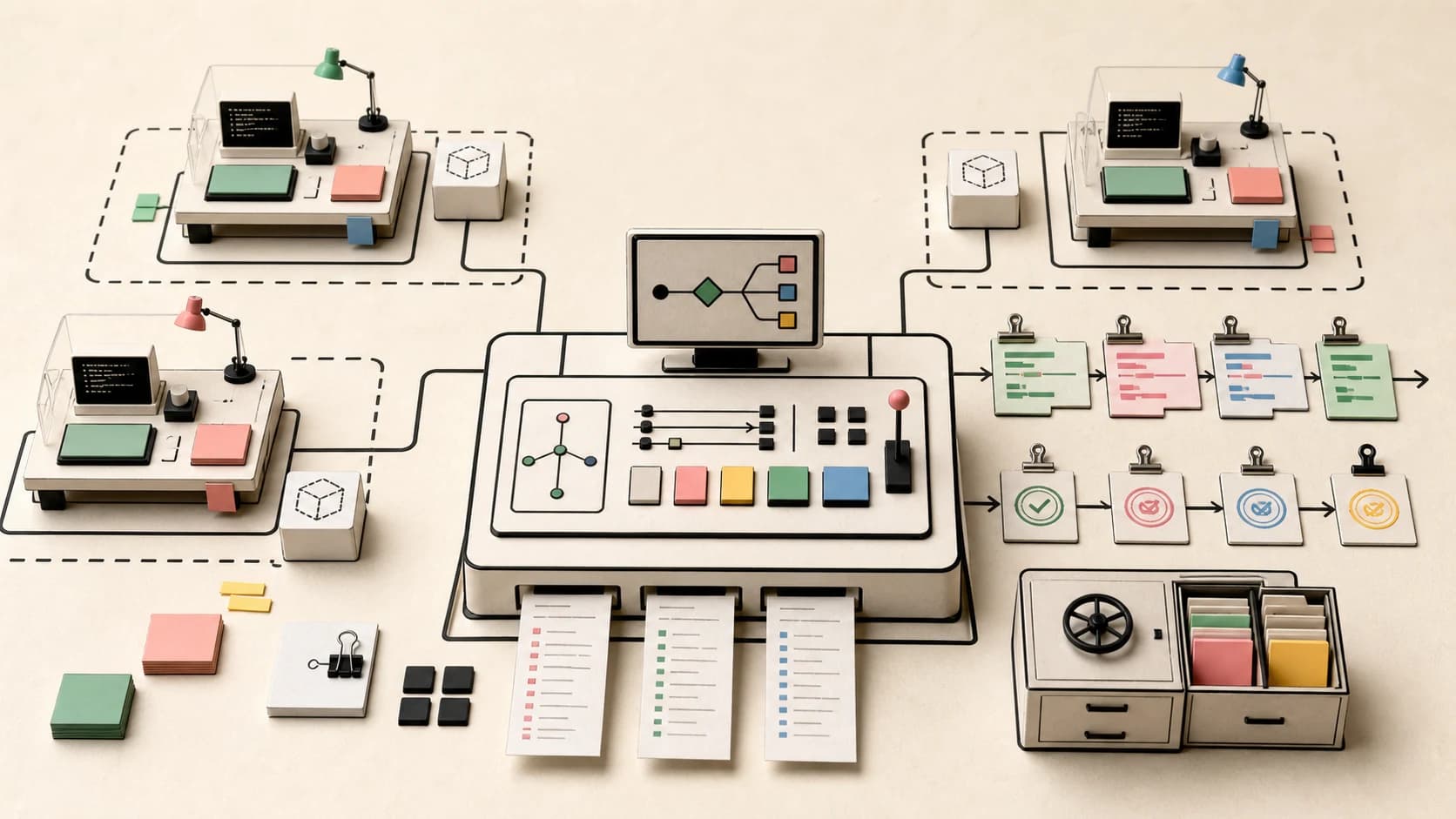
Sandboxed Agents Are Becoming the Team Control Plane
Runtime's Launch HN thread is a useful signal: teams do not just want isolated coding agents. They want a control plane...
9 min read
AI Security
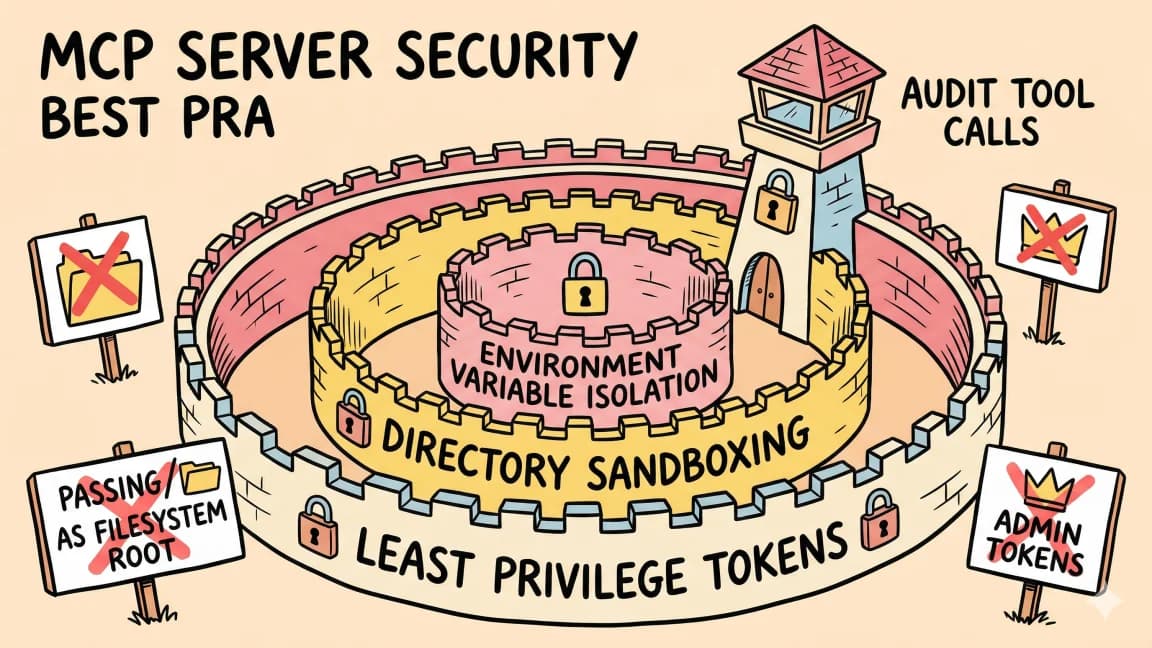
Permissions, Logs, and Rollback for AI Coding Agents
AI coding agents become safer when permissions, logs, and rollback are designed as one system. Here is the operating loo...
8 min read
OpenAI
OpenAI Codex, Managed Agents, and AWS: What Developers Should Watch
OpenAI is moving Codex from a coding assistant into an enterprise agent platform. Here is what changed with Codex, Manag...
8 min read
AI Coding
Agent Config Files Are Executable Supply Chain
A Hacker News thread on config files that run code points at the next AI coding risk: agent hooks, skills, and editor ru...
Build with the member tools

Get Smarter About AI Dev
New tutorials, open-source projects, and deep dives on coding agents - delivered weekly.
One email per weekReal code, not theoryFree forever