Claude Mythos and Fable 5 Banned: The Export Controls That Shut Down Two Frontier Models
TL;DR
Claude Fable 5 and Mythos 5 were suspended for all users by a US export control directive. What it said, why it hit everyone, and what changed for developers.
Last updated: June 13, 2026
On June 12, 2026 at 5:21pm ET, Anthropic received an export control directive that forced the company to disable Fable 5 and Mythos 5 for every customer -- not just foreign nationals, but everyone. There was no practical way to enforce nationality checks on API keys, so both frontier models went dark.
Watch the full 5-minute breakdown for the screen flow, timeline walkthrough, and the Streisand Effect angle that a static post cannot show.
Here is what the directive actually said, why Anthropic pushed back, how Mythos users were rerouted, and what the ban reveals about government authority over frontier models.
Official Sources#
| Resource | Link | Notes |
|---|---|---|
| Anthropic statement on suspension | anthropic.com/news/fable-mythos-access | June 12, 2026 official response |
| Anthropic models documentation | docs.anthropic.com/models | Current model availability |
| Claude API status | status.anthropic.com | Real-time service health |
| Fable 5 launch post | anthropic.com/news/claude-fable-5-mythos-5 | Original safeguards and red-teaming disclosure |
| GPT-5.5 cybersecurity eval | deploymentsafety.openai.com/gpt-5-5/cybersecurity | Referenced by Anthropic in its rebuttal |
Two Models, One Directive#
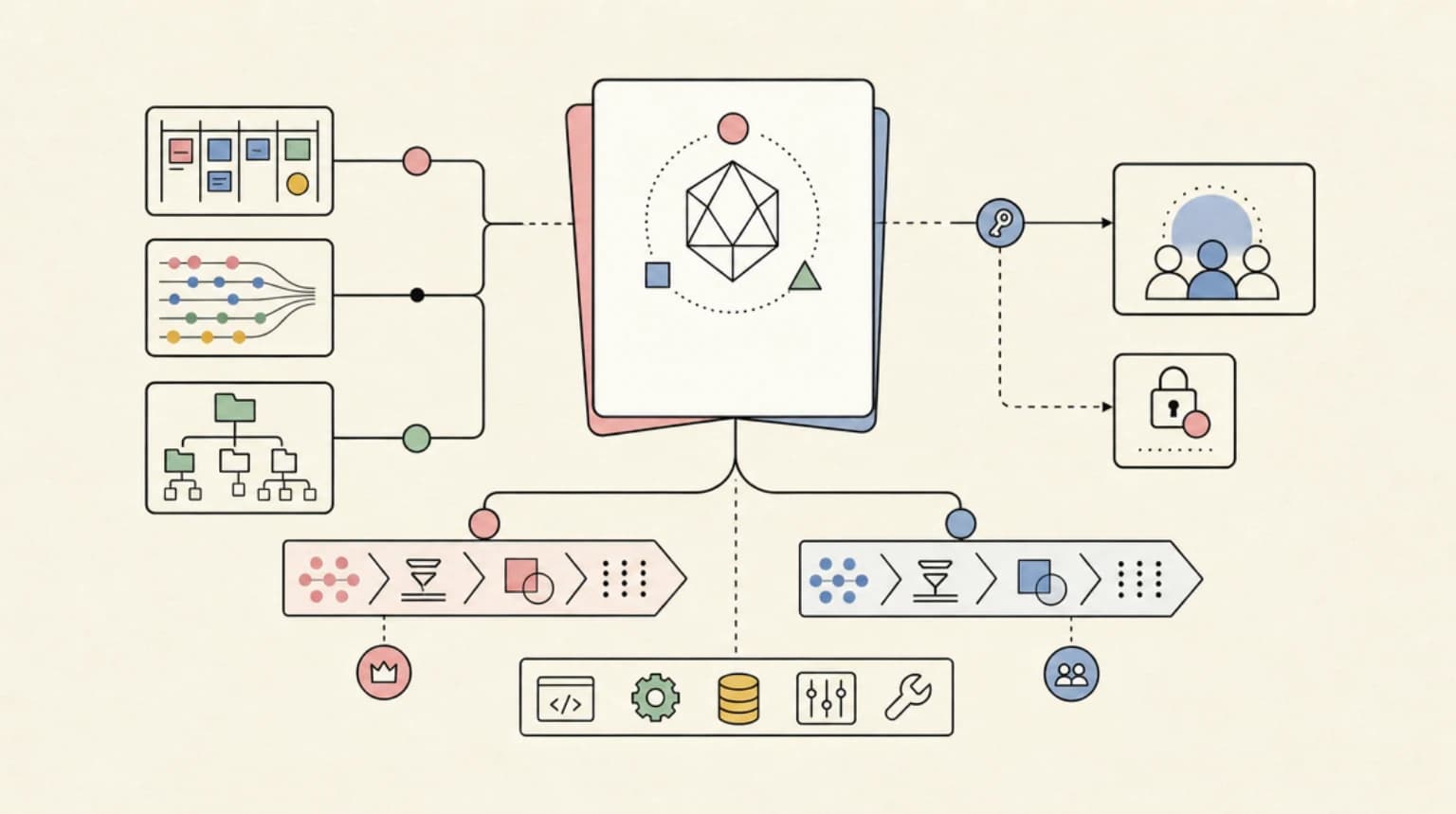
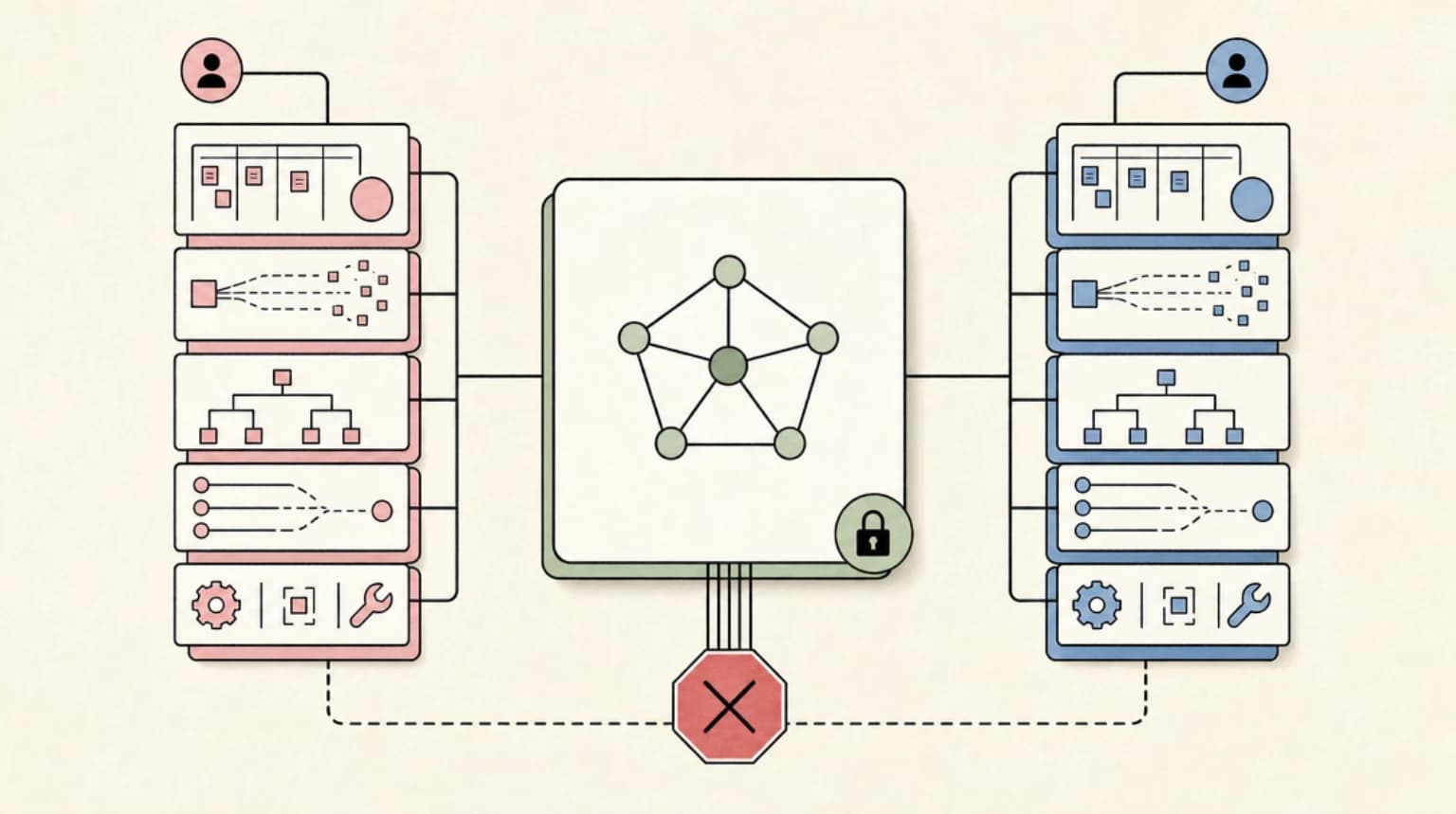
The directive targeted both Fable 5 and Mythos 5 specifically. Other Anthropic models -- Opus 4.8, Sonnet 4.6, and Haiku 4.5 -- remained available. The scope was extraordinary: no access for any foreign national anywhere, including Anthropic's own foreign national employees inside the United States.
There is no infrastructure for nationality-gating an API key. Anthropic had two choices: build a KYC system in hours (impossible) or pull the models for everyone. They chose the latter.
The immediate effect: anyone with Fable 5 or Mythos 5 in their stack had a hard cutoff with zero notice. API calls started returning errors. Mythos 5 routing was redirected to Opus 4.8. In-progress Mythos chats errored out.
The "Jailbreak" That Triggered It#
The government's justification was a jailbreak. Anthropic's description of what they saw: ask the model to read a codebase and fix software flaws. That is the product. It is what developers using Claude Code do every day.
Anthropic's formal rebuttal made four claims:
- The jailbreak was narrow, not universal. No tester has found a universal jailbreak for Fable 5.
- The vulnerabilities surfaced were previously known and minor.
- Other models -- including GPT-5.5 -- can find the same vulnerabilities without any bypass.
- No disclosed jailbreak has led to a harmful result. Every disclosed attempt produced either benign responses or minor findings with no Mythos-specific uplift.
Anthropic's statement put it bluntly: "We disagree that the finding of a narrow potential jailbreak should be cause for recalling a commercial model deployed to hundreds of millions of people."
The company's own defense-in-depth strategy -- strong safeguards, red-teaming with US and UK agencies, 30-day data retention for monitoring -- was designed around the assumption that perfect jailbreak resistance is not currently possible for any model provider. The government's action, Anthropic argued, applied a standard that "would essentially halt all new model deployments for all frontier model providers."
Why Export Controls Hit Everyone#
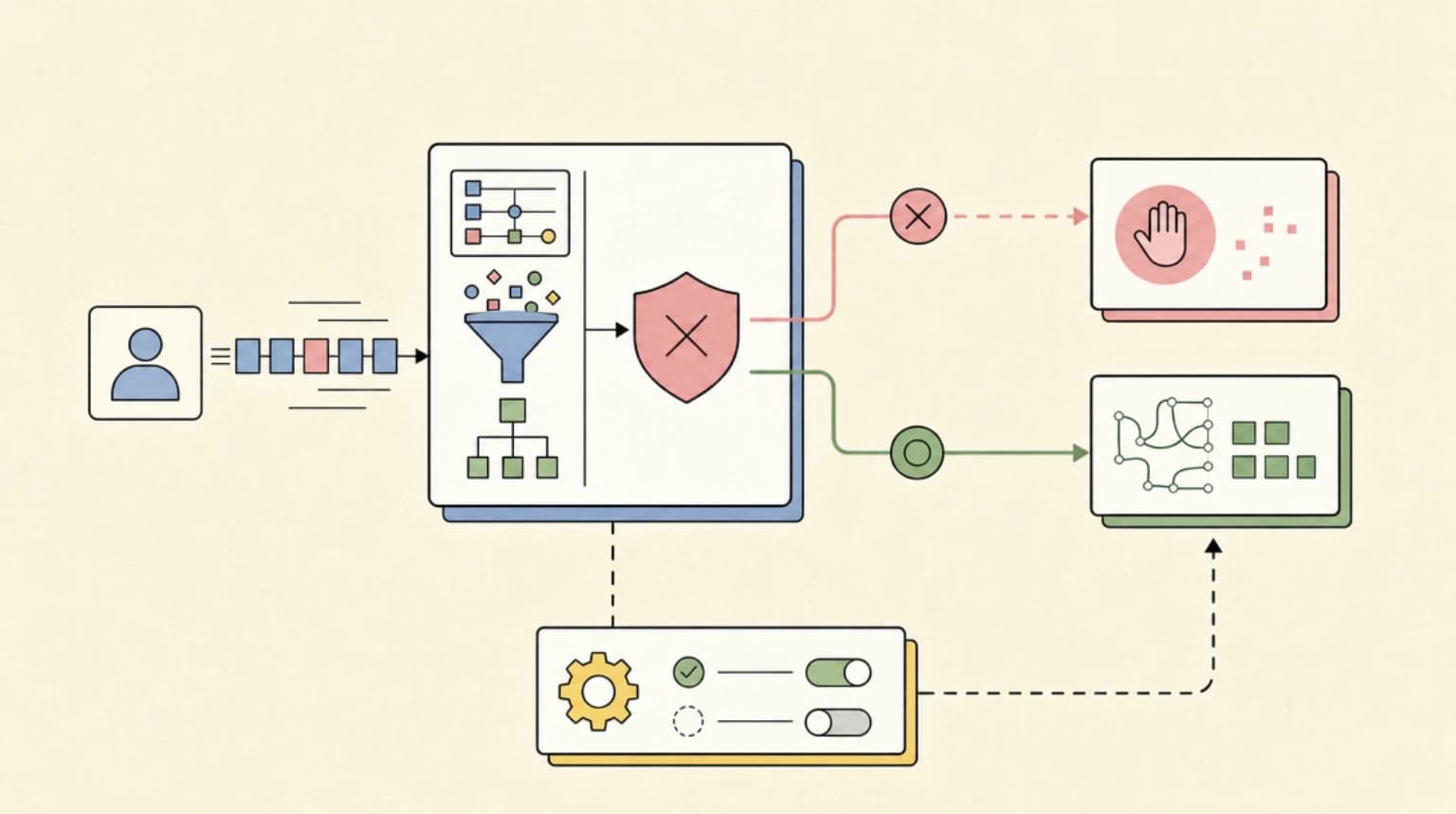
Export controls are nationality-based by design. They restrict technology transfer to foreign persons. When applied to a cloud API, the only compliant implementations are:
- Identity verification: Check nationality before serving every request. Requires government ID infrastructure that does not exist at API scale.
- IP geoblocking: Coarse, bypassable with VPNs, and still does not verify nationality.
- Shut it off for everyone: The legally safe default.
Anthropic was not given a phased compliance window. The Friday 5:21pm directive left no room for a partial rollout. The result was an all-or-nothing shutdown.
For context on why this was a seismic event in the AI policy world, see our deeper analysis: Why the US Government Pulled Fable 5: Four Theories.
Mythos 5: The Overlooked Casualty#
Most coverage focused on Fable 5 because it had the broader user base. But Mythos 5 was invitation-only with no cybersecurity safeguards -- it was the model Anthropic explicitly restricted to trusted partners precisely because it could be dangerous in the wrong hands.
When Mythos 5 was pulled, existing API traffic was routed to Opus 4.8. For users who had built workflows against Mythos 5's unrestricted behavior (no refusal classifiers, no cyber filtering), the fallback to Opus 4.8 meant those same prompts would hit safeguards that Mythos was designed to bypass. The degradation was not just a capability downgrade -- it was a fundamental mismatch between model behavior and workload assumptions.
The earlier Claude Mythos vs Fable 5 comparison covers what each model was designed for, and that distinction is what made the Mythos suspension uniquely disruptive for its small but specialized user base.
The Streisand Effect#
The directive generated more attention for Fable 5 and Mythos 5 than any marketing campaign could have. In the 24 hours after the announcement, discussion threads on Hacker News, X, and Reddit exploded. People who had not previously heard of Mythos 5 suddenly wanted to know what it was and why the government considered it dangerous enough to ban.
This is a textbook Streisand Effect: the attempt to suppress access to the models amplified interest in them. For a company like Anthropic that had positioned these models as its most capable offerings, the ban functioned as an unintentional endorsement of their power.
The video covers this angle with specific examples of the reaction across developer communities, including the jailbreak culture speculation that the ban fueled rather than suppressed.
WSJ: Amazon Researchers and Vulnerability Disclosure#
The Wall Street Journal reported that Amazon researchers were involved in prompting the model to reveal security vulnerabilities, contributing to the government's concern. The report, published June 13, added detail to the timeline: a third-party demonstration of vulnerability-finding capability, shown to government officials, triggered the export control machinery.
Anthropic's response to this finding was that the capability is already widely available. Defenders use it every day. The WSJ report highlighted the gap between how security researchers view vulnerability scanning (a defensive tool) and how national security officials may perceive it (a weaponizable capability).
Watch the Video#
The 5-minute video walks through the timeline of the ban, the routing changes for Mythos users, the Streisand Effect dynamics in the developer community, and the WSJ reporting on Amazon's involvement -- context that is easier to absorb watching the screen flow than reading a static summary.
FAQ#
Why were Fable 5 and Mythos 5 banned but not Opus 4.8?#
The directive specifically targeted the two models with the highest capability ceilings. Fable 5 and Mythos 5 represented Anthropic's frontier tier. Opus 4.8, Sonnet 4.6, and Haiku 4.5 were classified as standard models with existing safeguards that did not trigger the same export control concerns.
What happened to Mythos 5 API traffic after the ban?#
Mythos 5 requests were rerouted to Opus 4.8. This created compatibility issues because Mythos 5 had no cybersecurity safeguards, while Opus 4.8 does. Prompts designed for an unfiltered model would hit refusal classifiers on the fallback.
Was the jailbreak actually dangerous?#
Anthropic's position is that the jailbreak was narrow (not universal), found only previously known minor vulnerabilities, and that GPT-5.5 could reproduce the same results without any bypass. No disclosed jailbreak has led to a harmful outcome.
Could Anthropic have built nationality checks instead of shutting down?#
In theory, yes. In practice, with a Friday 5:21pm directive and no phased compliance window, building an identity verification system for every API request was not feasible. IP geoblocking would not satisfy the legal requirement because the directive applied to foreign nationals anywhere, including inside the US.
Are Fable 5 and Mythos 5 still unavailable?#
Check the Claude API status page and Anthropic's models documentation for current availability. As of June 13, 2026, both models remained suspended while Anthropic worked with the government to restore access.
Sources#
- Statement on the US government directive to suspend access to Fable 5 and Mythos 5 -- Anthropic, June 12, 2026
- Introducing Claude Fable 5 and Mythos 5 -- Anthropic, original launch post with safeguards disclosure
- GPT-5.5 Cybersecurity Evaluation -- OpenAI, referenced by Anthropic in rebuttal
- Claude API Status -- Real-time service availability
- Anthropic Models Documentation -- Current model catalog and availability
- Claude Mythos and Fable 5 Banned -- Developers Digest on YouTube, June 13, 2026
Continue Reading#
- The US Government Just Pulled Fable 5: What Happened -- the breaking-news timeline and immediate developer impact
- Why the US Government Pulled Fable 5: Four Theories -- the deeper analysis of what was really behind the directive
- What Is Claude Mythos 5 and Who Is It For -- the invitation-only model that was the other casualty
- Claude Fable 5 in 7 Minutes -- what Fable 5 could do before the ban
- Claude Mythos vs Fable 5 -- how the two suspended models compare and why each existed
- Open-Weight AI's Kubernetes Moment: Why the Ecosystem Will Win
Get the next deep dive like this in your inbox
One email a week on Anthropic and the rest of the AI dev stack. Free.
Read next on Claude Code
The US Government Just Pulled Fable 5: What Happened
Fable 5 was pulled by a US export control directive, disabling it and Mythos 5 for every customer. What happened, what still works, and what to do next.
5 min readWhy the US Government Pulled Fable 5: Four Theories
A narrow jailbreak that other models can match does not get a frontier model recalled. So what actually happened? The plausible explanations, ranked.
6 min readClaude Mythos 5 Explained: What It Is, Who Can Access It, and Why It's Gated
Claude Mythos 5 explained - how it differs from Fable 5, who gets unrestricted access through Project Glasswing, and what developers should do right now.
7 min readTechnical content at the intersection of AI and development. Building with AI agents, Claude Code, and modern dev tools - then showing you exactly how it works.