Open-Weight AI's Kubernetes Moment: Why the Ecosystem Will Win
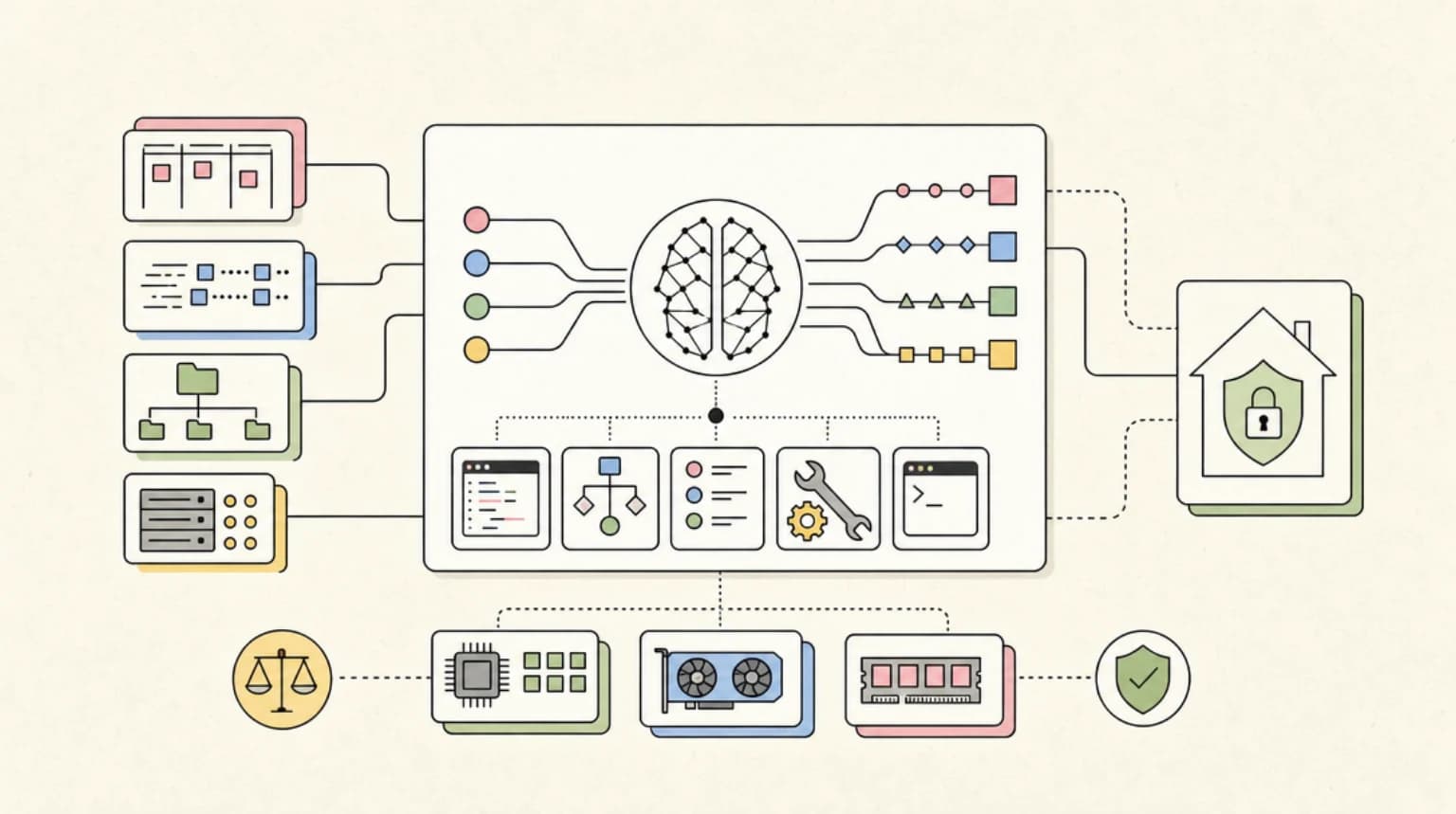
TL;DR
Tobi Knaup, co-founder of Mesosphere, argues that open-weight AI has reached the same inflection point as Kubernetes in 2014. We break down the argument, the HN reaction, and what it means for developers building on open models.
What the Article Actually Says#
Tobi Knaup, the co-founder of Mesosphere (the company behind DC/OS), published a piece arguing that open-weight AI has arrived at the same strategic inflection point as Kubernetes did around 2014. His thesis: once an open, customizable platform becomes the industry's center of gravity, no single vendor can match the combined rate of innovation around it.
Knaup knows this pattern from personal experience. Mesosphere built on Apache Mesos, which was open source but never achieved the community gravity that Kubernetes did. Once Kubernetes won, innovation shifted to its ecosystem -- networking, storage, observability, policy engines, deployment tools. A wave of startups formed around it. Cloud providers and enterprise vendors built businesses on top. The key insight is not that open source always wins; it is that a vendor-neutral substrate attracts complementary innovation far beyond what any original creator could build alone.
The article applies this lens to open-weight AI. Knaup draws a careful distinction between "open-weight" (downloadable trained parameters) and the OSI's full definition of open source AI (which requires training data and process transparency). Open-weight falls short of that definition, but it is still sufficient for an ecosystem to form around the artifact that developers can run and modify.
The first wave of open-weight value was self-hosting: companies wanting control over data, cost, and infrastructure. That demand produced a healthy serving stack -- vLLM, SGLang, llama.cpp, Ollama, MLX. But self-hosting is only the beginning. Hugging Face now hosts over two million public models. Around families like Qwen and Gemma, developers produce quantized weights, fine-tunes, LoRA adapters, model merges, and runtime adaptations.
The critical claim: the capability gap between open and closed frontier models is narrowing fast. Z.ai's GLM-5.2, released under MIT license, scores 62.1% on SWE-bench Pro versus 58.6% for GPT-5.5. Moonshot's Kimi K3 approaches closed frontier performance on long-horizon coding, with weights promised by July 27. Independent evaluation from Artificial Analysis scores it alongside Opus 4.8 and GPT-5.5.
Knaup then pivots to policy. The Trump administration is reportedly considering restrictions on Chinese open-weight models. He argues this would backfire: Chinese models already account for 41% of Hugging Face downloads (from the Qwen family alone). Cutting US developers off from that ecosystem would block them from building on the fastest-growing platform in AI, while the rest of the world keeps innovating.
His alternative: the US should compete. Release frontier-grade open-weight models (NVIDIA's Nemotron, Thinking Machines' Inkling under Apache 2.0, OpenAI's gpt-oss, Google's Gemma 4). Use government procurement to create demand for portable, interoperable systems -- the Platform One playbook from the Department of Defense. Build the rest of the stack: customized models, serving tooling, operational layers. And set independent safety standards rather than blanket bans, citing Demis Hassabis's proposal for a US-led standards body.
From the archive
Nvidia, Microsoft, Meta, and 30+ Companies Warn Against Overregulating Open-Weight AI Models
Jul 25, 2026 • 9 min read
Replit Agent 4: Design-to-Full App with Parallel Agents and Infinite Canvas
Jul 25, 2026 • 8 min read
A Security Camera Shipped a GitHub Admin Token in Its Login Page
Jul 25, 2026 • 6 min read
AI Agent Auth Platforms Compared: Arcade vs Composio vs Nango vs Stytch
Jul 24, 2026 • 8 min read
What HN Is Saying#
The Hacker News discussion (67 comments as of this writing) clusters around four debates.
The Kubernetes analogy itself got mixed reviews. Several commenters pushed back directly: "why would any software want to have Kubernetes moment? can't count how devops I know that is confused by it." The complexity of Kubernetes -- the steep learning curve, the operational overhead -- makes it an ambivalent comparison for some. Others defended it, pointing out that Kubernetes provides real portability: "we walked in, it was fine. Because it was all kubernetes and laid out like every other app." One sharp reply noted "ghost ship status is not something most orgs aspire to," acknowledging that standardization is not the same as simplicity.
The tokenomics thread was the most active. Several commenters explored why AI pricing remains so opaque. "One of the strangest things in the AI industry is tokenomics -- it's not very clear why using GPT-4 in early 2023 was so expensive and then six months later $20 could get you a fair amount of GPT-4 inference." Responses pointed to FlashAttention as a major efficiency breakthrough, supply-and-demand dynamics, and the simple answer that "nobody wanted to pay for usage at that price point." One commenter drew an analogy to free-to-play mobile game currency, noting that tokens function like in-game coins where you discover the cost only after committing.
The financial realities of open weights drew sharp takes. Several commenters argued that the open source software analogy breaks down because frontier models require billions in capital, while software requires zero. "Open models can only survive in the long run if they can eventually generate significant cash flows or if they are paid for by governments." Another noted the irony: "China essentially has a monopoly on open weight models. And so supporting open source models means either supporting long-term EC [economic] competition." A counterpoint argued for government-funded models, pointing out that Kimi K3 required only $2B in funding yet created a national security conversation -- a small price relative to defense budgets.
Developers shared real open-weight coding experiences. One developer using GLM-5.2 via Ollama Cloud at $20/month reported running 4 concurrent sessions without hitting limits, contrasting with $75/hour on Opus at work. Another using Kimi K3 with OpenCode reported $5/hour at ~10 million tokens per hour. DeepSeek V4 users reported $5-10/month for solid coding assistance. One commenter noted that "even the foundational models fail at the hard parts of my code so I use it opportunistically," suggesting the gap varies by task complexity.
See the full discussion on HN.
Our Take#
Knaup's piece is worth reading because he has been through this specific pattern before. The Kubernetes analogy is not perfect -- he acknowledges this -- but it captures a real dynamic: ecosystems compound faster than products when a platform is good enough and open enough for others to build on.
The best argument for his thesis is the numbers he cites. Chinese open-weight models account for 41% of Hugging Face downloads. GLM-5.2 matches or beats GPT-5.5 on SWE-bench Pro. The Kimi K3 evaluated independently alongside Opus 4.8 and GPT-5.5. Those are not hypothetical. They are measurable signals that the open-weight tier is crossing the capability threshold where ecosystem effects start to snowball.
The most interesting pushback in the HN thread is not about the analogy -- it is about the economics. Frontier models cost billions to train. Open source software costs nothing to copy. If the US government does not fund open-weight development (or if no profitable business model emerges for open-weight labs), the ecosystem may be sustained primarily by Chinese investment. That is a real tension, and Knaup's answer -- US government procurement and standards-setting -- is the right direction but underspecified.
For developers building on AI today, the practical takeaway is simpler. The open-weight serving stack (vLLM, SGLang, Ollama) is production-grade. The models available through it -- GLM-5.2, Kimi K3, Qwen 3.6, DeepSeek V4 -- are competitive with closed frontier models on a growing range of tasks. The cost numbers from the HN thread ($5-20/month for heavy personal use) are real. The main constraint is not capability but convenience: the closed-model APIs still offer better tooling, lower latency, and zero operational overhead.
That gap will close if the open-weight ecosystem compounds the way Knaup predicts. Model serving providers (Together, Fireworks, Groq, Cloudflare) are already competing on inference speed and price for open models. The agent harnesses (OpenCode, Codex hooks for custom providers) support open-weight backends. Each layer of the stack that becomes competitive reduces the switching cost away from vendor-locked APIs.
The open-weight ecosystem is not going to replace Claude, GPT, or Gemini overnight. What it can do -- and this is Knaup's real argument -- is provide the competitive floor that keeps all pricing honest, the portability that prevents lock-in, and the substrate for specialized fine-tunes that no general API will offer. That is the Kubernetes pattern, and it is worth paying attention to.
Continue Reading#
- Inkling: Thinking Machines' Open-Weight Frontier Model Released -- another US open-weight contender
- GLM-5.2 vs DeepSeek V4 vs Qwen 3: Open-Weight Coding Showdown -- head-to-head on coding benchmarks
- Self-Hosting Open-Weight Models: Break-Even Math for 2026 -- when self-hosting makes financial sense
- Notes on DeepSeek and Open-Weight Economics -- the cost dynamics of running open models
- Kimi K3 Developer Guide: What the 2.8T Open Model Changes -- deep dive on the most-discussed open-weight model
- OpenJDK Bans AI-Generated Code: What the New Policy Means for Java Contributors
Sources#
- Tobi Knaup, "Open-weight AI is having its Kubernetes moment. Let's not ruin it." https://tobi.knaup.me/2026-07-25-open-weight-ai-is-having-its-kubernetes-moment/ (fetched July 25, 2026)
- Hacker News discussion. https://news.ycombinator.com/item?id=49048034 (fetched July 25, 2026)
- Z.ai, "GLM-5.2." https://z.ai/blog/glm-5.2 (referenced in article)
- Moonshot AI, "Kimi K3." https://www.kimi.com/blog/kimi-k3 (referenced in article)
- Hugging Face, "State of Open Source AI." https://huggingface.co/blog/huggingface/state-of-os-hf-spring-2026 (referenced in article)
- Artificial Analysis, "Kimi K3 Intelligence Index." https://artificialanalysis.ai/articles/kimi-k3-achieves-3-in-the-artificial-analysis-intelligence-index-comparable-to-opus-4-8-and-gpt-5-5 (referenced in article)
Read next
Anthropic CEO Dario Amodei on open-weights models: the position, the pushback, and what it means for developers
Dario Amodei published Anthropic's stance on open-weights models this week - no total ban, but support for chip export controls, distillation crackdowns, and mandatory safety testing. HN responded with 800+ comments calling it regulatory capture. Here is what the CEO said, what the thread argued, and why the debate matters for every developer deploying AI.
8 min readBetter Auth Joins Vercel: What It Means for the Auth Ecosystem
Vercel acquires the open-source authentication framework that became the go-to Next.js auth solution. HN weighs in on open source sustainability and vendor lock-in concerns.
5 min readThe Underground Relay Market for AI API Tokens: How Resellers Get 97% Off
An inside look at the gray-market relay economy that resells OpenAI, Anthropic, and Google API access at up to 97.8% off -- and what it means for developers building on AI APIs.
9 min readShare
Developers Digest
Technical content at the intersection of AI and development. Building with AI agents, Claude Code, and modern dev tools - then showing you exactly how it works.
300+ videos30K+ GitHub stars850+ articles
Related Guides
Related Posts
9 min read
News
Debian Debates LLM Usage: Four Proposals, One Fork in the Road
Debian is voting on four proposals to regulate LLM-generated contributions - from an outright ban to full acceptance. Th...
8 min read
News
OpenJDK Bans AI-Generated Code: What the New Policy Means for Java Contributors
OpenJDK's interim policy bans AI-generated contributions in full or in part, while Oracle runs on AI-written code intern...

6 min read
News
Coding Agents Almost Never Read Open Source Contribution Rules: RepoComplianceBench Study
A new 106-issue benchmark across 49 repositories finds frontier coding agents rarely retrieve AI contribution rules on t...
9 min read
News
Superlogical: Mitchell Hashimoto's New Company Building a Multiplexer for All Work
Mitchell Hashimoto (Vagrant, Terraform, Ghostty) launched Superlogical - a new company building a terminal multiplexer t...
8 min read
News
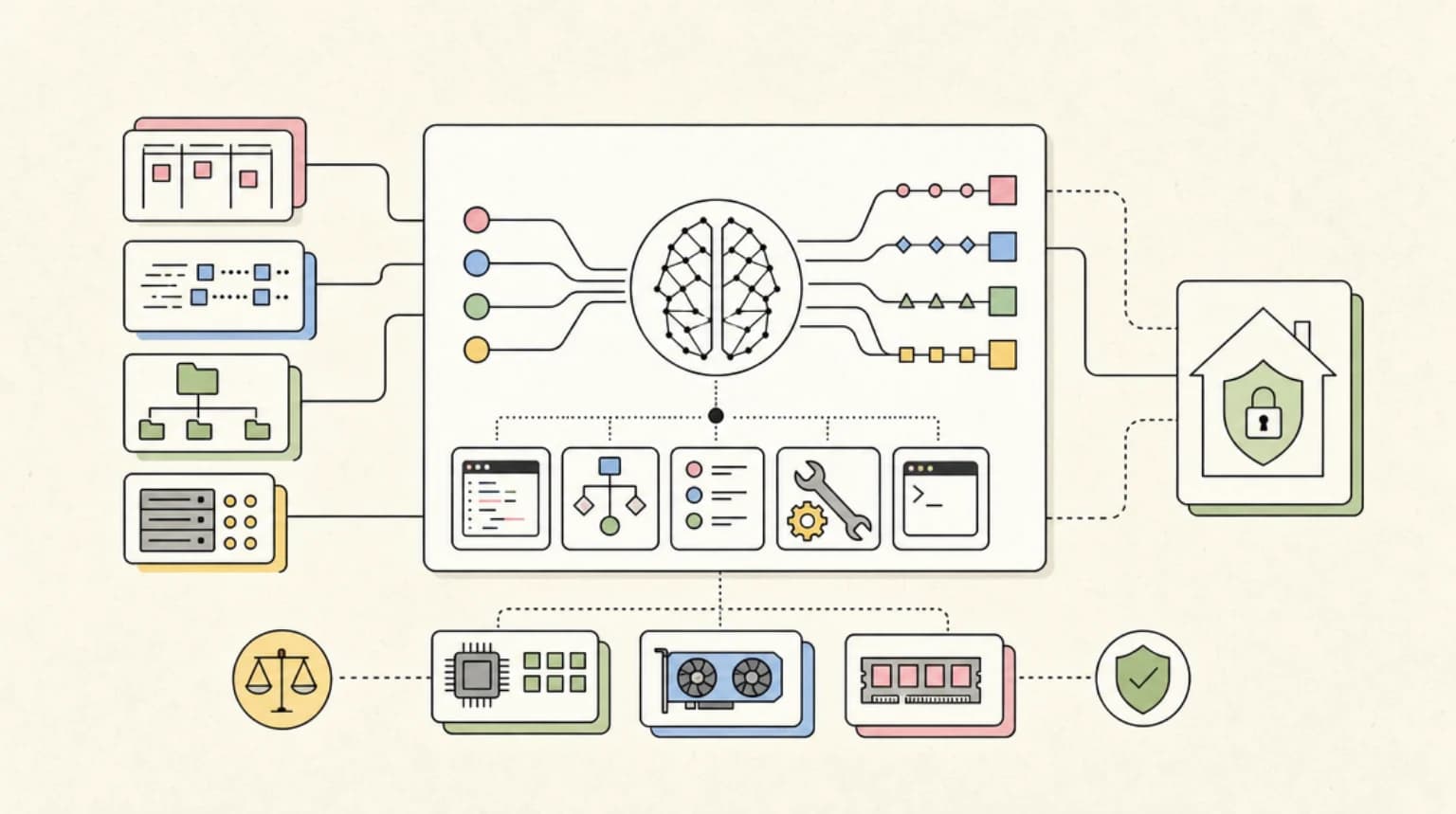
TurboFieldfare: Running Gemma 4 26B in 2 GB of RAM on Any M-Series Mac
TurboFieldfare is a custom Swift and Metal inference engine that runs Google's 26B-parameter Gemma 4 MoE model in roughl...
8 min read
Anthropic
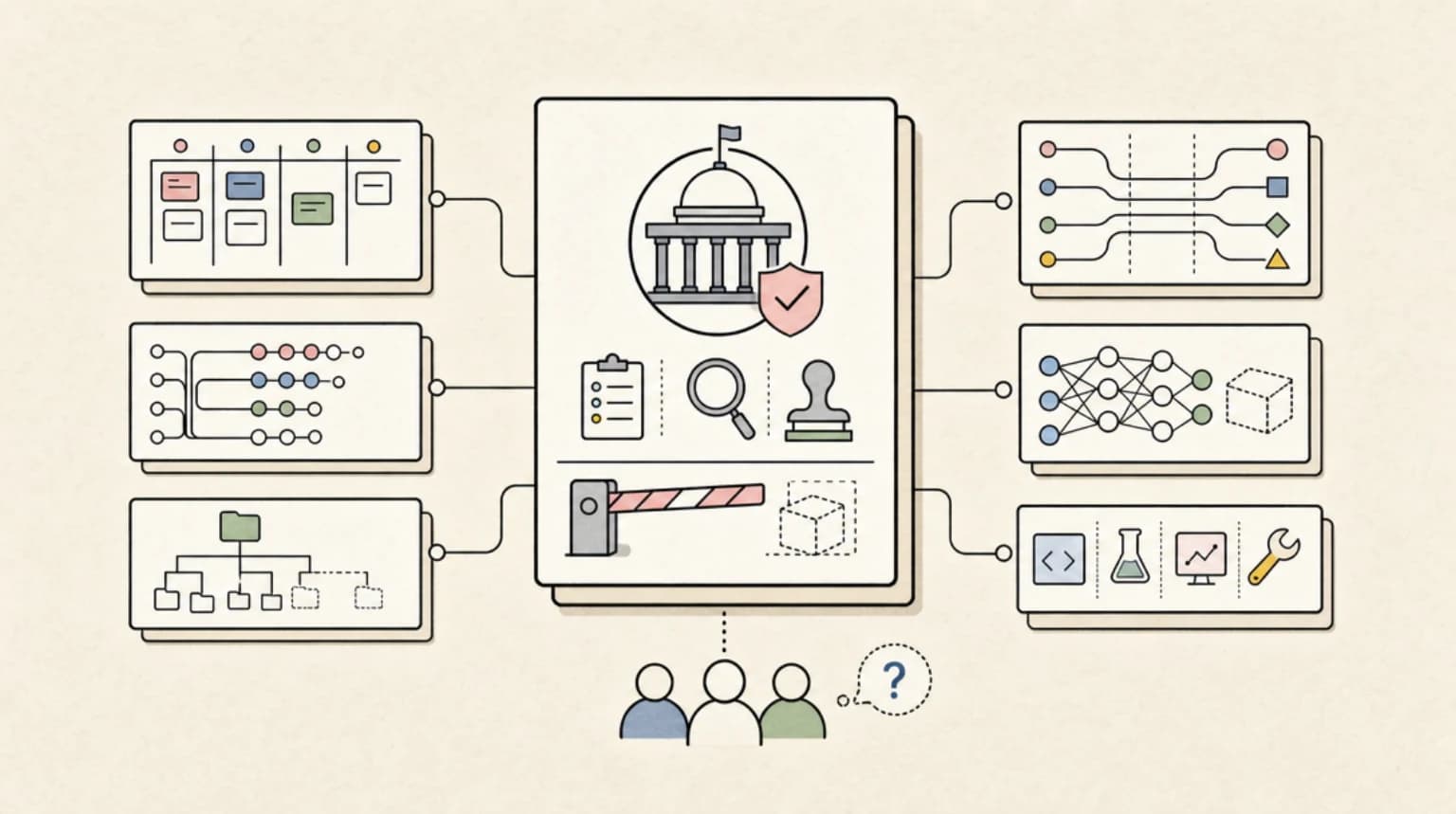
Anthropic CEO Dario Amodei on open-weights models: the position, the pushback, and what it means for developers
Dario Amodei published Anthropic's stance on open-weights models this week - no total ban, but support for chip export c...
Build with the member tools

Get Smarter About AI Dev
New tutorials, open-source projects, and deep dives on coding agents - delivered weekly.
One email per weekReal code, not theoryFree forever