Anthropic CEO Dario Amodei on open-weights models: the position, the pushback, and what it means for developers
TL;DR
Dario Amodei on open-weights models: export controls, distillation crackdowns and mandatory safety testing, the HN pushback, and what it means for developers.
Last updated: October 20, 2026
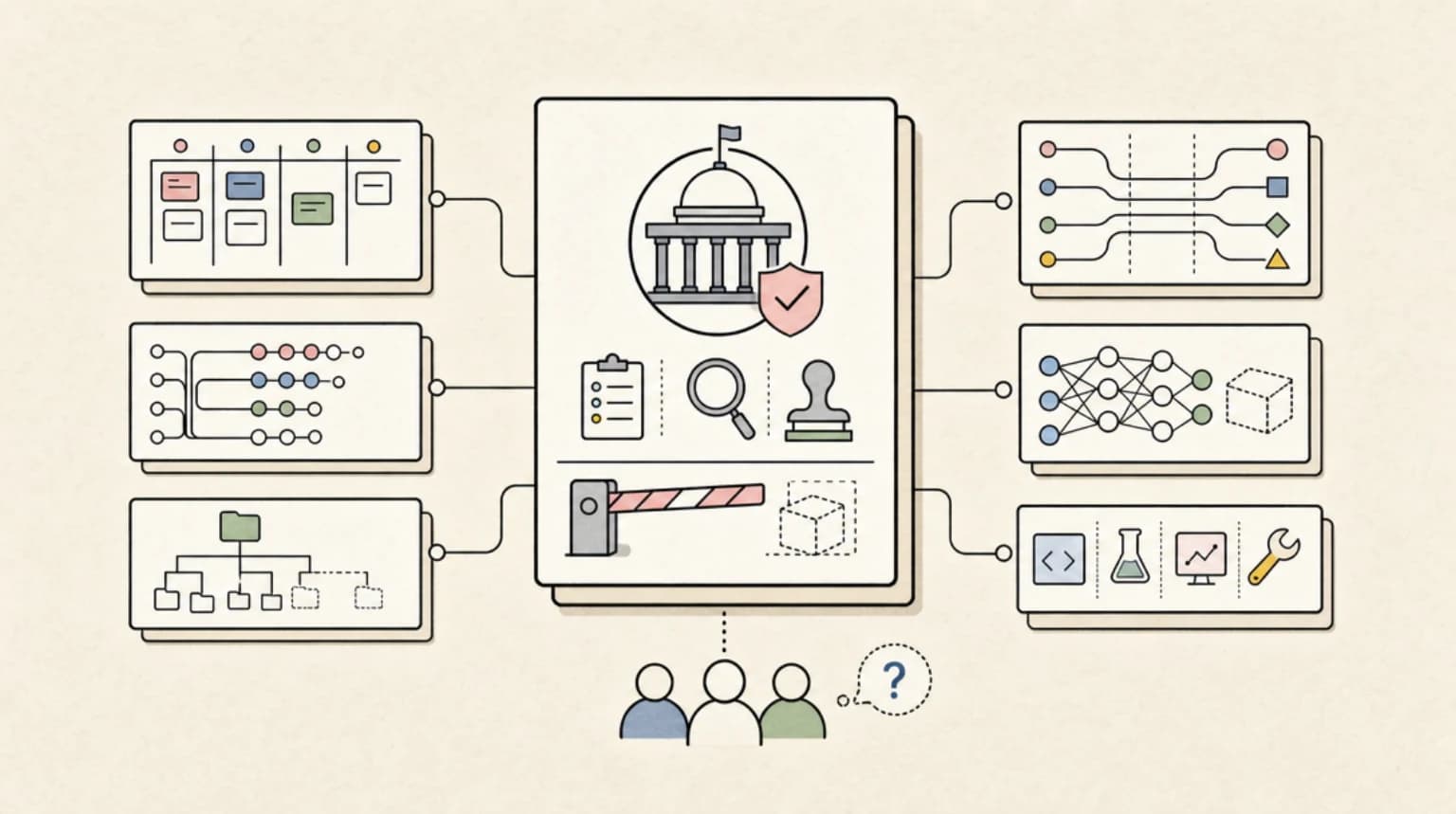
Dario Amodei, CEO of Anthropic, published a post titled "Our position on open-weights models" on July 27 responding to what he describes as "a lot of discussion about open-weights models, especially those from China." The piece is framed as a clarification: Anthropic has never advocated for a ban on open-weights models. But the three measures he endorses - chip export controls, anti-distillation enforcement, and mandatory safety testing - have been read by the Hacker News community as the same thing through a different door.
The timing is not accidental. Reports indicate US officials are considering restricting Chinese open-weights models, and a coalition of tech companies signed an open letter supporting open-weights access. Amodei's post is his intervention in that debate.
What the Anthropic piece says#
The core claim is simple: "Anthropic has never advocated for a ban on open-weights models." Amodei distinguishes two nightmare scenarios: an authoritarian state building more powerful AI than the US for military superiority, and capable models being misused for cyber or biological attacks regardless of origin.
For the first scenario, he argues chip export controls are the right tool, not model bans. "China has limited domestic production capacity, and therefore, due to the scaling laws, cannot build more powerful models than the US without US chips."
For the second, he argues for mandatory pre-release safety testing for all sufficiently capable models - open and closed alike. He references the recent OpenAI/HuggingFace incident and cites a UK AI Safety Institute report on the irreversibility of open-weight release.
Between the two, he endorses cracking down on "industrial-scale distillation operations," which he claims let China partially evade chip bans by distilling frontier models rather than training from scratch.
What HN is saying#
The Hacker News thread hit 580 points and 818 comments within hours, and the tone is overwhelmingly skeptical. The commentariat's central charge: this is regulatory capture dressed in safety language.
The "ban by another name" argument. The most-upvoted critical thread argues that mandatory safety testing would functionally ban open-weights models. As one top comment put it: "Who runs this test? What happens if this test is too costly or the administrator refuses to allow certain people to participate? This is exactly how the US has banned goods in the past, by requiring a stamp and then refusing to issue it."
The hypocrisy charge. Multiple commenters pointed out what they see as a contradiction: Amodei opposes banning open-weights models but supports banning chip sales. "If you truly believe that bans don't work, the same applies to hardware too," wrote GodelNumbering in a heavily upvoted thread. Others noted the convenience: all three measures Amodei supports happen to benefit Anthropic commercially.
The China framing debate. Several comments questioned whether the China threat is being overstated for political purposes. "Schrodinger's China at once is an evil entity looking to use AI for their own nefarious purposes yet also willing to cooperate with their main competitor," wrote vhantz. Others pushed back, arguing the national security concern is real and citing the DOJ's own reports on chip smuggling.
The HuggingFace incident as context. Multiple threads connected Amodei's post to last week's OpenAI/HuggingFace security incident, with some commenters suggesting it serves as convenient justification for tighter control. "Makes sense why OpenAI's little 'hacking' stunt was published last week," wrote fishfasell. The counter-argument: the incident demonstrated that open-weight models (GLM-5.2 was used to defend) can shift the advantage toward defenders.
The open-source historical analogy. Several comments compared this moment to earlier debates about Metasploit and encryption tooling. "We played this game with Metasploit back in the day: many who had no clue claimed exploit tools should be regulated... systems improved because of security FOSS tooling. The same thing will happen with LLMs."
Dev-to-dev take: what this means for how you build#
This debate is not academic for developers shipping AI products today. Here is what the outcome affects directly:
Deployment flexibility. If mandatory safety testing becomes law, the cost and timeline of releasing an open-weights model could shift dramatically. The testing regime matters less for API-served models (where Anthropic and OpenAI already control the deployment layer) and far more for anyone self-hosting or fine-tuning open weights. The self-hosting break-even math changes if compliance costs enter the equation.
Distillation as a practice. Distillation - using a larger model's outputs to train a smaller, cheaper one - is now a geopolitical flashpoint. If the US cracks down on "industrial-scale distillation," the definition matters enormously. Most real-world distillation is smaller teams fine-tuning models for specific tasks, not state-backed operations. The two could get swept up together.
The model landscape. Open-weights models from Chinese labs - Kimi, DeepSeek, GLM, Qwen - have become critical parts of the developer toolchain. They account for 45% of OpenRouter tokens as of early 2026. A restriction on their use by US companies would force real migration costs. The GPT-OSS release from OpenAI is a hedge in this direction, but it does not match the breadth of what is available from the open-weights ecosystem today.
The safety testing question. The most practical question for developers: who runs the tests? Amodei argues for a global regime that would include China, citing his earlier essay. But as the HN thread points out, a testing regime controlled by incumbents could function as a barrier to entry regardless of intent. The UK AISI's recent evaluation of Kimi K3 - which found it safe - is the kind of transparency the community needs more of.
What developers should watch. Three things: (a) whether the open letter's signatories push back or accept Amodei's framing, (b) what the actual language of any safety testing legislation says about who conducts evaluations and at what cost, and (c) whether Chinese labs respond by tightening their own release practices, which would make the ecosystem worse for everyone.
The open-weights debate is where AI policy hits real engineering constraints. The outcome will determine not just which models you can use, but how much it costs to deploy them, where you can run them, and how much control you have over the stack.
FAQ#
Does Anthropic want to ban open-weights models?#
No, according to Amodei's post: "Anthropic has never advocated for a ban on open-weights models." Instead he endorses three measures - chip export controls, a crackdown on industrial-scale distillation, and mandatory pre-release safety testing for all sufficiently capable models, open and closed alike.
Why did Hacker News call Anthropic's position regulatory capture?#
The most-upvoted critical thread argued that mandatory safety testing would work as a ban in practice, because whoever runs the test can make it too costly or refuse to approve releases. Commenters also noted that supporting chip bans while opposing model bans looks inconsistent, and that all three measures happen to benefit Anthropic commercially.
How would mandatory safety testing affect developers?#
It would matter less for API-served models, where providers already control deployment, and far more for anyone self-hosting or fine-tuning open weights. Compliance costs could change the self-hosting break-even math, and a broad crackdown on distillation could sweep up small teams fine-tuning models for specific tasks alongside state-backed operations.
What should developers watch next in the open-weights debate?#
Three things: whether the open letter's signatories push back on Amodei's framing, what any safety testing legislation says about who conducts evaluations and at what cost, and whether Chinese labs tighten their own release practices.
Sources#
- Anthropic: Our position on open-weights models - verified July 28, 2026
- HN Thread: 49076057 - 580 points, 818 comments, accessed July 28, 2026
- Axios: US officials consider banning Chinese open-weights models - July 20, 2026
- Open letter: Open Weights and American AI Leadership - via NVIDIA
- Dario Amodei: The Adolescence of Technology - six months prior
- UK AI Safety Institute: How far behind the frontier are leading open-weight models on cyber
- UK AISI / CAISI: Kimi K3 cyber evaluation
- Time: OpenAI Hugging Face attack
- Anthropic: Detecting and preventing distillation attacks
Continue Reading#
- Anthropic's GLM-5.3 Cyber Report: The Numbers, the Backlash, and What Developers Should Take From It - the September follow-up where Anthropic's red team measured an open-weight competitor's cyber capability
- DeepSeek Banned From US Federal Civilian Agencies: What the DHS Order Covers - the US side: DHS removal order and what it means for builders
- What FAA-style AI regulation looks like, from the person who proposed it - Our earlier breakdown of Dario Amodei's regulatory vision
- The open-weights model self-hosting break-even math - When self-hosting actually saves money vs the API
- Mozilla's 2026 State of Open Source AI report - Data on the open-weights vs closed model quality gap
- GPT-OSS: OpenAI's open-weight release under Apache 2.0 - What it means for the competitive landscape
- The US government pulled Fable 5 - When the government directly intervenes in model availability
- China AI Export Controls: What They Mean for Open-Weight Models - China's draft export controls on model weights and what they exempt
- The Exponential and the Working Developer: Sitting With Amodei's Hardest Questions
Get the next deep dive like this in your inbox
One email a week on Anthropic and the rest of the AI dev stack. Free.
Read next on local and open-weight models
Anthropic's GLM-5.3 Cyber Report: The Numbers, the Backlash, and What Developers Should Take From It
Anthropic's GLM-5.3 cyber report: exploit numbers against Claude Mythos Preview, how its safeguards were stripped, the backlash, and the read for developers.
6 min readAnthropic Cuts Fable 5 Biology Fallbacks by 85%: What the Safeguard Tuning Means for Developers
Anthropic retuned Claude Fable 5 biology safeguards, cutting biology fallbacks about 85%. What changed and what still routes to Opus 5.
5 min readOpen-Weight AI's Kubernetes Moment: Why the Ecosystem Will Win
Open-weight AI is having its Kubernetes moment, argues Mesosphere co-founder Tobi Knaup. His case, the HN pushback, and what it means for developers.
8 min readNew here? Start with
Technical content at the intersection of AI and development. Building with AI agents, Claude Code, and modern dev tools - then showing you exactly how it works.