GPT-OSS: OpenAI's First Open Source Model
TL;DR
GPT-OSS is OpenAI's pair of open-weight 20B and 120B reasoning models under Apache 2.0. Hardware needs, benchmarks, hosting costs and how to run them locally.
Last updated: June 6, 2026
Official Sources#
| Resource | Link |
|---|---|
| GPT-OSS on Hugging Face | huggingface.co/openai/gpt-oss |
| OpenAI Platform Docs | platform.openai.com/docs |
| Ollama GPT-OSS | ollama.com/library/gpt-oss |
| Fireworks AI | fireworks.ai |
| Groq Cloud | groq.com |
| OpenRouter | openrouter.ai |
First Open-Weight Models Since GPT-2#
OpenAI has released its first open-weight models in over five years. GPT-OSS 12B and GPT-OSS 20B are now available under the Apache 2.0 license, marking a significant shift in strategy for the company. These are reasoning models built on a Mixture of Experts (MoE) architecture, designed to run efficiently on consumer hardware while delivering competitive performance against frontier closed models.
For model-selection context, compare this with OpenAI Codex: Cloud AI Coding With GPT-5.3 and OpenAI vs Anthropic in 2026 - Models, Tools, and Developer Experience; the useful question is not only benchmark quality, but where the model fits in a real developer workflow.
Model Specifications#
Two variants are available:
GPT-OSS 20B - The efficient option. Activates 3.6 billion parameters per token and runs on a laptop with 16GB of RAM. Suitable for offline, private deployments where data cannot leave the local environment.
GPT-OSS 120B - The larger variant. Activates 5.1 billion parameters per token despite its name, deployable on a single 80GB GPU such as an NVIDIA A100. This model targets production applications requiring higher capability.
Both models support a 128,000 token context window and were trained primarily on English text with emphasis on STEM, coding, and general knowledge. OpenAI is also releasing the O200K tokenizer used for GPT-4 and GPT-4o mini, now open-sourced as part of this announcement.
Chain-of-Thought with Tool Integration#
The standout feature is the integration of tool use within the reasoning process. During the post-training phase, OpenAI trained these models to invoke tools like web search and code execution before finalizing responses. This happens inside the chain-of-thought trace.
This architecture eliminates the need for external agent orchestration. The model can search, evaluate results, and decide to search again if the first query fails, all within its internal reasoning loop. For developers building agentic applications, this reduces complexity significantly. No separate agent framework is required to handle tool selection, reflection, and iterative refinement.
Performance Benchmarks#
The 120B model outperforms o3-mini across standard benchmarks, even without tool access. Against the full o3 model, it remains competitive.
| Benchmark | GPT-OSS 120B | GPT-OSS 20B |
|---|---|---|
| MMLU | 90.0% | 85.3% |
| GPQA Diamond | 80.1% | 71.5% |
| Humanity's Last Exam | Strong | Strong for size |
| Competition Math | Near o3/o4-mini | Competitive |
On artificial analysis aggregations, these models sit respectably against Gemini 2.5, Grok 2, and other frontier systems. The critical caveat: these are not code-generation specialists. They will not build full web applications from prompts like Claude Opus or similar top-tier coding models. They excel at reasoning, analysis, and tool-augmented tasks rather than end-to-end application generation.
Deployment Costs and Options#
Because these are Apache 2.0 licensed, hosting competition is already aggressive:
GPT-OSS 120B:
- Fireworks: $0.10 per million input tokens / $0.50 output
- Groq: $0.15 per million input tokens / $0.75 output
GPT-OSS 20B:
- Fireworks: $0.05 per million input tokens / $0.20 output
- Groq: $0.10 per million input tokens / $0.50 output
Groq delivers over 1,000 tokens per second on the 20B model and approximately 500 tokens per second on the 120B variant. OpenRouter provides unified billing across providers with transparent latency and throughput metrics if you prefer a single integration point.
Running Locally and Getting Started#
For local execution, HuggingFace hosts the model weights. Ollama provides the simplest setup path:
ollama run gpt-oss # Defaults to 20B model
For the 120B model, you need hardware like an A100 or an M3 Max with substantial RAM.
Cloud deployment options include Groq for low-latency inference, Fireworks for cost optimization, and OpenRouter for multi-provider access. Each platform exposes the standard OpenAI-compatible API, making migration straightforward.
The Bottom Line#
GPT-OSS fills a specific niche: capable reasoning with tool integration at low cost and manageable hardware requirements. These models are not replacements for top-tier closed models on creative or complex coding tasks. They are practical choices for applications requiring reasoning, moderate coding assistance, and agentic tool use without the infrastructure overhead of massive parameter counts or closed API dependencies.
FAQ#
What is GPT-OSS and why is it significant?#
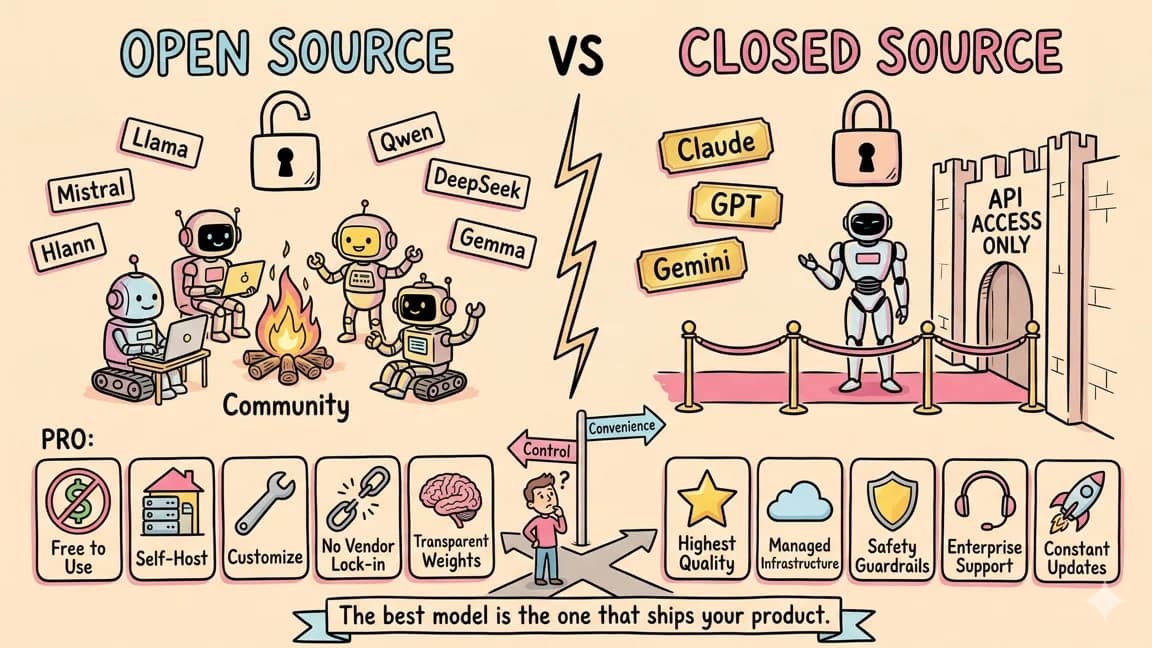
GPT-OSS is OpenAI's first open-weight model release since GPT-2, available under the Apache 2.0 license. It comes in two variants: GPT-OSS 20B (runs on 16GB RAM laptops) and GPT-OSS 120B (requires an 80GB GPU like A100). The significance is both strategic and practical - OpenAI entering the open-weights space creates competition with Llama, Qwen, and other open models while giving developers deployment flexibility without API dependencies.
How does GPT-OSS compare to other open-source models like Llama 4 or Qwen 3?#
GPT-OSS 120B achieves 90% on MMLU and 80.1% on GPQA Diamond, placing it competitively against Llama 4 and Qwen 3. The key differentiator is built-in tool use during reasoning - the model can search, execute code, and iterate within its chain-of-thought without external orchestration. For pure coding tasks, specialized models like Qwen 3.6 Coder may outperform, but GPT-OSS excels at reasoning-heavy, tool-augmented workflows.
What hardware do I need to run GPT-OSS locally?#
GPT-OSS 20B runs on consumer hardware with 16GB RAM - a MacBook Pro or gaming laptop with sufficient memory works. GPT-OSS 120B requires an 80GB GPU (NVIDIA A100) or an M3 Max MacBook with expanded RAM. For the 20B model, Ollama provides the simplest setup: ollama run gpt-oss.
How much does it cost to run GPT-OSS in production?#
Cloud hosting is aggressive on pricing. GPT-OSS 120B costs $0.10/$0.50 per million tokens (input/output) on Fireworks and $0.15/$0.75 on Groq. GPT-OSS 20B is cheaper at $0.05/$0.20 on Fireworks. For comparison, this is significantly less than closed frontier models - the tradeoff is capability ceiling on complex coding tasks.
What is the tool use feature and how does it work?#
GPT-OSS integrates tool invocation inside the chain-of-thought reasoning process. During training, OpenAI taught the model to call web search and code execution tools before finalizing responses. The model decides when to search, evaluates results, and can retry if needed - all within its internal reasoning trace. This eliminates the need for external agent frameworks like LangChain or AutoGen for simple agentic workflows.
What are the limitations of GPT-OSS?#
GPT-OSS is not a coding specialist. It will not build full web applications from prompts like Claude Opus or GPT-4o. It excels at reasoning, analysis, and tool-augmented research tasks rather than end-to-end code generation. The context window is 128K tokens, and training emphasized English STEM content - non-English performance and creative writing may lag.
Which hosting provider should I use for GPT-OSS?#
Groq delivers the fastest inference (1,000+ tokens/second on 20B, ~500 on 120B) but costs slightly more. Fireworks offers the best price-performance ratio. OpenRouter provides unified billing across providers with transparent latency metrics if you want to avoid vendor lock-in. All expose OpenAI-compatible APIs.
Can I fine-tune GPT-OSS for my use case?#
Yes, the Apache 2.0 license permits fine-tuning, modification, and commercial use without restrictions. The O200K tokenizer is also open-sourced. For fine-tuning infrastructure, Hugging Face provides the weights and standard PyTorch training pipelines apply. Fireworks and other providers also offer managed fine-tuning services.
Watch the Video#
Get the next deep dive like this in your inbox
One email a week on OpenAI and the rest of the AI dev stack. Free.
Read next
GPT-5: OpenAI's Most Capable Model
GPT-5 routes each query by complexity instead of making developers pick a reasoning mode. Its benchmarks, front-end coding gains and four API models explained.
7 min readDeepSeek R1 and V3: The Developer's Guide to Open-Source AI
DeepSeek R1 and V3 developer guide: use the MIT-licensed models through the API, run them locally with Ollama and decide when they beat closed-source models.
9 min readLlama 4: The Complete Developer's Guide to Meta's Open Source Models
Llama 4 developer guide to Scout and Maverick, the open mixture-of-experts models from Meta: run them locally, call them via APIs and know when to pick them.
10 min readNew here? Start with
Technical content at the intersection of AI and development. Building with AI agents, Claude Code, and modern dev tools - then showing you exactly how it works.