Open Lovable: Re-Imagine Websites in Seconds
Prefer video? Watch the full tutorial with code walkthroughs.
Watch VideoTL;DR
Rebuilding or redesigning an existing website typically means starting from scratch. You audit the content, wireframe new layouts, and spend hours translating ideas into code.
The Problem with Website Rebuilds#
Rebuilding or redesigning an existing website typically means starting from scratch. You audit the content, wireframe new layouts, and spend hours translating ideas into code. Open Lovable eliminates that friction.
For the design side of the same problem, read AI Design Slop: 15 Patterns That Out Your App as Vibe-Coded with Create Beautiful UI with Claude Code: The Style Guide Method; they show how agent-generated interfaces fail and how to give coding agents better visual constraints.
This open-source platform takes any live website, extracts its content, and regenerates it as a modern application in seconds. Input a URL, pick a style, and choose your model. The platform handles the rest.
How It Works#
The architecture centers on two key integrations. First, Firecrawl scrapes the target website and extracts clean, structured content. In parallel, E2B spins up a secure sandbox environment with a full file system. No EC2 configuration. No scaling headaches.
The system streams generated code directly into the sandbox. Currently, it outputs Vite-based React applications, generating the full file tree in real time. The result is a complete, runnable codebase - not a static mockup.
The demo shows the Firecrawl site reimagined in a neo-brutalist style. Within seconds, the platform produces a functional application with proper component structure, styling, and routing.
Model Flexibility#
One architecture decision stands out: model-agnostic prompts. You can generate the initial build with Kimi K2, then switch to GPT-5 or Claude for specialized edits. Want to add a Three.js visualization? Use a model with stronger code reasoning. Need a complex charting library? Switch to whatever performs best for that specific task.
This matters because different models excel at different problems. Locking into a single provider forces compromises. Open Lovable treats models as interchangeable tools rather than platform requirements.
The system maintains continuity across model switches. The styling, component hierarchy, and content structure persist even when you hand off to a different provider.
Targeted Editing#
Initial generation is only half the story. The platform supports precise, context-aware edits. In the demo, the user requests a yellow hero background. The system identifies the correct component among the generated files and modifies only what is necessary.
This targeted approach extends to package installation. Request a pie chart in the hero section, and the platform adds the appropriate charting dependency, creates a new component file, and integrates it into the existing layout. The visual continuity remains intact.
The generated code is not locked in. You can export the full project, install dependencies locally, and continue development in Cursor, Windsurf, or any IDE you prefer. The platform serves as a rapid starter, not a walled garden.
Setup and Configuration#
Getting started requires minimal configuration:
- Clone the repository
- Install dependencies
- Add API keys for E2B and Firecrawl
- Configure your preferred LLM providers (OpenAI, Anthropic, Groq, etc.)
- Run
npm run dev
The author notes a preference for Kimi K2 via Groq for initial generations, though GPT-5 and Claude are fully supported. If a new model releases - Gemini 3 or whatever comes next - you can add it to the configuration without waiting for an official update.
Architecture Decisions That Matter#
Several technical choices deserve attention:
E2B for sandboxing: Running untrusted code generation in a secure, ephemeral environment eliminates infrastructure concerns. File system access, dependency installation, and code execution happen in isolation.
Firecrawl for extraction: Structured content extraction from arbitrary URLs is harder than it looks. Firecrawl handles the edge cases - JavaScript-rendered pages, messy HTML, pagination - so the generation layer receives clean inputs.
Streaming generation: Files appear in real time as the model writes them. This is not a batch process where you wait minutes for a zip file. You watch the application take shape component by component.
Why This Matters#
The Lovable team built something significant with their original platform. Open Lovable explores how those same concepts - AI-assisted application generation, natural language editing, model flexibility - work in an open, self-hosted context.
For developers, this means full control over the stack. You own the generated code, choose the models, and decide where the infrastructure runs. For teams, it means rapid prototyping without vendor lock-in.
The repo is live now. If you are building with AI-generated code, it is worth examining how the platform handles prompt construction, file system operations, and model context management.
Official Sources#
| Resource | Link |
|---|---|
| E2B Documentation | e2b.dev/docs |
| E2B GitHub | github.com/e2b-dev |
| Firecrawl Documentation | docs.firecrawl.dev |
| Firecrawl GitHub | github.com/firecrawl/firecrawl |
| Lovable (Original Platform) | lovable.dev |
FAQ#
What is Open Lovable and how does it differ from Lovable?#
Open Lovable is an open-source platform that takes any live website URL and regenerates it as a modern application using AI. While Lovable (the original platform) is a commercial product for building apps from scratch, Open Lovable focuses specifically on website redesign and cloning. You input a URL, select a visual style (like neo-brutalist), choose your preferred AI model, and the platform extracts the content and generates a complete, runnable Vite-based React application in seconds.
What technologies power Open Lovable?#
Open Lovable integrates two key services: Firecrawl handles website scraping and structured content extraction from arbitrary URLs, including JavaScript-rendered pages and complex HTML. E2B provides secure sandbox environments with full file system access, eliminating infrastructure concerns. Code generation streams directly into the E2B sandbox, producing a complete file tree in real time rather than a batch download.
Which AI models does Open Lovable support?#
Open Lovable is model-agnostic. It supports OpenAI models (GPT-5), Anthropic (Claude), Groq-hosted models (Kimi K2), Gemini, and others. You can switch models mid-project - for example, use Kimi K2 for initial generation, then switch to Claude for specialized edits or GPT-5 for complex code reasoning tasks. The platform maintains styling and component hierarchy continuity across model switches.
Can I export and continue developing the generated code?#
Yes. The generated code is fully exportable. You can download the complete project, install dependencies locally, and continue development in Cursor, Windsurf, VS Code, or any IDE. Open Lovable serves as a rapid starting point rather than a walled garden - there is no vendor lock-in.
How does the targeted editing feature work?#
Beyond initial generation, Open Lovable supports precise, context-aware edits. You describe what you want changed in natural language (like "make the hero background yellow"), and the system identifies the correct component among the generated files and modifies only what is necessary. It can also handle package installation - request a pie chart, and it adds the charting dependency, creates a new component, and integrates it into the existing layout.
What output format does Open Lovable generate?#
Currently, Open Lovable outputs Vite-based React applications with proper component structure, styling, and routing. The platform generates the full file tree in real time through streaming - you watch the application take shape component by component rather than waiting for a batch process to complete.
What API keys do I need to run Open Lovable?#
To self-host Open Lovable, you need API keys for E2B (for sandbox environments), Firecrawl (for web scraping), and at least one LLM provider (OpenAI, Anthropic, Groq, etc.). Clone the repository, install dependencies, add your API keys to the configuration, and run npm run dev.
How does Open Lovable compare to other vibe coding tools like Bolt or v0?#
Open Lovable specializes in redesigning existing websites rather than building from scratch. While Bolt and v0 focus on generating new applications from prompts or designs, Open Lovable takes a URL input, extracts real content, and regenerates it in a new style. The open-source nature means you can self-host, customize the prompts, and choose your own models - unlike hosted platforms with fixed model choices.
From the archive
Watch the Video#
Read next
Zoer: Full-Stack App in 5 Minutes with Vibe Coding
Zoer is a text-to-app platform that generates database schema, backend, and deployment from a prompt. How it compares to Lovable and Bolt as a vibe-coding alternative, and who it is actually best for versus a full framework like Next.js.
6 min readVibe Coding in 2026: Build Fast Without Losing the Plot
Vibe coding works when you pair natural-language building with repo context, tests, diff review, security checks, and rollback. Here is the practical workflow for Claude Code, Cursor, Codex, v0, Lovable, and Bolt.
10 min readHow to Build Full-Stack TypeScript Apps With AI in 2026
A practical guide to building Next.js apps using Claude Code, Cursor, and the modern TypeScript AI stack.
7 min readShare
Developers Digest
Technical content at the intersection of AI and development. Building with AI agents, Claude Code, and modern dev tools - then showing you exactly how it works.
300+ videos30K+ GitHub stars850+ articles
Related Tools
AI Coding

Cline
Open-source autonomous coding agent inside VS Code. Creates files, runs commands, and can use a browser for UI testing a...
View ToolAI CodingAgent

OpenAI Codex
OpenAI's coding agent for terminal, cloud, IDE, GitHub, Slack, and Linear workflows. Reads repos, edits files, runs comm...
View ToolAI CodingFree

Gemini CLI
Google's open-source coding CLI. Free tier with Gemini 2.5 Pro. Supports tool use, file editing, shell commands. 1M toke...
View ToolAI CodingOpen source

DeepSeek-TUI
Open-source terminal agent runtime with approval modes, rollback snapshots, MCP servers, LSP diagnostics, and a headless...
View ToolApps from Developers Digest
Developer ToolsIn Progress
Maintainer Dashboard
Track open-source maintenance signals, release tasks, and repo follow-ups in one dashboard.
View AppDeveloper ToolsIn Progress
Migrate
Beat the August 2026 Assistants API sunset. Paste old code, get Responses API.
View AppDeveloper ToolsPlus $20/mo
TraceTrail Plus
Share agent traces with a link. Keep history long enough to find the bug.
View AppRelated Guides
Guide
Getting Started with DevDigest CLI
Install the dd CLI and scaffold your first AI-powered app in under a minute.
Getting StartedGuide
Claude Code Setup Guide
Configure Claude Code for maximum productivity -- CLAUDE.md, sub-agents, MCP servers, and autonomous workflows.
AI AgentsGuide
MCP Servers Explained
What MCP servers are, how they work, and how to build your own in 5 minutes.
AI AgentsRelated Videos
Introducing Open Lovable - Re-Imagine Websites in Seconds
Star the Repo! https://github.com/mendableai/open-lovable In this video, I unveil Open Lovable, an open-source platform that allows you to transform and edit websites using various models...
Video·
Introducing FireGeo: The Open Source AI Brand Visibility SaaS Starter Kit
In this video, I am excited to introduce FireGeo, an AI-powered brand visibility platform designed to kickstart your SaaS application. FireGeo leverages advanced tools such as Firecrawl for...
Video·
OpenAI Open Sources Codex: The CLI Coding Agent
Exploring Codex: AI Coding in Terminal In this video, I explore Codex, a new lightweight CLI tool for AI coding that runs in the terminal. This tool, possibly a response to Anthropic's CLI,...
Video·
Related Posts
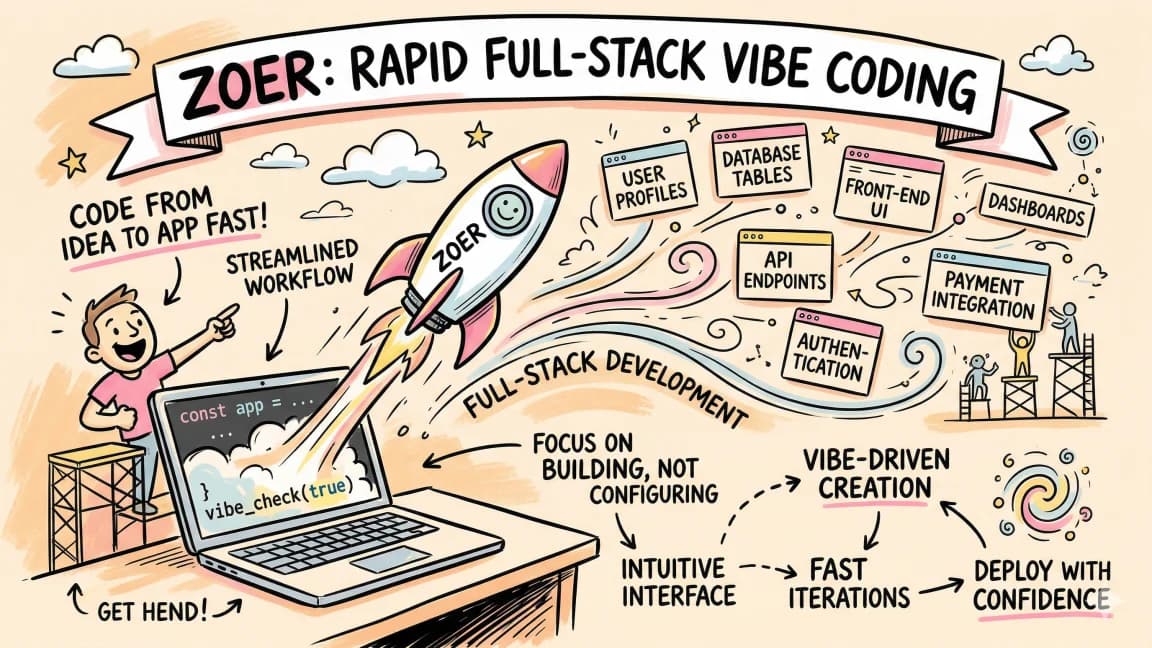
6 min read
Zoer
Zoer: Full-Stack App in 5 Minutes with Vibe Coding
Zoer is a text-to-app platform that generates database schema, backend, and deployment from a prompt. How it compares to...
10 min read
Vibe Coding
Vibe Coding in 2026: Build Fast Without Losing the Plot
Vibe coding works when you pair natural-language building with repo context, tests, diff review, security checks, and ro...

7 min read
AI Coding
How to Build Full-Stack TypeScript Apps With AI in 2026
A practical guide to building Next.js apps using Claude Code, Cursor, and the modern TypeScript AI stack.
8 min read
Claude Code
Create Beautiful UI with Claude Code: The Style Guide Method
AI-generated interfaces tend to look the same - gradient-heavy, emoji-laden, and generic. The style guide method gives y...

8 min read
Qwen
Qwen3.6-27B Is the Local Coding Model to Test First
Qwen3.6-27B keeps pulling developers back because it sits in the awkward, useful middle: strong enough for real local co...

6 min read
OpenAI
GPT-OSS: OpenAI's First Open Source Model
OpenAI has released its first open-weight models in over five years. GPT-OSS 12B and GPT-OSS 20B are now available under...
Build with the member tools

Get Smarter About AI Dev
New tutorials, open-source projects, and deep dives on coding agents - delivered weekly.
One email per weekReal code, not theoryFree forever