Dario Amodei Wants FAA-Style AI Regulation: Open Questions for Developers
The Fable 5 Moment
31 parts- 1Claude Mythos 5 Explained: What It Is, Who Can Access It, and Why It's Gated
- 2Migrating to Claude Fable 5: The Practical Guide
- 3Claude Fable 5 Access After the June 22 Deadline: Where Things Stand
- 4Claude Fable 5 vs GPT-5.6 Sol: Benchmarks, Pricing, and When Each Wins
- 5Fable 5 vs Opus 4.8: A Data-Driven Decision Guide for Engineering Teams
- 6How to Model Fable 5 Costs Before They Blow Up Your Budget
- 7Claude Fable 5 API: Production Integration Patterns, Rate Limits, and Migration Gotchas
- 8Handling Fable 5 Refusals: A Working Guide to the Fallback API
- 9Why Fable 5 Refuses Your Cybersecurity Queries (And How the Fallback Works)
- 10Fable 5's Hidden Guardrails: What Developers Need to Know About Silent Degradation
- 11Fable 5 Broke Enterprise ZDR Agreements: What Dev Teams Must Do Now
- 12Claude Managed Agents: Dreaming, Outcomes, and Multi-Agent Orchestration Explained
- 13Claude Managed Agents Public Beta: What's Actually Available vs What's Gated
- 14Dario Amodei Wants FAA-Style AI Regulation: Open Questions for DevelopersCurrent
- 15The Exponential and the Working Developer: Sitting With Amodei's Hardest Questions
- 16The Dario Paradox: Warning About the Exponential While Shipping It
- 17The Pushback on Amodei's Exponential Essay: Too Slow, Too Convenient, or About Right?
- 18Fable 5 Before June 22: The Decision Checklist for Every Plan Tier
- 19Fable 5 on AWS Bedrock: When Your Data Leaves the AWS Boundary
- 20Why Claude Desktop Installs a 1.8 GB Hyper-V VM on Windows
- 21Anthropic Model Names Explained: Fable, Mythos, Opus, Sonnet
- 22Managed Agents vs LangGraph vs Rolling Your Own: Who Should Run Your Agent Loop in 2026
- 23Claude Usage Limits With Fable 5: Windows and Burn Rates
- 24Fable 5 for Government and Regulated Teams: The GovCloud Question
- 25Fable 5 vs DeepSeek V4: The Cost-Quality Gap Measured in Real Tasks
- 26Fable 5 Orchestrator Playbook: Smart Model, Cheap Workers
- 27Prompt Caching Economics on Fable 5: When the 5-Minute TTL Pays
- 28Fable 5 with 1M Context: What Actually Works in Practice
- 29Claude Effort Levels Explained: Fable 5, Opus 5.5, Haiku 5.5
- 30Fable 5 Effort Levels vs Switching Models: When to Dial and When to Change
- 31Recursive Self-Improvement: What Fable 5, Dario's Essay, and Anthropic's Own Data Actually Tell Us
TL;DR
Dario Amodei's call for FAA-style AI regulation, with mandatory third-party testing and power to block deployments, and the open questions for developers.
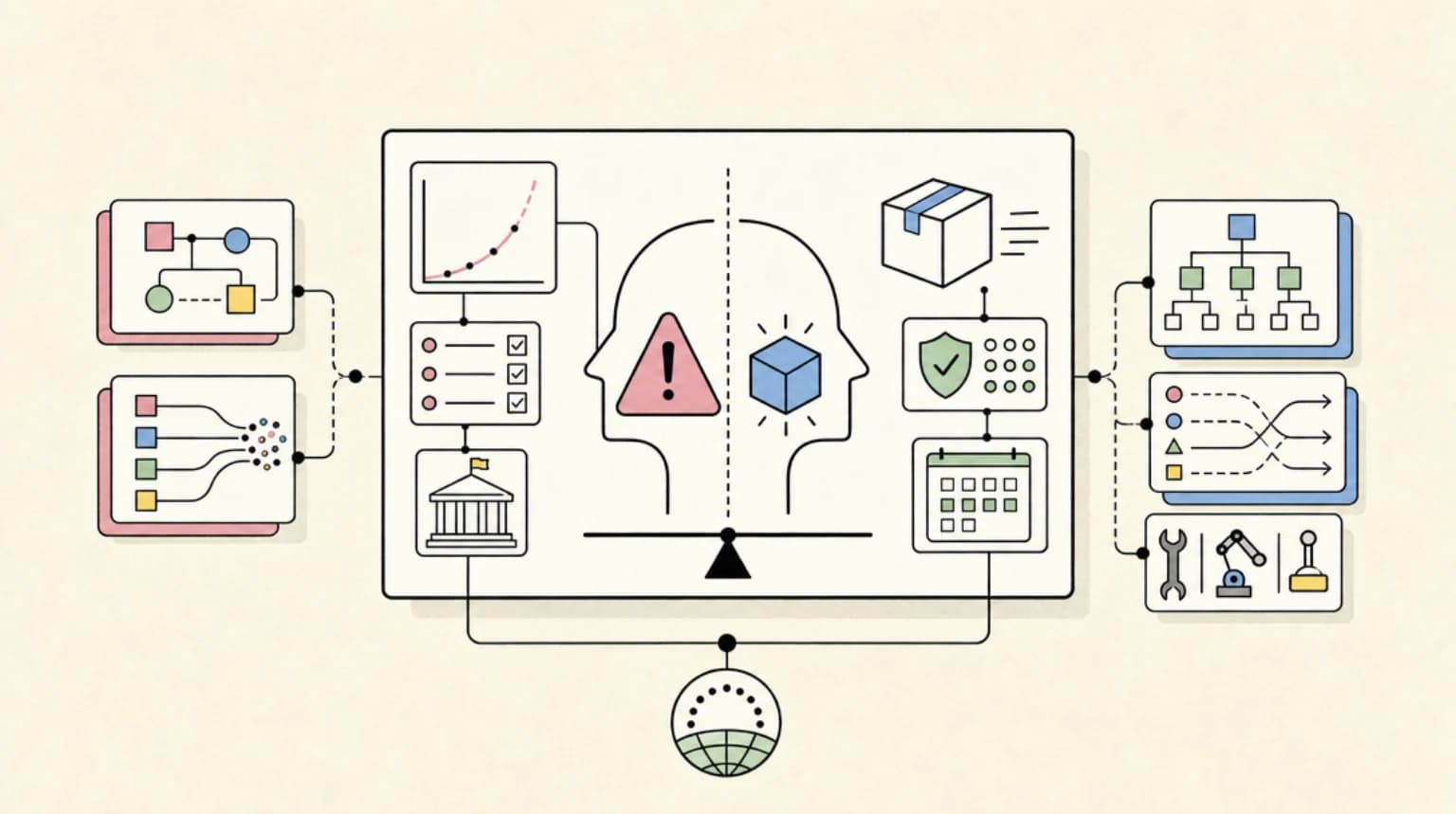
On June 10, 2026, Anthropic CEO Dario Amodei published a sweeping essay titled "Policy on the AI Exponential", announced on X, covering five policy areas he believes need reimagining for an AI world. The essay is long and touches on macroeconomics, civil liberties, and geopolitics. But for developers building on frontier models, one section demands careful reading: the call for FAA-style regulation of AI, including mandatory third-party testing and government power to block or reverse model deployments.
This piece focuses on that section and asks what the proposal might mean in practice - not to offer a verdict, but to surface questions worth thinking through.
Last updated: June 10, 2026
What the Proposal Actually Says#
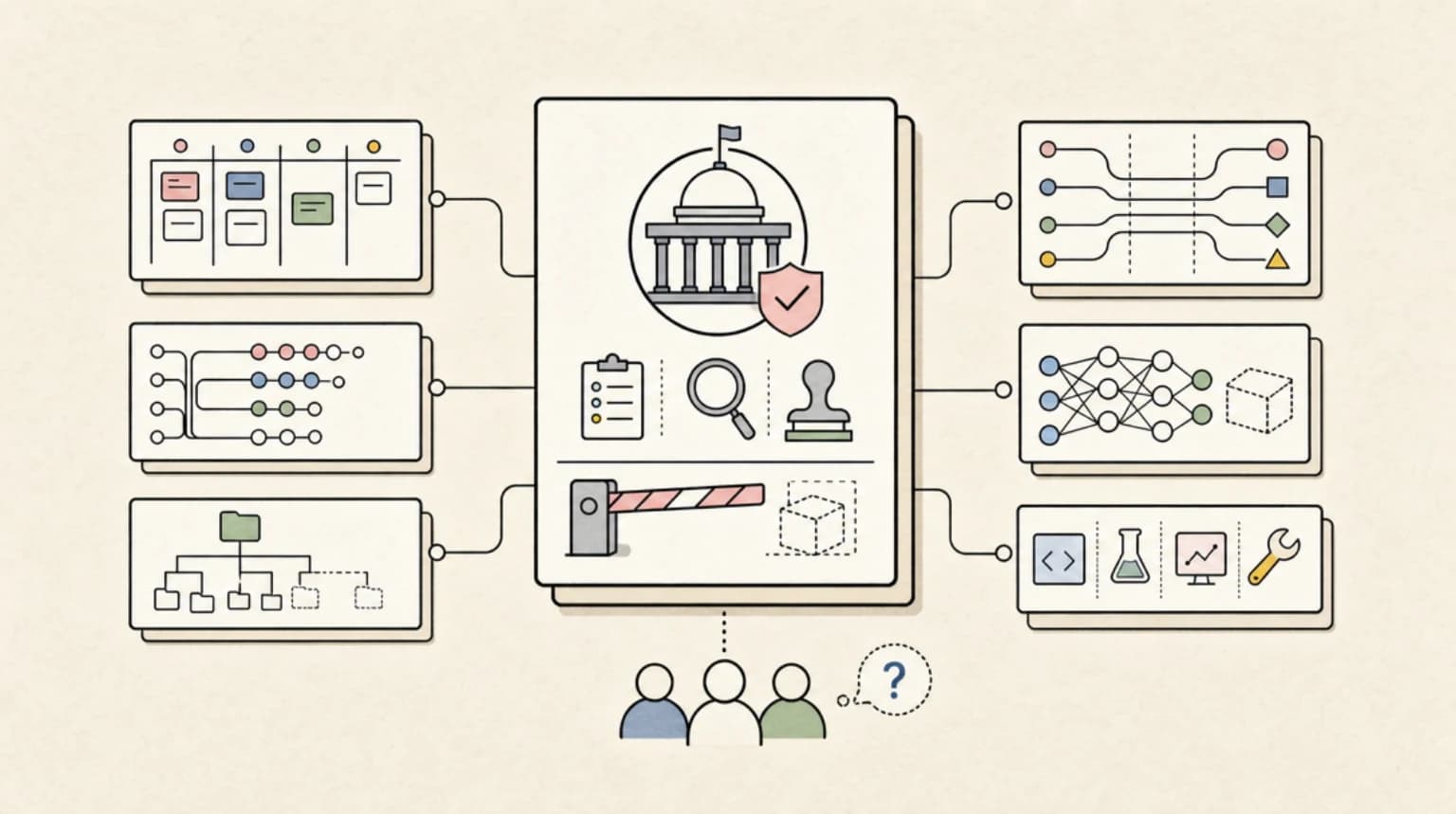
Amodei's regulatory proposal is more specific than the "AI regulation" headlines usually suggest. The core elements, as he describes them:
| Proposal Element | What It Entails |
|---|---|
| Compute threshold trigger | Models above a certain training compute level must undergo mandatory testing |
| Four risk categories | Cybersecurity, bioweapons, loss of AI control, automated R&D that could accelerate those risks |
| Third-party testing | Either a government agency (like the FAA) or private orgs authorized and inspected by the government |
| Deployment blocking | Government has power to block or reverse a release if third-party assessment finds unacceptable risk |
| Security standards | AI companies must protect model weights, conduct red teaming and penetration testing |
| Incident reporting | Safety incidents in the four critical areas must be reported promptly |
The essay frames this as a response to a specific moment: the Mythos Preview model, which Amodei writes "scrambled the global cybersecurity landscape" and "proves beyond doubt that AI models are now tools of global and national strategic consequence." The argument is that the evidence of risk that was not definite enough to justify binding regulation in 2023-2024 is now clearly here.
The FAA Analogy: How Far Does It Stretch?#
The FAA comparison is doing a lot of work in this essay, and it is worth asking how well it maps onto the AI development cycle.
Commercial aviation operates in a fairly stable engineering paradigm: a new airframe design is tested, certified, and then manufactured at scale. The certification process is front-loaded. Once a 737 variant is certified, airlines do not need to re-certify each individual plane from scratch - there is a type certificate that covers the design.
Frontier AI models update continuously. Fine-tuned versions, RLHF iterations, and mid-cycle capability improvements are common. One reading of the proposal is that certification applies to a specific checkpoint - a model version - and that incremental updates below a certain threshold would not require re-certification. Another reading is that any significant update to a frontier model would restart the process, because the risk profile can change meaningfully with relatively small weight changes.
Amodei does not resolve this in the essay. Developers who rely on, say, Claude's API for a production application might reasonably wonder what "blocking or reversing deployment" means for their users mid-cycle. If a model is blocked after launch, does the API version persist for existing integrations? Is there a sunset period? The proposal calls for "protective measures against political favoritism or arbitrary decisions," but the mechanics of how a reversal would work for downstream applications are not spelled out.
The Fable 5 Timing Problem#
This essay landed one day after the Fable 5 launch, a release notable for its use of classifier fallbacks and layered content moderation that was not surfaced in public documentation. Whether or not Fable 5 would fall above the compute threshold in Amodei's proposal, the timing raises a concrete question: what does shipping under a certification regime look like for model-dependent products?
If third-party testing takes months - and there is no reason to think it would be faster than, say, FDA drug review phases or FAA type certification, both of which run to years - then the effective cadence of frontier model releases slows dramatically. That could mean longer gaps between Claude 3.5 Sonnet and its successor, longer gaps between GPT releases, and longer periods in which developers are building on models whose edge cases are better understood (because they have been tested), but also models that lag what is technically possible.
Whether that is a reasonable tradeoff is genuinely unclear. It is worth asking whether slower model releases would push more development pressure onto fine-tuning and RAG layers that are built on top of a certified base model - and whether those downstream adaptations would themselves be in scope.
Third-Party Testing: Who Qualifies, and Does It Favor Incumbents?#
The proposal offers two models for who does the testing: a government agency analogous to the FAA itself, or a "regulatory markets" approach where private organizations are authorized and inspected by the government to evaluate models against defined standards.
The regulatory markets framing is interesting because it has been used in financial services, where approved credit rating agencies or auditing firms fill quasi-regulatory roles. The history there is not entirely encouraging - concentration in those markets, and incentive problems when the entities being rated are also paying for the rating, have been well documented.
For AI specifically, the question of who is qualified to evaluate frontier models is not trivial. Testing for cybersecurity uplift or bioweapons potential requires both deep technical capability and specialized domain knowledge that does not exist in large supply. One reading of this constraint is that only a small number of organizations - likely those already embedded in national security research ecosystems - would realistically qualify in the near term. That could mean a very concentrated set of evaluators, with all the bottleneck and capture risks that implies.
Another reading is that the regulatory markets approach is designed to scale: that as more organizations build evaluation capability, the market for testing services expands and diversifies. The essay does not commit to either outcome, and it is not obvious which would actually happen.
Developers might reasonably wonder about a more specific version of this question: does a mandatory testing regime entrench the incumbents who already have safety teams and government relationships, or does it level the field by creating a standardized bar that any well-resourced organization can clear? These two outcomes have very different implications for the competitive landscape.
Open-Weight Models Above the Threshold#
The proposal applies to "models above a threshold of compute." The essay does not specify what that threshold is, but Anthropic has previously used training compute as a rough proxy for frontier capability in policy discussions.
The open-weight ecosystem - Meta's Llama series, Mistral, and the rapidly expanding set of models released through Hugging Face - is a direct complication here. Once weights are released publicly, the mechanism for blocking or reversing deployment is unclear. You cannot un-release weights that have already been downloaded by millions of developers and self-hosters.
Amodei acknowledges elsewhere in the essay that geopolitical dynamics matter - that the US acting alone on AI governance while China does not creates its own risks. The same logic applies to open-weight models: a compute-threshold testing requirement applied only to commercial API deployments would not cover the increasingly capable open-weight models that developers use directly.
It is worth asking whether the proposal as described is primarily a mechanism for governing commercial API providers - which it could do effectively - while leaving open-weight deployment largely outside its reach by practical necessity. If that is the case, the risk profile it addresses may be narrower than the framing suggests.
Security Standards and What They Imply for Model Weight Protection#
The proposal includes a requirement that AI companies "have strong security standards that protect their model weights" and "conduct regular red teaming and penetration testing." This is framed primarily as a defense against foreign adversaries stealing frontier model weights.
For developers, this section is less immediately consequential than the deployment blocking provisions - but it is not irrelevant. Weight protection requirements could affect how models are deployed in on-premise or air-gapped environments, which some enterprise and government customers require. The compliance and data retention questions that came up around Fable 5 are one version of this: when the security posture of the underlying model affects how it can be deployed, application developers inherit constraints they did not design for.
Red teaming requirements for providers could also affect what developers experience at the API layer. More aggressive pre-release red teaming might surface capability limitations or behavioral quirks earlier - which could be useful - but could also mean more conservative defaults baked in at the model level, in ways that affect legitimate use cases.
The Incident Reporting Obligation#
Safety incident reporting is the element of the proposal that most closely resembles existing regulatory frameworks in other industries. Airlines report incidents to the NTSB. Drug manufacturers report adverse events to the FDA. The proposal would require AI companies to report "safety incidents in the four critical areas" promptly.
What counts as an incident is a genuinely hard definitional problem. In cybersecurity, the line between a researcher demonstrating a capability and a deployment-level incident is not always clear. In the context of AI models, a jailbreak that extracts dangerous information could happen in a research context, a red team exercise, or an uncontrolled production setting. Whether all three trigger a reporting obligation - and to whom, under what confidentiality rules - would matter a great deal to how developers think about building and deploying applications.
For teams using Claude for managed agentic workflows, this is not an abstract question. If an agent running on a frontier model encounters an edge case that triggers a safety-relevant behavior, is that an incident? The answer probably depends on definitions that do not yet exist.
FAQ#
What is Dario Amodei's FAA-style AI regulation proposal?#
In his June 10, 2026 essay "Policy on the AI Exponential", Amodei proposes that models above a training compute threshold undergo mandatory third-party testing across four risk categories: cybersecurity, bioweapons, loss of AI control, and automated R&D that could accelerate those risks. Testing would be done by a government agency or by private organizations authorized and inspected by the government, and the government would have power to block or reverse a release if the assessment finds unacceptable risk. The proposal also covers security standards for model weights and prompt incident reporting.
Would the proposal apply to open-weight models?#
The essay applies the testing requirement to models above a compute threshold but does not specify the threshold or say how it would handle open weights. The practical problem is that weights already downloaded by millions of developers and self-hosters cannot be un-released, so a blocking or reversal mechanism is unclear. One reading is that the proposal would mainly govern commercial API providers while leaving open-weight deployment largely outside its reach.
What would blocking a model deployment mean for developers building on the API?#
The essay does not say. It calls for "protective measures against political favoritism or arbitrary decisions," but does not spell out whether a blocked model's API version would persist for existing integrations, whether there would be a sunset period, or how a reversal would work for downstream applications. That makes the regulatory trajectory a planning variable for teams building long-cycle products on frontier model APIs.
Official Sources#
- Dario Amodei, "Policy on the AI Exponential", June 2026
- Announcement on X
- Anthropic legislative proposal on frontier model testing (released alongside the essay)
The essay is explicit that it is designed for "the dangers that are emerging today, while laying the foundations to ramp up our response even more quickly as new dangers appear." That framing suggests the proposal is a floor, not a ceiling - that future, more aggressive measures are possible if the risk picture changes. For developers building long-cycle products on frontier model APIs, it may be worth treating the regulatory trajectory as a planning variable alongside the technical one.
None of the questions raised here have obvious answers. The essay itself acknowledges the difficulty of designing good policy under uncertainty. What seems clear is that the period of treating AI governance as someone else's problem - a concern for safety researchers and policy teams, not for application developers - is probably ending.
Get the next deep dive like this in your inbox
One email a week on ai-regulation and the rest of the AI dev stack. Free.
Read next on Claude Code
Claude Mythos 5 Explained: What It Is, Who Can Access It, and Why It's Gated
Claude Mythos 5 explained - how it differs from Fable 5, who gets unrestricted access through Project Glasswing, and what developers should do right now.
7 min readFable 5's Hidden Guardrails: What Developers Need to Know About Silent Degradation
Claude Fable 5 silently degrades answers on some ML development tasks with no refusal or notice. See which work is restricted and what developers should do.
7 min readClaude Managed Agents Public Beta: What's Actually Available vs What's Gated
Claude Managed Agents public beta reviewed: what ships today, which orchestration features are gated behind a research preview, what it costs, and when to DIY.
8 min readTechnical content at the intersection of AI and development. Building with AI agents, Claude Code, and modern dev tools - then showing you exactly how it works.