Fable 5 Broke Enterprise ZDR Agreements: What Dev Teams Must Do Now
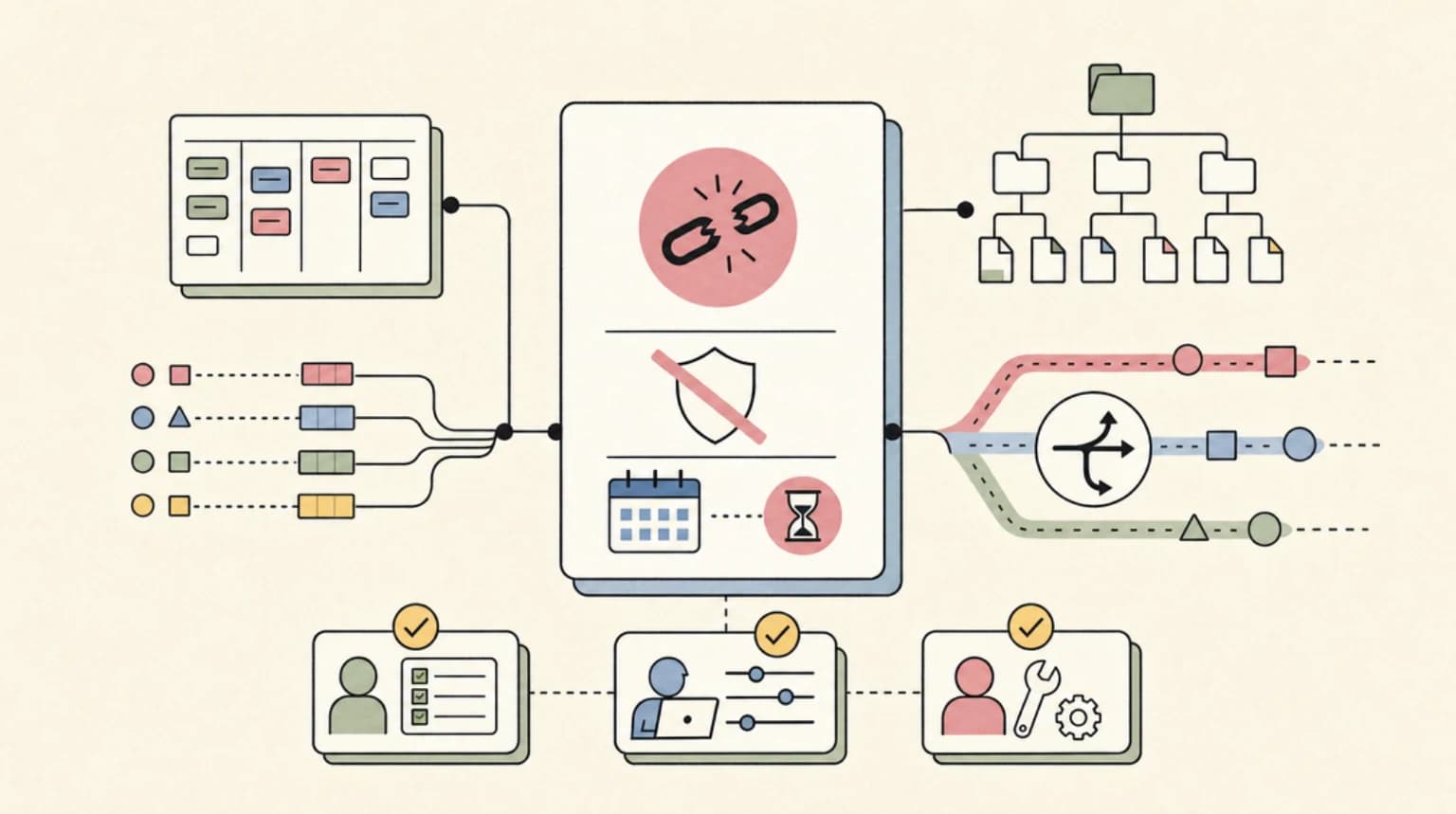
The Fable 5 Moment
31 parts- 1Claude Mythos 5 Explained: What It Is, Who Can Access It, and Why It's Gated
- 2Migrating to Claude Fable 5: The Practical Guide
- 3Claude Fable 5 Access After the June 22 Deadline: Where Things Stand
- 4Claude Fable 5 vs GPT-5.6 Sol: Benchmarks, Pricing, and When Each Wins
- 5Fable 5 vs Opus 4.8: A Data-Driven Decision Guide for Engineering Teams
- 6How to Model Fable 5 Costs Before They Blow Up Your Budget
- 7Claude Fable 5 API: Production Integration Patterns, Rate Limits, and Migration Gotchas
- 8Handling Fable 5 Refusals: A Working Guide to the Fallback API
- 9Why Fable 5 Refuses Your Cybersecurity Queries (And How the Fallback Works)
- 10Fable 5's Hidden Guardrails: What Developers Need to Know About Silent Degradation
- 11Fable 5 Broke Enterprise ZDR Agreements: What Dev Teams Must Do NowCurrent
- 12Claude Managed Agents: Dreaming, Outcomes, and Multi-Agent Orchestration Explained
- 13Claude Managed Agents Public Beta: What's Actually Available vs What's Gated
- 14Dario Amodei Wants FAA-Style AI Regulation: Open Questions for Developers
- 15The Exponential and the Working Developer: Sitting With Amodei's Hardest Questions
- 16The Dario Paradox: Warning About the Exponential While Shipping It
- 17The Pushback on Amodei's Exponential Essay: Too Slow, Too Convenient, or About Right?
- 18Fable 5 Before June 22: The Decision Checklist for Every Plan Tier
- 19Fable 5 on AWS Bedrock: When Your Data Leaves the AWS Boundary
- 20Why Claude Desktop Installs a 1.8 GB Hyper-V VM on Windows
- 21Anthropic Model Names Explained: Fable, Mythos, Opus, Sonnet
- 22Managed Agents vs LangGraph vs Rolling Your Own: Who Should Run Your Agent Loop in 2026
- 23Claude Usage Limits With Fable 5: Windows and Burn Rates
- 24Fable 5 for Government and Regulated Teams: The GovCloud Question
- 25Fable 5 vs DeepSeek V4: The Cost-Quality Gap Measured in Real Tasks
- 26Fable 5 Orchestrator Playbook: Smart Model, Cheap Workers
- 27Prompt Caching Economics on Fable 5: When the 5-Minute TTL Pays
- 28Fable 5 with 1M Context: What Actually Works in Practice
- 29Claude Effort Levels Explained: Fable 5, Opus 5.5, Haiku 5.5
- 30Fable 5 Effort Levels vs Switching Models: When to Dial and When to Change
- 31Recursive Self-Improvement: What Fable 5, Dario's Essay, and Anthropic's Own Data Actually Tell Us
TL;DR
Claude Fable 5 mandates 30-day data retention on every platform, overriding Zero Data Retention contracts. What compliance teams should audit before deploying.
Anthropic released Claude Fable 5 on June 10, 2026. Within hours, legal and compliance professionals were raising flags that the benchmark headlines buried: this model cannot operate under Zero Data Retention agreements, and that single fact has significant downstream consequences for enterprise teams, regulated industries, and anyone who negotiated a ZDR contract with Anthropic.
This post breaks down exactly what changed, who is affected, and what concrete steps your team should take before routing any sensitive workload through Fable 5.
Last updated: June 10, 2026
What Changed: Mandatory 30-Day Retention Overrides ZDR#
Anthropic's official support documentation states clearly: "Prompts submitted to, and outputs generated by, Mythos-class models are retained for 30 days for trust and safety purposes, on every platform where these models are offered."
Fable 5 is a Mythos-class model - the same underlying architecture as Claude Mythos 5, which was previously restricted to vetted organizations through Project Glasswing due to its advanced capabilities in cybersecurity and biological research. Fable 5 makes those capabilities broadly available with safety classifiers layered on top, but it carries the same mandatory retention requirement.
This policy took effect June 9, 2026, and it applies across every surface:
- Claude.ai and Claude Code (first-party)
- AWS Bedrock
- Google Cloud Agent Platform
- Microsoft Azure Foundry
- Claude Enterprise workspaces with ZDR
There is no configuration toggle, no platform exemption, and no enterprise carve-out. If you are calling Fable 5, your prompts and outputs are retained for 30 days.
Anthropic's stated rationale is legitimate: safety classifiers need to see patterns across many requests to detect threats like Best-of-N jailbreaking (which sends hundreds of prompt variations hoping one bypasses safety filters) and state-sponsored misuse campaigns. Single-request analysis cannot surface these patterns.
Who Is Affected#
Consumer Claude users (Free, Pro, and Max plans) are not affected - Anthropic already retains their data under existing terms. This is a non-change for that audience.
The organizations with real exposure are those that previously operated under ZDR agreements:
| Organization Type | Previous Status | Fable 5 Status |
|---|---|---|
| Enterprise API customers with ZDR | No data retention | 30-day mandatory retention |
| Claude Enterprise with ZDR in Claude Code | No data retention | 30-day mandatory retention |
| AWS Bedrock with ZDR | Data stayed in AWS environment | Data leaves AWS security boundary |
| Google Cloud Agent Platform with ZDR | No data retention | 30-day mandatory retention |
| Microsoft Azure Foundry with ZDR | No data retention | New Azure subscription required |
| Consumer plans (Free/Pro/Max) | Already retained | No change |
| API customers using Opus 4.8, Sonnet 4.6, Haiku 4.5 | ZDR available | ZDR still available |
That last row is important: the ZDR breaking change is specific to Fable 5 and future Mythos-class covered models. If your workloads use Opus 4.8 or Sonnet 4.6, your ZDR agreement remains intact for those models.
The AWS situation deserves particular attention. When Amazon announced Fable 5 availability on Bedrock, a detail in the infrastructure documentation noted: "Once you opt in data retention, your data will leave AWS's data and security boundary." For organizations that chose Bedrock specifically to keep data inside AWS's security perimeter, that sentence disqualifies Fable 5 from entire categories of workloads regardless of how capable the model is.
What Anthropic Retains and Why#
According to Anthropic's published documentation and their technical white paper on the Trust Center, the retention framework works as follows:
Anthropic employees cannot access conversations unless the content is flagged by safety classifiers for potential serious harm, or unless a customer makes a written request. Access is restricted to a small set of approved reviewers using tooling that prevents export, copying, or downloading. Every instance of human access is recorded in what Anthropic describes as a "tamper-proof" log. After 30 days, data is automatically deleted - with exceptions for active safety investigations or legal requirements.
Eligible organizations can add customer-managed encryption keys and access transparency audit logs.
Anthropic is explicit that retained data will not be used to train new models or for any non-safety purpose. The retention is scoped to trust and safety analysis only.
These controls are meaningful. They are also not equivalent to zero retention, which is the specific commitment many enterprise contracts were built around.
Legal Exposure: Attorney-Client Privilege and Work Product#
Jessica Eaves Mathews, founder of Leverage Legal Group and a lawyer focused on AI legal risk, published a detailed analysis on the day of Fable 5's launch that every legal team using Claude should read.
Her core concern: prior arguments that AI platforms preserve attorney-client privilege rested on the premise that data passes through automated systems only, with no human ever reading the content. That premise no longer holds for Fable 5.
Anthropic's own terms disclose that human reviewers can access flagged conversations. The access is controlled and logged. But the access exists. As Mathews writes: "If a human being at Anthropic can review a flagged conversation that contains privileged client communications, that is third-party disclosure."
Voluntary disclosure to a third party is one of the most established mechanisms for waiving attorney-client privilege. The legal question a court would ask is whether the attorney took reasonable steps to maintain confidentiality. If the attorney knowingly chose a platform whose terms of service explicitly state that human employee review is part of the arrangement, the answer to that question becomes difficult to defend.
Work product protection carries a similar risk. Work product can be waived by disclosure to any third party in a way that substantially increases the risk that an adversary will obtain it. A lawyer drafting motions, analyzing case law, or developing litigation strategy through Fable 5 is retaining that material on Anthropic's infrastructure for 30 days, subject to potential human review.
Mathews is careful to note that she still believes AI tools should be treated like other technology tools for privilege purposes. Her concern is that Fable 5's human review component moves the model out of the purely automated category that supports that argument.
Practical guidance from her analysis: do not run privileged communications or work product through Fable 5 until you have jurisdiction-specific guidance on how this retention policy interacts with your privilege obligations. That guidance likely requires waiting for judicial interpretation.
GDPR and International Compliance#
Anthropic has not published specific guidance on how the mandatory retention policy interacts with GDPR's data minimization and storage limitation principles, or with equivalent frameworks in other jurisdictions. The 30-day retention window and the potential for human access to flagged content are both relevant to data protection impact assessments.
For organizations processing personal data of EU residents, the retention requirement raises questions that existing ZDR agreements were specifically designed to avoid. The absence of official guidance from Anthropic on international compliance obligations is itself an answer: the burden of assessment falls on the deploying organization.
Teams operating under HIPAA, SOC 2, FedRAMP, or other regulated frameworks should apply the same scrutiny before deploying Fable 5 in any workflow that touches protected data.
Practical Mitigations#
Audit current deployments. Identify every integration in your stack that calls a Claude model. Determine whether any of those integrations have been updated to route to Fable 5, either by explicit configuration or by defaulting to the latest model version. If you have ZDR agreements, verify that those integrations are pointed at Opus 4.8, Sonnet 4.6, or Haiku 4.5, where ZDR is still available.
Renegotiate or update contracts. Existing ZDR agreements do not automatically update to reflect the new policy for covered models. Review your data processing agreements with Anthropic and with any cloud provider delivering Fable 5. Update confidentiality clauses with clients if those agreements did not anticipate third-party retention and human review.
Consider data sanitization layers. For teams that want Fable 5 capabilities on internal workflows without exposing raw sensitive data, a preprocessing layer that strips PII, redacts proprietary identifiers, or substitutes placeholder values before the prompt reaches the API reduces - though does not eliminate - the exposure surface. On Claude Enterprise, Inference hooks are the first-party place to enforce this: every governed prompt goes to your own security server for an allow or deny verdict before the model sees it.
Use Opus 4.8 for sensitive workloads. Fable 5 shares the Mythos-class architecture and is impressive on benchmarks. It is not, however, the only capable model in Anthropic's lineup. Opus 4.8 remains available under ZDR for organizations that have those agreements and can still handle complex reasoning tasks for most enterprise use cases.
Decision Framework: Fable 5 vs. Staying on Opus 4.8#
The capability jump in Fable 5 is real. Anthropic's early data shows that more than 95% of Fable 5 sessions run entirely on the model without any fallback to a less capable tier, which means the safety classifiers are not materially degrading the experience for typical developer workloads. Performance in software engineering and agentic tasks is state of the art on tested benchmarks.
The question is not whether Fable 5 is impressive. It is whether the compliance profile matches your deployment context.
Use Fable 5 when:
- Your workloads involve non-sensitive internal tooling, developer productivity, or experimentation
- The data involved is already retained under other terms and does not carry confidentiality obligations
- Your client agreements and data processing terms permit third-party 30-day retention and potential human review
- Throughput and capability gains justify the compliance overhead of updating agreements
Stay on Opus 4.8 or other ZDR-eligible models when:
- Workloads touch legal materials, privileged communications, or regulated data (HIPAA, financial, government)
- Existing ZDR agreements are load-bearing for client relationships or regulatory standing
- Your data processing agreements have not yet been updated to cover the Fable 5 retention terms
- You operate in a jurisdiction with strict data residency or data minimization requirements
FAQ#
Does the 30-day retention policy apply if I use Claude through AWS Bedrock?#
Yes. Anthropic's documentation confirms the policy applies to Fable 5 on AWS Bedrock, Google Cloud Agent Platform, and Microsoft Azure Foundry. Amazon's Bedrock documentation notes that opting into data retention for Fable 5 means data leaves AWS's data and security boundary - a significant constraint for organizations that chose Bedrock to maintain data residency within AWS.
Does my existing ZDR agreement with Anthropic still apply?#
Your ZDR agreement remains in effect for models that are not designated as covered Mythos-class models - including Opus 4.8, Sonnet 4.6, and Haiku 4.5. It does not apply to Fable 5 or future models Anthropic designates in the same class. The change is model-specific, not agreement-wide.
Will Anthropic use retained Fable 5 data to train future models?#
Anthropic states in their published documentation that retained data will not be used to train new models or for any non-safety purpose. The retention is scoped to trust and safety classifier review only.
Can Anthropic employees read my Fable 5 conversations?#
Anthropic employees can access conversations that are flagged by safety classifiers for potential serious harm, or upon a customer's written request. Access is restricted to approved reviewers using tooling that prevents export or downloading. All access is logged in tamper-proof records. Conversations that are not flagged are not browsed by humans.
What should law firms do before using Fable 5 for client work?#
Jessica Eaves Mathews recommends not running privileged communications or attorney work product through Fable 5 until you have jurisdiction-specific legal guidance on how the retention and human review policy interacts with your privilege obligations. Check whether your client agreements permit third-party data processing with 30-day retention and potential human review.
Official Sources#
- Anthropic: Data retention practices for Mythos-class models
- Jessica Eaves Mathews: Claude Fable 5 Just Dropped. Here Is What the Fine Print Says About Your Data.
- Cybernews: Companies using Fable 5 beware - it's collecting your data, and there are no exceptions
- Anthropic Trust Center - Technical White Paper on Data Retention Security
Continue Reading#
- AI Session Portability Compared 2026: OpenAI vs Anthropic vs Gemini
- Anthropic Claude Tag Turns Slack Into a Shared Agent Workspace
- Fable 5 for Government and Regulated Teams: The GovCloud Question
- Which AI APIs Train on Your Data?
- Claude Fable 5 - pricing, limits, and alternatives on one page
- Claude - the model family and plans on one page
Get the next deep dive like this in your inbox
One email a week on anthropic and the rest of the AI dev stack. Free.
Read next on Claude Code
Claude Mythos 5 Explained: What It Is, Who Can Access It, and Why It's Gated
Claude Mythos 5 explained - how it differs from Fable 5, who gets unrestricted access through Project Glasswing, and what developers should do right now.
7 min readClaude Fable 5 vs GPT-5.6 Sol: Benchmarks, Pricing, and When Each Wins
Fable 5 is API-only at 2x GPT-5.6 Sol's price with a 15-point SWE-Bench Pro gap. Here is the decision framework for choosing between them in August 2026.
12 min readClaude Fable 5 Pricing: Real Cost Per Task vs Opus 4.8, GPT-5.5 and Codex
Claude Fable 5 pricing beyond the $10/$50 per MTok list rate: real cost per task versus Opus 5, Opus 4.8 and Sonnet 5, and when the premium pays off.
9 min readTechnical content at the intersection of AI and development. Building with AI agents, Claude Code, and modern dev tools - then showing you exactly how it works.