Fable 5 vs Opus 4.8: A Data-Driven Decision Guide for Engineering Teams
The Fable 5 Moment
31 parts- 1Claude Mythos 5 Explained: What It Is, Who Can Access It, and Why It's Gated
- 2Migrating to Claude Fable 5: The Practical Guide
- 3Claude Fable 5 Access After the June 22 Deadline: Where Things Stand
- 4Claude Fable 5 vs GPT-5.6 Sol: Benchmarks, Pricing, and When Each Wins
- 5Fable 5 vs Opus 4.8: A Data-Driven Decision Guide for Engineering TeamsCurrent
- 6How to Model Fable 5 Costs Before They Blow Up Your Budget
- 7Claude Fable 5 API: Production Integration Patterns, Rate Limits, and Migration Gotchas
- 8Handling Fable 5 Refusals: A Working Guide to the Fallback API
- 9Why Fable 5 Refuses Your Cybersecurity Queries (And How the Fallback Works)
- 10Fable 5's Hidden Guardrails: What Developers Need to Know About Silent Degradation
- 11Fable 5 Broke Enterprise ZDR Agreements: What Dev Teams Must Do Now
- 12Claude Managed Agents: Dreaming, Outcomes, and Multi-Agent Orchestration Explained
- 13Claude Managed Agents Public Beta: What's Actually Available vs What's Gated
- 14Dario Amodei Wants FAA-Style AI Regulation: Open Questions for Developers
- 15The Exponential and the Working Developer: Sitting With Amodei's Hardest Questions
- 16The Dario Paradox: Warning About the Exponential While Shipping It
- 17The Pushback on Amodei's Exponential Essay: Too Slow, Too Convenient, or About Right?
- 18Fable 5 Before June 22: The Decision Checklist for Every Plan Tier
- 19Fable 5 on AWS Bedrock: When Your Data Leaves the AWS Boundary
- 20Why Claude Desktop Installs a 1.8 GB Hyper-V VM on Windows
- 21Anthropic Model Names Explained: Fable, Mythos, Opus, Sonnet
- 22Managed Agents vs LangGraph vs Rolling Your Own: Who Should Run Your Agent Loop in 2026
- 23Claude Usage Limits With Fable 5: Windows and Burn Rates
- 24Fable 5 for Government and Regulated Teams: The GovCloud Question
- 25Fable 5 vs DeepSeek V4: The Cost-Quality Gap Measured in Real Tasks
- 26Fable 5 Orchestrator Playbook: Smart Model, Cheap Workers
- 27Prompt Caching Economics on Fable 5: When the 5-Minute TTL Pays
- 28Fable 5 with 1M Context: What Actually Works in Practice
- 29Claude Effort Levels Explained: Fable 5, Opus 5.5, Haiku 5.5
- 30Fable 5 Effort Levels vs Switching Models: When to Dial and When to Change
- 31Recursive Self-Improvement: What Fable 5, Dario's Essay, and Anthropic's Own Data Actually Tell Us
TL;DR
Fable 5 posts an 80.3% SWE-Bench Pro score and costs 2x Opus 4.8 - here is the task-profile scoring guide that tells you when the premium pays off.
Anthropic released Claude Fable 5 on June 9, 2026 - the first model from its restricted "Mythos" tier to reach general availability. It posts a benchmark lead that looks decisive on paper: 80.3% on SWE-Bench Pro versus Opus 4.8's 69.4%, a 50-million-line Ruby migration completed in a day at Stripe, and qualitative endorsements from engineers who describe it as a qualitative step change. It also costs exactly double Opus 4.8 on every token type. That gap demands a clear framework, not instinct. This post builds one from the practitioner data that is already public.
Last updated: July 26, 2026
Why the Price Premium Demands Clear Criteria#
Fable 5 is priced at $10 per million input tokens and $50 per million output tokens. Opus 4.8 runs at $5 and $25 respectively - a clean 2x ratio across the board. On a small workload that difference is noise. On a long-horizon agentic task that generates hundreds of thousands of output tokens, the difference is real budget exposure.
The 67-100% price premium figure cited in coverage reflects the range depending on whether you factor in prompt caching. Fable 5 offers a 90% discount on cached input tokens at $1 per million (versus $0.50 for Opus 4.8 cache hits). If your agent reuses a large system prompt or shared context, aggressive caching narrows the effective gap. But it does not close it, and on output tokens - where the real spend accumulates in agentic work - there is no caching discount to lean on.
The decision rule follows directly: Fable 5 earns its price only when quality improvement translates into fewer total tokens consumed, fewer failed runs, or avoided human rework. Any other framing is rationalizing a luxury purchase.
Benchmark Breakdown: What the Numbers Actually Mean#
The headline figure is SWE-Bench Pro, an industry-standard measure of autonomous software engineering on real GitHub issues. Fable 5 scores 80.3% versus Opus 4.8 at 69.4% - an 11-point gap that is meaningful but requires context before routing decisions.
SWE-Bench Pro evaluates models on self-contained repository tasks: fix a bug, implement a feature, resolve a test failure. These tasks are bounded. A model gets a repo, a failing test, and must produce a passing patch. The benchmark rewards autonomy, planning, and code correctness on problems that fit inside a single session.
What that means practically: the gap between Fable 5 and Opus 4.8 is most pronounced on tasks that require the model to explore a codebase, identify the right intervention point, and produce a complete, multi-file solution without hand-holding. On simpler, more constrained coding tasks - apply this diff, rename this function, explain this error - the gap shrinks because both models are capable and the task does not stress the planning layer where Fable 5 differentiates.
Two other benchmarks worth noting from Anthropic's launch materials: Fable 5 scored more than 2x Opus 4.8 on FrontierCode Diamond (difficult production-codebase tasks), and spatial reasoning improved from 14.5% (Opus 4.8) to 38.6% - a near-tripling that matters for code that involves layout, data structure design, or complex dependency graphs.
Where Fable 5 Wins: Long-Horizon Agentic Work#
CodeRabbit's benchmark data gives the clearest practitioner signal on where Fable 5 earns its price. In their coding project evaluations, the model exhibited a consistent behavior: given a vague prompt, it explored the environment first, identified available files, tools, and constraints, then built from a grounded plan rather than guessing at structure. Fully underspecified prompts still produced complete projects rather than prototype shells.
The Stripe migration is the canonical enterprise example: a codebase-wide Ruby migration across 50 million lines, estimated at over two months for a full team, completed by Fable 5 in a single day. Anthropic published this in their launch materials and it has not been disputed. The task fits the Fable 5 profile exactly - large scope, multiple interdependent files, requires holding the full context of what changed to avoid breaking downstream code.
Specific task types where Fable 5 consistently outperforms based on available data:
- Multi-file migrations (schema changes, API version upgrades, dependency replacements)
- Greenfield project scaffolding from loose requirements
- Agent workflows where the model must plan a sequence of tool calls before executing
- Long-running sessions where context coherence degrades in less capable models
- Architecture work that requires reasoning across a full dependency graph
The CodeRabbit team noted one counterintuitive finding: Fable 5 produced more thorough implementations in complex coding projects, but the same exploration drive that produces quality also produces timeouts. In their coding task benchmark, 19 of the evaluated tasks hit the agent timeout before completion. The model kept working when given ambiguous scope. That is a feature for some workloads and a cost hazard for others - which is why explicit step and token budgets are not optional when deploying Fable 5 in an agent pipeline.
Where Opus 4.8 Still Leads: Review Precision and Interactive Chat#
The CodeRabbit benchmarks are specific and worth quoting directly: in a 105-EP code review evaluation, Fable 5 achieved 32.8% actionable precision versus Opus 4.8's 35.5%. On full precision the gap is wider - 19.4% for Fable 5 versus 26.5% for Opus 4.8. Fable 5 also produced 253 comments versus fewer from Opus 4.8, with a larger proportion classified as nitpick or assertive style.
This combination - lower precision, higher volume - is a real operational problem for code review. More comments means more triage work for reviewers. Lower precision means a higher rate of noise that dilutes the signal. CodeRabbit's recommendation is to keep Opus 4.8 as the default code review path until Fable 5's precision improves through future tuning.
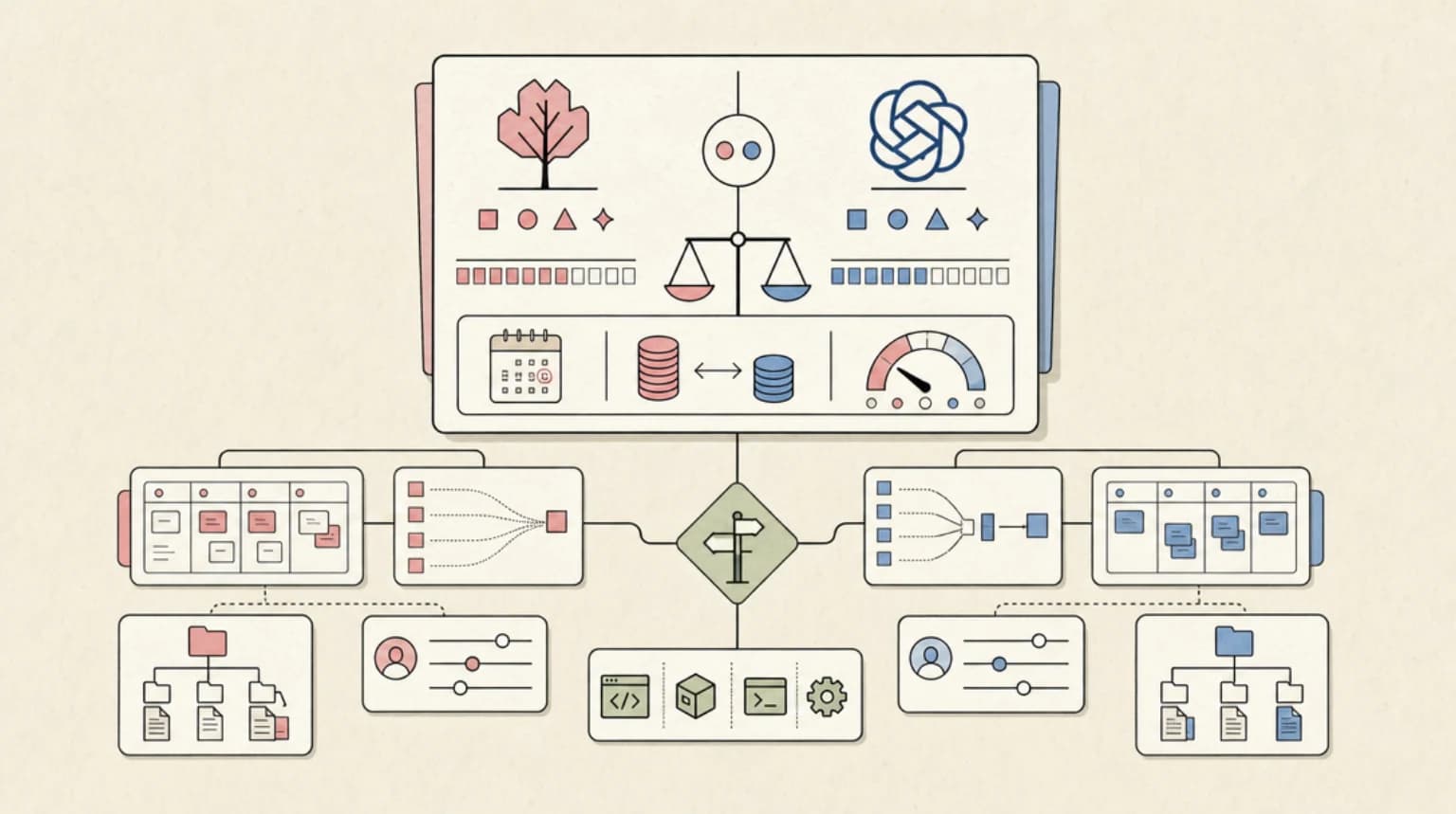
| Metric | Fable 5 | Opus 4.8 |
|---|---|---|
| SWE-Bench Pro | 80.3% | 69.4% |
| Actionable precision (code review) | 32.8% | 35.5% |
| Full precision (code review) | 19.4% | 26.5% |
| Comment volume (105-EP benchmark) | 253 | lower |
| Coding task timeouts (CodeRabbit) | 19 | not reported |
| Input price (per million tokens) | $10 | $5 |
| Output price (per million tokens) | $50 | $25 |
| Context window | 1M tokens | 200K tokens |
For interactive chat - where a developer is asking questions, iterating on code snippets, debugging with back-and-forth - Opus 4.8's lower latency profile and tighter precision are practical advantages. Fable 5 is slower to respond because it reasons more deeply before answering. That is useful when the question is hard. It is friction when the question is routine.
CodeRabbit Signal: Fable 5 as Async Tool, Not Chat Replacement#
The framing that emerges from CodeRabbit's evaluation is precise: Fable 5 behaves like an async engineering tool, not a responsive chat assistant. It works best when you hand it a well-scoped problem with clear success criteria and let it run. It works worst when you need fast, targeted responses with high comment precision.
The 19-timeout figure from their coding benchmark is not a failure of the model - it is a signal about deployment contract. Those tasks ran until the harness cut them off because the model kept exploring. In a production agent with explicit step limits and a clear completion condition, many of those runs would have finished. Without those guardrails, they are expensive non-completions.
The practical conclusion: treat Fable 5 as you would a senior contractor doing a large, autonomous engagement. Define the deliverable clearly, set a budget, and give it room to work. Do not use it for tasks where you need a quick answer or where review noise is a cost.
Cost Math: When Fable's Quality Offsets 2x Price#
The token efficiency argument for Fable 5 depends on the task profile. TrueFoundry's analysis notes that Anthropic and early customers report Fable 5 finishing tasks in fewer turns and tokens on hard problems - meaning a job at 2x the per-token rate can land closer to parity in total cost when the model's deeper planning avoids the retry loops that a less capable model accumulates.
A rough framework for the math:
- If Fable 5 completes a migration in one pass that Opus 4.8 takes three attempts to complete, and each attempt generates similar token volumes, Fable 5 is cheaper despite the higher rate.
- If Fable 5 times out on 40% of runs due to open-ended scope, the effective cost is much higher than the per-token price suggests.
- Prompt caching at $1/MTok for cache hits narrows the gap on repeated large-context calls, but the output side is uncacheable and that is where agentic spend accumulates.
The honest version: Fable 5 is cheaper than it looks on tasks where Opus 4.8 fails or requires multiple attempts. It is more expensive than it looks on tasks without clear completion conditions. Token-per-dollar analysis requires measuring actual completion rates, not just per-token sticker prices. If you are also weighing Opus 4.8 against OpenAI's workhorse tier, the GPT-5.5 vs Claude Opus 4.8 head-to-head runs the same cost math from the other direction.
Decision Tree: Task Profile Scoring Guide#
Use this scoring guide to route between Fable 5 and Opus 4.8. Score each attribute for the task at hand, then total.
Score +1 for Fable 5 if:
- Task spans more than 10 files or 5,000 lines of context
- Task is underspecified and requires the model to discover requirements
- Task is async (runs unattended, no live feedback loop)
- Completion quality matters more than completion speed
- The task has failed at least once with a cheaper model
- Session context needs to stay coherent over many steps
Score +1 for Opus 4.8 if:
- Task is interactive (developer actively reviewing and steering)
- Task is code review on existing PRs (precision over coverage)
- Task is high-throughput (many small tasks in parallel)
- Cost sensitivity is high and task is routine
- Response latency affects the workflow
- Task involves cybersecurity, biology, or chemistry tooling (Fable 5 safeguards may route to Opus 4.8 anyway)
Routing rule: If Fable 5 score exceeds Opus 4.8 score by 2 or more, use Fable 5. If tied or Opus 4.8 leads, use Opus 4.8 and revisit if quality falls short.
FAQ#
Is Fable 5 better than Opus 4.8 for all coding tasks?#
No. Fable 5 leads on long-horizon agentic coding - multi-file migrations, autonomous project work, underspecified tasks. On code review precision and interactive chat, Opus 4.8 currently outperforms it based on CodeRabbit's benchmarks (35.5% vs 32.8% actionable precision in review).
What does the 80.3% SWE-Bench Pro score mean in practice?#
SWE-Bench Pro measures autonomous resolution of real GitHub issues. An 80.3% score means Fable 5 solved roughly 4 in 5 evaluated issues independently, without human steering. The 11-point gap over Opus 4.8 is largest on complex multi-step issues and narrows on simpler, self-contained tasks.
Why did Fable 5 produce 19 timeouts in the CodeRabbit benchmark?#
Fable 5 explores extensively when task scope is ambiguous. In CodeRabbit's coding task harness, many tasks hit the agent timeout because the model kept working without converging. This is a deployment configuration issue - not an inherent flaw - but it means Fable 5 requires explicit step limits and completion conditions to avoid runaway costs.
Does Fable 5 always cost 2x Opus 4.8?#
The base token rates are exactly 2x ($10/$50 versus $5/$25 per million tokens). Prompt caching reduces that gap on input tokens (both offer 90% cache discounts). On output tokens, where agentic work accumulates most spend, there is no caching discount and the 2x ratio holds.
What is the safeguard fallback and does it affect my costs?#
Fable 5 ships with classifiers that route cybersecurity, biology, and chemistry queries to Opus 4.8. Anthropic reports this affects fewer than 5% of sessions. Rerouted requests are charged at Opus 4.8 rates, not Fable 5 rates. API customers must configure the Fallback API explicitly - it is not automatic outside the Claude apps.
Should I use Opus 5 or Fable 5 now?#
Opus 5 launched July 24 at $5/$25 per MTok - the same price as Opus 4.8 - with benchmark scores that approach or match Fable 5 on most coding evals. For the large majority of tasks, Opus 5 is the rational choice: near-frontier intelligence at half the price. Reserve Fable 5 for the hardest problems where the remaining benchmark gap matters, or where you have confirmed through your own evals that the premium produces measurably better outcomes.
What Changed on July 26#
Claude Opus 5 launched (July 24), resetting the Fable 5 value equation. Opus 5 scores 61 on the Artificial Analysis Intelligence Index - ahead of Fable 5's 60 - while matching Opus 4.8 pricing at $5/$25 per MTok. This changes the decision framework in this post: the comparison is now Fable 5 vs Opus 5, not Fable 5 vs Opus 4.8. Opus 5 gives you near-Fable 5 intelligence at half the price, which shifts the scoring guide toward "use Opus 5 for most tasks, reserve Fable 5 for the hardest problems where every point of benchmark gain matters." See the full Opus 5 vs Fable 5 comparison.
Official Sources#
All sources verified July 26, 2026:
| Source | Link |
|---|---|
| CodeRabbit: Fable 5 model review | coderabbit.ai |
| TrueFoundry: Claude Fable 5 API, benchmarks, pricing | truefoundry.com |
| Every.to: Anthropic Mythos vibe check | every.to |
| Anthropic Claude Opus 5 announcement | anthropic.com |
| Artificial Analysis Intelligence Leaderboard | artificialanalysis.ai |
Continue Reading#
- Claude Opus 5 vs Opus 4.8 vs Fable 5 Comparison - full benchmark breakdown of Anthropic's new flagship
- Claude Opus 5 in 8 Minutes - quickstart guide for Opus 5
- Frontier Model API Pricing, July 2026 - verified pricing across all providers
- Claude Fable 5 Cost-per-Task Analysis - when the 2x price makes sense
- Context Engineering for Claude 5 - new prompting rules for the latest models
- PAIChecker: 13.6% of SWE-bench Verified Instances Have Misaligned PR-Issue Pairs
Get the next comparison like this in your inbox
One email a week on AI Models and the rest of the AI dev stack. Free.
Read next on Claude Code
Claude Mythos 5 Explained: What It Is, Who Can Access It, and Why It's Gated
Claude Mythos 5 explained - how it differs from Fable 5, who gets unrestricted access through Project Glasswing, and what developers should do right now.
7 min readClaude Fable 5 vs GPT-5.6 Sol: Benchmarks, Pricing, and When Each Wins
Fable 5 is API-only at 2x GPT-5.6 Sol's price with a 15-point SWE-Bench Pro gap. Here is the decision framework for choosing between them in August 2026.
12 min readClaude Fable 5 Pricing: Real Cost Per Task vs Opus 4.8, GPT-5.5 and Codex
Claude Fable 5 pricing beyond the $10/$50 per MTok list rate: real cost per task versus Opus 5, Opus 4.8 and Sonnet 5, and when the premium pays off.
9 min readTechnical content at the intersection of AI and development. Building with AI agents, Claude Code, and modern dev tools - then showing you exactly how it works.