FrontierCode Benchmark Explained: Why AI Coding Quality Scores Are Wrong (And the Fix)
TL;DR
FrontierCode grades AI coding agents on whether maintainers would merge their PRs, not on passing tests. Why SWE-Bench misleads and how to adjust review.
Official Sources#
| Source | Link |
|---|---|
| FrontierCode benchmark announcement | cognition.ai/blog/frontier-code |
| METR SWE-Bench false positive analysis | metr.org/notes/2026-03-10-many-swe-bench-passing-prs-would-not-be-merged-into-main |
| O'Reilly: AI Code Review Only Catches Half of Your Bugs | oreilly.com/radar/ai-code-review-only-catches-half-of-your-bugs |
| Vellum: Claude Fable 5 and Mythos 5 Benchmarks Explained | vellum.ai/blog/claude-fable-5-and-mythos-5-benchmarks-explained |
| Snyk: AI Hallucinations in Code | snyk.io/blog/ai-hallucinations |
Last updated: June 10, 2026
When a model scores 90% on a coding benchmark, does that mean 90% of its code would actually ship? According to Cognition's new FrontierCode evaluation, the answer is closer to: no, and the gap is large enough to matter for your review process today.
FrontierCode flips the benchmark question from "does this pass tests?" to "would a maintainer actually merge this?" The results are the most important benchmark story in months, and they carry real implications for how teams should think about AI code review.
The Problem With SWE-Bench - 81% False-Positive Rate#
SWE-Bench Verified and SWE-Bench Pro became the default yardsticks for AI coding capability. A model's SWE-Bench score became a proxy for production readiness. The problem is that the yardstick is broken in a specific and measurable way.
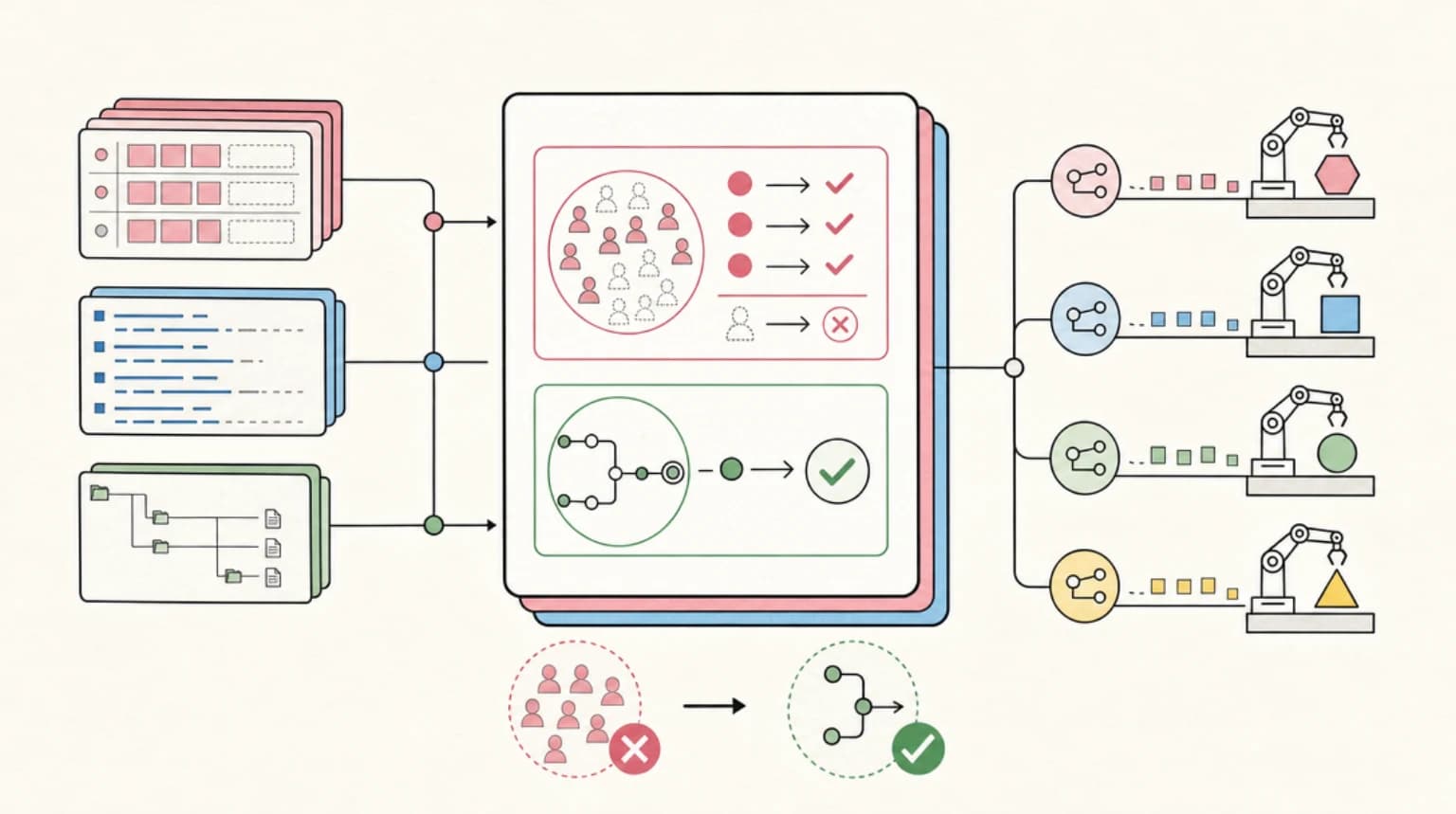
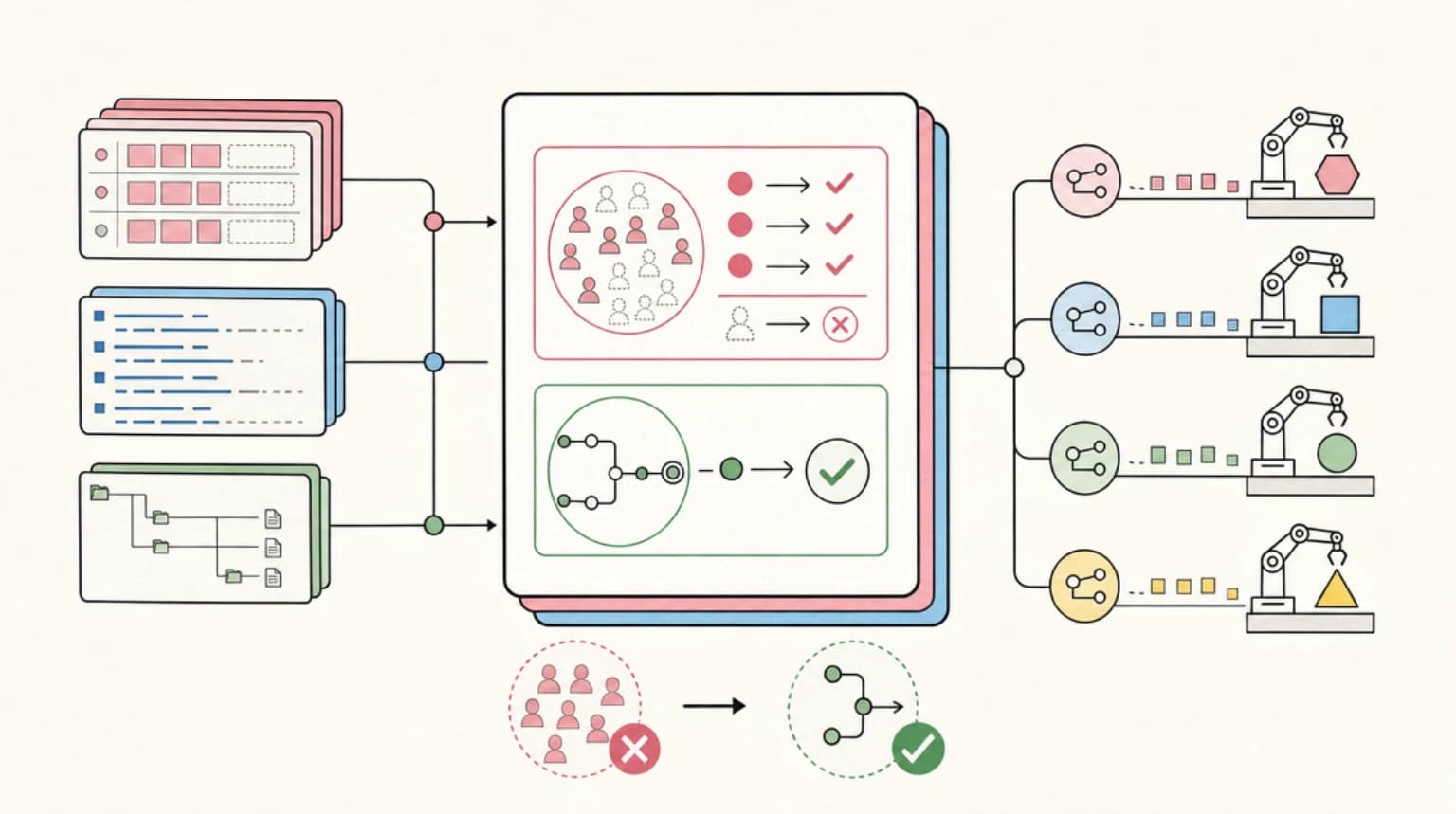
METR's analysis of SWE-Bench passing submissions found that high-scoring models routinely produce patches that would not be accepted by the actual project maintainers. Cognition quantifies this in FrontierCode's methodology: their benchmark produces 81% fewer misclassification errors than SWE-Bench Pro.
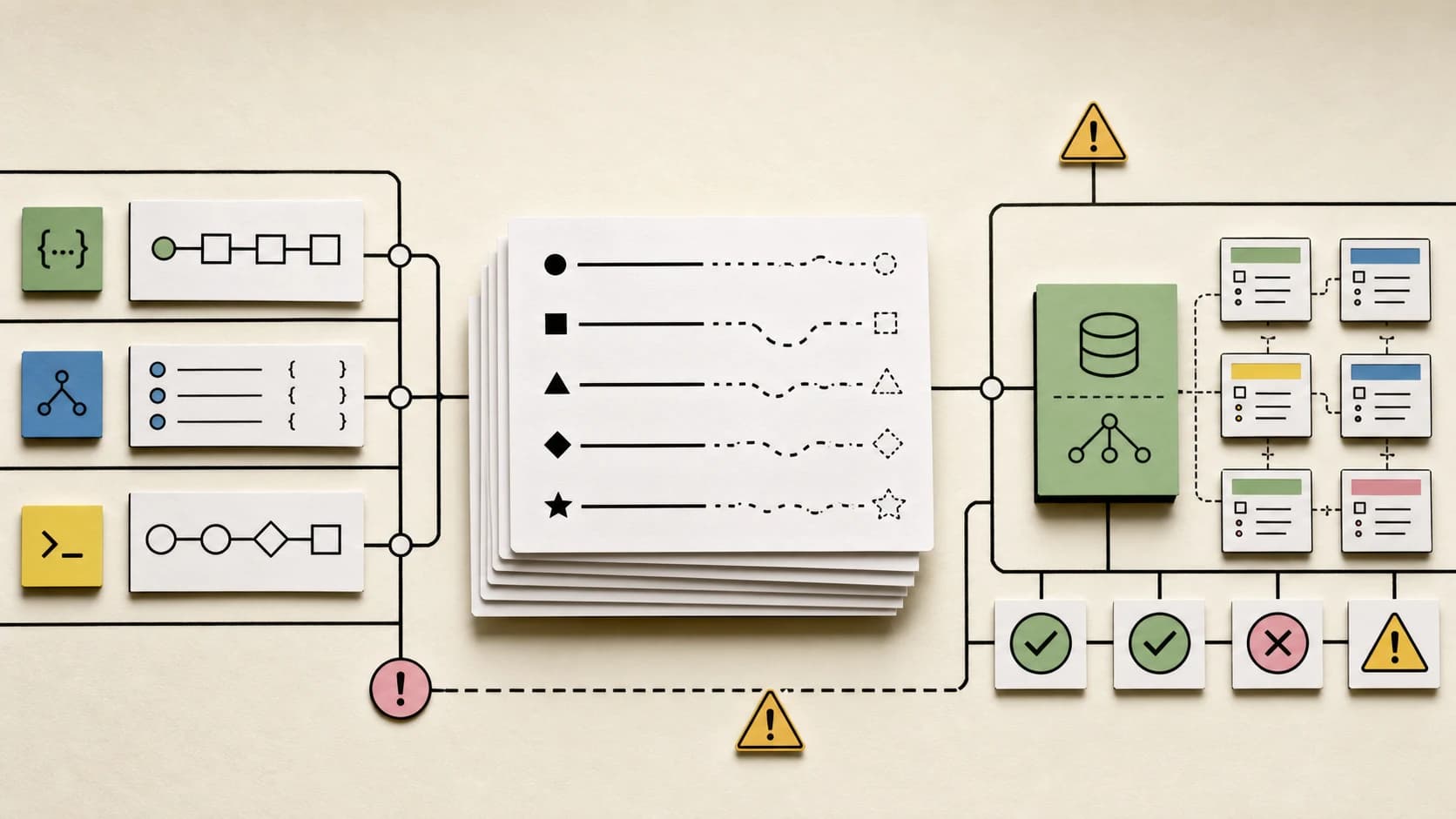
The misclassification errors come from two directions:
- False positives: The test suite is incomplete, so a wrong solution still passes because the tests do not cover the edge cases that matter.
- False negatives: The tests are too specific - checking for exact error strings or internal function names - so a valid alternative solution fails even though it is correct.
Both types corrupt the signal. A model optimized for SWE-Bench can game both failure modes: exploit test coverage gaps to pass with minimal changes, or pattern-match to the expected output format without actually solving the underlying problem.
SWE-Bench was designed for less capable models. Those models needed tightly specified tasks with deterministic grading. Today's frontier models can handle ambiguous, realistic prompts - which means the benchmark is no longer the limiting factor. The models have outpaced the measurement.
How FrontierCode Is Different - 20+ Maintainers, 40+ Hours Per Task#
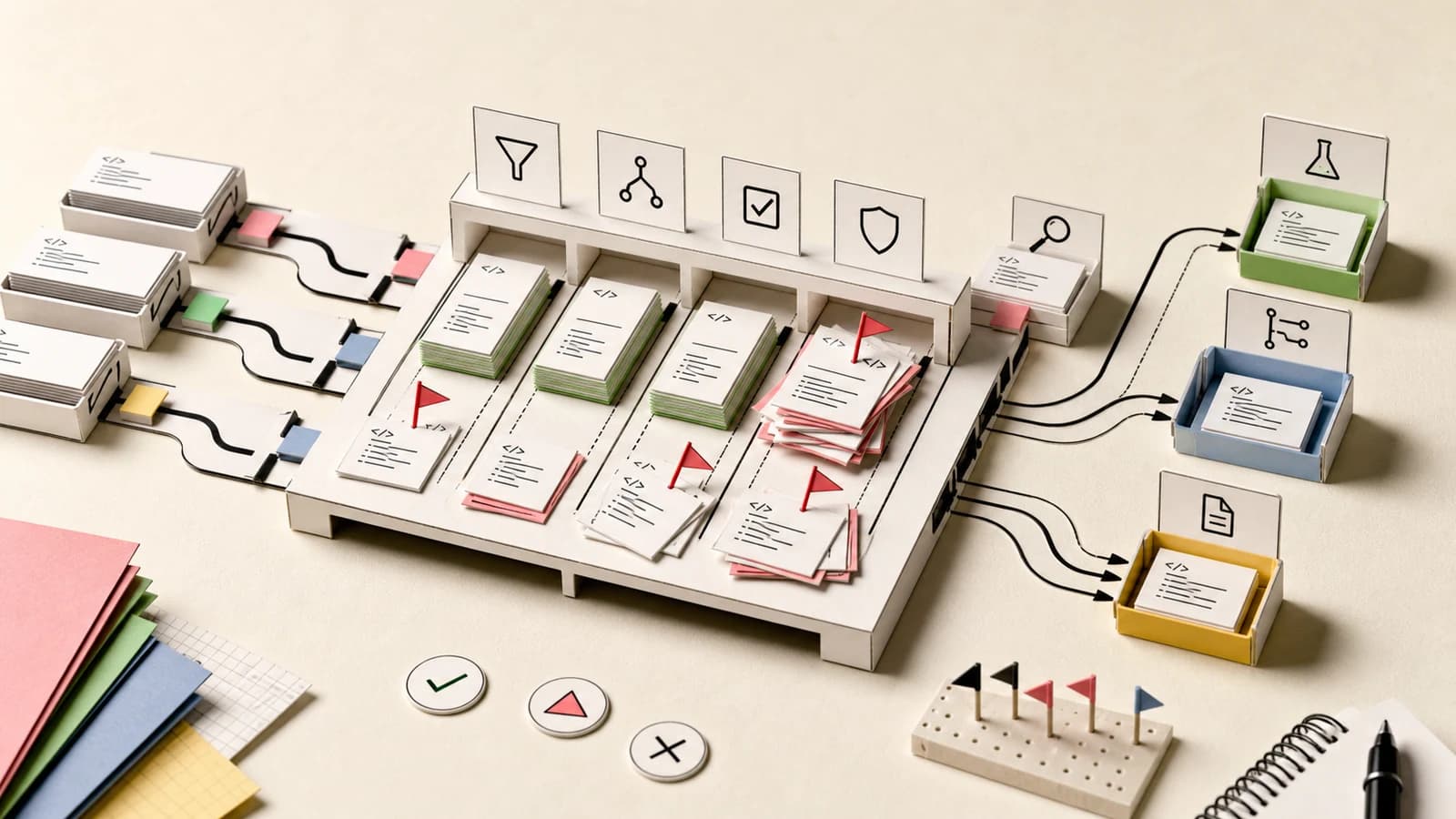
Cognition built FrontierCode around a single question: would the project maintainer merge this PR?
That required going to the source. FrontierCode recruited 20+ world-class open-source developers to build tasks directly from the repositories they maintain. Represented projects include repos with 28,000 to 37,000 GitHub stars. Each maintainer spent more than 40 hours per task - across multiple rounds of review with Cognition researchers - to distill their judgment into concrete evaluation criteria.
The benchmark covers 150 tasks total, organized into three nested difficulty subsets:
- Extended: All 150 tasks
- Main: The 100 hardest tasks
- Diamond: The 50 hardest tasks
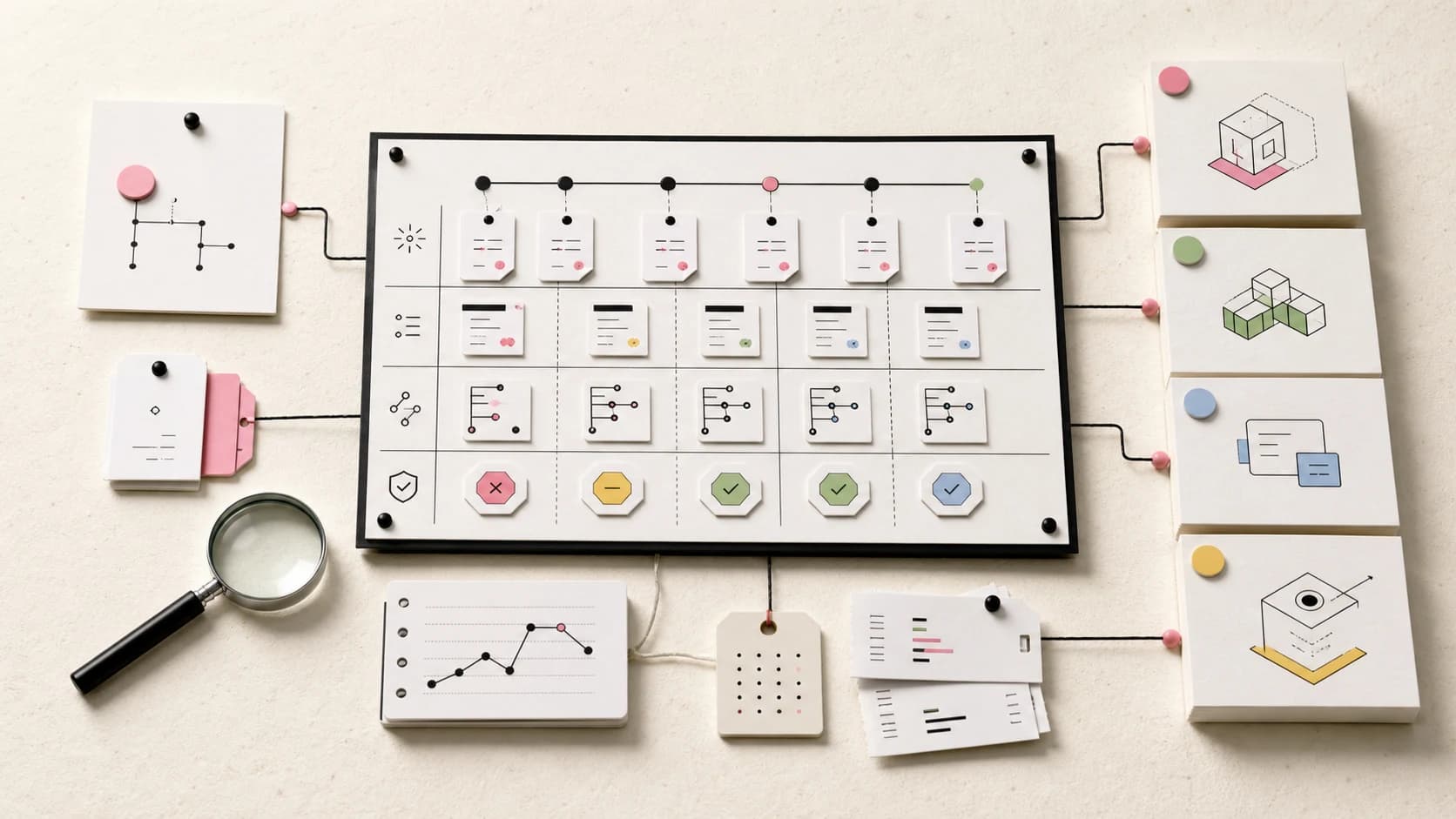
That 40-hour-per-task investment means the criteria are durable. The rubric for each task includes blocker criteria (hard stops that must pass for the solution to count) and non-blocker quality signals (style, type safety, readability). A solution that passes all blockers receives a weighted aggregate score across all rubric items. A solution that fails any blocker gets a zero.
The evaluation methodology is also meaningfully different from prior benchmarks:
| Method | What it checks |
|---|---|
| Classical unit tests | Behavioral correctness |
| Reverse-classical tests | Agent's tests must fail on the broken base commit - confirming the agent understood the problem |
| Adaptive classical grading | LLM-patched tests that handle valid alternative implementations |
| Scope checks | Diff size, file boundaries, semantic locality |
| Prompt-based LLM grading | Code quality, codebase conventions, design patterns |
The reverse-classical method is particularly interesting. It runs the agent's own test suite against the original, unfixed codebase. If the tests do not fail on the broken code, the agent did not understand the problem well enough to test for it. This catches a common failure mode: agents that write tests designed to pass rather than tests designed to verify.
The Scores That Matter#
FrontierCode Diamond scores show the current state of the field clearly:
| Model | Diamond Score |
|---|---|
| Claude Opus 4.8 | 13.4% |
| GPT-5.5 | 6.3% |
| Gemini 3.1 Pro | 4.7% |
| GPT-5.4-mini | 4.6% |
| Claude Sonnet 4.6 | 3.5% |
| Kimi K2.6 (best open-source) | 3.8% |
| MiniMax M2.7 | 2.4% |
The best performing model - Claude Opus 4.8 - scores 13.4% on the hardest subset. On FrontierCode Main (100 tasks), Opus 4.8 reaches 34.3%. On Extended (all 150), it reaches 51.8%.
One cost-efficiency note from Cognition's analysis: GPT-5.5 consistently uses up to 4x fewer tokens than Opus 4.8 while scoring 6.3% on Diamond. For teams optimizing cost-per-task rather than raw ceiling, that tradeoff matters.
The open-source gap is notable. Kimi K2.6, the best-performing open-source model, scores 3.8% on Diamond and 16% on Main - well behind the frontier. For teams considering self-hosted models for cost or privacy reasons, these numbers are a realistic baseline for what they are giving up.
What "Mergeability" Actually Measures#
The gap between "passes tests" and "gets merged" is not random. FrontierCode Diamond tasks surface a specific category of difficulty that automated tests cannot reliably measure: decisions that require inferring the maintainer's intent.
Cognition's example task illustrates this well. The task asks a model to encapsulate all warning logs behind a new LOG_WARNING() function and use it consistently across the codebase. Claude Opus 4.8 consistently writes code that is behaviorally equivalent but architecturally wrong:
// Opus 4.8 approach - mixes LOG_WARNING() and std::cerr
LOG_WARNING() << "You are opting in to remove schema identifiers...\n";
std::cerr << "The only legit use case...\n";

// Maintainer-preferred approach - chains through LOG_WARNING()
LOG_WARNING() << "You are opting in to remove schema identifiers...\n"
              << "The only legit use case...\n";
Both compile and produce the same output today. But the first implementation bakes in the assumption that LOG_WARNING() and std::cerr are the same stream - which might not hold if LOG_WARNING() is modified later. The maintainer knows this. The model does not.
This is a trust boundary the model cannot infer from the code alone. Mergeability requires understanding:
- Authorization intent: What actions the codebase is designed to prevent, not just what it currently enforces
- Architectural conventions: The patterns a maintainer expects future contributors to follow
- Scope discipline: What the PR should not touch, even if touching it would make the code cleaner in isolation
These are design decisions, not implementation details. And design decisions are exactly where AI coding tools reach their limits.
The 50% Ceiling Problem From O'Reilly Research#
The FrontierCode scores are not an accident of benchmark design. They reflect a fundamental constraint on what automated code analysis can find.
Andrew Stellman's O'Reilly Radar analysis frames this as the "intent ceiling." Structural analysis tools - linters, static analyzers, AI code reviewers that work without requirements context - can detect implementation bugs: buffer overflows, SQL injection patterns, null pointer dereferences, race conditions. These are pattern-matchable.
But roughly 50% of security defects are not implementation bugs. They are design flaws: missing authorization checks, unspecified trust boundaries, security properties that were never written down. NIST SATE evaluations found that the best static analysis tools plateaued at 50-60% detection rates for security vulnerabilities. A 2024 study by Charoenwet et al. (ISSTA 2024) tested five static analysis tools against 815 real vulnerability-contributing commits and found that 22% of vulnerable commits went entirely undetected.
The pattern is consistent across two decades of research: there is a ceiling on what you can find by analyzing code structure alone, and it is around 50%.
AI code review, as it exists today, works on the same side of that ceiling that static analysis always has. It can ask "does this look right?" - but it cannot ask "does this do what it was supposed to do?" without knowing what it was supposed to do.
FrontierCode Diamond scores in the single digits for most models are a direct expression of this constraint. The hardest 50 tasks are exactly the tasks where intent matters most. You can read more about the category of failures that escape current review workflows in our post on constraint decay in AI coding agents.
Practical Implications for Teams#
These benchmark results do not mean AI coding tools are not useful - they are. They mean the failure modes are more specific than "the AI made a mistake."
For code review workflows today, the FrontierCode results suggest a practical split:
Where current AI review adds reliable value:
- Syntax and style enforcement
- Known anti-pattern detection (SQL injection, unsafe deserialization, race conditions)
- Test coverage gaps for deterministic behaviors
- Mechanical compliance (lint, build, formatting)
Where human review remains essential:
- Authorization and access control boundaries
- Architectural decisions and codebase conventions
- Scope discipline - what should not be in the PR
- Any requirement that is not explicit in the existing code
The models scoring at 13-34% on FrontierCode are not randomly failing. They are failing at the second category. If your review process relies on AI to catch things in that second category, the benchmark data suggests you are taking on more risk than the tooling can currently absorb.
One workflow adjustment that the O'Reilly research suggests: feed the AI your intent, not just your code. Design rationale sitting in commit messages, architecture decision records, and issue threads gives the model the context it needs to evaluate whether a PR actually fulfills the requirement - not just whether it compiles and passes tests. For more on how this pattern applies to agent memory, see our post on why agent memory benchmarks are not enough.
How to Use AI for Code Review Without Getting Burned#
Given the current ceiling, the practical approach is not "use AI less" but "use AI for the right half of the problem."
Effective AI-assisted review in 2026 looks like:
- Use AI for structural review without reservation. Pattern-matching bugs, style enforcement, common security anti-patterns - AI is fast and reliable here.
- Write down what the code is supposed to prevent. Negative requirements ("authenticated users must not be able to delete other users' data") are the class of defect most likely to escape structural review. If you can articulate them, an AI reviewer can check against them.
- Check scope as a separate pass. FrontierCode's scope criterion - which files can and cannot be modified, how many lines the diff should touch - is a cheap, fast mechanical check. Make it explicit.
- Treat passing tests as a necessary condition, not a sufficient one. FrontierCode's reverse-classical method is worth borrowing: verify that new tests actually fail on the unfixed baseline before treating them as meaningful coverage.
- Keep a human in the loop for trust boundary decisions. Authorization logic, data access patterns, and API contracts are the places where intent violations are both common and dangerous. These are not good candidates for AI-only review.
You can find more on building review workflows that scale in our post on the AI code review bottleneck.
What Benchmark Progress We Need to See#
FrontierCode Diamond is unsaturated. The highest score is 13.4%. That is useful as a signal precisely because there is so much room to improve.
The path from 13% to production-trustworthy requires progress on two fronts:
Better context utilization. Models need to reason about what a codebase is designed to do - not just what it currently does. This means ingesting architecture docs, commit history, design rationale, and issue threads as first-class inputs to code generation and review. The models that will push Diamond scores toward 50% are the ones that can faithfully represent a maintainer's intent from surrounding context.
Reliable scope discipline. The hardest FrontierCode tasks require surgical changes: modify exactly what needs to be modified, nothing else. Current models over-generalize. They refactor while fixing. They clean up adjacent code. Those are good instincts in isolation, but they violate the trust model of a code review. A maintainer reviewing a small bug fix does not want to evaluate an unexpected refactor at the same time.
Verifiable requirements integration. The O'Reilly research points at a more fundamental gap: models need a way to check code against stated intent, not just code against code. That requires either better tooling for surfacing requirements context, or new evaluation methods that test whether a model can detect intent violations from natural-language specifications.
FrontierCode gives the industry a durable target to aim at. The current scores are an honest accounting of where the frontier is. Teams that build their review workflows around that honest accounting will catch more of the things that actually matter.
For related analysis, see constraint decay in AI coding agents, what Hacker News gets right about AI coding agents in 2026, and why agent memory benchmarks are not enough.
FAQ#
What does "mergeability" mean in the FrontierCode benchmark?#
Mergeability asks whether a project maintainer would actually accept the patch into the codebase, not just whether it passes the test suite. FrontierCode's rubrics include blocker criteria (hard requirements a solution must pass) and non-blocker quality signals like style and codebase conventions, built from more than 40 hours of maintainer input per task.
Why did SWE-Bench need replacing?#
METR's analysis found that SWE-Bench passing submissions routinely would not be merged by real maintainers, and Cognition's methodology reports 81% fewer misclassification errors under FrontierCode. The errors run in both directions: incomplete tests let wrong solutions pass, and overly specific tests fail valid alternative solutions.
Which model scores best on FrontierCode Diamond?#
Claude Opus 4.8 leads at 13.4% on the Diamond subset (the 50 hardest tasks), with GPT-5.5 close behind at 6.3% while using up to 4x fewer tokens. See the full scores table above for how other frontier and open-source models compare.
Should teams stop using AI for code review based on these scores?#
No. The scores point to a specific gap, not a blanket failure. AI review remains reliable for syntax, style, known anti-patterns, and mechanical compliance; the low scores show up specifically on tasks that require inferring a maintainer's unwritten intent, architectural conventions, and trust boundaries. Our post on the AI code review bottleneck covers where to draw that line in a real workflow.
Continue Reading#
Get the next deep dive like this in your inbox
One email a week on Benchmarks and the rest of the AI dev stack. Free.
Read next on Claude Code
AI Code Review Is the New Bottleneck
AI code review is the new bottleneck as coding agents outpace reviewers. Build review systems around reproduction, small diffs, tests and receipts.
8 min readAgent Memory Benchmarks Are Not Enough
Agent memory benchmarks are not enough. Coding-agent memory has to prove recall, freshness, deletion and rollback under real development pressure.
9 min readWhat Hacker News Gets Right About AI Coding Agents in 2026
What Hacker News gets right about AI coding agents: workflows beat demos, skills beat prompts, orchestration beats autonomy, and verification is the bottleneck.
11 min readTechnical content at the intersection of AI and development. Building with AI agents, Claude Code, and modern dev tools - then showing you exactly how it works.