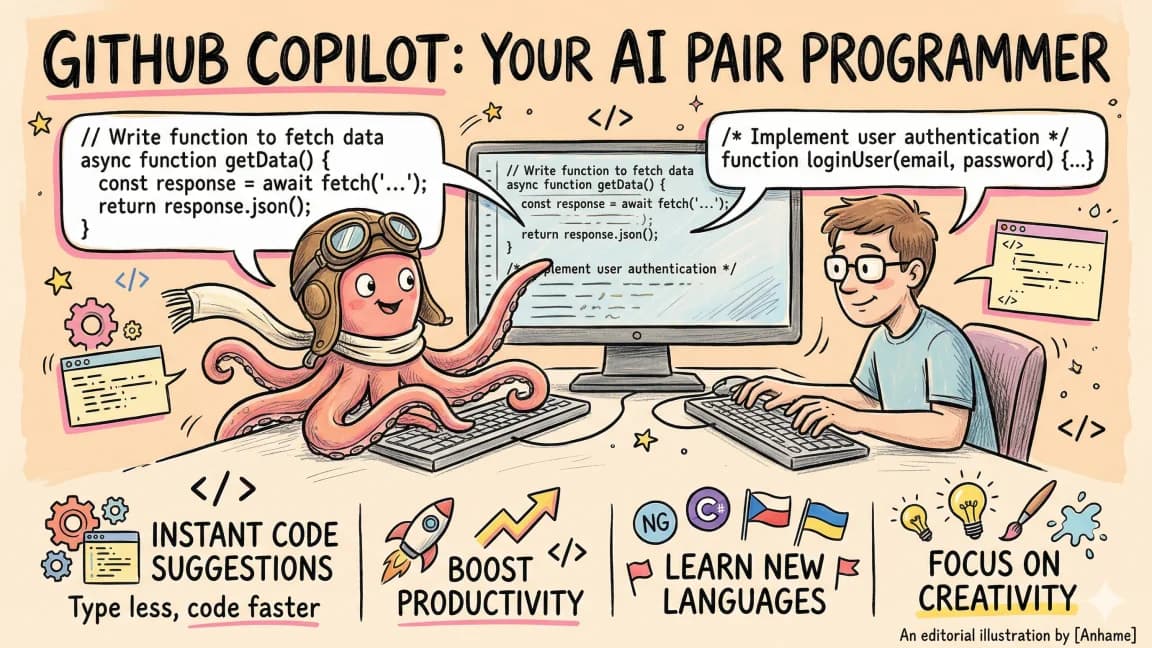
GitHub Copilot's New Usage-Based Billing: What Changed June 1 and What It Costs Now
TL;DR
GitHub Copilot moved to AI Credits billing on June 1. What changed, how Copilot Max and budgets work, and how costs compare to Claude Code and Codex for teams.
GitHub Copilot's billing model changed on June 1, 2026. If you are running Copilot across an engineering team, the change from flat-rate to AI Credits billing means your monthly invoice is now variable - and there are new controls to manage that variability. This post breaks down exactly what changed, who should consider Copilot Max, how the double-billing on code review works, and how the new pricing stacks up against Claude Code and Codex.
Last updated: August 28, 2026
What Changed on August 2, 2026#
The June 1 billing model is unchanged, but the model lineup it bills for has moved a lot since this guide first shipped:
- Opus 5 is now GA in Copilot at $5/$25 per MTok, alongside Sonnet 5 at $2/$10 intro pricing through August 31. The models and pricing reference (verified August 2, 2026) lists both, plus Claude Opus 4.8 fast mode at $10/$50.
- GPT-5.6 Sol, Terra, and Luna replaced the GPT-5.5 family as the headline OpenAI lineup in Copilot: Sol at $5/$30, Terra at $2/$12, Luna at $0.20/$1.20 per MTok. GPT-5.5 remains available at $5/$30.
- Two Gemini models were removed on July 31: Gemini 2.5 Pro and Gemini 3 Flash are gone from every Copilot surface, with Gemini 3.1 Pro (preview) and Gemini 3.6 Flash as the replacements. See the migration guide.
- New models joined the catalog: Grok 4.5 (July 28) at $2/$6, Kimi K2.7 Code at $0.95/$4, and Microsoft's MAI-Code-1-Flash at $0.75/$4.50. GitHub Models, the neutral API surface, was retired on July 30.
- Fable 5 remains in Copilot at $10/$50 even though Anthropic moved it to API-only pricing outside Copilot on July 7. The 30-day data retention requirement is unchanged.
- Code review got agent skills and MCP support (July 29), and enterprise admins got team-level model policy targeting (July 31).
- Code completions stay unlimited. They are not billed in AI Credits on any paid plan - only premium features like chat, code review, and agent tasks consume credits.
- New sign-ups for Copilot Pro, Pro+, and Max remain paused as of August 2, 2026; GitHub has not yet announced a reopening date.
Follow-up: Business and Enterprise seats go prepaid October 1#
On August 28 GitHub announced that Copilot Business and Enterprise seats become prepaid starting October 1, 2026: every assigned seat is charged upfront at the start of each billing cycle, and revoking a seat does not trigger a prorated refund. New credit card and PayPal customers can sign up again from September 1 after strengthened account vetting, and exceeding included usage can block further access until payment is resolved. List prices are unchanged. Full analysis in GitHub Copilot's September reset.
Official Sources#
All links verified August 2, 2026.
| Resource | Link |
|---|---|
| GitHub Copilot billing changelog (June 1) | github.blog/changelog |
| Claude Fable 5 availability (June 9) | github.blog/changelog |
| Copilot models and pricing reference | docs.github.com |
| Copilot individual billing docs | docs.github.com |
| Copilot org and enterprise billing docs | docs.github.com |
| Copilot budget management docs | docs.github.com |
| Gemini 2.5 Pro and Gemini 3 Flash deprecated (July 31) | github.blog/changelog |
| Grok 4.5 available in Copilot (July 28) | github.blog/changelog |
| Copilot code review: agent skills and MCP GA (July 29) | github.blog/changelog |
Pricing and plan details change frequently. Verify against the official docs above before making purchasing decisions.
What Happened June 1 - Flat-Rate to AI Credits Billing Explained#
Before June 1, GitHub Copilot worked on a straightforward seat model: pay a fixed monthly amount per user, get a defined set of features. Simple to budget, simple to explain.
As of June 1, 2026, every Copilot plan now bills based on GitHub AI Credits consumed. Each plan still comes with a monthly included allowance of AI Credits, so for most users using the tool at normal intensity, the change may not produce a higher bill. The shift matters when you go over the included amount.
Here is what the new model means in practice:
- Included credits per plan: each tier (Student, Pro, Pro+, Max, Business, Enterprise) ships with a monthly credit pool.
- Overage billing: once included credits are exhausted, you can continue using Copilot if you have set a spending budget - you will be billed at end of month for those additional credits.
- Individual limits: for individual plans (not org or enterprise), GitHub may limit additional AI Credit consumption based on usage patterns, billing history, and account verification status. If you hit that cap, the path forward is upgrading to the next plan tier.
The practical implication: teams that treated Copilot as a fixed line item now need a spending budget configured, or users will simply stop when their credits run out.
Copilot Max: Who It Is For and What You Get#
Copilot Max launched alongside the June 1 billing changes as an upgrade path for existing Student, Pro, and Pro+ subscribers. New user sign-ups remain paused as of August 2, 2026; GitHub has signaled they will reopen but has not announced a date.
The Max tier is positioned at power users and intensive workflows. It offers higher included AI Credit limits than Pro or Pro+, and higher spending budget ceilings for additional usage. It also unlocks access to models like Claude Fable 5 that are not available on lower tiers.
If you are regularly running into credit limits on Pro+, or you need to use frontier models like Fable 5 as part of autonomous agent workflows, Max is the intended upgrade path. If you are a casual Copilot user doing standard code completion and occasional chat, the lower tiers are likely sufficient.
For org and enterprise teams, Max also integrates with the new user-level budget controls (covered below), which makes it more tractable to give a subset of power users higher limits without opening up the entire org to uncapped spending.
The Real Cost of Copilot Code Review - Actions Minutes Plus AI Credits#
This is the detail most teams will miss. As of June 1, Copilot code review now consumes both GitHub Actions minutes and AI Credits.
If your org is already consuming significant Actions minutes for CI, automated reviews via Copilot will add to that total. The two costs are separate: AI Credits for the model inference, Actions minutes for the compute running the review job.
The default runner for Copilot code review is a standard GitHub-hosted runner. Org admins can now set a default runner at the organization level - this means you can route code review to a self-hosted runner or a custom-configured runner to control the Actions minutes cost. Setting this at the org level applies across all repositories without requiring per-repo configuration.
Before enabling Copilot code review broadly, it is worth auditing your current Actions minutes consumption and estimating what automated review will add. The docs for configuring runners at the org level are at docs.github.com.
User-Level Budget Controls: Practical Setup for Org Admins#
User-level budgets are now generally available for organizations and enterprises. This is the primary tool for preventing surprise overages.
Key things admins need to know:
- Universal budget vs per-user overrides: you can set a single budget that applies to all users, then override it for specific users or groups.
- AI Credits budgets are total, not just overage: unlike some spend controls that only gate additional spend after the included pool, user-level budgets for AI Credits control total usage - including the included monthly allowance. This means you can cap a user below their plan's included credits if needed.
- Email notifications: as users approach their budget limits, admins receive email alerts. You can adjust budgets anytime from billing settings - you do not need to wait for the billing cycle to reset.
- Where to configure: billing settings in your organization's GitHub account, under the budget management section.
For larger orgs with a mix of heavy and light Copilot users, the right setup is typically a conservative universal budget, with explicit higher-limit overrides for the engineers who need more headroom. This avoids the situation where a handful of power users consume credits that would otherwise be available to the rest of the team.
Full documentation is at docs.github.com/copilot/concepts/billing/budgets-for-usage-based-billing.
Fable 5 on Copilot: Extra Cost or Included?#
Claude Fable 5 became generally available on GitHub Copilot on June 9, 2026. It is the first model in Anthropic's Mythos class, designed for long-horizon autonomous coding and knowledge-work tasks. Note that outside Copilot, Fable 5 went API-only on July 7, 2026 at $10/$50 per MTok - but it remains in the Copilot catalog at the same rate.
A few things distinguish Fable 5 from other models available in Copilot:
Pricing: Fable 5 is billed at provider list pricing under usage-based billing. This is not a flat inclusion in your plan - each use pulls from your AI Credits at Anthropic's published rates. Check the Copilot models and pricing reference for the current credit cost per request.
Data retention requirement: Fable 5 requires data retention. Anthropic retains prompts and outputs for up to 30 days to operate the safety classifiers that detect harmful or abusive use. After 30 days, the data is deleted. According to the GitHub changelog, this retained data is not used to train Anthropic's models.
This is a meaningful departure from the other Claude models in Copilot - Claude Opus 4.8, Sonnet 4.5, and Haiku 4.5 all continue to operate under Zero Data Retention. Enabling the Fable 5 policy constitutes acknowledgement of the data retention requirement.
Availability: Fable 5 is available to Copilot Pro+, Max, Business, and Enterprise users. It requires an admin to explicitly enable the policy in Copilot settings - it is off by default.
Enterprise consideration: for organizations with strict data isolation requirements or compliance postures that prohibit third-party retention of code and prompts, the data retention requirement may be a blocker regardless of performance. For those teams, the other Claude models (under ZDR) remain the safer option until Anthropic's safety architecture evolves to support zero-retention operation of the classifier.
There is no BYOK option for Fable 5 within the Copilot interface - you pay at provider list pricing through AI Credits, or you do not use it within Copilot. If you want Fable 5 with BYOK economics, you would need to use it via the Anthropic API directly, outside of Copilot's interface.
Copilot vs Claude Code vs Codex: Pricing Comparison After the Rebill#
The June 1 shift changes the competitive picture for teams deciding between Copilot and alternatives. Here is where the tools stand after the rebill:
| Tool | Base cost | Model access | Billing model | Flat-rate option |
|---|---|---|---|---|
| Copilot Pro | ~$10/mo | Standard pool, premium at credits cost | AI Credits (variable after included) | Included credits only |
| Copilot Pro+ | Higher | Broader model pool | AI Credits (variable) | Included credits only |
| Copilot Max | Higher | Full pool including Fable 5 and Opus 5 | AI Credits (variable) | Included credits only |
| Copilot Business | $19/mo/seat | Standard + some premium | AI Credits (variable) | Included credits only |
| Copilot Enterprise | $39/mo/seat | Full enterprise pool | AI Credits (variable) | Included credits only |
| Claude Code Pro | $20/mo | Sonnet 5 default, Claude models via subscription | Flat subscription | Yes - full flat rate |
| Claude Code Max 5x | $100/mo | Full Claude model access including Opus 5 | Flat subscription | Yes - full flat rate |
| Claude Code Max 20x | $200/mo | Full Claude model access including Opus 5 | Flat subscription | Yes - full flat rate |
| OpenAI Codex | Included in ChatGPT plan | GPT-5.6 family | Per-plan + overflow | Partially, via ChatGPT plan |
The key distinction after the rebill: Claude Code's $20/mo Pro and $100/200/mo Max plans are flat-rate subscriptions. You know what you will pay each month regardless of how many requests you make. Copilot's plans now have a variable component once included credits are exhausted. Plan-level prices above were verified June 1, 2026; per-model token rates were re-verified August 2, 2026 against the Copilot models and pricing reference.
For teams that value billing predictability, flat-rate tools have an advantage. For teams that use Copilot lightly and will stay within included credits, the effective cost is unchanged.
For a deeper breakdown across all tools, see our AI coding tools pricing comparison and the frontier model API pricing tracker.
The Privacy Tier Problem#
The data retention requirement for Fable 5 surfaces a broader issue with Copilot's privacy model that predates the June 1 billing change. The GitGuardian analysis of Copilot security and privacy outlines the distinction between how different plan tiers handle user data.
For Free and lower-tier individual plans, GitHub has historically used prompts and outputs to improve Copilot models, with opt-out mechanisms. Business and Enterprise plans operate under stricter data isolation - prompts and generated code are not used for model training.
The June 1 billing change does not alter this tier structure. What it does change is the cost model for accessing the higher-tier models within those plans. Teams that were already on Business or Enterprise for data isolation reasons will find the new billing model layered on top of their existing privacy posture - they still have the isolation, but usage costs are now variable.
Fable 5's 30-day retention requirement adds a third state to this picture. It applies only to Fable 5, only when the policy is enabled, and operates within Anthropic's architecture rather than GitHub's. An Enterprise customer who enables Fable 5 has GitHub's enterprise data isolation for the platform, but Anthropic's retention for the specific model's safety operations.
For compliance-sensitive teams, the practical guidance is: treat Fable 5 as requiring explicit legal review before enabling, separate from the general Copilot data handling your org has already assessed.
What Teams Should Do Now#
Given the June 1 changes, here is a concrete audit checklist:
1. Check current credit consumption. Review your org's billing settings to see where teams are relative to their included credit pools. The billing dashboard should now show AI Credit usage per plan tier.
2. Set user-level budgets before the next billing cycle. Do not wait. Configure a universal budget that reflects your intended spend ceiling, then override for power users who need higher limits. This prevents surprise end-of-month invoices.
3. Audit Copilot code review enablement. If automated code review is on across repositories, account for Actions minutes in your cost projection. Consider whether routing to a self-hosted runner reduces the marginal cost to acceptable levels.
4. Decide on Fable 5 as a separate policy decision. Do not enable it by default because it is available. Run it past your security and legal teams first given the data retention requirement. If the performance gains are compelling for your autonomous agent workflows, the 30-day retention with no-training guarantees may be acceptable - but make that decision deliberately.
5. Compare against alternatives if flat-rate predictability matters to your team. If your billing and finance teams are pushing back on variable AI spend, tools like Claude Code (flat subscription) or the migrate to Claude Code path may be worth evaluating. The GitHub Copilot guide covers the full feature surface if you want a reference point for what you would be trading away.
6. Set a calendar reminder for when new sign-ups reopen. New user sign-ups for Copilot Student, Pro, Pro+, and Max were still paused as of August 2, 2026. GitHub has not announced a reopening date - watch the billing changelog for the announcement.
The transition to usage-based billing is not inherently bad for teams - it enables more flexible access to better models and gives admins real spending controls that the flat-rate model never had. The risk is treating it as the same product with the same budget assumptions, and discovering the difference when the invoice arrives.
Frequently Asked Questions#
What is GitHub AI Credits billing?#
GitHub AI Credits is the usage unit introduced on June 1, 2026 for GitHub Copilot. Each Copilot plan includes a monthly pool of AI Credits. Using Copilot features - completions, chat, code review, agent tasks - consumes credits. Once included credits are exhausted, usage continues if a spending budget is configured and you are billed for additional credits at end of month.
Does Copilot Max have unlimited usage?#
No. Copilot Max offers higher included credit limits and higher spending budget ceilings than Pro or Pro+, but it is not unlimited. Once you exhaust included credits, additional usage accrues against your configured spending budget and is billed monthly.
Does Claude Fable 5 in Copilot cost extra?#
Yes. Fable 5 is billed at Anthropic's provider list pricing via AI Credits. It is not included in the flat plan price. See the Copilot models and pricing docs for current per-request costs.
Can I use Fable 5 with Zero Data Retention in Copilot?#
No. Fable 5 requires 30-day data retention for Anthropic's safety classifiers. ZDR is available for other Claude models in Copilot (Opus 4.8, Sonnet 4.5, Haiku 4.5), but not for Fable 5.
What happens when my Copilot credits run out?#
For individual plans, GitHub may limit further usage based on your billing history and account status if no spending budget is set. For org and enterprise plans, usage stops or is gated by admin-configured user-level budgets. Setting a spending budget allows usage to continue with end-of-month billing for additional credits.
Do code completions count against my AI Credits?#
No. Code completions and next edit suggestions are not billed in AI Credits and remain unlimited on all paid Copilot plans. Only premium features - chat, code review, agent tasks - consume credits (verified August 2, 2026 against the Copilot models and pricing docs).
Is Opus 5 in Copilot more expensive than on the Anthropic API?#
No, the token rates match. Opus 5 bills at $5/$25 per MTok in Copilot, the same list pricing Anthropic publishes on its own API. Sonnet 5 intro pricing ($2/$10 through August 31) is also mirrored. The difference is the unit - Copilot converts token usage into AI Credits at 1 credit = $0.01, and your plan's included allowance covers the first portion.
Get the next deep dive like this in your inbox
One email a week on GitHub Copilot and the rest of the AI dev stack. Free.
Read next on AI coding tools
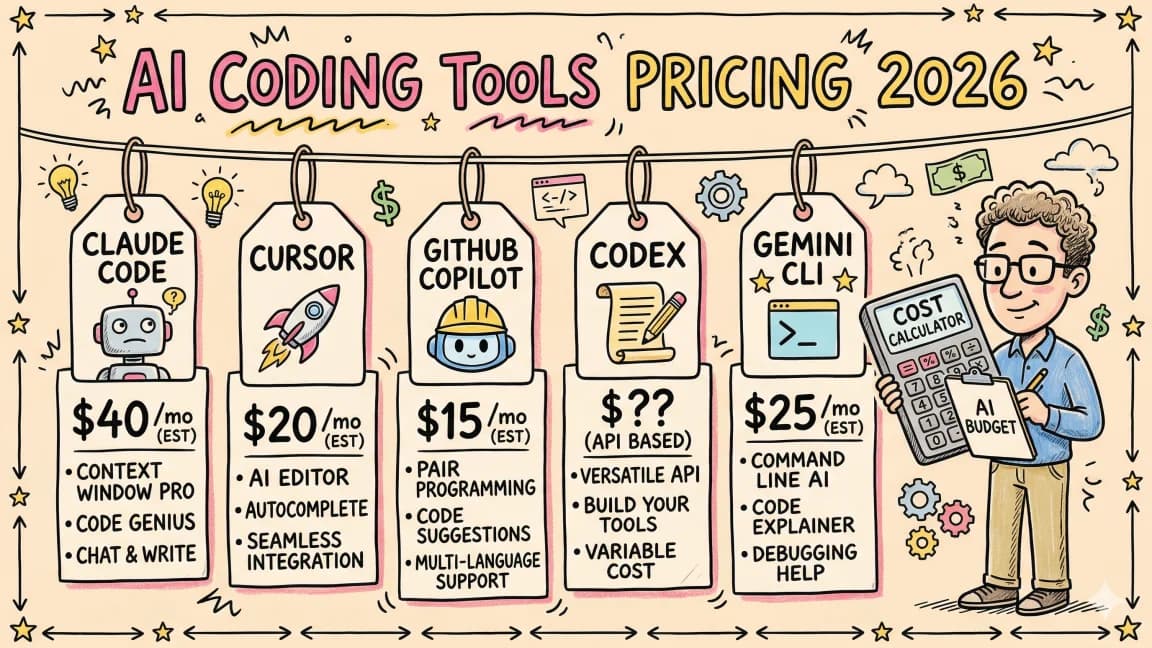
AI Coding Tools Pricing Comparison 2026
AI coding tools pricing, verified Sep 28, 2026: Claude Code, Codex, Cursor, Copilot, Antigravity, Windsurf and more. Free tiers, pro plans and hidden costs.
12 min readCopilot Pro+ Premium Requests Explained in 2026: What Teams Miss in Pricing Comparisons
Copilot Pro vs Pro+ comes down to premium request burn, not sticker price. How requests and the June 2026 move to AI Credits work, and how to avoid surprises.
9 min readHow to Migrate from GitHub Copilot to Claude Code
A practical migration guide for developers switching from GitHub Copilot to Claude Code. What changes, what stays the same, and how to get productive fast.
7 min readNew here? Start with
Technical content at the intersection of AI and development. Building with AI agents, Claude Code, and modern dev tools - then showing you exactly how it works.