GitHub Copilot CLI, BYOK, and AI Credits: The New Cost-Control Stack

TL;DR
GitHub's June Copilot updates point beyond autocomplete: CLI access, bring-your-own-key model routing, AI credit metrics, and external agent providers make Copilot a governed agent platform.
GitHub's latest Copilot updates are easy to read as separate feature announcements: a new CLI interface, bring-your-own-key support, AI credit reporting, Claude as an agent provider in JetBrains, and more code review polish.
Read together, they say something bigger.
Copilot is becoming a control plane for coding agents. The product is no longer only about where suggestions appear. It is about where agent work runs, which model provider pays for it, which teams can use it, how spend gets measured, and how generated work moves into review.
That is the useful lens for engineering teams. The terminal agent matters, but the cost and governance layer matters more.
Last updated: June 23, 2026
What GitHub Shipped This Week#
GitHub's June 19-23 Copilot changelog tells a coherent story:
- Copilot CLI's new terminal interface is generally available.
- The GitHub Copilot app now supports BYOK for OpenAI, Azure OpenAI, Microsoft Foundry, Anthropic, LM Studio, Ollama, and OpenAI-compatible endpoints.
- AI credits consumed per user now appear in the Copilot usage metrics API.
- Claude as an agent provider is in public preview for JetBrains IDEs, alongside model picker improvements and a per-turn AI credits indicator.
- Copilot code review now uses repository-level AGENTS.md files, which brings project instructions into review feedback.
That bundle is more important than any one item. It turns Copilot into a governed routing layer across terminal work, app sessions, IDE agents, review workflows, and billing data.
For the broader platform context, start with GitHub Copilot Coding Agent and CLI. This piece is narrower: how the June updates change cost control.
The Take: Copilot Is Becoming the Enterprise Agent Ledger#
The old Copilot buying question was simple: do developers want autocomplete and chat inside the editor?
The new question is different: can your team delegate work to agents without losing track of cost, model choice, policy, and review load?
GitHub is positioning Copilot as the ledger for that system.
The CLI gives developers a local terminal surface. BYOK gives teams a route for their own model providers. AI credit reporting gives administrators a way to see per-user consumption. Claude provider support shows Copilot is willing to host outside agent runtimes in specific surfaces. AGENTS.md support connects repository instructions to review behavior.
That is not just "more Copilot." It is a response to the same pressure behind Claude Code vs Codex App: teams are standardizing around agent workflows, but they still need a place to manage who can spend, which providers are allowed, and what evidence must accompany generated code.
Why BYOK Matters, Even If You Do Not Use It Immediately#
BYOK is not magic cost savings. Your OpenAI, Anthropic, Azure, or local model bill still exists. Local Ollama or LM Studio providers still need hardware and operational discipline.
The important part is optionality.
When one vendor bundles models, billing, and workflow into a single plan, the organization has fewer levers. BYOK separates the agent surface from the model provider. That gives teams room to:
- Route sensitive work to approved enterprise endpoints.
- Test a local model without changing the whole developer workflow.
- Compare bundled Copilot credits against direct provider billing.
- Keep the same app or CLI surface while switching model providers.
- Reserve premium bundled credits for the tasks where they actually pay off.
That is why BYOK belongs next to AI coding tools pricing, not only next to model feature lists. Once coding agents run multi-step tasks, the model bill becomes a workflow design question.
AI Credits Turn Usage Into a Management Problem#
The June 19 metrics update is the piece administrators should care about. Per-user AI credit consumption in the Copilot usage metrics API means usage-based billing can be inspected at the same level where teams already manage seats and adoption.
That matters because agent work is uneven. One developer may use Copilot for small completions. Another may run long terminal sessions, cloud-agent tasks, review requests, and expensive model turns. A flat active-user count does not explain that difference.
The new reporting does not automatically prove value. It only creates the possibility of better value measurement.
Teams still need to connect spend to outcomes:
| Metric | Why it matters |
|---|---|
| AI credits consumed per user | Shows where agent usage is concentrating |
| Agent sessions started | Separates passive chat from delegated work |
| Pull requests opened | Shows whether sessions produce reviewable artifacts |
| Pull requests merged | Connects usage to accepted changes |
| Review cycles | Shows whether the agent creates review debt |
| Failed checks | Finds workflows that spend credits without producing usable output |
This is the same bottleneck we covered in AI Coding Agents Move the Bottleneck to Review Queues. The scarce resource is no longer just code generation. It is the system that turns generated code into trusted merges.
The CLI Changes the Adoption Path#
Copilot CLI's new terminal interface going generally available is the adoption lever. Developers who already live in the terminal do not want every agent task forced through an editor sidebar.
GitHub's Copilot CLI page positions the product as a GitHub-native terminal agent that works with issues and pull requests, can run parallelized subagents, and is included across Copilot Free, Pro, Pro+, Max, Business, and Enterprise subscriptions. It also says each interaction draws on the plan's AI Credits allowance.
That last sentence is the product strategy.
Copilot CLI is not only a local agent. It is a local agent tied into GitHub identity, plan access, organization policy, and usage accounting. That is where GitHub has leverage against terminal-native competitors.
Claude Code and Codex can be stronger choices for developers who want direct local control, deeper workspace orchestration, or a model-specific workflow. Copilot CLI is strongest when the organization wants the terminal path to remain inside the same GitHub governance surface as issues, pull requests, code review, and billing.
The Opposing Take: This Does Not Solve Agent Cost by Itself#
The skeptical read is fair: more controls do not automatically make agentic coding cheap or effective.
BYOK can move spend from one invoice to another. AI credit metrics can create dashboards that show usage without showing value. CLI access can encourage more delegation before teams have review capacity. Provider choice can become a menu of expensive options rather than a routing strategy.
That is why the right conclusion is not "standardize on Copilot for everything."
The better conclusion is this:
If your team already runs on GitHub and wants centralized policy, Copilot's June updates make it harder to ignore. If your team optimizes for raw agent capability, local control, or independent model choice, you should still compare Copilot CLI against Claude Code, Codex, Cursor, and other tools task by task.
The winning setup may be mixed:
- Copilot for GitHub-native issue, PR, and review workflows.
- Claude Code or Codex for long local investigations and parallel implementation.
- BYOK for provider experiments and sensitive routing.
- Usage metrics for budget guardrails.
- Review queues and receipts for merge discipline.
That mix is messier than a single vendor story. It is also closer to how serious teams actually adopt developer tooling.
From the archive
GLM-5.2 Local Deployment: Running Z.ai's 744B Model on Consumer Hardware
Jun 23, 2026 • 7 min read
LangChain Rubrics Make Agent Evals Part of the Runtime
Jun 23, 2026 • 8 min read
Local Coding Agent Workspaces Are the New IDE Surface
Jun 23, 2026 • 8 min read
In Praise of Memcached: Why Simpler Caching Might Be Better
Jun 23, 2026 • 7 min read
What Teams Should Do Now#
Do not start by enabling every agent surface.
Start by writing a cost-control policy that answers five questions:
- Which Copilot surfaces are approved: CLI, app, IDE, cloud agent, code review?
- Which model providers are allowed through BYOK?
- Which repos can use agentic workflows?
- What evidence must every agent-authored PR include?
- Which usage metrics decide whether the rollout expands or shrinks?
Then run a small pilot. Pick one repo, one team, and one class of task. Compare Copilot CLI with your existing Claude Code, Codex, or Cursor workflow. Track credits, PR quality, review cycles, and merge rate.
That is how you avoid the common failure mode: lots of agent activity, no clear answer on whether it helped.
FAQ#
What is GitHub Copilot BYOK?#
GitHub Copilot BYOK means bring your own key. In the Copilot app, GitHub says users can add their own model providers, including OpenAI, Azure OpenAI, Microsoft Foundry, Anthropic, LM Studio, Ollama, and OpenAI-compatible endpoints, then use those providers in agent sessions.
Does BYOK make Copilot cheaper?#
Not automatically. BYOK changes where model spend is routed. It can reduce cost if your team already has better provider pricing, local inference capacity, or approved enterprise endpoints. It can also increase cost if developers route heavy agent sessions to expensive models without guardrails.
What changed in Copilot usage metrics?#
GitHub added per-user AI credit consumption to the Copilot usage metrics API on June 19, 2026. That gives administrators a clearer way to see who is consuming AI credits, which is essential now that Copilot agent workflows can consume more than simple autocomplete.
Is Copilot CLI now generally available?#
Yes. GitHub announced on June 23, 2026 that the new Copilot CLI terminal interface is generally available. GitHub positions it as a terminal-native agent tied into Copilot subscriptions and AI Credits.
Should teams choose Copilot CLI instead of Claude Code or Codex?#
Choose based on workflow, not brand. Copilot CLI is compelling when GitHub governance, issues, pull requests, and usage accounting matter. Claude Code and Codex may still be better for teams that prioritize direct local control, model-specific workflows, or independent multi-agent orchestration.
Sources#
- GitHub Changelog: Copilot CLI new terminal interface is generally available
- GitHub Changelog: GitHub Copilot app support for BYOK
- GitHub Changelog: AI credits consumed per user now in the Copilot usage metrics API
- GitHub Changelog: New features and Claude as agent provider preview in JetBrains IDEs
- GitHub Changelog: Copilot code review AGENTS.md support and UI improvements
- GitHub Copilot CLI product page
- GitHub Docs: Copilot usage metrics
Read next
GitHub Copilot Agent Finder: What ARD Means for Third-Party AI Tools in 2026
GitHub's Agent Finder discovers and invokes Claude, Codex, MCP servers, and skills automatically. Here is how the new ARD specification changes AI coding tool integration.
8 min readGitHub Copilot Coding Agent and CLI: Why GitHub Is Back in the Agent Race
GitHub Copilot is moving from autocomplete into asynchronous coding agents, terminal workflows, MCP, skills, and model choice. Here is what changed in 2026.
8 min readAI Coding Tools Pricing Comparison 2026
Complete pricing breakdown for every major AI coding tool. Claude Code, Cursor, Copilot, Windsurf, Codex, Augment, and more. Free tiers, pro plans, hidden costs, and what you actually get for your money.
12 min readShare
Developers Digest
Technical content at the intersection of AI and development. Building with AI agents, Claude Code, and modern dev tools - then showing you exactly how it works.
300+ videos30K+ GitHub stars850+ articles
Related Tools
AI Coding328K views

GitHub Copilot
The original AI coding assistant. 77M+ developers. Inline completions in VS Code and JetBrains. Copilot Workspace genera...
View ToolAI CodingAgent

OpenAI Codex
OpenAI's coding agent for terminal, cloud, IDE, GitHub, Slack, and Linear workflows. Reads repos, edits files, runs comm...
View ToolAI Coding68K views

Lovable
AI app builder - describe what you want, get a deployed full-stack app with React, Supabase, and auth. No coding requi...
View ToolAI Coding

Bolt
StackBlitz's in-browser AI app builder. Full-stack apps from a prompt - runs Node.js, installs packages, and deploys....
View ToolApps from Developers Digest
SaaS Products
Overnight Agents
Spec out AI agents, run them overnight, wake up to a verified GitHub repo.
View AppDeveloper ToolsIn Progress
SkillForge CI
Catch broken SKILL.md files in CI before they hit your team.
View AppDeveloper ToolsIn Progress
Repo Postcard
Turn any GitHub repo into a shareable PNG. README hero in one shot.
View AppRelated Guides
Guide
AI Agent Frameworks Compared: LangGraph vs CrewAI vs Mastra vs CopilotKit
Deep comparison of the top AI agent frameworks - LangGraph, CrewAI, Mastra, CopilotKit, AutoGen, and Claude Code.
AI AgentsGuide
gh CLI Integration - Claude Code
Full GitHub CLI support for automated PR and issue workflows.
Claude CodeGuide
Routines (Web) - Claude Code
Managed scheduling on Anthropic infrastructure with API and GitHub triggers.
Claude CodeRelated Videos
GitHub Copilot Spark Launch: New Rival to Cursor + v0? Full Update in 6 Minutes
Learn The Fundamentals Of Becoming An AI Engineer On Scrimba; https://v2.scrimba.com/the-ai-engineer-path-c02v?via=developersdigest Introducing GitHub Spark and Exciting GitHub Copilot Updates!...
Video·
Continue: Incredible Open Source Github Copilot Alternative. Use Groq + Llama-3, Ollama and more
Introducing Continue: The Open Source Alternative to GitHub Copilot for Coding The video introduces 'Continue,' an open source alternative to GitHub Copilot, designed to enhance coding with...
Video·
GitHub Copilot Chat
#Github #GithubCopilot #GitHubCopilotChat #VSCode #ProgrammingWorkflow #CodeProductivity In this video, we dive into GitHub Copilot Chat in VS Code, exploring its powerful capabilities and...
Video·
Related Posts

8 min read
GitHub Copilot
GitHub Copilot Agent Finder: What ARD Means for Third-Party AI Tools in 2026
GitHub's Agent Finder discovers and invokes Claude, Codex, MCP servers, and skills automatically. Here is how the new AR...
8 min read
GitHub Copilot
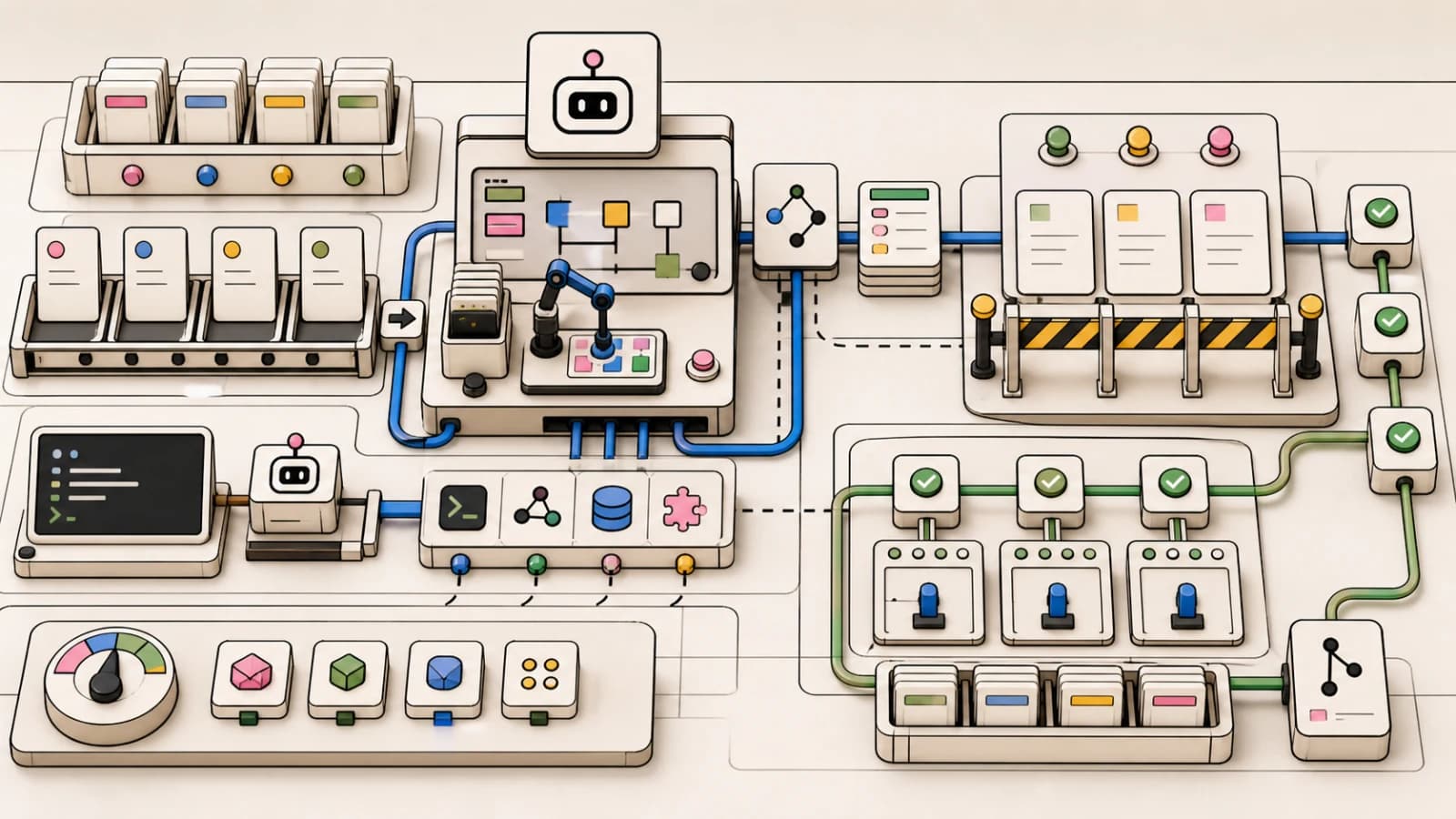
GitHub Copilot Coding Agent and CLI: Why GitHub Is Back in the Agent Race
GitHub Copilot is moving from autocomplete into asynchronous coding agents, terminal workflows, MCP, skills, and model c...

12 min read
AI Coding
AI Coding Tools Pricing Comparison 2026
Complete pricing breakdown for every major AI coding tool. Claude Code, Cursor, Copilot, Windsurf, Codex, Augment, and m...
11 min read
Claude Code
Claude Code vs Codex App in 2026: Local Agent Pairing vs Cloud Agent Orchestration
A deep comparison of Claude Code and OpenAI Codex app based on official docs and product updates: execution model, secur...

8 min read
AI Coding
AI Coding Agents Move the Bottleneck to Review Queues
As coding agents get easier to delegate to, the scarce resource shifts from code generation to review capacity, CI minut...
11 min read
AI Coding
The New AI Coding Stack I Would Pick Today
If I were rebuilding my AI coding workflow on May 30, 2026, I would not pick one magic tool. I would pick a layered stac...
Build with the member tools

Get Smarter About AI Dev
New tutorials, open-source projects, and deep dives on coding agents - delivered weekly.
One email per weekReal code, not theoryFree forever