F3 Is a Reminder That File Formats Are Becoming Runtime Contracts
TL;DR
F3 is trending on Hacker News as a research prototype for a future-proof columnar file format. The useful takeaway is not to replace Parquet tomorrow. It is that data files are starting to carry more of their own runtime contract.
F3 is on the Hacker News front page today, and the thread is exactly what you would expect when someone proposes a "file format for the future."
Some people see a serious research idea: a next-generation columnar format with embedded WebAssembly decoders so files can stay readable even when native library support is missing. Other people see a prototype with a thin README, no obvious migration path, and a familiar problem: Parquet is everywhere, so why would anyone leave?
Both reactions are fair.
The useful takeaway is not "replace Parquet." It is this:
File formats are becoming runtime contracts.
Last updated: June 23, 2026
That matters for data systems, analytics tools, and AI agents that increasingly consume files they did not create.
What F3 Is#
F3 stands for Future-proof File Format. The project describes itself as an open-source data file format designed around efficiency, interoperability, and extensibility. The README is explicit that it is a research prototype and should not be used in production.
The paper's core claim is that modern columnar formats like Parquet and ORC were designed for an older hardware and workload environment. They can evolve, but every evolution runs into compatibility problems. Engines need native decoders. Tooling drifts. New encodings can be hard to deploy everywhere.
F3's answer is to make files self-describing in a stronger way:
- the file carries data
- the file carries metadata
- the file can carry WebAssembly binaries that decode the data
- native decoders can still exist
- Wasm acts as a compatibility fallback when native support is unavailable
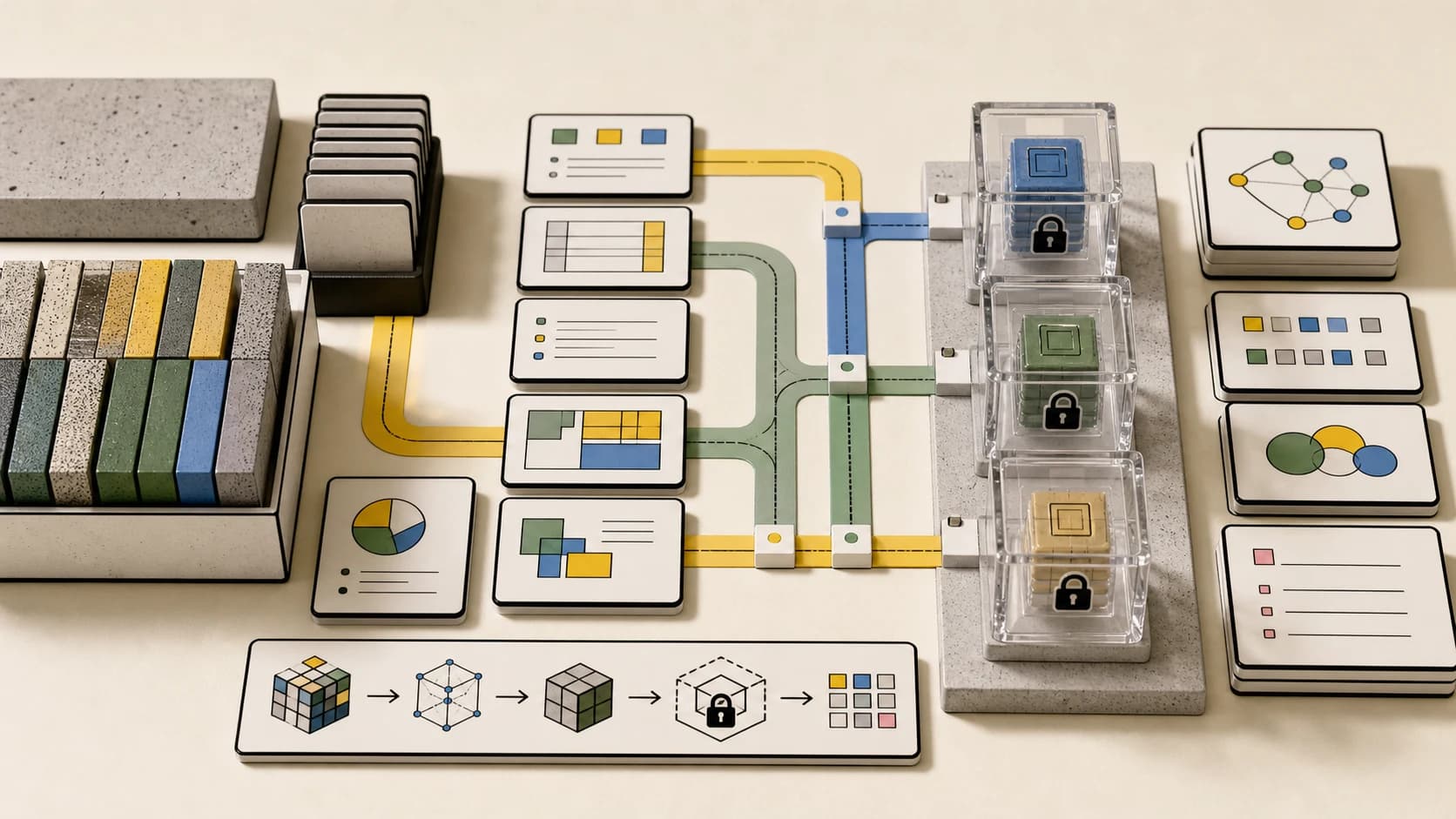
That is the interesting bit. The file does not just describe its shape. It can bring a portable decoder with it.
Why Developers Were Skeptical#
The HN thread had a clear theme: the repo does not make the case quickly enough.
People asked:
- What is this a file format for?
- What Parquet shortcomings does it fix?
- Why would anyone leave Parquet or ORC?
- Where are the examples?
- Is embedded executable code inside data a security risk?
- Is this a research artifact or a project with adoption momentum?
Those are not nitpicks. File formats live or die on boring adoption constraints. A better format that nobody can read is worse than a flawed format that every warehouse, query engine, notebook, ETL tool, and object-store scanner already supports.
Parquet has massive present-tense gravity. Spark reads it. DuckDB reads it. BigQuery reads it. Snowflake reads it. Pandas, Polars, Arrow, Trino, Athena, and a pile of internal systems read it. That support is the product.
So the practical stance is simple: F3 is not a migration recommendation today.
It is a design signal.
From the archive
GitHub Copilot CLI, BYOK, and AI Credits: The New Cost-Control Stack
Jun 23, 2026 • 8 min read
GLM-5.2 Local Deployment: Running Z.ai's 744B Model on Consumer Hardware
Jun 23, 2026 • 7 min read
LangChain Rubrics Make Agent Evals Part of the Runtime
Jun 23, 2026 • 8 min read
Local Coding Agent Workspaces Are the New IDE Surface
Jun 23, 2026 • 8 min read
The Wasm Decoder Idea Is the Signal#
The embedded Wasm decoder idea points at a bigger shift.
Historically, a data file mostly carried bytes and schema. The runtime carried the intelligence:
- the engine knew the format
- the library knew the encoding
- the application knew how to interpret fields
- the user hoped versions lined up
F3 pushes some of that contract into the artifact itself. If a file uses a new encoding, it can include a decoder implementation. The consumer still needs a sandbox and execution policy, but the file is no longer helpless without a matching native library.
That is a powerful direction for long-lived data.
Think about files that need to survive:
- scientific archives
- compliance exports
- ML training corpora
- public datasets
- government records
- company data lakes
- analytics snapshots
The longer a file has to live, the more painful decoder drift becomes.
This is also where the security question becomes real. A file that carries executable logic must be treated differently from a file that only carries inert bytes. Wasm is designed for sandboxed execution, but sandboxing is a policy surface, not a magic word. Readers need resource limits, capability controls, deterministic execution expectations, and a clear answer for "what is this decoder allowed to do?"
That makes F3 less like a simple format and more like a runtime boundary.
Why This Matters for AI Agents#
AI agents make the file-format problem sharper.
Agents are constantly asked to inspect unfamiliar artifacts:
- CSV exports
- Parquet datasets
- JSON logs
- notebooks
- model cards
- trace files
- benchmark outputs
- internal reports
The agent often sees the surface text but not the deep contract. It can summarize a README, but can it verify the encoding? Can it recover column semantics? Can it explain a weird compression scheme? Can it cite which decoder produced the data?
As agents move closer to data engineering work, the file is not just input. It is an operational boundary.
We made a similar argument in agent workspaces need filesystem contracts: agents become safer when their workspaces expose clear, inspectable contracts. F3 applies that mindset lower in the stack. The file itself becomes more self-explaining and self-contained.
That does not mean agents should blindly execute Wasm from random files. It means agent runtimes need a stronger notion of file trust:
- inert metadata is safe to inspect
- embedded code requires sandbox policy
- generated decoders need provenance
- derived values need receipts
- file-level capabilities should be explicit
This is the same trust-boundary lesson that shows up in MCP servers, plugin systems, and tool-call sandboxes. Once data can carry behavior, the reader needs policy.
Where F3 Could Matter#
F3's best near-term use case is not replacing every Parquet file in a data lake.
The better fit is research and specialized systems where format evolution is the bottleneck:
- testing new encodings without waiting for every engine to ship native support
- distributing datasets with portable decoding behavior
- experimenting with hardware-aware layouts
- preserving long-lived scientific or compliance datasets
- building engines that can safely execute file-provided decoders
That is still meaningful. Research prototypes do not need to win the whole market to move the conversation.
The important question is whether the idea can be packaged into something boring enough for real operators:
- clear examples
- obvious Parquet comparisons
- reproducible benchmarks
- sandbox defaults
- a small reader API
- compatibility with Arrow-like workflows
- a migration story for existing data lakes
HN was right to ask for the "why" upfront. A future file format has to win trust before it can win adoption.
My Take#
F3 is interesting because it treats file compatibility as a runtime problem, not just a schema problem.
That is a big idea.
It is also nowhere near enough to overcome Parquet by itself. The data world is not short on clever formats. It is short on formats that every tool reads, every team trusts, and every operator can debug at 2 a.m.
So the practical takeaway is not "move to F3."
The takeaway is to watch the contract shift:
- files will carry richer metadata
- formats will need safer extension points
- portable execution will become more common
- readers will need policy, not just parsers
- agents will need to reason about file provenance and decoder trust
That is bigger than F3. It is the direction data infrastructure has to go if files are going to outlive the tools that created them.
FAQ#
What is F3?#
F3 is a research prototype for a future-proof columnar data file format. It is designed around efficiency, interoperability, and extensibility, including embedded WebAssembly decoders.
Is F3 ready for production?#
No. The F3 README says the project is a research prototype and should not be used in production.
Is F3 trying to replace Parquet?#
The paper compares F3 against existing columnar formats such as Parquet and ORC, but developers should not treat it as a drop-in replacement today. Parquet's ecosystem support remains the practical default.
Why embed Wasm decoders in a file?#
The idea is that a file can remain readable even when a native decoder for its encoding is not available. Wasm provides a portable fallback, assuming the reader has a safe sandbox and execution policy.
Is executable code inside a data file risky?#
Yes, it creates a trust boundary. Wasm can reduce risk through sandboxing, but readers still need resource limits, capability controls, provenance checks, and a policy for whether embedded decoders can run at all.
Continue Reading#
- Workers RPC Now Bridges Python and JavaScript: No Schemas, No Serialization Code
- Cloudflare's x402 Monetization Gateway Brings Micropayments to the Edge
Sources#
Fetched June 23, 2026.
Read next
Agent Workspaces Need Filesystem Contracts
GitHub's latest agent workspace trend points at a boring but important primitive: agents need explicit filesystem contracts before they get more tools.
8 min readCodebase Graphs Are the New Agent Map
Graphify is trending because coding agents keep hitting the same wall: they can edit files, but they still need a durable map of how the codebase, docs, schemas, and decisions connect.
8 min readThe MCP Server Ecosystem: A Developer's Guide for 2026
An opinionated guide to the MCP server ecosystem in 2026. Curated picks by category, real configuration examples, installation commands, and honest assessments of what works and what does not.
13 min readShare
Developers Digest
Technical content at the intersection of AI and development. Building with AI agents, Claude Code, and modern dev tools - then showing you exactly how it works.
300+ videos30K+ GitHub stars850+ articles
Related Tools
Infrastructure
C
CSS Modules
Locally-scoped CSS for component-based apps. Plain CSS files with hashed class names, no runtime overhead, no learning c...
View ToolInfrastructureOpen source

E2B
Open-source cloud sandboxes for AI agents. Isolated environments that start in under 200ms, run code in Python, JavaScri...
View ToolApps from Developers Digest
Developer ToolsIn Progress
agentfs
Give your agents a filesystem that branches like git. Crash-safe by default.
View AppDeveloper Tools
Voice
Talk, get text. A Mac dictation app that doesn't waste your words.
View AppDeveloper ToolsIn Progress
SkillForge CI
Catch broken SKILL.md files in CI before they hit your team.
View AppRelated Guides
Guide
.claude/rules Directory - Claude Code
Path-specific rules that only load for matching files.
Claude CodeGuide
Read Tool - Claude Code
Read file contents with line limiting, offset, and binary support.
Claude CodeGuide
Write Tool - Claude Code
Create or overwrite files; requires permission for existing paths.
Claude CodeRelated Videos
Related Posts
8 min read
AI Agents
Agent Workspaces Need Filesystem Contracts
GitHub's latest agent workspace trend points at a boring but important primitive: agents need explicit filesystem contra...

8 min read
AI Coding
Codebase Graphs Are the New Agent Map
Graphify is trending because coding agents keep hitting the same wall: they can edit files, but they still need a durabl...

13 min read
MCP
The MCP Server Ecosystem: A Developer's Guide for 2026
An opinionated guide to the MCP server ecosystem in 2026. Curated picks by category, real configuration examples, instal...

8 min read
Context Engineering
The 98% Context Reduction Pattern
Efficient agents do not stuff every tool result into the model context. They keep intermediate state in code, files, and...
8 min read
Trending
Headroom: Compress Agent Tool Output Before It Reaches the LLM
Headroom is a context compression layer that intercepts your AI agent's tool outputs and strips 60-95% of the tokens bef...

7 min read
AI Agents
Agent-Native Apps Need Shared Actions, Not UI Puppeteering
BuilderIO's Agent-Native framework is trending because it gives AI apps a cleaner contract: one action layer shared by t...
Build with the member tools

Get Smarter About AI Dev
New tutorials, open-source projects, and deep dives on coding agents - delivered weekly.
One email per weekReal code, not theoryFree forever