Claude Managed Agents: Dreaming, Outcomes, and Multi-Agent Orchestration Explained
The Fable 5 Moment
31 parts- 1Claude Mythos 5 Explained: What It Is, Who Can Access It, and Why It's Gated
- 2Migrating to Claude Fable 5: The Practical Guide
- 3Claude Fable 5 Access After the June 22 Deadline: Where Things Stand
- 4Claude Fable 5 vs GPT-5.6 Sol: Benchmarks, Pricing, and When Each Wins
- 5Fable 5 vs Opus 4.8: A Data-Driven Decision Guide for Engineering Teams
- 6How to Model Fable 5 Costs Before They Blow Up Your Budget
- 7Claude Fable 5 API: Production Integration Patterns, Rate Limits, and Migration Gotchas
- 8Handling Fable 5 Refusals: A Working Guide to the Fallback API
- 9Why Fable 5 Refuses Your Cybersecurity Queries (And How the Fallback Works)
- 10Fable 5's Hidden Guardrails: What Developers Need to Know About Silent Degradation
- 11Fable 5 Broke Enterprise ZDR Agreements: What Dev Teams Must Do Now
- 12Claude Managed Agents: Dreaming, Outcomes, and Multi-Agent Orchestration ExplainedCurrent
- 13Claude Managed Agents Public Beta: What's Actually Available vs What's Gated
- 14Dario Amodei Wants FAA-Style AI Regulation: Open Questions for Developers
- 15The Exponential and the Working Developer: Sitting With Amodei's Hardest Questions
- 16The Dario Paradox: Warning About the Exponential While Shipping It
- 17The Pushback on Amodei's Exponential Essay: Too Slow, Too Convenient, or About Right?
- 18Fable 5 Before June 22: The Decision Checklist for Every Plan Tier
- 19Fable 5 on AWS Bedrock: When Your Data Leaves the AWS Boundary
- 20Why Claude Desktop Installs a 1.8 GB Hyper-V VM on Windows
- 21Anthropic Model Names Explained: Fable, Mythos, Opus, Sonnet
- 22Managed Agents vs LangGraph vs Rolling Your Own: Who Should Run Your Agent Loop in 2026
- 23Claude Usage Limits With Fable 5: Windows and Burn Rates
- 24Fable 5 for Government and Regulated Teams: The GovCloud Question
- 25Fable 5 vs DeepSeek V4: The Cost-Quality Gap Measured in Real Tasks
- 26Fable 5 Orchestrator Playbook: Smart Model, Cheap Workers
- 27Prompt Caching Economics on Fable 5: When the 5-Minute TTL Pays
- 28Fable 5 with 1M Context: What Actually Works in Practice
- 29Claude Effort Levels Explained: Fable 5, Opus 5.5, Haiku 5.5
- 30Fable 5 Effort Levels vs Switching Models: When to Dial and When to Change
- 31Recursive Self-Improvement: What Fable 5, Dario's Essay, and Anthropic's Own Data Actually Tell Us
TL;DR
Claude Managed Agents added dreaming, outcomes and multi-agent orchestration in 2026. How each primitive works and when to use the three together.
Anthropic launched Claude Managed Agents as a hosted harness for long-running agent work. On April 8, 2026, the initial public beta arrived on the Claude Platform. Then on May 6, 2026, Anthropic shipped three additions that changed the scope of what the platform can do: dreaming (research preview), outcomes (public beta), and multi-agent orchestration (public beta).
This post covers all three together - what they are, how they connect, and when to reach for them over a local agent loop.
Last updated: June 10, 2026
What Changed in the April-May 2026 Updates#
The April 8 launch gave developers a managed harness with secure sandboxing, credential management, durable session state, and persistent event history - replacing the need to build your own agent loop from scratch.
The May 6 update added three distinct primitives on top of that foundation:
| Primitive | Status | What it solves |
|---|---|---|
| Dreaming | Research preview (request access) | Agents repeating mistakes across sessions |
| Outcomes | Public beta | Vague or implicit definitions of "done" |
| Multi-agent orchestration | Public beta | Tasks too large for one context window |
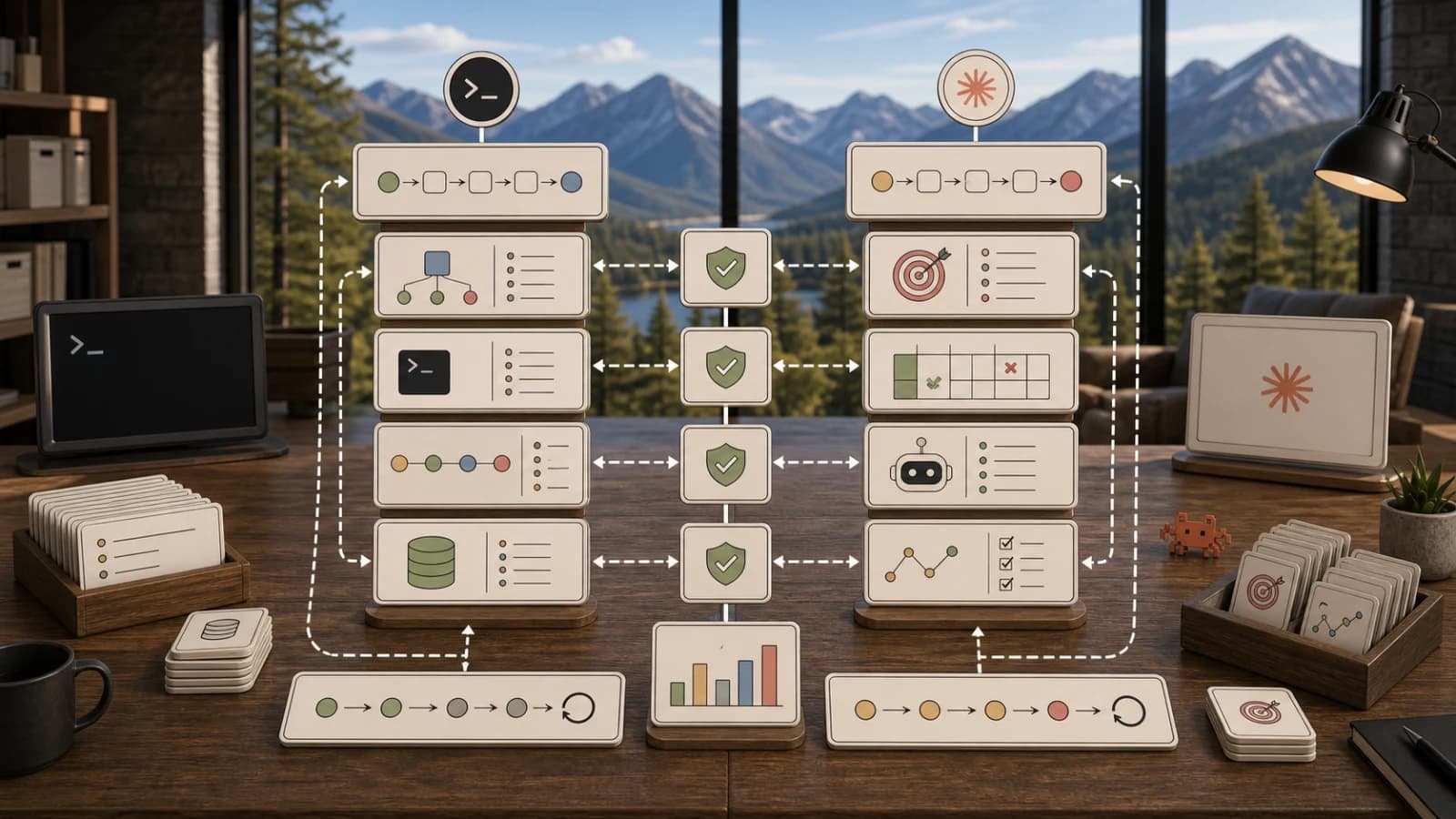
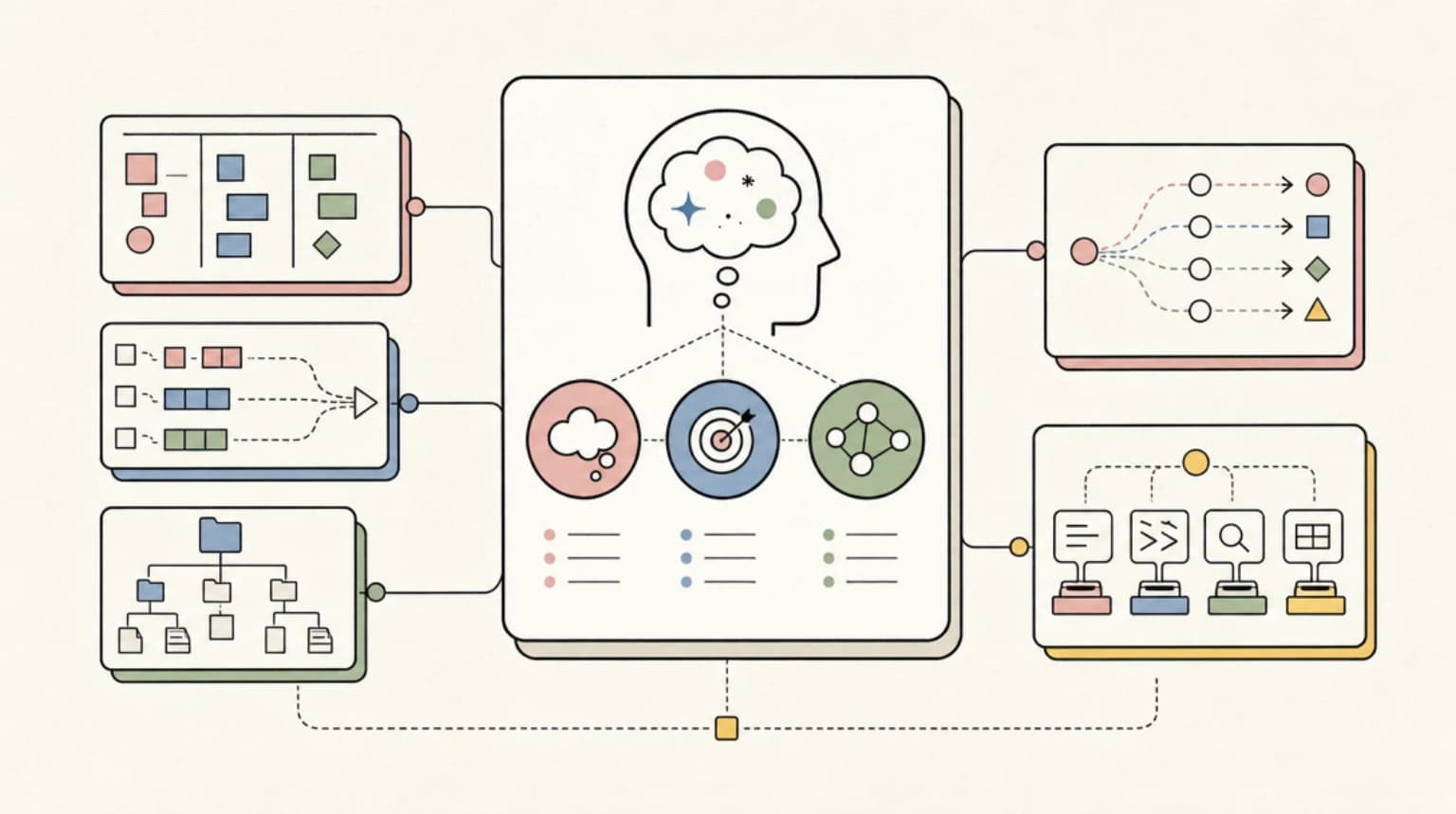
According to Anthropic's announcement, these features were designed to work as a loop, not independently. Dreaming captures lessons across sessions. Outcomes enforce quality within a session. Multi-agent orchestration distributes the work across parallel sessions. Together they address the three most common failure modes in production agent systems: memory drift, undefined success criteria, and context overload.
Dreaming (Research Preview): How Agents Learn Between Sessions#
Dreaming is the most unusual of the three features. It gives agents a formal mechanism to improve between sessions without retraining the model.
The Dreams API reads an existing memory store and up to 100 prior sessions, then writes a new output memory store. That output store reorganizes memories, merges duplicates, replaces stale entries, and surfaces patterns that span multiple sessions. The input memory store is not modified - dreaming produces a separate store that engineers can inspect, discard, or promote.
Ken Huang's analysis describes this accurately: dreaming is closer to a postmortem and runbook-generation process than any kind of "AI sleep" mechanism. It is non-parametric memory consolidation - the model weights do not change. What changes is the structured context attached to future sessions.
The pattern Anthropic recommends is a three-store layout:
- A read-only organization store for stable standards
- A read-only project store for verified architecture and domain facts
- A read-write working store for session lessons
Run dreams over the working store and a curated set of recent verified sessions, then promote reviewed outputs into the project store. Never pipe unvetted session transcripts directly into production memory.
Harvey, the legal AI company, reported roughly 6x improvement in completion rates after enabling dreaming - their agents stopped rediscovering filetype workarounds and tool-specific patterns every session.
Dreaming access currently requires a separate request form. It is not available to all API accounts by default.
Outcomes (Public Beta): Defining Done with Rubric Agents#
Outcomes solve what Anthropic calls the "looks done" problem. Without them, an agent stops when its output appears plausible. With outcomes, you write an explicit rubric describing what success looks like. A separate grader agent evaluates the artifact against that rubric in its own context window - it never sees the working agent's reasoning, so it cannot be anchored to partial results.
When the grader finds gaps, it returns them to the working agent, which takes another pass. This continues until the criteria are satisfied, the iteration budget is exhausted, or the outcome is marked failed.
According to Anthropic's internal benchmarks, outcomes improved task success by up to 10 points over a standard prompting loop, with the largest gains on the hardest problems. For structured file generation specifically: +8.4% task success on docx files and +10.1% on pptx files.
The rubric can handle both objective and subjective criteria. Wisedocs, a document verification company, used outcomes to enforce their internal review guidelines and reported reviews running 50% faster while staying aligned with their team's standards.
Outcomes integrate with the new webhooks support: define an outcome, start a session, and receive a webhook notification when the agent satisfies the rubric. This makes it practical to fire-and-forget agent tasks from an API call without polling.
For developers already familiar with evaluator-optimizer patterns from Anthropic's building effective agents guide, outcomes are the managed version of that same loop - but with observable lifecycle events and no custom eval infrastructure to maintain.
Multi-Agent Orchestration (Public Beta): Delegating to Specialists#
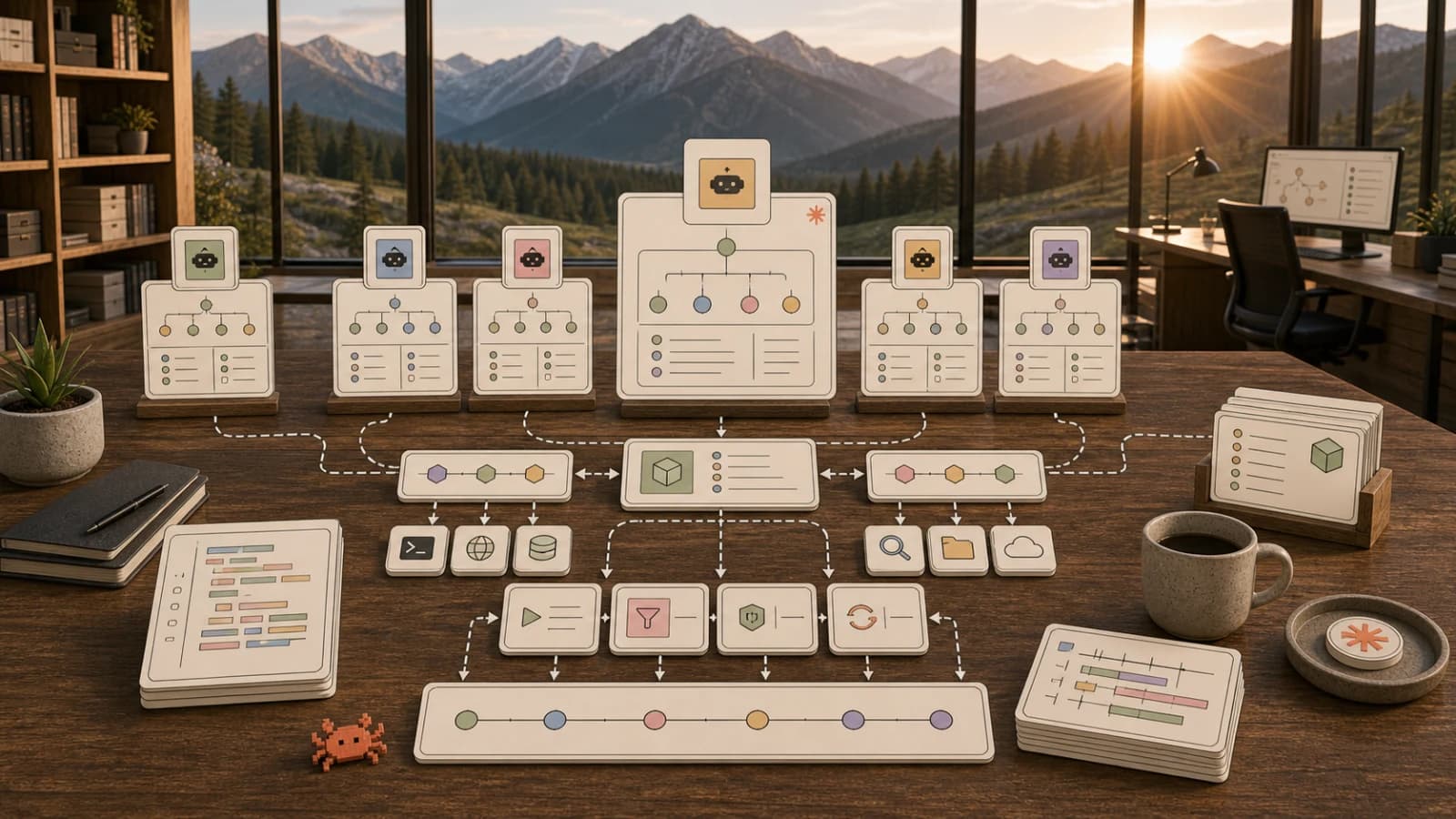
Multi-agent orchestration lets a lead agent delegate work to specialist agents, each with its own model, system prompt, tools, and context window. The lead agent does not share its context with subagents - they operate independently, which is the key architectural difference from a single large-context run.
From Anthropic's announcement:
A lead agent can run an investigation while subagents fan out through deploy history, error logs, metrics, and support tickets.
Specialists work in parallel on a shared filesystem. Events are persistent across all sessions, so the lead agent can check in on subagent progress mid-workflow. Every step is traceable in the Claude Console: which agent did what, in what order, and why. To get the same turns into your own observability backend, see Claude API OpenTelemetry tracing.
Netflix's platform team used this to analyze logs from hundreds of builds across different sources. With changes that affect thousands of applications, the multi-agent pattern allows batches to be analyzed in parallel and only the recurring patterns to be surfaced.
Spiral (by Every) combined multi-agent orchestration with outcomes in an interesting way: a lead agent on Claude Haiku handles routing and follow-up questions, then delegates drafting to subagents running on Claude Opus. Each draft is scored against a rubric before being returned to the user.
This is covered in more detail in building multi-agent workflows with Claude Code and the broader agent architecture guide.
When to Use Managed vs Local Agents#
The official docs frame the choice clearly: Messages API for custom loops and fine-grained control, Managed Agents for long-running tasks and asynchronous work. Here is a more detailed framework:
| Dimension | Local / Messages API | Claude Managed Agents |
|---|---|---|
| Session length | Short to medium | Long-running, hours+ |
| State persistence | You manage it | Built in, server-side |
| Multi-tenancy | Custom implementation | Handled by platform |
| Sandbox security | You provision | Anthropic-managed or self-hosted |
| Debugging | Full access to your logs | Claude Console traces |
| Dreaming / Outcomes | Not available | Available |
| Zero Data Retention | Available | Not currently eligible |
| HIPAA BAA | Available | Not currently eligible |
| Latency (TTFT) | Fast for simple tasks | Anthropic reports ~60% p50 improvement after decoupling brain from sandbox |
The HIPAA and Zero Data Retention gaps are worth noting for teams in regulated industries - Managed Agents is stateful by design, which currently makes it ineligible for both. You can delete sessions and uploaded files through the API, but the session data persists server-side while the session is live.
Production Patterns: Cloudflare Workers + Managed Agents#
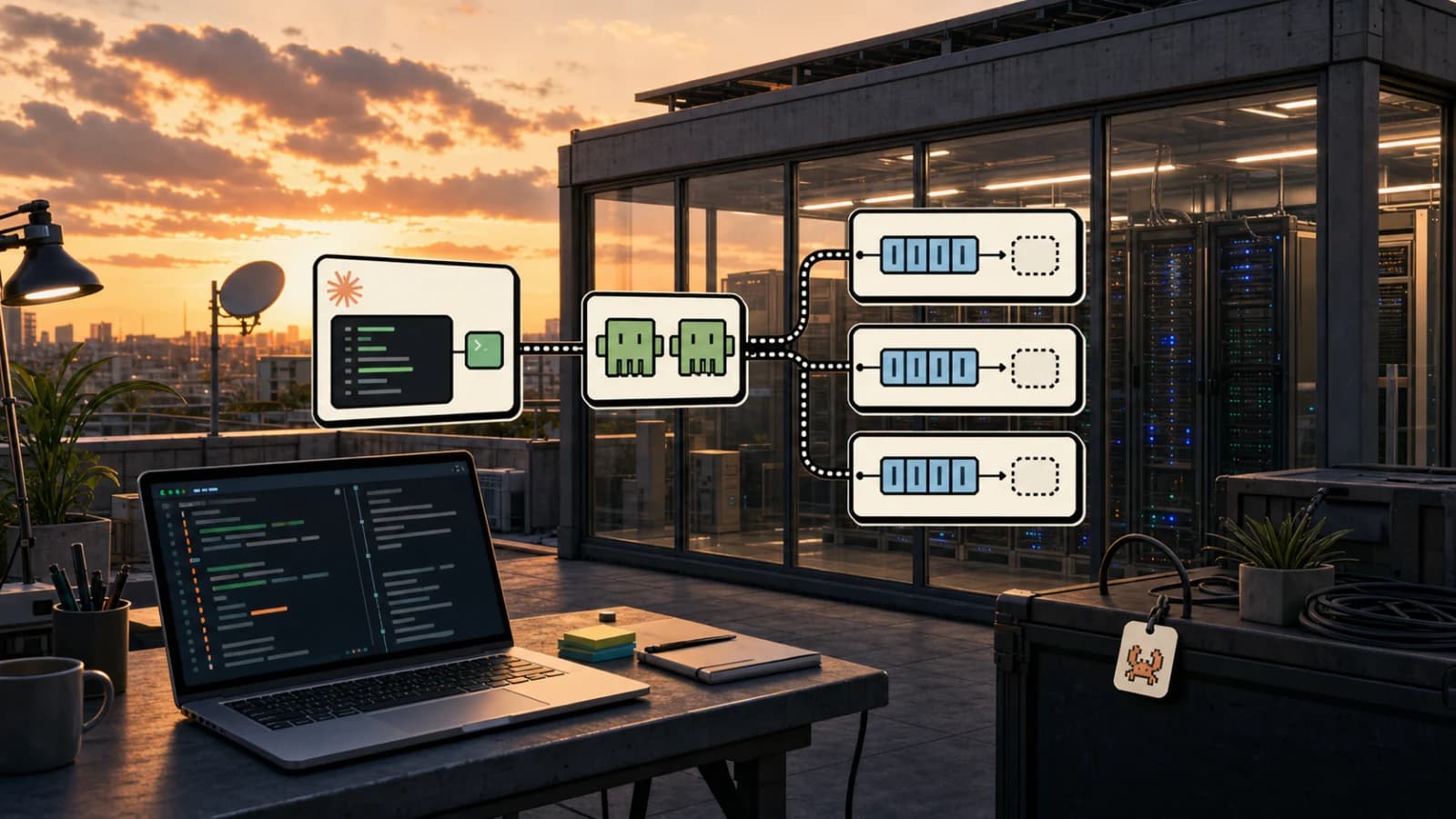
Anthropic published a reference architecture on GitHub with Cloudflare Workers. The pattern uses a Workers edge layer to handle webhook callbacks, fan out tasks, and integrate Managed Agent sessions into existing application flows without a dedicated backend service.
The core loop looks like this:
- Application sends a task to a Cloudflare Worker
- Worker creates a Managed Agents session via the SDK
- Session runs asynchronously in Anthropic's infrastructure
- Webhook fires to the Worker on completion or failure
- Worker writes the result back to the application
This pattern fits naturally with asynchronous background job queue patterns, where the session lifecycle maps directly to task management.
The SDK handles the beta header automatically. All Managed Agents endpoints require the managed-agents-2026-04-01 beta header on raw API calls.
Managed Outcomes vs Codex /goal: Practical Differences#
Both Outcomes and Codex's /goal command define a target state and let an agent iterate toward it. They take different approaches.
| Dimension | Managed Outcomes | Codex /goal |
|---|---|---|
| Evaluation mechanism | Separate grader agent with its own context window | Target-based: did the repo reach the specified state? |
| Rubric format | Free-text acceptance criteria | Typically a shell command or test that passes |
| Iteration control | Iteration budget + lifecycle events | Codex manages its own retry loop |
| Observability | Claude Console traces per iteration | Codex diff and PR output |
| Best for | Quality criteria that require judgment | Deterministic acceptance tests |
For a deeper comparison, see Codex /goal vs Claude Managed Outcomes: Practical Differences.
Getting Started: API IDs, Quickstart, Common Gotchas#
Quickstart: Follow the official quickstart. Create an agent (define model, system prompt, tools), create an environment, start a session, send events, stream responses.
Beta header: Raw API calls need anthropic-beta: managed-agents-2026-04-01. The Python and TypeScript SDKs set this automatically.
Dreaming access: Not enabled by default. Request access separately.
Common gotchas:
- Sessions store conversation history and sandbox state server-side. Zero Data Retention accounts cannot use Managed Agents.
- The Dreams API reads up to 100 prior sessions. Narrow your input set to verified, curated sessions - do not feed it everything.
- Outcomes iterate until a budget is hit, not indefinitely. Set a realistic
max_iterationsvalue or you will see truncated runs on hard tasks. - Multi-agent subagents have their own context windows, which means they do not share the lead agent's accumulated reasoning. Pass context explicitly via the shared filesystem or event payloads.
- MCP tunnels and dreaming are in more limited research preview inside the broader beta. They require separate access requests.
Official Sources#
| Resource | Link |
|---|---|
| Claude Managed Agents overview | platform.claude.com/docs/en/managed-agents/overview |
| Dreaming docs | platform.claude.com/docs/en/managed-agents/dreams |
| Outcomes docs | platform.claude.com/docs/en/managed-agents/define-outcomes |
| Multi-agent orchestration docs | platform.claude.com/docs/en/managed-agents/multi-agent |
| May 6 announcement | claude.com/blog/new-in-claude-managed-agents |
| Engineering: brain-hands architecture | anthropic.com/engineering/managed-agents |
| Cloudflare reference architecture | github.com/cloudflare/claude-managed-agents |
| Access request form | claude.com/form/claude-managed-agents |
FAQ#
Do dreaming, outcomes, and multi-agent orchestration require separate opt-ins?#
Outcomes and multi-agent orchestration are in public beta and available to Managed Agents accounts. Dreaming is a research preview that requires a separate access request through Anthropic's form - it is not enabled by default even for accounts already using Managed Agents.
Can I use Managed Agents if I need Zero Data Retention or a HIPAA BAA?#
Not currently. Managed Agents is stateful by design - sessions and sandbox state persist server-side while a session is live - which makes it ineligible for Zero Data Retention and HIPAA BAA as of this writing. Teams in regulated industries needing either should stick with the Messages API and a custom agent loop.
How is Outcomes different from Codex's /goal command?#
Outcomes uses a separate grader agent with its own context window to evaluate free-text acceptance criteria, useful for judgment calls. Codex /goal is target-based, typically checking whether a shell command or test passes, which suits deterministic acceptance tests better. See the full comparison in Codex /goal vs Claude Managed Outcomes.
What is the biggest gotcha when adopting multi-agent orchestration?#
Subagents do not share the lead agent's context window or accumulated reasoning. Any information the lead agent has gathered needs to be passed explicitly through the shared filesystem or event payloads, or the subagent will be working blind.
Continue Reading#
- OpenAI AgentKit in Production: An Honest Builder's Review
- Claude Managed Agents Dynamic Workflows: How to Use Workflow Runs - let an agent write a multi-agent workflow and run it server-side
- Claude - the model family and platform features on one page
- Best AI Agent Frameworks (2026) - the self-hosted alternatives to a managed agent runtime
Get the next deep dive like this in your inbox
One email a week on Claude and the rest of the AI dev stack. Free.
Read next on Claude Code
Codex /goal and Claude Managed Outcomes: The New Control Loops
Codex /goal vs Claude Managed Agents outcomes compared: where each control loop fits, the tradeoffs, and when to combine them for long-running tasks.
18 min readClaude Code Agent Teams, Subagents, and MCP: The 2026 Playbook
Claude Code is turning into an orchestration layer for agent teams. Here is how subagents, MCP, hooks, and long context fit together in 2026.
9 min readBuilding Multi-Agent Workflows in Claude Code: A Practical Tutorial
Multi-agent workflows in Claude Code: use the Task tool, custom sub-agents and worktrees to run parallel development, with real prompts and agent configs.
11 min readTechnical content at the intersection of AI and development. Building with AI agents, Claude Code, and modern dev tools - then showing you exactly how it works.