Claude Opus 5 vs Opus 4.8 vs Fable 5: Benchmark Comparison (July 2026)

TL;DR
Claude Opus 5 launched July 24, 2026 at $5/$25 per MTok - matching Opus 4.8 pricing while delivering near-Fable 5 intelligence. Full benchmark comparison across 7 evals, pricing breakdown, and decision guide.
Last updated: October 15, 2026. List prices for Opus 5, Opus 4.8 and Fable 5 were re-checked against the Anthropic pricing page on that date and are unchanged ($5/$25 for the two Opus models, $10/$50 for Fable 5, fast mode on Opus 5 and Opus 4.8 at $10/$50). Newer models have since shipped: Opus 5.5 lists at $4/$20 and Fable 5.1 at $10/$50 - see the Opus 5.5 release guide and Fable 5 is back: what changed before choosing between the older models compared below.
Claude Opus 5 launched July 24, 2026 and immediately claimed the #1 spot on the Artificial Analysis Intelligence Leaderboard with a score of 61 - surpassing both Fable 5 (60) and GPT-5.6 Sol (59). The headline: it matches Opus 4.8 pricing at $5/$25 per MTok while approaching Fable 5's peak intelligence on several benchmarks.
This guide compares Opus 5 against its predecessor (Opus 4.8) and Anthropic's flagship (Fable 5) across benchmarks, pricing, and real-world use cases. If you want the short version first, see Claude Opus 5 in 8 minutes; for how the naming ladder fits together, see Anthropic model naming explained.
Quick Comparison#
| Opus 4.8 | Opus 5 | Fable 5 | |
|---|---|---|---|
| Launch date | June 2026 | July 24, 2026 | June 2026 |
| Input price / MTok | $5 | $5 | $10 |
| Output price / MTok | $25 | $25 | $50 |
| AA Intelligence Index | 56 | 61 | 60 |
| Frontier-Bench v0.1 | baseline | 2x Opus 4.8 | above Opus 5 |
| CursorBench 3.2 (max) | baseline | within 0.5% of Fable 5 | peak |
| ARC-AGI 3 | baseline | 3x next-best | below Opus 5 |
| OSWorld 2.0 | baseline | best | best at 3x cost |
| Fast mode speed | 2.5x | 2.5x | n/a |
| Fast mode pricing | 2x base | 2x base | n/a |
All benchmark data from Anthropic's official announcement (July 24, 2026) and Artificial Analysis leaderboard (July 25, 2026).
Specs at a Glance#
The headline is price-performance, but the spec sheet is where the practical differences live:
| Spec | Opus 5 |
|---|---|
| API model ID | claude-opus-5 |
| Context window | 1M tokens (both the default and the maximum - there is no smaller variant) |
| Max output tokens | 128k |
| Thinking | On by default |
| Default effort | high |
| Effort ladder | low, medium, high, xhigh, max |
| Minimum cacheable prompt | 512 tokens (down from 1,024 on Opus 4.8) |
| Fast mode | Claude API only - not on Bedrock, Google Cloud, or Microsoft Foundry |
| Availability | Claude API, Amazon Bedrock, Google Cloud, Microsoft Foundry |
Two of these are easy to miss and both cost money. The 1M context window is the default, not an opt-in tier, so long-context work no longer needs a special model variant. And the cache minimum dropping to 512 tokens means prompts that were too short to cache on Opus 4.8 now create cache entries with no code changes - a silent cost reduction if your workload is full of short system prompts.
Benchmark Analysis#
Frontier-Bench v0.1#
On Frontier-Bench v0.1 (a software engineering evaluation using the mini-SWE-agent harness on GKE), Opus 5 more than doubles Opus 4.8's performance at the same cost per task. Fable 5 scores higher still, but at roughly 2x the per-task cost. Opus 5 at max effort closes most of the gap while costing half as much per task as Fable 5.
CursorBench 3.2#
At max effort, Opus 5 performs within 0.5% of Fable 5's peak score at half the cost per task. At high, xhigh, and max effort levels, Opus 5 achieves greater performance at a given cost than any other model. This is the clearest "price-performance crossover" point in the current frontier market.
ARC-AGI 3#
Opus 5 scores 3x higher than the next-best model on ARC-AGI 3, a benchmark measuring novel problem-solving ability. This is the largest single benchmark gap in the launch data and suggests Opus 5's reasoning generalizes better to unfamiliar tasks than any prior model.
OSWorld 2.0 (Computer Use)#
Opus 5 outperforms every other model on OSWorld 2.0 at any given cost. It surpasses Fable 5's best result at just over a third of the cost. For teams building computer-use agents, this efficiency gap makes Opus 5 the clear economic choice.
Zapier AutomationBench#
Opus 5's pass rate is approximately 1.5x the next-best model for the same cost per task. Even at its lowest effort setting, Opus 5 passes more tasks than any other model. Zapier CEO Wade Foster noted in the launch that Opus 5 "topped Zapier's AutomationBench leaderboard without spending more tokens than prior Claude models."
AA Coding Agent Index#
On Artificial Analysis's Coding Agent Index, Opus 5 scores 61 at max effort - the highest recorded score on the leaderboard. Fable 5 (with Opus 4.8 fallback) scores 60, followed by GPT-5.6 Sol at 59. At xhigh effort, Opus 5 scores 60; at high effort, it scores 59. This means even at reduced effort settings, Opus 5 matches or exceeds the competition.
Knowledge Work and Long-Horizon Tasks#
Opus 5 leads Artificial Analysis's two agentic knowledge-work benchmarks, GDPval-AA v2 and AA-Briefcase. Full figures and the caveats attached to them are in the Artificial Analysis section below.
The effort ladder matters more than any single score: GDPval-AA v2 spans 407 Elo points across the five effort settings, with output token usage varying roughly 8x from low to max. That spread is the whole cost-control story in one number.
Life Sciences#
Anthropic reports gains outside coding as well: +10.2 percentage points over Opus 4.8 on organic chemistry tasks and +7.7 points on protein tasks. These are the least-covered numbers in the launch and the most relevant if your workload is scientific rather than software.
Cost per Task#
On the Artificial Analysis cost-per-task metric, Opus 5 (max) costs $2.03 per task, Opus 5 (xhigh) costs $1.56, and Opus 5 (high) costs $1.06. Compare to Fable 5 at $2.75, GPT-5.6 Sol (max) at $1.04, and Opus 4.8 (max) at $1.80. Opus 5 (high) offers better intelligence than Opus 4.8 (max) at 40% lower cost per task.
Effort Levels and Cost Optimization#
Opus 5's adaptive reasoning effort system allows fine-grained cost control:
| Effort Level | AA Index | Cost per Task | Use Case |
|---|---|---|---|
| Low | 51 | $0.36 | Simple queries, classification |
| Medium | 56 | $0.62 | Routine coding, documentation |
| High | 59 | $1.06 | Complex debugging, code review |
| Xhigh | 60 | $1.56 | Architecture, migration planning |
| Max | 61 | $2.03 | Frontier research, novel problems |
The medium effort level (AA Index 56) matches Opus 4.8 at max (also 56) while costing 65% less per task. This means teams that currently run Opus 4.8 at max effort can switch to Opus 5 at medium effort for equivalent quality at roughly one-third the cost.
What Changed from Opus 4.8#
Opus 5 maintains the same API pricing as Opus 4.8 ($5/$25 per MTok) while delivering:
- 2x+ improvement on Frontier-Bench v0.1
- Near-Fable 5 parity on CursorBench 3.2
- 3x improvement on ARC-AGI 3
- Lowest misalignment score in Anthropic's automated behavioral audit (2.3 overall)
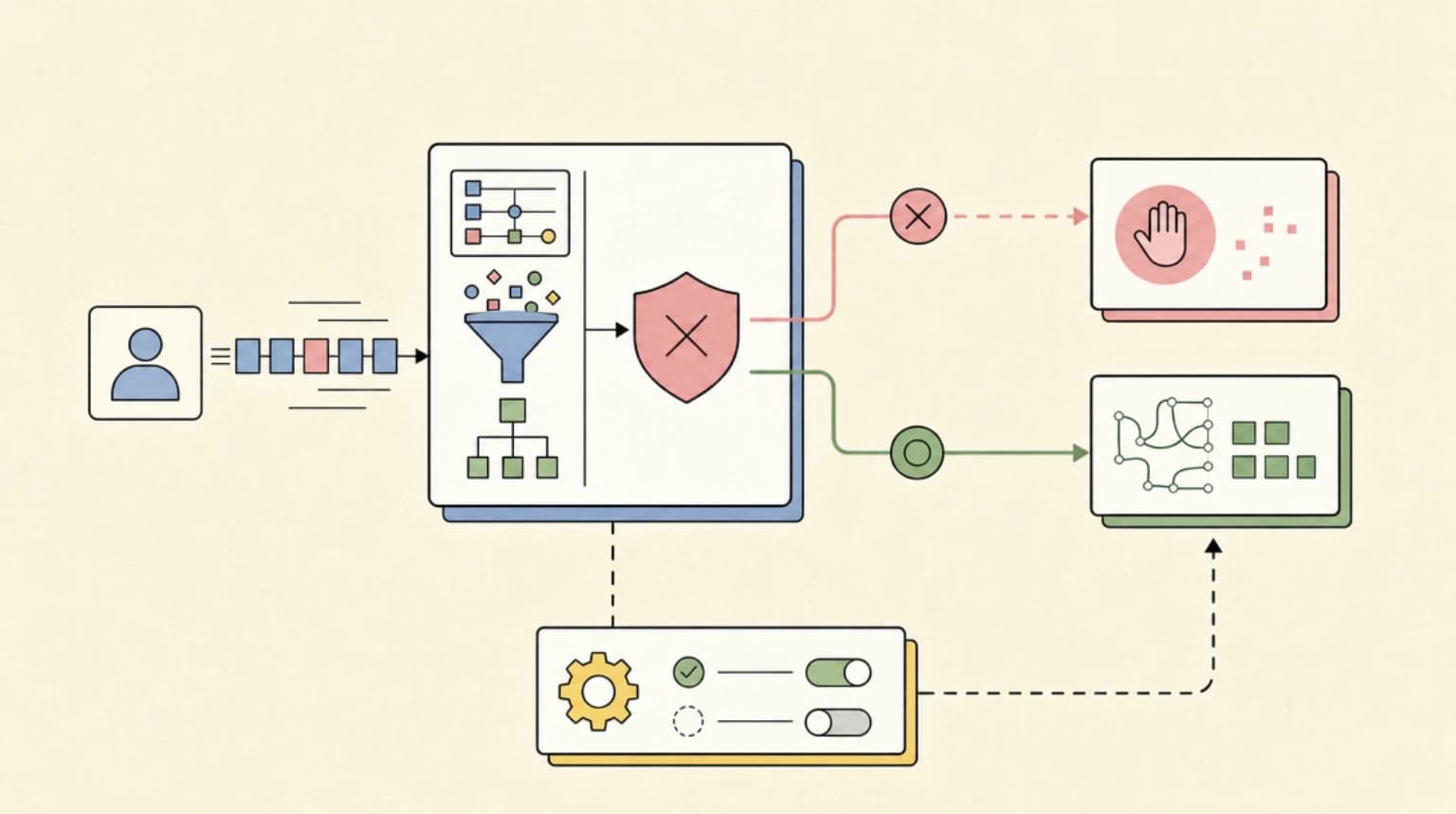
- 85% fewer safety classifier interventions than Fable 5
- Fast mode at 2x pricing (2.5x speed)
Two new API features launch alongside Opus 5: mid-conversation tool changes (swap tools without invalidating prompt cache) and automatic fallbacks (flagged requests route to a fallback model instead of blocking).
In the Wild#
Benchmarks measure a narrow slice. The other signal worth tracking is what people actually one-shot with these models, because that is where the jump from Opus 4.8 shows up as something you can watch rather than a number in a table.
Claude Opus 5 one-shotted this game.
EVERYTHING you see in this demo is custom code... not a single external asset was used.
AI games are going to be amazing.
The claim to weigh here is "not a single external asset" - the model generating sprites, geometry, and animation procedurally in one pass rather than wiring together libraries. That is the ARC-AGI 3 and Frontier-Bench jump showing up as one long, coherent artifact instead of a score, and it is the kind of task Opus 4.8 typically needed several correction rounds to finish.
A second report points at the same capability from a different angle, and is more useful because it includes its own caveat:
Opus 5 test with a first-person shooter prototype, one shot. Took like 1.5 hrs
It not only created the entire game but also spawned bots to play in multiplayer. Flight mechanics may be under-tuned, but...
It's easily the most powerful model of all time full stop.
"Took like 1.5 hrs" is the detail worth keeping. One-shot does not mean instant: it means one prompt and one uninterrupted run, which lines up with what Anthropic claims about long-horizon agentic work rather than raw speed. The under-tuned flight mechanics matter too. These runs produce something coherent end to end, not something finished.
This section is updated as more first-party examples surface.
The Artificial Analysis Read#
Artificial Analysis evaluated Opus 5 ahead of release at Anthropic's request, which is worth stating plainly: this is third-party measurement, but not blind third-party measurement.
Claude Opus 5 is narrowly the most intelligent model on the Artificial Analysis Intelligence Index, offering comparable intelligence to Fable 5 at 26% lower Cost per Task
We supported @AnthropicAI to evaluate Claude Opus 5 ahead of release: it sets the highest GDPval-AA v2 and ...
Their headline numbers, all at max effort:
| Metric | Opus 5 | Comparison |
|---|---|---|
| Intelligence Index | 61 | Fable 5: 60, GPT-5.6 Sol: 59, Kimi K3: 57, Opus 4.8: 56 |
| GDPval-AA v2 | 1,861 Elo | +114 over Fable 5 |
| AA-Briefcase | 1,720 Elo | +146 over Fable 5 (1,574) |
| Terminal-Bench v2.1 | 89% | roughly level with GPT-5.6 Sol (xhigh) |
| Humanity's Last Exam | 53% | matches Fable 5 |
| Coding Agent Index | joint 1st | tied with Claude Code; top score on SWE-Atlas-QnA |
| CritPt (physics) | matches Fable 5 | behind GPT-5.6 Sol variants |
Note the word "narrowly." Several of these are ties or near-ties, not the blowout the launch framing implies, and on Terminal-Bench and CritPt the model is level with or behind the competition rather than ahead.
Two findings deserve more attention than they have received.
Hallucination went up. On AA-Omniscience, Opus 5 gains 7 points of accuracy over Opus 4.8 but its hallucination rate rises to 50%, a 14-point increase. A model that is more accurate and also more confidently wrong is a specific operational problem: it is exactly the profile that defeats spot-checking, because the errors that survive are the well-argued ones. If you are putting Opus 5 on factual retrieval or research summarization, this is the number to design around, not the Intelligence Index.
The evaluations ran with Opus 4.8 fallback enabled. Artificial Analysis notes this in their methodology, alongside their use of the open-source Stirrup reference harness. Requests that tripped a classifier were served by Opus 4.8, so a small share of the measured results are not pure Opus 5. It does not invalidate the comparison, but it does mean the published figures are for the deployed configuration most people will actually run, rather than for the model in isolation.
One clarification on cost, since two different "cost per task" numbers circulate: $2.03 (versus Fable 5's $2.75) is the weighted average across the Intelligence Index, while $17.79 (versus Fable 5's $22.30) is the AA-Briefcase agentic knowledge-work figure. They measure different workloads and are not interchangeable.
What Independent Testers Found#
Launch benchmarks come from the vendor. The independent picture is more mixed, and it is the part most launch coverage skips.
Epoch AI measured Opus 5 at 159 on its capability index against 161 for Fable 5, with the two performing identically on software engineering tasks. That is a materially narrower gap than the launch framing suggests.
CodeRabbit ran it on code review and found a genuine trade-off. Precision on actionable comments reached 39.3% against a 35.2% baseline, but the model produced roughly four times as many nitpicks, all needing manual triage. At default settings precision fell to 26.4%, and it caught fewer known bugs than expected.
Claire Vo described it as "brilliant but annoying," citing a neurotic streak and cases where it declined to resolve merge conflicts.
Anthropic is also explicit about one weakness: Opus 5 underperforms Mythos 5 on offensive cybersecurity and exploit development, by design rather than by accident.
For the community reaction as it landed, see our Hacker News analysis of the Opus 5 launch.
The practical read: the coding gains are real but the model is chattier and more opinionated, and the extra output is a triage cost you should budget for. The prompting section below is how you claw most of that back.
Pricing Comparison#
Opus 5 is the best value in Anthropic's lineup for most production workloads:
| Model | Input | Output | Cache Write | Cache Read | Fast Mode |
|---|---|---|---|---|---|
| Opus 5 | $5 | $25 | $6.25 | $0.50 | $10/$50 (2x) |
| Opus 4.8 | $5 | $25 | $6.25 | $0.50 | n/a |
| Sonnet 5 | $2 | $10 | $2.50 | $0.20 | n/a |
| Fable 5 | $10 | $50 | $12.50 | $1.00 | n/a |
| Haiku 4.5 | $1 | $5 | $1.25 | $0.10 | n/a |
Sonnet 5 pricing is introductory ($2/$10) through August 31, 2026, reverting to $3/$15 standard pricing. Opus 5 pricing has no introductory discount - it launches at the same permanent price as Opus 4.8.
Migrating from Opus 4.8#
The model ID swap is trivial:
model = "claude-opus-4-8"  # Before
model = "claude-opus-5"    # After
The two behavior changes behind it are not, and one of them is a hard breaking change.
Thinking is on by default. On Opus 4.8, requests ran without thinking unless you set thinking: {"type": "adaptive"}. On Opus 5 those same requests now think, and the effort parameter controls the depth. The wire format did not change, so nothing errors - your token usage just moves. Because max_tokens caps total output including thinking, revisit it for any workload that previously ran without thinking, or you will start truncating responses that used to fit.
Disabling thinking now returns a 400 above high effort. thinking: {"type": "disabled"} is accepted only at effort high or below. Pair it with xhigh or max and the request fails. This is enforced per request and generally available, not a beta. If you disable thinking today, either drop effort to high or below, or keep your effort level and remove the thinking field entirely.
Anthropic's own guidance is to prefer the second option. Thinking enabled at low effort generally outperforms thinking disabled at comparable cost, and running with thinking off has two documented failure modes: the model occasionally writes a tool call into its visible text instead of emitting a tool_use block (the call never runs, and in agentic loops the leaked text pollutes later turns), and it can leak <thinking> or other internal XML tags into responses. If a system prompt of yours instructs the model not to think or reason, remove it - that instruction makes tag leakage worse.
Setting effort explicitly:
curl https://api.anthropic.com/v1/messages \
  -H "x-api-key: $ANTHROPIC_API_KEY" \
  -H "anthropic-version: 2023-06-01" \
  -H "content-type: application/json" \
  -d '{
    "model": "claude-opus-5",
    "max_tokens": 64000,
    "stream": true,
    "output_config": { "effort": "max" },
    "messages": [{ "role": "user", "content": "..." }]
  }'
At xhigh or max, set a large max_tokens so the model has room to think and act across tool calls, and stream the response - 64k output can run past the non-streaming time limit.
The two new API features are both beta and both header-gated: mid-conversation-tool-changes-2026-07-01 lets you add or remove tools between turns without invalidating the prompt cache, which makes progressive tool disclosure practical for the first time. server-side-fallback-2026-07-01 enables the fallbacks parameter's new "default" mode, routing classifier-flagged requests to Anthropic's recommended fallback by refusal category instead of a list you maintain. Note what the fallback actually does: flagged requests are served by a different, cheaper model, so a run that silently fell back is not an Opus 5 result. We covered the same mechanism on the Fable side in the Fable 5 fallback API.
Prompt Changes That Actually Matter#
Opus 5 runs existing Opus 4.8 prompts well, but several patterns that helped older models now actively cost you money.
Delete your verification instructions. Opus 5 verifies its own work unprompted. Lines like "include a final verification step" or "use a subagent to verify" compound with that behavior and cause over-verification. Anthropic's guidance is direct: removing them cuts tokens with no loss in quality. The same goes for "double-check your answer" and legacy harness scaffolding that bolts on a separate verification pass.
Invert your code review prompt. If your review prompt says "only report high-severity issues" or "be conservative," Opus 5 follows that literally and reports less. Ask for everything and filter in a separate pass. Read this next to CodeRabbit's four-times-the-nitpicks finding above - the volume is real, so the filter needs to be real too.
Cap delegation explicitly. Opus 5 spawns subagents more readily than prior models. That pays on genuinely independent tracks and burns money on small ones. If your harness supports subagents, set deterministic caps or spell out when delegation is warranted.
Prompt for length directly. Effort controls how much the model thinks, not how much it says. Lowering effort will not reliably shorten a response. Ask for brevity explicitly instead.
Constrain scope on narrow tasks. The model will expand a task's scope and apply its own judgment about what the work should be. For tightly-scoped jobs, say so.
Re-run your effort sweep. Effort defaults carried over from an older model are probably wrong now, and one independent tester found medium effort beating higher settings on coding tasks. Start at the high default and move in both directions against your own evals, rather than assuming more effort is better.
Decision Guide#
Teams currently on Opus 4.8. Upgrade immediately. Same price, strictly better across every benchmark. You can also reduce your effort level while maintaining the same output quality, effectively cutting costs by 40-65%.
Teams on Sonnet 5 for cost-sensitive work. Stay on Sonnet 5 for high-volume, latency-sensitive tasks where Opus 5's extra reasoning isn't needed. Opus 5 (low) costs 3x more than Sonnet 5 while delivering only slightly higher intelligence - the price-performance crossover favors Sonnet 5 for straightforward work.
Teams evaluating Fable 5. Run your hardest tasks on Opus 5 at max effort first. If they pass, you save 50% on per-token cost. Reserve Fable 5 for tasks that genuinely fail Opus 5 validation. Given that Opus 5 matches Fable 5 within 0.5% on CursorBench, many teams may find they never need Fable 5's extra headroom.
Teams building agentic pipelines. See agent fleet economics for how per-task cost compounds across a fleet. Opus 5's lower safety classifier intervention rate (85% fewer than Fable 5) means fewer fallback interruptions in production. Combined with the new automatic fallback API feature, agent pipelines can run with significantly less manual oversight.
Teams doing computer-use or browser automation. Opus 5's OSWorld 2.0 performance at one-third of Fable 5's cost makes it the clear choice. The gap is large enough that Fable 5 is hard to justify for computer-use workloads.
FAQ#
How does Claude Opus 5 compare to GPT-5.6 Sol?#
Opus 5 leads the AA Intelligence Index at 61 vs GPT-5.6 Sol at 59. Opus 5 costs $5/$25 per MTok vs Sol's $5/$30. On Frontier-Bench and CursorBench, Opus 5 leads; Sol leads on certain reasoning benchmarks. Both are priced similarly, but Opus 5 has a $5/MTok cheaper output rate.
Is Opus 5 available in Fast mode?#
Yes, with a caveat worth checking before you plan around it. Fast mode is a research preview available on the Claude API only, priced at $10/$50 per MTok for roughly 2.5x the output speed. It is not currently available on Amazon Bedrock, Google Cloud, or Microsoft Foundry, so multi-cloud deployments cannot rely on it uniformly.
What is Opus 5's context window?#
1M tokens, and that is both the default and the maximum - there is no smaller context variant to opt out of and no larger tier to opt into. Max output is 128k tokens. Anthropic states that instruction following, tool calling, and reasoning stay consistent across the full window.
Are there breaking changes migrating from Opus 4.8?#
One. thinking: {"type": "disabled"} is accepted only at effort high or below; combining it with xhigh or max returns a 400 error. Separately, thinking is now on by default, which does not error but does change your token usage and may require revisiting max_tokens, since that limit covers thinking plus response text. See the migration section above.
Can I use Opus 5 through the API today?#
Yes. Opus 5 is available on all platforms as of July 24, 2026, including the Claude API, Claude.ai, Claude Code, and Claude Cowork. The model name is claude-opus-5. No data retention requirements for general access, consistent with prior Opus models.
Does Opus 5 support prompt caching?#
Yes. Prompt caching for Opus 5 is priced at $6.25/MTok write and $0.50/MTok read (standard 5-minute TTL), identical to Opus 4.8. Extended prompt caching is also available.
How does Opus 5's safety compare to other models?#
Opus 5 scored 2.3 on Anthropic's automated behavioral audit - the lowest misalignment score of any recent Claude model. It adheres to Claude's Constitution better than Opus 4.8, Sonnet 5, or Fable 5, and exhibits the lowest rates of deceptive behavior. Its cyber classifiers are proportionally less restrictive than Fable 5's, with 85% fewer interventions expected in practice.
Official Sources#
Continue Reading#
- Claude Opus 5.5 Release Guide - the September 2026 successor: Fable 5.1-level coding at $4/$20
- Claude Sonnet 5 Developer Guide - migration checklist from Sonnet 4.6 to 5
- Frontier Model API Pricing (July 2026) - pricing comparison across all frontier providers
- AI Coding Tools Pricing 2026 - tool-by-tool cost analysis for coding agents
- Claude Sonnet 5 vs Sonnet 4.6 - Anthropic's previous generation comparison
- Claude Code Dynamic Workflows Guide - building agentic workflows with Claude
Get the next comparison like this in your inbox
One email a week on Claude and the rest of the AI dev stack. Free.
Read next on Claude Code
Claude Fable 5 Pricing: Real Cost Per Task vs Opus 4.8, GPT-5.5 and Codex
Claude Fable 5 pricing beyond the $10/$50 per MTok list rate: real cost per task versus Opus 5, Opus 4.8 and Sonnet 5, and when the premium pays off.
9 min readOpus 5.5 vs Sonnet 5.5 vs Haiku 5.5: Which Claude Model to Use
Sonnet 5.5 is the default, Opus 5.5 is for open-ended long-horizon work, and Haiku 5.5 is for bounded steps and subagents. Prices, benchmarks, cost math.
8 min readClaude Opus 5: Near-Fable Intelligence at Half the Cost
Claude Opus 5 benchmarks, pricing and HN reaction: near Fable 5 performance at the Opus 4.8 price, and what it means for choosing a daily-driver model.
12 min readTechnical content at the intersection of AI and development. Building with AI agents, Claude Code, and modern dev tools - then showing you exactly how it works.