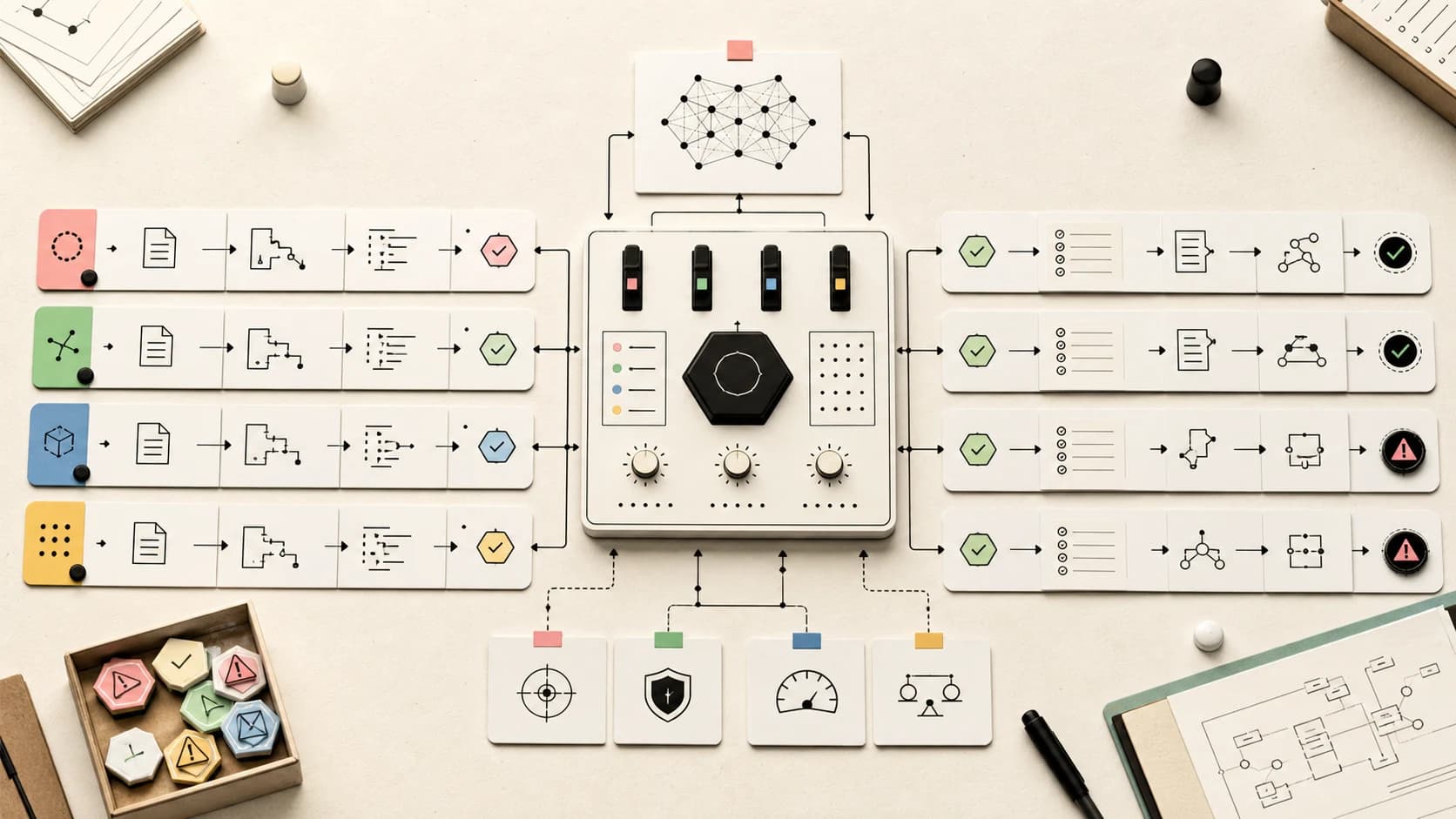
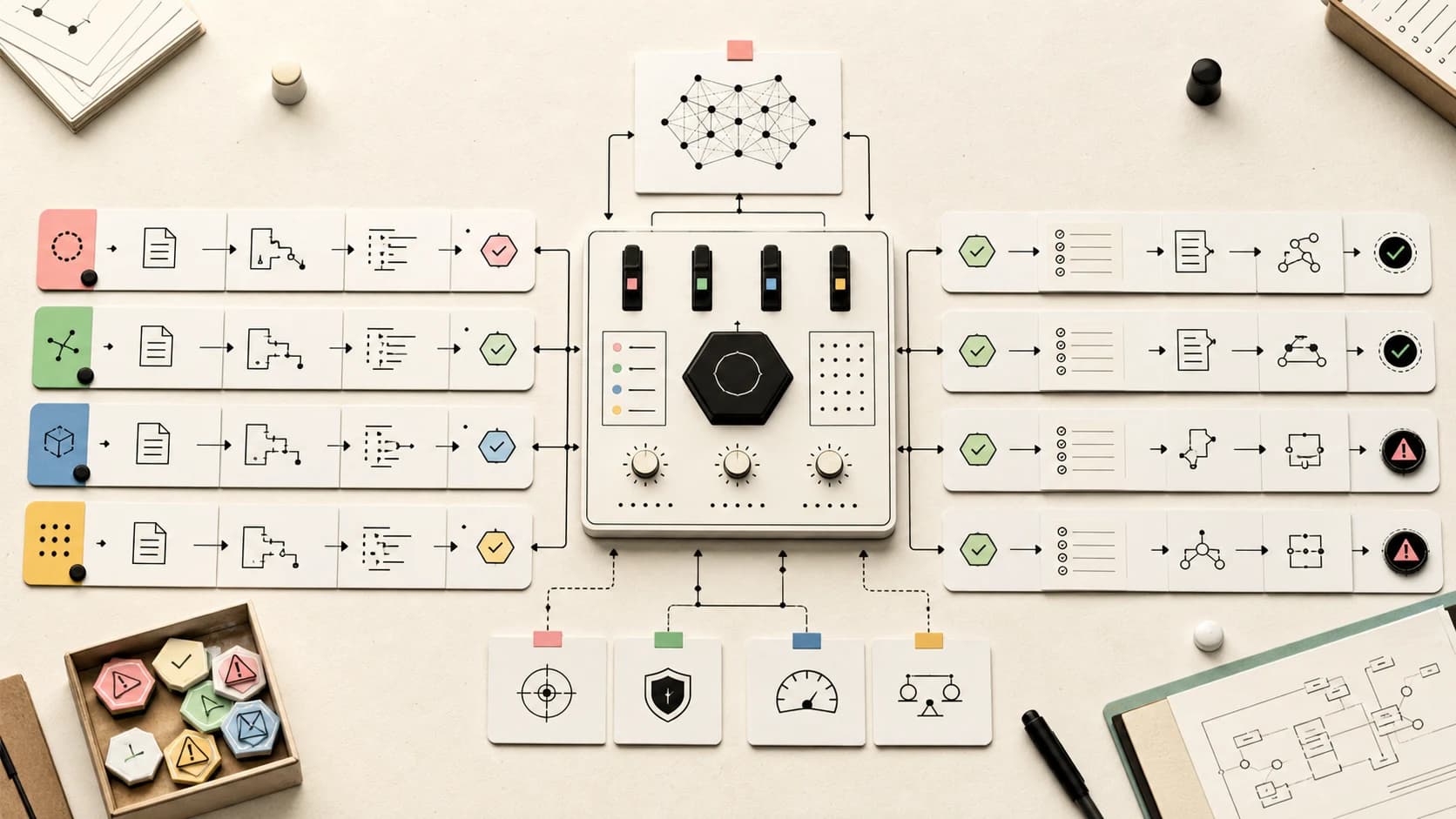
Claude Sonnet 5 vs Sonnet 4.6: Should You Upgrade?

TL;DR
Claude Sonnet 5 lands near Opus 4.8 on some tasks for a fraction of the price - but a new tokenizer runs about 30 percent more tokens.
Anthropic shipped Claude Sonnet 5 on June 30, 2026, and made it the default model for Free and Pro. The pitch is simple: performance close to Opus 4.8 on agentic and coding work, at Sonnet prices. It is a strong upgrade, but there is one catch in the fine print that changes the cost math. Here is the builder decision.
Last updated: July 24, 2026
What shipped, and when#
Sonnet 5 (claude-sonnet-5) is available same-day across the Claude API, Claude Code, Amazon Bedrock, Google Vertex, and Microsoft Foundry. It is the default on Free and Pro and available on Max, Team, and Enterprise. Anthropic calls it "the most agentic Sonnet yet" - built to plan, use browsers and terminals, and run autonomously.
Key specs:
- Context: 1M tokens (default and max), output up to 128K (300K on the Batches API via a beta header)
- Modalities: text and image input, text-only output
- Knowledge cutoff: January 2026
- Thinking: adaptive thinking on by default; manual extended-thinking budgets and non-default sampling params now return a 400. You control depth with
effort(defaults to high on the API and in Claude Code)
The numbers that justify the upgrade#
From Anthropic's official system card (Sonnet 5 at adaptive thinking, max effort, 5-trial average):
| Benchmark | Sonnet 5 | Sonnet 4.6 | GPT-5.5 | Gemini 3.5 Flash |
|---|---|---|---|---|
| SWE-bench Verified | 85.2% | - | - | - |
| SWE-bench Pro | 63.2 | 58.1 | 58.6 | 55.1 |
| Terminal-Bench 2.1 | 80.4 | 67.0 | 83.4 | 76.2 |
| BrowseComp | 84.7 | 76.2 | 84.4 | - |
| Humanity's Last Exam (with tools) | 57.4 | 46.8 | 52.2 | - |
| OSWorld-Verified | 81.2 | 78.5 | 78.7 | 78.4 |
| FrontierCode v1 | 38.8 | 15.1 | 25.5 | - |
| GDPval-AA v2 (Elo) | 1618 | 1395 | 1509 | 1357 |
The story is coding and agents. FrontierCode more than doubled over Sonnet 4.6 (15.1 to 38.8), SWE-bench Pro and BrowseComp both jumped, and it leads GPT-5.5 and Gemini 3.5 Flash on most of the agentic and knowledge benchmarks. Two spots where a competitor leads: Terminal-Bench (GPT-5.5 via Codex CLI) and AutomationBench (Gemini 3.5 Flash).
The pricing pitch: near-Opus for less#
Sonnet 5 introductory pricing is $2 per 1M input and $10 per 1M output through August 31, 2026, then $3 / $15 after (the same per-token rate as Sonnet 4.6). For reference, Opus 4.8 is $5 / $25. So on tasks where Sonnet 5 lands close to Opus 4.8, you get comparable results for roughly half the output price.
The catch every builder needs to see#
Sonnet 5 uses a new tokenizer that produces about 30 percent more tokens for the same text (Anthropic's own footnote gives a 1.0 to 1.35x range by content type). The per-token price is unchanged, but that means an equivalent request can cost slightly more than it did on Sonnet 4.6, and your max_tokens budgets may need re-checking. "Same per-token price" is not the same as "same per-task cost." Model this before you migrate a high-volume workload.
Honest framing: it is a safety and agent release, not a frontier jump#
Anthropic's system card is refreshingly direct: overall performance is "comparable to Sonnet 4.6" and Sonnet 5 "does not advance our capability frontier" against Opus and Mythos-class models. The real gains are concentrated in agentic and coding tasks, plus it is the first Sonnet-tier model with real-time cyber safeguards on by default (and it is deliberately weak at cyber-offense by design).
Should you upgrade?#
Upgrade now if you run coding agents, autonomous workflows, or browser and terminal tasks. The FrontierCode and SWE-bench gains are real, and near-Opus quality at Sonnet prices is a genuine cost win for agent-heavy products.
Hold or test first if your workload is high-volume and cost-sensitive - the tokenizer inflation can quietly raise per-task cost, so measure on your own traffic before flipping the default.
Migration itself is close to a drop-in: swap the model ID, remove manual thinking budgets and non-default sampling params (they now 400), and re-verify your max_tokens because of the tokenizer change.
Frequently Asked Questions#
Is Claude Sonnet 5 better than Sonnet 4.6?#
Yes on agentic and coding tasks - it beats Sonnet 4.6 across Anthropic's benchmark suite, with FrontierCode more than doubling (15.1 to 38.8). Anthropic notes overall quality is otherwise comparable, so the biggest wins are concentrated in coding and agents rather than a blanket jump.
How much does Claude Sonnet 5 cost?#
Introductory pricing is $2 per million input tokens and $10 per million output through August 31, 2026, then $3 / $15. That is the same per-token rate as Sonnet 4.6 and cheaper than Opus 4.8 ($5 / $25).
What is the tokenizer catch with Sonnet 5?#
Sonnet 5 uses a new tokenizer that generates roughly 30 percent more tokens for the same text. The per-token price is unchanged, so an equivalent request can cost a bit more per task than on Sonnet 4.6.
Is Sonnet 5 hard to migrate to?#
No. It is close to a drop-in: change the model ID, drop manual extended-thinking budgets and non-default sampling parameters (both now return 400), and re-check your max output token budgets because of the tokenizer change.
Official Sources#
All sources verified July 24, 2026:
| Resource | Link |
|---|---|
| Introducing Claude Sonnet 5 | anthropic.com/news |
| Claude Sonnet 5 System Card | anthropic.com (PDF) |
| What's new in Claude Sonnet 5 | platform.claude.com |
| Models overview | platform.claude.com |
| Anthropic API pricing | claude.com/pricing |
| Sonnet 5 migration guide | platform.claude.com |
Continue Reading#
- Claude Sonnet 5 Developer Guide - full migration checklist, effort parameter guide, and code examples
- Frontier Model API Pricing, July 2026 - how Sonnet 5 compares across the full API rate card
- Claude Fable 5 vs GPT-5.5 Benchmark Comparison - the max-capability tier head-to-head
- AI Coding Tools Pricing Comparison 2026 - subscription plans for Claude Code, Cursor, and Copilot
Get the next comparison like this in your inbox
One email a week on Claude and the rest of the AI dev stack. Free.
Read next on Claude Code
Claude Sonnet 5.5 Developer Guide: Pricing, Benchmarks, and the Five API Changes
Claude Sonnet 5.5 (claude-sonnet-5-5) is Anthropic's new mid-tier model: $2/$10 per million tokens, 70.6% on Terminal-Bench 4.0, 1M context, now GA in GitHub Copilot and on Vercel AI Gateway. The pricing math, the five breaking API changes, and where it fits next to Opus 5.5 and Sonnet 5.
11 min readClaude Opus 5.5 Developer Guide: API Examples, Claude Code Setup, Pricing, and When to Use It
Claude Opus 5.5 (claude-opus-5-5) is Anthropic's new default Opus: $4/$20 per million tokens, $0.20 cache reads, 1M context, thinking always on with medium default effort. Runnable TypeScript and Python SDK examples, Claude Code setup, before/after prompts, and a decision guide vs Sonnet 5, Haiku 4.5, and Fable 5.1.
11 min readClaude Opus 5: Near-Fable Intelligence at Half the Cost
Anthropic released Opus 5 on July 24, 2026 - same price as Opus 4.8, within 0.5% of Fable 5 on CursorBench, and the new #1 on Artificial Analysis. We break down the benchmarks, HN reaction, and what it means for every developer choosing a daily-driver model.
12 min readTechnical content at the intersection of AI and development. Building with AI agents, Claude Code, and modern dev tools - then showing you exactly how it works.