Opus 5.5 vs Sonnet 5.5 vs Haiku 5.5: Which Claude Model to Use

TL;DR
Sonnet 5.5 is the default, Opus 5.5 is for open-ended long-horizon work, and Haiku 5.5 is for bounded steps and subagents. Prices, benchmarks, cost math.
Last updated: October 8, 2026 - new page. Prices, limits, default effort and benchmark numbers checked against Anthropic's Sonnet 5.5 and Haiku 5.5 announcements, the three Claude Platform model overviews, the pricing page, and the Claude Code docs on this date, including the Claude Code version requirements and the Claude Code effort defaults.
Use Claude Sonnet 5.5 as your default coding model: Anthropic reports it ahead of Opus 5.5 on Terminal-Bench 4.0 (70.6% vs 66.4%), and since the October 7 cache-read cut it costs exactly half of Opus 5.5 on every price line. Move up to Opus 5.5 for open-ended, long-horizon work that needs sustained judgment, or when your evals at Sonnet 5.5 still fall short. Use Haiku 5.5 for bounded steps - summaries, compaction, classification, triage and subagents - where it costs a small fraction of Sonnet but scores 39.2% on the same terminal benchmark.
That is the short version. The rest of this page is the evidence behind it, a worked cost example, and how to wire the three together. Every benchmark number here is vendor-reported; we have not run these models head to head ourselves.
The Three Models Side by Side#
All prices are per million tokens on the Claude API, taken from the pricing page and the model overviews on October 8, 2026. Benchmarks are Anthropic's own, from the Sonnet 5.5 and Haiku 5.5 announcement tables.
| Opus 5.5 | Sonnet 5.5 | Haiku 5.5 | |
|---|---|---|---|
| Model id | claude-opus-5-5 | claude-sonnet-5-5 | claude-haiku-5-5 |
| Input | $4.00 | $2.00 | $0.10 (up to 100K prompt) / $0.50 (over 100K) |
| Output | $20.00 | $10.00 | $0.50 / $2.50 |
| Cache read | $0.20 | $0.10 | $0.01 / $0.05 |
| 5-minute cache write | $5.00 | $2.50 | $0.125 / $0.625 |
| Context / max output | 1M / 128K | 1M / 128K | 1M / 128K |
| Default effort (API) | medium | high | medium |
| Default effort (Claude Code) | medium | medium | medium |
| Thinking | Adaptive, always on | Adaptive | Adaptive |
| Terminal-Bench 4.0 | 66.4% (at xhigh) | 70.6% | 39.2% |
| OSWorld 2.1, partial (Sonnet 5.5 table) | 81.8% | 80.1% | not reported |
| OSWorld 2.1, offline subset (Haiku 5.5 table) | not reported | 83.9% | 72.4% |
Three things in that table decide most routing questions.
Sonnet 5.5 is now exactly half of Opus 5.5. At launch on September 28, both models charged the same $0.20 cache read, which narrowed the real gap on cache-heavy agent loops. Anthropic cut Sonnet 5.5 cache reads to $0.10 alongside the Haiku 5.5 launch on October 7, so input, output, cache write and cache read are now all 2x apart.
Haiku 5.5 has a price cliff. Its prices step up 5x once a prompt passes 100,000 tokens, and it is the only one of the three priced by prompt length. The Haiku 5.5 guide walks through the cliff and the Haiku 4.5 migration.
The Terminal-Bench lead needs its footnote. Anthropic reports Opus 5.5 at xhigh effort, its highest score, and does not state an effort level for Sonnet 5.5's 70.6%. The two OSWorld rows come from different subsets in different tables, so compare within a row, never across.
A Worked Cost Example#
Our arithmetic at list prices, not a measured bill. One agent turn with a 100K-token prompt, 90K of it read from cache and 10K fresh, returning 4K output tokens:
| Cache reads (90K) | Fresh input (10K) | Output (4K) | Turn total | |
|---|---|---|---|---|
| Opus 5.5 | $0.018 | $0.040 | $0.080 | $0.138 |
| Sonnet 5.5 | $0.009 | $0.020 | $0.040 | $0.069 |
| Haiku 5.5, prompt up to 100K | $0.0009 | $0.001 | $0.002 | $0.0039 |
| Haiku 5.5, prompt over 100K | $0.0045 | $0.005 | $0.010 | $0.0195 |
A 100K-token prompt sits right on Haiku's line, so the last row shows what the same split costs one token past it. Even on the upper tier Haiku 5.5 is roughly a quarter of Sonnet 5.5 for this turn; under the line it is about 1/18th. The example ignores cache writes (the prefix is assumed already cached) and assumes we read "prompt" as the whole input including cached tokens.
All three models use the same newer tokenizer that Anthropic introduced with Claude 4.7, so the same text counts as the same number of tokens on each, and the comparison carries over to your prompts. The roughly 30% token inflation Anthropic documents only matters if you are coming from Haiku 4.5 or Sonnet 4.6 and earlier.
Per-token price is not cost per task. A model that needs more turns, more thinking, or a retry erases its discount, and on the raw API Sonnet 5.5 defaults to high effort while Opus 5.5 defaults to medium. In Claude Code and the Claude apps all three default to medium, so that caveat applies to direct API calls, not to a default Claude Code session. Anthropic's own framing is that Sonnet 5.5 costs less per task at lower effort settings, and that "at higher settings, it can perform comparably at a similar cost." Measure cost per finished task on your workload before you lock in a rule, the same way we sized parallel agent fleets.
Pick by Job#
Built from Anthropic's positioning on the announcement pages and model overviews, not from our own runs:
- Daily coding (features, bug fixes, refactors): Sonnet 5.5. Anthropic says Sonnet 5.5 is "strongest at well-scoped everyday tasks, fixing bugs", and it leads the terminal benchmark at half the Opus price.
- Long autonomous runs and open-ended work: Opus 5.5. The Sonnet 5.5 announcement itself says Opus 5.5 "remains clearly stronger at complex, open-ended work requiring sustained judgment", and the Opus 5.5 overview describes it as built "for long-running agentic coding and knowledge work."
- Planning and code review: Opus 5.5 when the plan is ambiguous or the change is risky; Sonnet 5.5 for routine reviews. Claude Code's
opusplanalias does this split for you: Opus in plan mode, Sonnet for execution. - Compaction and summaries: Haiku 5.5. Anthropic names summaries and compaction first among its target workloads.
- Triage, classification, extraction and routing: Haiku 5.5. These are the jobs the Haiku 5.5 overview lists, and they usually fit under the 100K line.
- Subagents: Haiku 5.5 for narrow, read-heavy workers that return a short report; Sonnet 5.5 for subagents that edit code. Anthropic says Haiku 5.5 "pairs well with Opus 5.5 and Sonnet 5.5 as a subagent on coding work", and keeps the bigger models for "complex agentic coding tasks like those measured by Terminal-Bench 4.0."
One wrinkle for subscribers: in Claude Code, the default model on Pro, Max, Team, Enterprise and the Anthropic API is Opus 5.5, per the model configuration docs. On a subscription you are not paying per token, so starting on Opus is reasonable. On the API, where every line in the table above lands on your bill, Sonnet 5.5 is the better default. If you have the new monthly API credit on a Max or Team plan ($100 on Max 5x, $200 on Max 20x, up to $500 pooled on Team, per the Haiku 5.5 announcement), how those credits work covers what they buy at these rates.
Routing Pattern: Big Orchestrator, Small Workers#
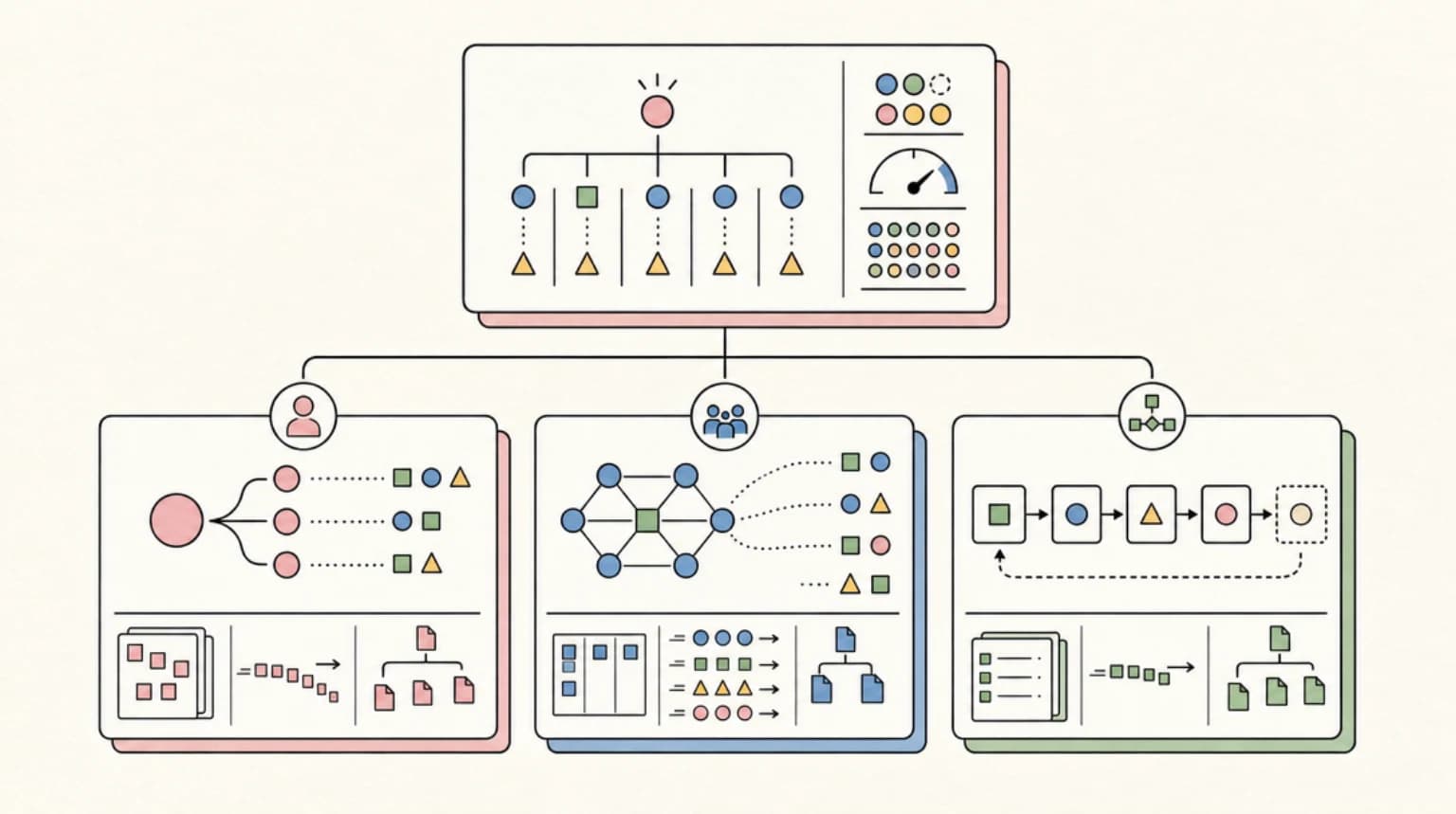
The pattern Anthropic is pricing for is an Opus 5.5 or Sonnet 5.5 session that hands bounded jobs to Haiku 5.5 workers. In Claude Code, a subagent takes a model field that accepts sonnet, opus, haiku, fable, a full model id, or inherit. On the Anthropic API the haiku alias resolves to Haiku 5.5, and the docs say to use Claude Code v2.1.293 or later with Haiku 5.5. On Amazon Bedrock, Google Cloud's Agent Platform, Claude Platform on AWS and Microsoft Foundry the same alias still points at Haiku 4.5. A log-summarizing worker looks like this:
---
name: log-summarizer
description: Summarize a long test or build log into the failing cases and the likely cause. Use after a test run fails.
tools: Read, Grep
model: haiku
---

Read the log you are given. Return the failing test names, the first error for each, and one line on the likely cause. Do not propose fixes.
To push every subagent that is not otherwise assigned a model onto Haiku, set an environment variable in settings.json. This is adapted from the docs example, which sets this variable together with the force flag below:
{
  "env": {
    "CLAUDE_CODE_SUBAGENT_MODEL": "haiku"
  }
}
A subagent's own model field still wins over that variable unless you also set CLAUDE_CODE_SUBAGENT_MODEL_FORCE to 1, which needs Claude Code v2.1.257 or later. On its own, CLAUDE_CODE_SUBAGENT_MODEL does not change the built-in Explore and Plan subagents; the force flag is what moves them too. The subagent file follows the format in the Claude Code docs and the settings snippet is adapted from them; we did not run either for this page. When to reach for subagents at all, versus agent teams or a scripted workflow, is covered in subagents vs agent teams vs workflows.
Where People Disagree#
Anthropic's two announcements pull in slightly different directions, and that is the honest state of the comparison. The Sonnet 5.5 page leads with benchmark parity and half the price; the same page concedes Opus is "clearly stronger" on open-ended judgment. The launch-day community debate we recorded in the Sonnet 5.5 guide split the same way: one camp read the tables as Opus-class coding at half the price, while another argued that at xhigh effort Sonnet's cost overlaps Opus, so there is little reason to run Sonnet hard instead of Opus at a lower setting. That guide's cache-read comparison was written before the October 7 cut, when both models charged $0.20. The cut since then moves the argument toward Sonnet, but it does not settle it.
On the small end, the counter-case is trust. The Haiku 5.5 guide records launch-day developers who found Haiku 4.5 a poor delegate for coding. Haiku 5.5's 39.2% on Terminal-Bench is a large step from Haiku 4.5's 0.0%, but it is still well below Sonnet 5.5, which is why it belongs on bounded jobs and not open-ended ones.
What We Have Not Tested#
- We have not run Opus 5.5, Sonnet 5.5 and Haiku 5.5 head to head on our own tasks. Every score above is Anthropic's.
- The cost example is arithmetic on list prices. Real bills depend on cache hit rates, thinking tokens, retries, and effort.
- We have not measured Haiku 5.5 as a Claude Code subagent on our repos. The routing advice follows Anthropic's positioning.
If you run your own eval, the useful number is cost per completed task at a fixed effort, not the per-token price.
FAQ#
Is Sonnet 5.5 better than Opus 5.5 for coding?#
On Anthropic's own Terminal-Bench 4.0 numbers, yes: 70.6% for Sonnet 5.5 against 66.4% for Opus 5.5 at xhigh effort. Anthropic still says Opus 5.5 is "clearly stronger" at complex, open-ended work that needs sustained judgment. Use Sonnet 5.5 for well-scoped coding and move to Opus 5.5 for long, ambiguous tasks or when Sonnet falls short in your evals.
Is Sonnet 5.5 cheaper than Opus 5.5?#
Yes, by exactly half per token since October 7, 2026: $2 input, $10 output and $0.10 cache read for Sonnet 5.5 against $4, $20 and $0.20 for Opus 5.5. Per task the gap can shrink on the raw API, because there Sonnet 5.5 defaults to high effort while Opus 5.5 defaults to medium. In Claude Code all three models default to medium.
Can Haiku 5.5 replace Sonnet 5.5?#
For bounded jobs, often yes: summaries, compaction, classification, routing and read-only subagents. For multi-step agentic coding, no. Anthropic reports 39.2% on Terminal-Bench 4.0 for Haiku 5.5 against 70.6% for Sonnet 5.5, and says Sonnet and Opus remain the better choices for that work.
Which model should a Claude Code subagent use?#
Use model: haiku for narrow, read-heavy subagents that return a short report, and sonnet or inherit for subagents that edit code. You can set a default for unassigned subagents with the CLAUDE_CODE_SUBAGENT_MODEL environment variable. The haiku alias maps to Haiku 5.5 on the Anthropic API from Claude Code v2.1.293.
Why does Haiku 5.5 have two prices?#
Haiku 5.5 is priced by prompt length. Up to 100,000 tokens it costs $0.10 input and $0.50 output per million; over 100,000 it costs $0.50 and $2.50. Opus 5.5 and Sonnet 5.5 bill their full 1M window at one rate.
Sources#
| Source | What it supports |
|---|---|
| Anthropic, "Introducing Claude Sonnet 5.5" | Terminal-Bench 4.0 and OSWorld 2.1 (partial) for Sonnet 5.5 and Opus 5.5, the xhigh footnote, when to choose Sonnet vs Opus, per-task cost framing, effort defaults on the API and in Claude Code |
| Anthropic, "Introducing Claude Haiku 5.5" | Haiku 5.5 benchmarks, the Sonnet 5.5 cache-read cut, subagent positioning, Max and Team API credits |
| Claude Opus 5.5 model overview | Model id, limits, default effort, prices, "long-running agentic coding and knowledge work" |
| Claude Sonnet 5.5 model overview | Model id, limits, default effort, current $0.10 cache read |
| Claude Haiku 5.5 model overview | Model id, limits, default effort, 100K price tiers, tokenizer note, target workloads |
| Claude API pricing | Cross-check of every price line, cache-read multipliers, tokenizer note, Haiku 5.5 length-based pricing |
| Claude Code subagents | Subagent model field values, CLAUDE_CODE_SUBAGENT_MODEL and CLAUDE_CODE_SUBAGENT_MODEL_FORCE (v2.1.257+), Explore and Plan behavior |
| Claude Code model configuration | Alias resolution on the Anthropic API (Haiku 5.5 needs v2.1.293+), default resolving to Opus 5.5, opusplan, medium effort default in Claude Code |
Continue Reading#
- Claude Sonnet 5.5 Developer Guide - the five breaking API changes and the launch-day debate
- Claude Opus 5.5 Developer Guide - SDK examples, Claude Code setup and effort levels for the top model
- Claude Haiku 5.5 Release Guide - the 100K price cliff and the Haiku 4.5 migration checklist
- Anthropic Model Names Explained - what Fable, Mythos, Opus and Sonnet mean across generations
- Claude Max API Credits - what the monthly Max and Team credit covers
Get the next comparison like this in your inbox
One email a week on AI Models and the rest of the AI dev stack. Free.
Read next on Claude Code
Claude Sonnet 5.5 Developer Guide: Pricing and API Changes
Claude Sonnet 5.5 costs $2/$10 per million tokens, and cache reads fell to $0.10 on October 7 - half of Opus 5.5 on every line. Pricing math and API changes.
11 min readClaude Opus 5.5 Developer Guide: Pricing, API, Claude Code
Claude Opus 5.5 costs $4/$20 per million tokens with $0.20 cache reads. SDK examples, Claude Code setup, and when to pick it over Sonnet 5.5 or Haiku 5.5.
11 min readClaude Haiku 5.5: Pricing, Migration Changes, and When to Use It
Claude Haiku 5.5 (claude-haiku-5-5) costs $0.10 input and $0.50 output per million tokens under 100K, with a 1M window and adaptive thinking. The pricing cliff, the tokenizer catch, and the ten migration steps from Haiku 4.5.
9 min readTechnical content at the intersection of AI and development. Building with AI agents, Claude Code, and modern dev tools - then showing you exactly how it works.