What a Fleet of Claude Agents Actually Costs (July 2026 Math)
TL;DR
Claude Code parallel agents cost real money because every session draws from one quota - here is the July 2026 budgeting math, verified against live pricing.
Last updated: July 31, 2026
What Changed on July 31, 2026#
Claude Opus 5 launched (July 24) at $5/$25 per MTok. It replaces Opus 4.8 in every fleet budget at the same rate but with near-Fable 5 intelligence, so the all-Opus row in this post is now the strongest price-performance default it has ever been. See the Opus 5 comparison for benchmarks.
Claude Sonnet 5 promo pricing ($2/$10 through August 31). Sonnet 5's introductory rates make the tiered fleet math in this post better than June: a 1 Opus 5 + 3 Sonnet 5 + 1 Haiku fleet now costs about 52% less than all-Opus instead of 40%, because Sonnet 5 promo input is $2 instead of $3. After September 1 the standard $3/$15 rate applies and the savings revert toward the June numbers.
GPT-5.6 Luna dropped 80% to $0.20/$1.20 (July 30). If your fleet is not Claude-locked, the OpenAI side of the tiering argument changed overnight - Luna is now 5x cheaper than Haiku on input. Cross-provider routing is covered in our routing guide and the budget tier comparison; this post stays Claude-focused because Claude Code draws from Claude plans.
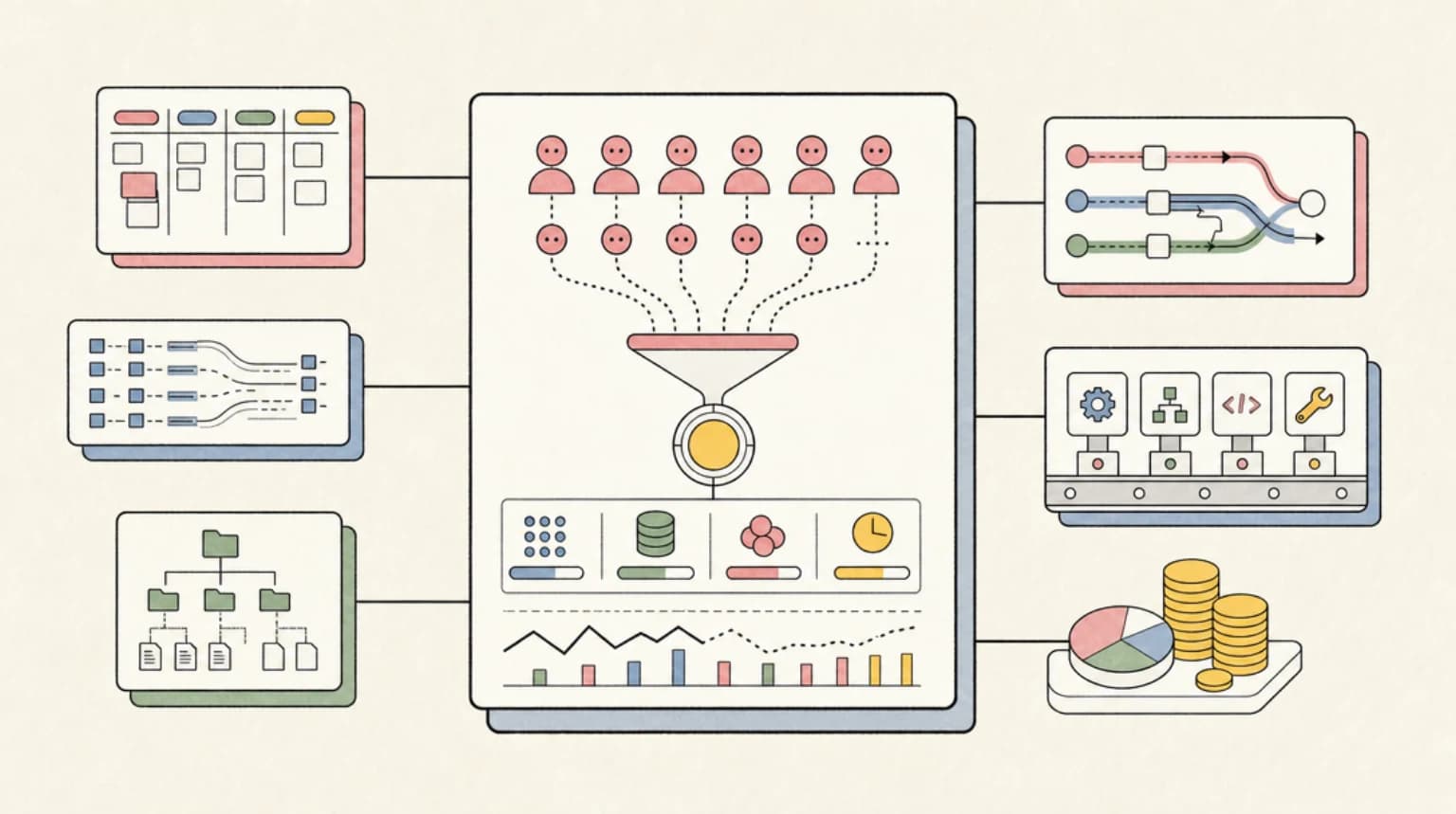
Claude Code now ships four ways to run agents in parallel: subagents, agent teams, background sessions in agent view, and dynamic workflows. None of them comes with its own bill. Every one of those agents draws from the same plan quota or API balance as your main session, which means the budgeting question is not "what does an agent cost" but "how many sessions am I really running, and on which models." This post works through the actual math, with every number checked against a live page.
This is the forward-looking companion to our $400 overnight bill postmortem. That post covered what happens when you skip the budgeting step. This one is the budgeting step.
There Is No Separate Agent Billing#
The single most important fact for planning a fleet comes straight from the agent view docs: "Each session uses your subscription quota independently," and "background sessions consume your subscription usage the same as interactive sessions, so running ten agents in parallel uses quota roughly ten times as fast as running one" (verified June 11, 2026, code.claude.com/docs/en/agent-view).
Agent teams behave the same way. The official docs are explicit that "token costs scale linearly: each teammate has its own context window and consumes tokens independently" (verified June 11, 2026, code.claude.com/docs/en/agent-teams). The costs page adds a sharper figure: agent teams use approximately 7x more tokens than a standard session when teammates run in plan mode, because each teammate is a separate Claude instance with its own context (verified June 11, 2026, code.claude.com/docs/en/costs).
CloudZero's May 2026 analysis summarizes the billing model bluntly: "No separate billing. No agent discount. No volume pricing. Every Claude Code agent session eats from the same plan" (verified June 11, 2026, cloudzero.com/blog/claude-code-agents).
So the planning model is simple multiplication. If one session would have hit your weekly limit on Thursday, five parallel sessions hit it Monday night. If you are on a plan, that shows up as throttling - see our usage limits playbook for how the limit windows behave. If you are on API billing, it shows up as invoice.
The Baseline Numbers, Verified#
Two sets of figures anchor any fleet budget. First, Anthropic's own telemetry: across enterprise deployments, average Claude Code cost is around $13 per developer per active day and $150-250 per developer per month, with 90% of users staying below $30 per active day (verified June 11, 2026, code.claude.com/docs/en/costs).
Second, CloudZero's third-party fleet estimates, which extrapolate from that $13 baseline (verified June 11, 2026, cloudzero.com/blog/claude-code-agents):
| Setup | Estimated daily cost | Estimated monthly (20 active days) |
|---|---|---|
| 1 session | ~$13 | ~$260 |
| 3 parallel agents | $30-40 | $600-800 |
| 5-10 parallel agents | $50-130 | $1,000-2,600 |
These are vendor estimates, not Anthropic pricing, and they assume agents that are actually working most of the day. But the shape matters more than the exact dollars: a 5-10 agent fleet is a four-figure monthly line item, which is well past the point where "just put it on the Max plan" stops being a complete answer. For context, plans currently run $20/month for Pro ($17 on annual billing) and from $100/month for Max, with Team premium seats at $125/month monthly or $100 annual (verified July 31, 2026, claude.com/pricing). If you are deciding how a whole team should pay, our Team seats vs API vs Enterprise comparison for Claude Code works through the 10-developer math.
Head-to-Head: All-Opus Fleet vs Tiered Fleet#
The biggest lever you control is which model each agent runs. Current Claude API rates per million tokens: Fable 5 at $10 input / $50 output, Opus 5 at $5 / $25, Sonnet 5 at $2 / $10 (promo through August 31, then $3 / $15), and Haiku 4.5 at $1 / $5, with cache reads at 0.1x base input on all of them (verified July 31, 2026, platform.claude.com/docs/en/about-claude/pricing).
Here is a worked example at those rates. Assume a busy agent processes 2M billed input tokens and 250K output tokens per day - a heavy but realistic agentic workload before caching. Per-agent daily cost: Fable 5 $32.50, Opus 5 $16.25, Sonnet 5 promo $6.50 (standard $9.75), Haiku 4.5 $3.25. Now compare five-agent fleet configurations:
| Fleet (5 agents) | Composition | Daily cost | Monthly (20 days) | vs all-Opus |
|---|---|---|---|---|
| All Fable 5 | 5x Fable | $162.50 | $3,250 | +100% |
| Fable orchestrator | 1 Fable + 3 Opus + 1 Haiku | $84.50 | $1,690 | +4% |
| All Opus 5 | 5x Opus | $81.25 | $1,625 | baseline |
| Tiered (promo) | 1 Opus 5 + 3 Sonnet 5 promo + 1 Haiku | $39.00 | $780 | -52% |
| Tiered (Sept 1) | 1 Opus 5 + 3 Sonnet 5 + 1 Haiku | $48.75 | $975 | -40% |
The tiered row is the headline: during the Sonnet 5 promo window the tiered fleet costs 52% below all-Opus, and it reverts to roughly 40% below after September 1 when Sonnet 5 standard pricing kicks in. CloudZero reported the same ~40% shape from a slightly different mix in June, estimating that "an agent team with one Opus 4.7 orchestrator and four Sonnet 4.6 workers costs roughly 40% less than five Opus agents" (verified June 11, 2026, cloudzero.com/blog/claude-code-agents). The pattern is consistent: route the orchestrator to your strongest model, workers to Sonnet, and mechanical tasks like formatting to Haiku.
The lushbinary long-horizon agents guide reaches the same architecture from the Fable 5 side: reserve Fable 5 for orchestration and hard reasoning steps, and delegate routine subtasks to Opus 5 at half the rate. Their single-task example is useful for calibration: 200K input plus 50K output on Fable 5 costs $4.50 before caching (verified June 11, 2026, lushbinary.com). For deeper per-task modeling on Fable specifically, see our Fable 5 production cost modeling guide.
Two caveats on the table. Prompt caching changes these numbers a lot: with 80% of input arriving as cache reads, the Opus agent in this example drops from $16.25 to about $9.05 per day. And Opus 4.7 and later, including Fable 5, use a new tokenizer that can produce up to 35% more tokens for the same text, so comparisons against older-model baselines understate real spend (both verified July 31, 2026, platform.claude.com/docs/en/about-claude/pricing).
Per-Subagent Model Caps Are the Cheapest Guardrail#
You enforce tiering in subagent definitions, not in prompts. Every subagent file takes a model frontmatter field accepting sonnet, opus, haiku, fable, a full model ID like claude-opus-4-8, or inherit, and it defaults to inherit (verified June 11, 2026, code.claude.com/docs/en/sub-agents). That default is the cost trap: an unspecified worker silently runs whatever expensive model your main session runs.
---
name: test-runner
description: Runs the test suite and summarizes failures
tools: Bash, Read, Grep
model: haiku
---
The resolution order matters for fleet-wide caps: the CLAUDE_CODE_SUBAGENT_MODEL environment variable beats the per-invocation parameter, which beats frontmatter, which beats the main conversation's model (verified June 11, 2026, code.claude.com/docs/en/sub-agents). Setting that env var in CI gives you a hard ceiling no prompt can override.
For agent teams, the docs recommend Sonnet for teammates outright, and teammates do not inherit the lead's /model selection by default - you set a default teammate model in /config (verified June 11, 2026, code.claude.com/docs/en/costs and code.claude.com/docs/en/agent-teams).
Beyond model routing, the official cost levers are behavioral: stop idle sessions (an idle teammate still holds a context window, and the docs tell you to clean up teams because "active teammates continue consuming tokens even if idle"), and clear context between tasks - CloudZero estimates /clear cuts per-message token cost by 30-50% (both verified June 11, 2026, code.claude.com/docs/en/costs, cloudzero.com/blog/claude-code-agents).
Make the Spend Observable Before You Scale#
A fleet you cannot meter is a fleet you cannot budget. Three layers, all first-party:
- In-session:
/usageshows token usage plus a plan-limit breakdown attributed to skills, subagents, plugins, and MCP servers over the last 24 hours or 7 days (verified June 11, 2026, code.claude.com/docs/en/costs). - Hard limits: on Pro and Max,
/usage-creditssets a monthly spend limit on usage credits; on the API, workspace spend limits cap total Claude Code workspace spend (verified June 11, 2026, code.claude.com/docs/en/costs). - Fleet telemetry: set
CLAUDE_CODE_ENABLE_TELEMETRY=1and export OpenTelemetry metrics.claude_code.cost.usagereports session cost in USD,claude_code.token.usagereports tokens, and trace spans carryagent_idandparent_agent_idattributes so you can attribute spend to the exact subagent or teammate that incurred it (verified June 11, 2026, code.claude.com/docs/en/monitoring-usage). Agents you run on the Claude API rather than in Claude Code can now export spans too - see Claude API OpenTelemetry tracing.
If you want this on a dashboard without building one, we have covered Codeburn, a TUI for Claude Code token spend, and for SDK-built fleets, metering with the Agent SDK credit meter pattern.
Decision Guide by Persona#
- Solo dev on Pro ($20/month): one or two background sessions, Sonnet workers, no agent teams. Parallel fleets will hit Pro limits fast since every session draws the same quota.
- Max power user (from $100/month): 3-5 agents with tiered models is the sweet spot. Set
/usage-credits, check/usagedaily, and keep Opus or Fable for the lead only. - Team lead on Team premium seats: agent teams for review and research bursts, Sonnet teammates by default, plan-approval gates so teammates do not burn tokens implementing a bad plan.
- Platform or enterprise: API billing with workspace spend limits,
CLAUDE_CODE_SUBAGENT_MODELcaps in CI, and OTel cost metrics piped to your existing observability stack before anyone scales past five concurrent agents.
When to Skip the Fleet (and When to Stay)#
Skip parallel agents when the work is sequential, touches the same files, or is routine enough that one session finishes it cleanly - the docs themselves say a single session is more cost-effective for routine tasks, and that three focused teammates often outperform five scattered ones (verified June 11, 2026, code.claude.com/docs/en/agent-teams). Coordination overhead is a real cost even before tokens.
Stay with a fleet when the work is genuinely independent - parallel research angles, multi-module builds, competing debugging hypotheses - and when you have the three guardrails in place: model caps per agent, a spend limit that actually binds, and per-agent telemetry. At roughly 40% savings from tiering alone, a disciplined five-agent fleet can cost less than a sloppy three-agent one. The fleet is not the risk. The unmetered fleet is.
FAQ#
How much do Claude Code parallel agents cost per day?#
Anthropic reports an average of about $13 per developer per active day for a single session, with 90% of users under $30. CloudZero's third-party estimates put 3 parallel agents at $30-40 per day and 5-10 agents at $50-130 per day (both verified June 11, 2026). Actual cost depends heavily on model choice, caching, and how long agents stay active.
Do Claude Code subagents and agent teams have separate billing?#
No. There is no separate agent billing of any kind. Subagents, teammates, background sessions, and workflow agents all consume your plan quota or API balance exactly like interactive sessions. The agent view docs state that running ten agents in parallel uses quota roughly ten times as fast as running one.
How do I cap which model a subagent uses?#
Set the model field in the subagent's YAML frontmatter (haiku, sonnet, opus, fable, or a full model ID). It defaults to inherit, meaning the main session's model. For a fleet-wide ceiling, the CLAUDE_CODE_SUBAGENT_MODEL environment variable overrides everything else in the resolution order.
Is a tiered model fleet really 40% cheaper than all-Opus?#
In our worked example at live July 2026 API rates, a 1 Opus 5 + 3 Sonnet 5 + 1 Haiku fleet costs $39.00 per day during the Sonnet 5 promo window ($2/$10) versus $81.25 for five Opus 5 agents - 52% less. After September 1, when Sonnet 5 standard pricing ($3/$15) applies, the same fleet costs $48.75 per day, about 40% less. CloudZero independently reported the ~40% figure for a 1 Opus orchestrator + 4 Sonnet workers team versus five Opus agents. Savings shrink if your workers genuinely need frontier reasoning.
How do I monitor spend across many agents at once?#
Use /usage for per-session breakdowns, /usage-credits or workspace spend limits for hard caps, and OpenTelemetry for fleets: the claude_code.cost.usage metric reports USD per session, and trace spans carry agent_id and parent_agent_id so spend attributes to specific subagents and teammates.
Official Sources#
| Source | Description | Last Verified |
|---|---|---|
| Claude Code Agent View Docs | Parallel and background sessions draw from the same quota | June 11, 2026 |
| Claude Code Agent Teams Docs | Teammate token costs scale linearly | June 11, 2026 |
| Claude Code Costs Docs | Telemetry baselines, 7x agent-team multiplier, cost levers | June 11, 2026 |
| Claude Code Sub-Agents Docs | model frontmatter field and resolution order | June 11, 2026 |
| Claude Code Monitoring Usage Docs | OpenTelemetry cost and token metrics | June 11, 2026 |
| Anthropic API Pricing | Model rates used in the fleet math | July 31, 2026 |
| Claude Plan Pricing | Pro/Max/Team plan rates | July 31, 2026 |
| CloudZero: Claude Code Agents Analysis | Third-party fleet cost estimates | June 11, 2026 |
Continue Reading#
- Claude for Startups Offer Paused - the separate startup-program credit and why it is over capacity
- Claude Max API Credits: $100 a Month, What They Cover - a free monthly API pot for Max and Team to fund a small fleet
- Claude Opus 5.5 Release Guide - the $0.20 cache-read tier that changes the fleet math
- AI Model Routing Strategies for Cost-Effective Coding - how to put the tiered-fleet pattern into practice
- Claude Code Subagent Model: Put Explore on Haiku 5.5 - the cheapest tier change in a fleet: moving read-only helpers to Haiku 5.5
- Frontier Model API Pricing, July 2026 - the full cross-provider rate card
- Budget AI Coding Models Compared 2026 - what the Luna price cut means for non-Claude fleets
- AI Coding Tools Pricing Compared 2026 - subscription plans versus API billing
- The $400 Overnight Bill: Why Managed Agents Need FinOps Now - what happens when you skip the budgeting step
- Running Fable 5 Agent Fleets in Production: The Operations Guide - operating a Fable 5 fleet once the budget is set
- Claude Code - plans, install routes, and alternatives on one page
- Claude Code Power User course - subagents, hooks, and parallel workflows in depth
Get the next deep dive like this in your inbox
One email a week on claude-code and the rest of the AI dev stack. Free.
Read next on Claude Code
Claude Code for Teams: Team Seats vs API vs Enterprise (2026)
Team seats ($25 or $125 a month), Enterprise ($20 plus API-rate usage) or the Console API? How to pay for Claude Code for a team, with 10-developer math.
11 min readThe $500M Claude Bill: A Spend-Guardrails Playbook for AI-Native Teams
Claude spend guardrails playbook for AI-native teams: usage caps, budget alerts, gateway spend limits, model routing, prompt caching and approval workflows.
11 min readClaude Cowork vs Claude Code (2026): Which One Should You Use, and What Does It Cost?
Claude Cowork vs Claude Code: Code is for software, Cowork for documents, spreadsheets and research. Both are in every paid Claude plan. How to pick.
9 min readTechnical content at the intersection of AI and development. Building with AI agents, Claude Code, and modern dev tools - then showing you exactly how it works.