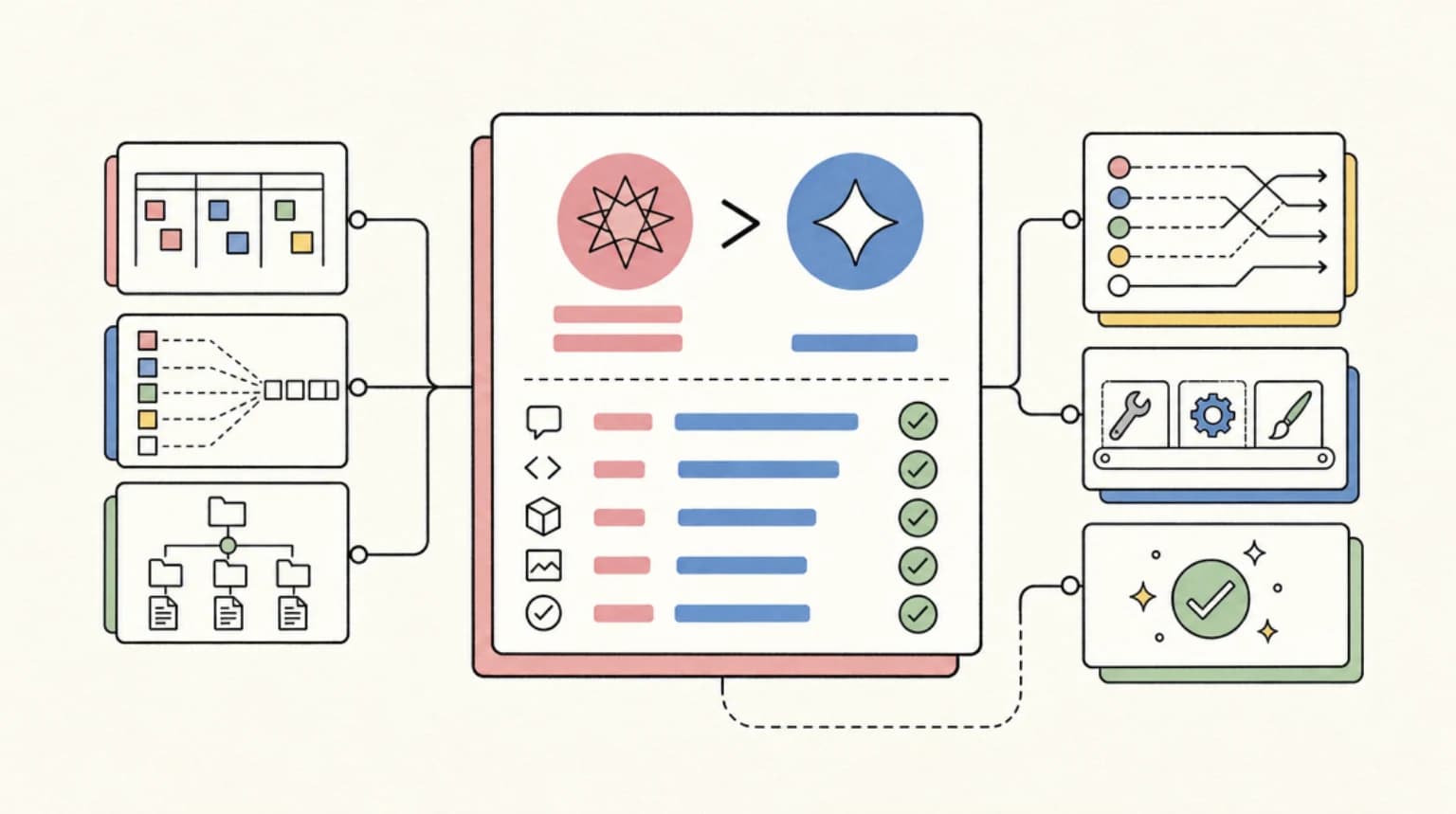
Enterprise AI Coding Budget Blowouts: What Uber and Microsoft Teach Us
TL;DR
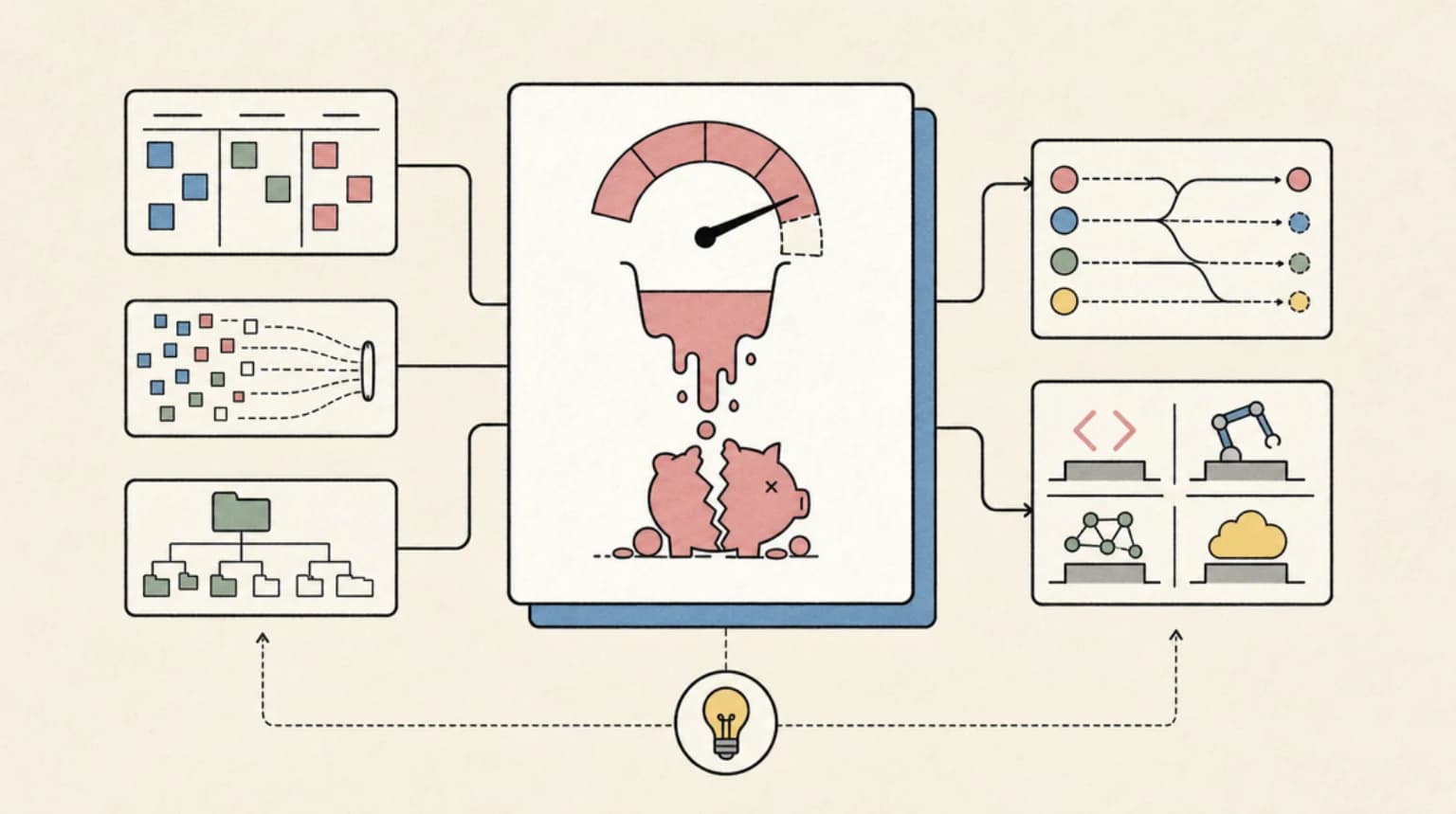
Enterprise AI coding budget lessons: Uber spent its 2026 AI tools budget by April and Microsoft is canceling Claude Code licenses. Spend controls that work.
Official Sources#
| Source | Link |
|---|---|
| Microsoft Claude Code cancellation | Space Daily coverage |
| Claude Code pricing | Anthropic pricing |
| Cursor pricing | cursor.com/pricing |
| GitHub Copilot plans | Copilot Plans |
Last updated: June 13, 2026
Two of the largest technology companies just learned an expensive lesson about AI coding tools. Uber exhausted its entire 2026 AI tools budget by April - four months into the fiscal year. Microsoft is canceling Claude Code licenses across its Experiences + Devices division by June 30, steering thousands of engineers toward GitHub Copilot CLI.
These are not edge cases. They are early signals of what happens when enterprise AI adoption meets token-based billing without financial governance infrastructure in place.
What Actually Happened#
Uber: Incentives Without Guardrails#
Uber deployed Claude Code and Cursor to its engineering organization in December 2025. The company created an internal leaderboard ranking teams by AI tool usage volume - a gamification approach intended to accelerate adoption.
It worked. By March 2026, 84% of Uber's approximately 5,000 engineers were classified as agentic coding users. Per-engineer monthly costs ranged from $500 to $2,000 for heavy users versus $150 to $250 on average.
The math was brutal. Heavy users at $2,000 per month times hundreds of engineers equals a budget line that looks nothing like traditional per-seat licensing. By April, the entire 2026 AI tools budget was gone.
COO Andrew Macdonald assessed the situation bluntly: "That link is not there yet" - referring to the connection between increased AI spending and tangible consumer feature output.
Microsoft: Platform Control Over Best-of-Breed#
Microsoft's decision to cancel Claude Code licenses across its Experiences + Devices division by June 30 follows a different logic. Engineers had rapidly adopted Claude Code after it became available in December 2025, creating a preference shift away from Microsoft's own GitHub Copilot product.
The stated reasoning focuses on integration: GitHub Copilot has deep integration with Microsoft's repos, workflows, CI pipelines, and security infrastructure. The internal messaging emphasized that Copilot CLI offers "a product we can help shape directly with GitHub for Microsoft's repos, workflows, security expectations, and engineering needs."
The unstated reasoning is obvious: Microsoft does not want its engineers preferring and advocating for a competitor's product.
Why Token-Based Billing Breaks Enterprise Budgeting#
Traditional enterprise software licensing is predictable. You buy seats, you know the cost. GitHub Copilot Business at $19 per seat per month for 1,000 engineers is $228,000 per year. Finance can plan for that.
Token-based billing for agentic AI tools scales with task complexity, not headcount. A multi-step refactor generates vastly more tokens than a simple function suggestion. A parallel agent workflow spawning 8 subagents to analyze a codebase can burn through $50 in tokens in minutes.
The cost drivers are not linear:
Context window size. Fable 5's 1M token context window means engineers can dump entire codebases into prompts. At $10 per million input tokens, that adds up fast when context is rebuilt for every turn.
Agentic workflows. Claude Code's sub-agent architecture means complex tasks spawn multiple parallel agents. A single refactoring session consuming 500K to 1M tokens is not unusual for heavy users.
Output token weight. Output tokens cost 5x input tokens for most models. A verbose response from Fable 5 at $50 per million output tokens accumulates quickly.
No natural ceiling. Unlike seat licenses, there is no cap on what an individual engineer can spend. The leaderboard Uber created rewarded exactly this behavior.
The Real Cost Numbers#
Here is what enterprise teams are actually seeing at scale:
| Usage Pattern | Monthly Cost Per Engineer | Annual Cost (1,000 engineers) |
|---|---|---|
| Light autocomplete only | $20-50 | $240K-600K |
| Moderate chat + completions | $100-250 | $1.2M-3M |
| Heavy agentic workflows | $500-1,000 | $6M-12M |
| Power user, parallel agents | $1,000-2,000 | $12M-24M |
The variance is the problem. Finance teams budgeting based on "moderate" usage discover that 20% of engineers are power users consuming 80% of the token spend.
API pricing for reference (verified June 13, 2026):
| Model | Input ($/MTok) | Output ($/MTok) |
|---|---|---|
| Claude Fable 5 | $10 | $50 |
| Claude Opus 4.8 | $5 | $25 |
| Claude Sonnet 4.6 | $3 | $15 |
| Claude Haiku 4.5 | $1 | $5 |
What Works: Budget Controls That Do Not Kill Productivity#
The solution is not banning AI tools or reverting to seat-based pricing alone. Teams that ship consistently with AI tools report 2-3x productivity gains on certain task categories. Killing that upside defeats the purpose.
What works is financial governance infrastructure deployed alongside adoption:
Per-engineer spend caps with escalation. Set a monthly ceiling - say $300 - with a clear escalation path for legitimate heavy usage. Engineers who need more for a specific project can request budget, which creates visibility into what is driving spend.
Model routing by task type. Not every request needs Fable 5. Autocomplete on Haiku 4.5 at $1/$5 per MTok handles most completion tasks. Routing routine requests to cheaper models dramatically reduces average spend without impacting complex reasoning tasks.
Task-level cost attribution. Connect AI spend to tickets, PRs, or projects. This surfaces whether expensive agentic sessions correlate with shipped features or just exploration. Uber's COO was right to look for the output link.
Subscription-first for heavy users. Claude Max at $100-200 per month or Cursor Ultra at $200 per month caps individual spend regardless of token volume. For your top 10-20% power users, subscription plans beat API billing.
Shared context caching. Claude's prompt caching reduces repeated context costs by 90%. For teams working in the same codebase, cached context means the second engineer to ask about that module pays 10% of what the first paid.
The Microsoft Path: Consolidation#
Microsoft's choice to consolidate on GitHub Copilot reveals a different governance strategy: picking a single platform and accepting the capability tradeoff for cost predictability and integration depth.
This works when:
- The chosen platform is good enough for your use cases
- Integration with existing infrastructure (repos, CI, security) matters more than best-in-class reasoning
- Platform vendor relationship provides leverage on pricing and roadmap
- Standardization reduces training, support, and procurement overhead
It does not work when:
- Your hardest engineering problems genuinely require frontier reasoning (Fable 5, Opus 4.8)
- Engineers have strong tool preferences that affect retention
- The consolidated platform has meaningful capability gaps
Microsoft can absorb the capability tradeoff because they can influence Copilot's roadmap directly. Most enterprises cannot.
The Future: Token Costs Down, Total Spend Flat#
Gartner projects that per-token inference costs will fall approximately 90% by 2030. That sounds like relief - but enterprise AI bills will not fall proportionally.
Why? Agentic workflows require far more tokens per task than current usage patterns. As models get cheaper, engineers use more of them. The $2,000 per month power user today becomes the baseline tomorrow when everyone is running parallel agent swarms on every commit.
The companies that navigate this well are building financial governance infrastructure now, before the next budget blowout.
The Practical Takeaway#
If your enterprise is deploying AI coding tools without spend guardrails, you are one viral internal leaderboard away from Uber's situation. If you are considering consolidating on a single platform for cost reasons, Microsoft's decision shows what that looks like at scale.
The middle path - best-of-breed tools with financial governance - requires more infrastructure but preserves both capability and predictability. That is where most enterprises will land after learning these lessons the expensive way.
For budget planning specifics, see our AI coding tools pricing comparison with verified June 2026 numbers, and the Fable 5 cost-per-task analysis for modeling individual task economics.
FAQ#
Why did Uber burn through its AI tools budget so fast?#
Uber deployed Claude Code and Cursor to approximately 5,000 engineers in December 2025 and created an internal leaderboard incentivizing high usage. By March 2026, 84% of engineers were active agentic coding users, with heavy users spending $500 to $2,000 per month each. The combination of token-based billing, no per-engineer caps, and gamified adoption exhausted the entire 2026 budget by April.
Why is Microsoft canceling Claude Code licenses?#
Microsoft is canceling Claude Code licenses across its Experiences + Devices division by June 30, 2026, directing engineers to use GitHub Copilot CLI instead. The official reasoning cites integration advantages with Microsoft's repos, workflows, and security infrastructure. The practical effect is consolidating on Microsoft's own product rather than supporting a competitor.
How much does Claude Code cost per engineer per month?#
Costs vary dramatically based on usage pattern. Light autocomplete users average $20 to $50 per month. Moderate chat and completions users run $100 to $250. Heavy agentic workflows cost $500 to $1,000. Power users running parallel agents can reach $1,000 to $2,000 per month. Subscription plans like Claude Max ($100-200/month) cap costs for heavy users.
What are the alternatives to per-token billing?#
Claude Max plans ($100-200/month) and Cursor Ultra ($200/month) provide subscription-based pricing that caps individual spend regardless of token volume. GitHub Copilot Business ($19/seat) and Enterprise ($39/seat) use per-seat licensing with flex credit pools for usage-based features. These provide cost predictability at the expense of potentially lower capability ceilings.
How can enterprises control AI coding tool spend?#
Effective approaches include: per-engineer spend caps with escalation paths, model routing to use cheaper models for routine tasks, task-level cost attribution to connect spend with shipped features, subscription plans for heavy users, and shared context caching to reduce repeated context costs.
Will AI coding tool costs decrease?#
Per-token inference costs are projected to fall approximately 90% by 2030. However, total enterprise AI bills are not expected to fall proportionally because agentic workflows require far more tokens per task than current usage patterns. As models get cheaper, usage expands to fill available budget.
Should enterprises consolidate on a single AI coding tool?#
Consolidation provides cost predictability and integration advantages but trades off capability. It works best when the chosen platform meets your capability requirements, integration with existing infrastructure is a priority, and you have leverage with the vendor. It does not work when your hardest problems require frontier reasoning that the consolidated platform cannot match.
What is the ROI problem with enterprise AI coding tools?#
Many enterprises adopted AI coding tools without establishing measurement infrastructure to connect spend with output. As Uber's COO noted, "That link is not there yet" between increased AI spending and tangible feature delivery. Without task-level attribution, it is difficult to justify or optimize AI tool budgets.
Continue Reading#
Get the next deep dive like this in your inbox
One email a week on enterprise and the rest of the AI dev stack. Free.
Read next on Cursor
AI Coding Tools Pricing Comparison 2026
AI coding tools pricing, verified Sep 28, 2026: Claude Code, Codex, Cursor, Copilot, Antigravity, Windsurf and more. Free tiers, pro plans and hidden costs.
12 min readClaude Fable 5 Pricing: Real Cost Per Task vs Opus 4.8, GPT-5.5 and Codex
Claude Fable 5 pricing beyond the $10/$50 per MTok list rate: real cost per task versus Opus 5, Opus 4.8 and Sonnet 5, and when the premium pays off.
9 min readThe $400 Overnight Bill: Why Managed Agents Need FinOps Now
Five managed-agent providers, five pricing models, zero unified cost attribution. If you're running agents overnight, you need FinOps you don't have yet.
13 min readNew here? Start with
Technical content at the intersection of AI and development. Building with AI agents, Claude Code, and modern dev tools - then showing you exactly how it works.