The Economics of Agent Fleets: Fable 5 Orchestrators, Sonnet 5 Workers
Fable 5 Agent Fleets
7 parts- 1Fable 5 Is Back: The Anthropic Model the Government Switched Off
- 2Orchestrating a Fleet of Agents with Fable 5
- 3The Economics of Agent Fleets: Fable 5 Orchestrators, Sonnet 5 WorkersCurrent
- 4Refusals at Fleet Scale: Building Fable 5 Agents That Do Not Silently Fail
- 5Long-Horizon Agents: What Fable 5's 1M Context and Memory Actually Unlock
- 6Running Fable 5 Agent Fleets in Production: The Operations Guide
- 7Fable 5 vs Opus 4.8: Which Should Orchestrate Your Agents?
TL;DR
One expensive orchestrator plus many cheap workers beats an all-frontier fleet for most workloads.
Official Sources#
| Source | Description |
|---|---|
| Claude Fable 5 and Mythos 5 Announcement | Fable 5 launch post, pricing, vendor benchmarks |
| Introducing Claude Sonnet 5 | Sonnet 5 announcement, intro pricing |
| What's New in Sonnet 5 | Tokenizer change documentation |
| Claude Pricing | Current pricing for all Claude models |
| Claude Models Overview | Model specifications and API details |
Part 2 of the Fable 5 agent fleets series. It builds on Part 1, Orchestrating a Fleet of Agents with Fable 5, and the series origin, Fable 5 Is Back.
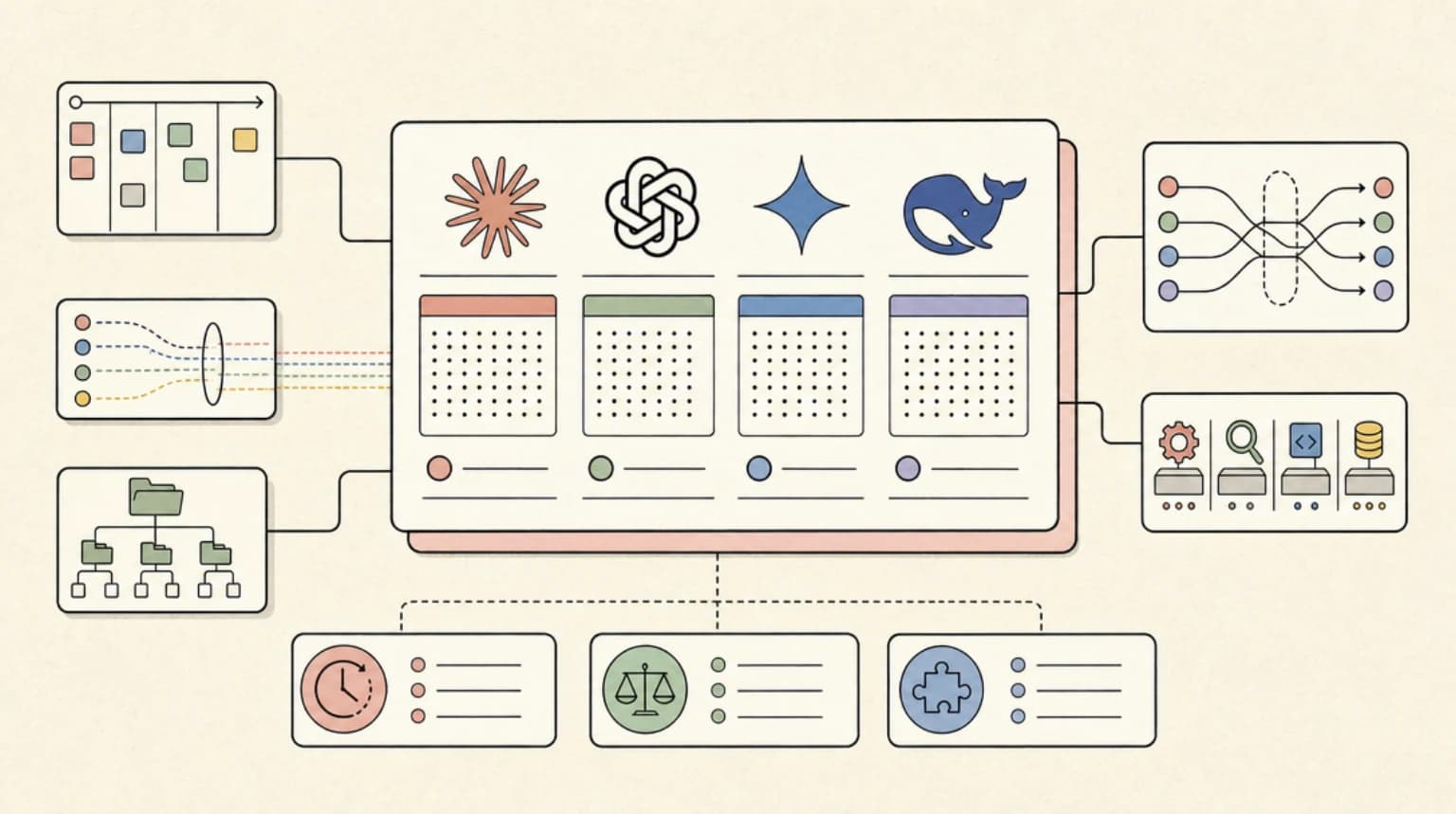
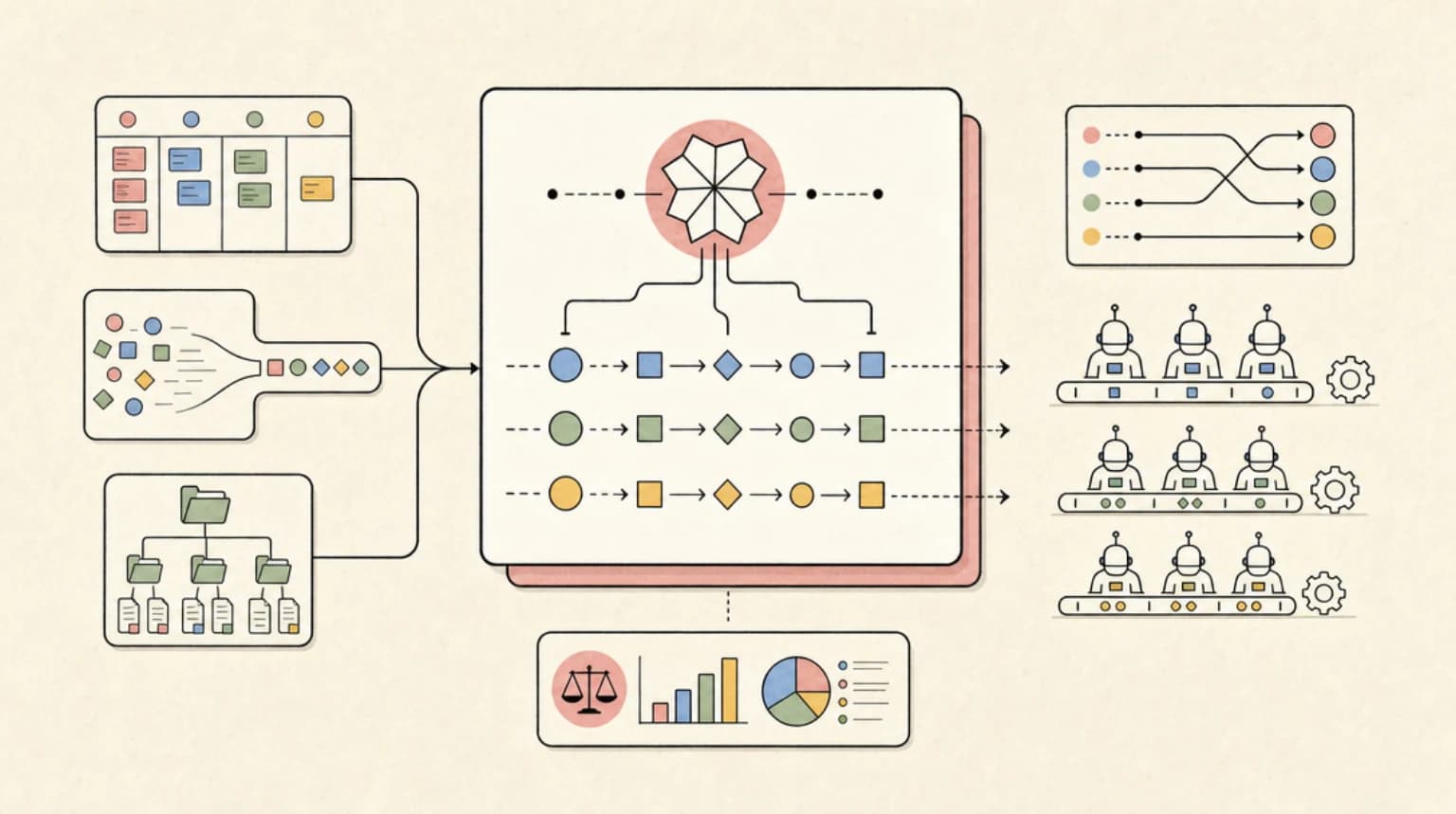
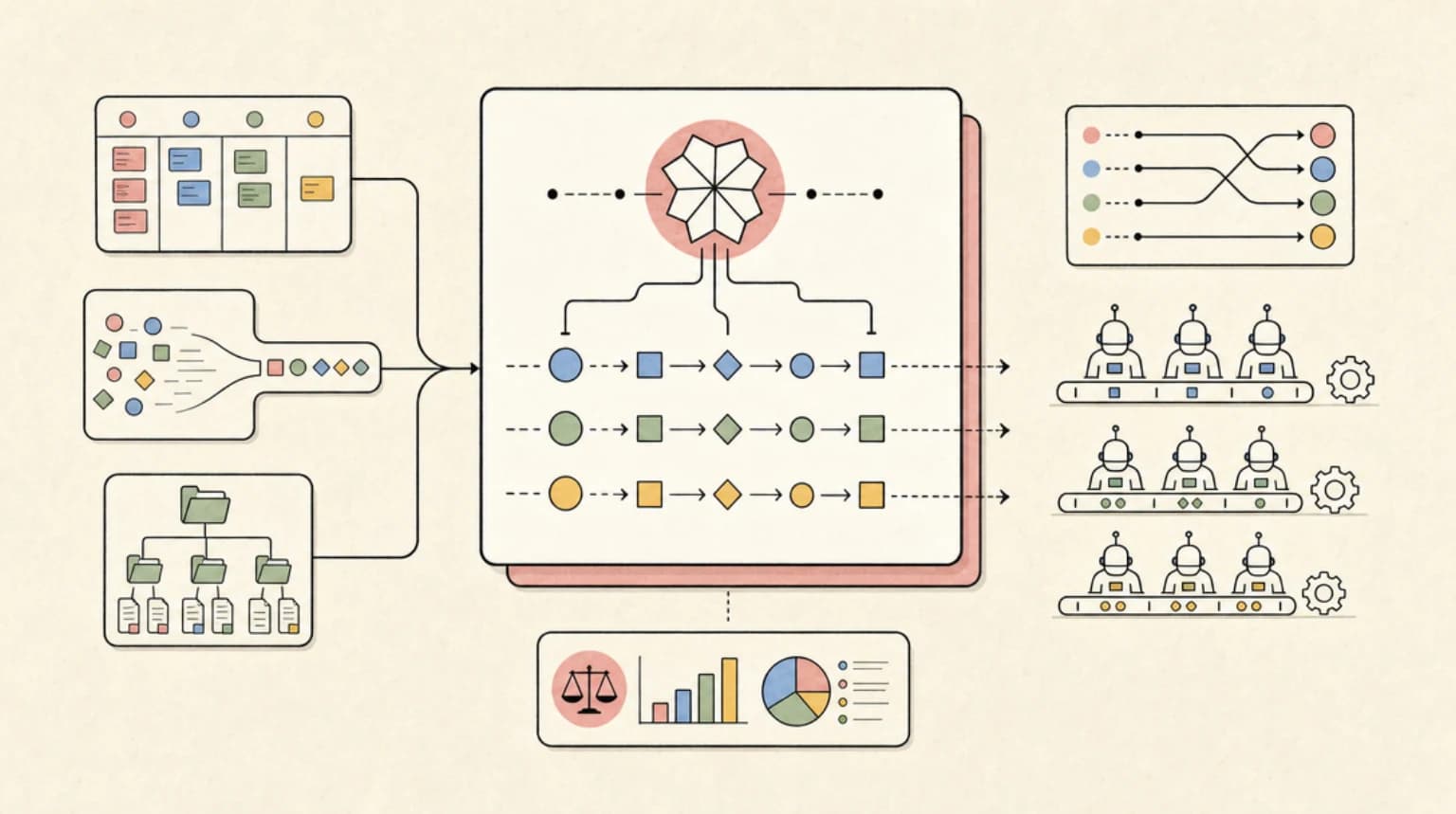
The manager-model pattern from Part 1 has an obvious objection: Fable 5 is expensive. At $10 per million input tokens and $50 per million output, running your whole fleet on it would be brutal. But that is not the pattern. The pattern is one expensive orchestrator and many cheap workers, and once you do the arithmetic it beats an all-frontier fleet for most workloads. This post works the numbers.
A note on the numbers: every dollar figure below is an illustrative estimate built from published per-token prices and made-up but plausible token counts. The point is the shape of the math, not a quote for your workload. Your real costs depend on your prompts, your caching, and how much your workers actually read and write. For the per-tool subscription side of the budget, the AI coding tools pricing comparison is the companion reference.
The three prices that matter#
All prices are per 1M tokens, input / output:
- Fable 5 (
claude-fable-5): $10 / $50. Anthropic's most capable widely released model, the orchestrator in this pattern. See the launch post. - Opus 4.8: $5 / $25. The step-down frontier model and, notably, the model Fable 5 falls back to on a refusal.
- Sonnet 5 (
claude-sonnet-5): $2 / $10 introductory, through August 31, 2026, then $3 / $15. Anthropic calls it its "most agentic Sonnet yet," near Opus 4.8 on agentic and coding tasks. See the Sonnet 5 announcement.
The spread is the whole story. Sonnet 5 output is one-fifth the price of Fable 5 output at the intro rate. When most of your fleet's token volume is worker output - and in a fan-out of code or content, it is - moving that volume to Sonnet 5 is where the savings live.
The tokenizer caveat that changes worker math#
Before the arithmetic, one catch that is easy to miss. Sonnet 5 ships with a new tokenizer that produces roughly 30% more tokens for the same text (see the what's new page). That means a naive per-token price comparison understates Sonnet 5's real cost, because the same work consumes about 30% more billable tokens.
Fold that in and the effective intro output rate is not $10 per "unit of text equivalent to a million old tokens" but closer to $13 once you account for the token inflation. Sonnet 5 is still far cheaper than Fable 5 as a worker. But the tokenizer change narrows the gap, and if you benchmarked worker cost on an older Sonnet's tokenizer, your estimate is low. Re-measure on real Sonnet 5 outputs rather than trusting an old ratio.
Illustrative cost math: a fan-out build#
Take a concrete, made-up job: an orchestrator plans a refactor and fans it out to 10 worker tasks, each editing one module. All token counts below are invented for illustration.
Orchestrator (Fable 5). Say it reads a 200K-token slice of the repo plus spec, and across planning, dispatching, and verifying 10 results it produces 60K output tokens.
- Input: 0.2M x $10 = $2.00
- Output: 0.06M x $50 = $3.00
- Orchestrator subtotal: $5.00
Workers (Sonnet 5, intro rate). Say each worker reads 40K tokens of context and writes a 15K-token diff plus reasoning. Apply the ~30% tokenizer inflation to both sides, so 40K becomes ~52K input and 15K becomes ~19.5K output.
- Per worker input: 0.052M x $2 = $0.104
- Per worker output: 0.0195M x $10 = $0.195
- Per worker: ~$0.30
- 10 workers: ~$3.00
Fleet total: about $8.00, split roughly $5 orchestrator and $3 workers.
Now price the same job as an all-Fable-5 fleet. The orchestrator cost is unchanged at $5. But each worker's 40K in / 15K out on Fable 5 (no tokenizer inflation, since that is a Sonnet 5 property) is:
- Input: 0.04M x $10 = $0.40
- Output: 0.015M x $50 = $0.75
- Per worker: $1.15
- 10 workers: $11.50
All-Fable-5 total: about $16.50. Same orchestrator, roughly 4x the worker cost, about double the total. The split fleet does the same job for around half the money, and the workers are doing bounded, well-specified tasks where Sonnet 5's near-Opus agentic quality is enough.
That is the core result. As the worker count grows, the gap widens, because worker volume dominates and that is exactly the volume you moved to the cheaper model.
When to promote a worker to Opus 4.8#
Sonnet 5 is the default worker, but not every slice is equal. Promote a worker to Opus 4.8 ($5 / $25) when the task carries more risk than a routine edit:
- The slice is on a critical path where a subtle bug is expensive to catch later.
- The task needs deeper reasoning than a scoped edit - a tricky algorithm, a security-sensitive change, a gnarly migration step.
- Your verify loop keeps bouncing a particular slice back to Sonnet 5. If a worker fails verification twice, promoting it is usually cheaper than a third round plus the orchestrator's verification time on each attempt.
Opus 4.8 output at $25 is 2.5x Sonnet 5's intro rate but half of Fable 5's, so it is the sensible middle tier for the handful of slices that need more than a default worker but do not justify the orchestrator's model.
When the task justifies Fable 5 end to end#
Sometimes the split fleet is the wrong tool and you should just run Fable 5 for the whole thing. That is the right call when the task is long-horizon and hard to decompose cleanly - the exact profile where Anthropic reports Fable 5's lead is largest, and where its vendor-reported results cluster: a codebase-wide migration across a 50M-line Ruby codebase in about a day at Stripe, top scores on Cognition's FrontierCode and Cursor's CursorBench, and outsized gains from file-based memory on long-running tasks (all vendor and partner reported, from the launch post).
The trade is real. If a job cannot be split into independent slices without the slices needing to know about each other constantly, the coordination overhead of a fleet eats the savings, and a single Fable 5 run holding the whole problem in its 1M context can be both cheaper and better. The heuristic: if you can write clean, independent worker specs, run the split fleet. If every slice bleeds into every other, run Fable 5 end to end and pay for the capability.
The decision in one line#
For most workloads with decomposable work, one Fable 5 orchestrator plus a fleet of Sonnet 5 workers is the cost-quality sweet spot, with Opus 4.8 as the promotion tier for risky slices. Reserve all-Fable-5 for the long-horizon, hard-to-split jobs where its lead is worth the premium. Run the arithmetic on your own token counts before committing - the shape holds, but the exact break-even depends on how much your workers read and write.
Frequently Asked Questions#
Is an all-frontier agent fleet ever worth it?#
Rarely for decomposable work. If your tasks split into clean, independent slices, running every worker on Fable 5 roughly doubles total cost for the same output versus Sonnet 5 workers, because worker volume dominates and Sonnet 5 is near Opus 4.8 on agentic tasks. All-frontier makes sense for a single long-horizon job that cannot be split cleanly, where one Fable 5 run holding the whole problem beats the coordination overhead of a fleet.
How does the Sonnet 5 tokenizer change affect worker cost?#
Sonnet 5's new tokenizer produces roughly 30% more tokens for the same text, so the same work bills about 30% more tokens on both input and output. A naive per-token price comparison understates its real cost. Sonnet 5 is still far cheaper than Fable 5 as a worker, but re-measure worker cost on actual Sonnet 5 outputs rather than trusting a ratio from an older tokenizer.
When should I promote a worker from Sonnet 5 to Opus 4.8?#
When the slice is on a critical path, needs deeper reasoning than a routine edit, or keeps failing your verify loop. Opus 4.8 output at $25 per million is 2.5x Sonnet 5's intro rate but half of Fable 5's, making it the sensible middle tier for the few slices that need more than a default worker but do not justify the orchestrator's model.
What are the current prices for these models?#
Per million tokens, input / output: Fable 5 is $10 / $50, Opus 4.8 is $5 / $25, and Sonnet 5 is $2 / $10 introductory through August 31, 2026, then $3 / $15. All figures are Anthropic's published rates as of July 1, 2026. Confirm current pricing on Anthropic's model pages before budgeting.
Sources#
- Anthropic, Claude Fable 5 and Claude Mythos 5 (launch, pricing, vendor-reported benchmarks)
- Anthropic, Introducing Claude Sonnet 5 (pricing and positioning)
- Anthropic Docs, What's new in Claude Sonnet 5 (tokenizer change)
- Anthropic Docs, Introducing Claude Fable 5 and Claude Mythos 5
- Developers Digest, Orchestrating a Fleet of Agents with Fable 5
- Developers Digest, Fable 5 Is Back: The Anthropic Model the Government Switched Off
Get the next deep dive like this in your inbox
One email a week on Fable 5 and the rest of the AI dev stack. Free.
Read next on AI coding tools
Running Fable 5 Agent Fleets in Production: The Operations Guide
Standing up a fleet of Fable 5 agents is the easy part. This is the operations layer - data retention rules, refusal-rate alerting, effort tuning, observability, and availability planning - that keeps the fleet running.
8 min readOrchestrating a Fleet of Agents with Fable 5
Fable 5 changes multi-agent orchestration because the orchestrator can now hold the whole project in one head. Here is the manager-model pattern: a 1M-context frontier model leading, delegating scoped work to cheaper workers, and verifying results.
8 min readFable 5 vs Opus 4.8: Which Should Orchestrate Your Agents?
The orchestrator is the most important model choice in an agent fleet. A fair head-to-head between Fable 5 and Opus 4.8 for that role, with a decision matrix by run length, budget, compliance, and refusal-handling tolerance.
8 min readNew here? Start with
Technical content at the intersection of AI and development. Building with AI agents, Claude Code, and modern dev tools - then showing you exactly how it works.