Codex in June 2026: What Changed Since the Spring Wave
TL;DR
Codex changelog for April to June 2026: GPT-5.5, Goal mode going stable, the Chrome extension, iOS access, Bedrock support and Sites, and what each means.
Official Sources#
| Resource | Link |
|---|---|
| Codex Changelog | developers.openai.com/codex/changelog |
| Codex Documentation | developers.openai.com/codex |
| Codex Feature Maturity | developers.openai.com/codex/feature-maturity |
| Codex Rate Card | help.openai.com |
| GPT-5.5 Announcement | openai.com/index/introducing-gpt-5-5 |
| Codex on AWS Announcement | openai.com |
Our Codex Changelog April 2026 post became one of the top-35 pages in our Google Analytics for a reason: developers want a clear, attributed summary of what actually changed rather than a marketing narrative. This is the follow-up for the spring-to-June period. Every item below is drawn from the official Codex changelog at developers.openai.com/codex/changelog, fetched directly for this post.
The two-sentence summary: OpenAI shipped a lot. Usage grew from 3 million weekly active developers (cited April 16) to 5 million (cited June 1), and pricing quietly migrated from per-message to token-based credits on April 2 - a change that matters as much as any feature below. Goal mode left experimental, GPT-5.5 arrived, browser use became real, a Chrome extension launched, and Codex now runs on iOS, Windows, and Amazon Bedrock (including GovCloud). If you last checked in around early April, your mental model of Codex is out of date.
Last updated: June 10, 2026
The Spring-to-June Changes at a Glance#
| Change | Date | Status | Who It Affects |
|---|---|---|---|
| GPT-5.5 available in Codex | Apr 23 | GA | All plan tiers |
| Old model IDs deprecated (gpt-5.2-codex, etc.) | Apr 7-14 | Removed | CLI users with pinned models |
| In-app browser + Computer Use (macOS) | Apr 16 | Stable | Codex app on macOS |
| Thread automations (scheduled follow-ups) | Apr 16 | Stable | Codex app |
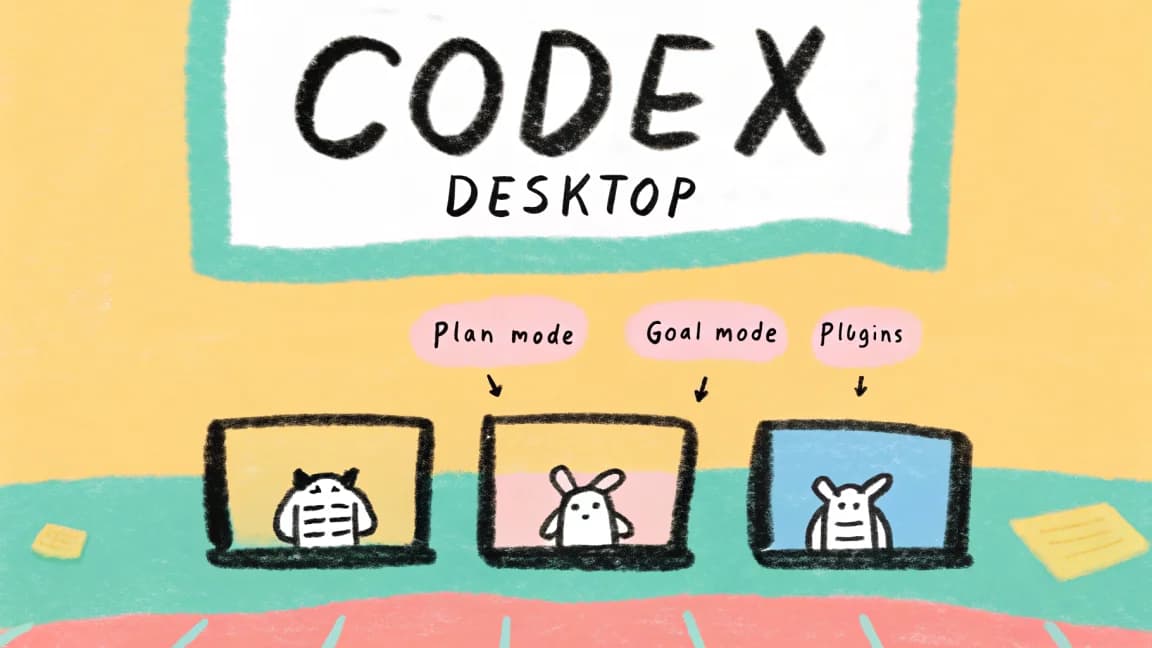
| Goal mode out of experimental | May 21 | Stable | App, IDE extension, CLI |
| Chrome extension | May 7 | Stable | Browser-use workflows |
| Remote mobile access via ChatGPT iOS | May 14 | Stable | All plans with iOS |
| Hooks generally available | May 14 | GA | Automation workflows |
| Codex access tokens for CI | May 5 | GA | Enterprise admins |
| Computer Use on Windows | May 29 | Stable | Windows Codex app users |
| Amazon Bedrock model provider | Jun 1 | Stable | Enterprise / AWS shops |
| Sites plugin (deploy from Codex) | Jun 2 | Preview | Business / Consumer plans |
| Appshots (screenshot-to-context) | May 21 | Stable | macOS app users |
| Plugin sharing in Business workspaces | May 21 | Business | Team leads, eng managers |
GPT-5.5 and the Model ID Cleanup#
The changelog notes that GPT-5.5 became available in Codex on April 23 as the recommended default for implementation, refactors, debugging, testing, and knowledge-work artifacts. To switch in the CLI: codex --model gpt-5.5. In the IDE extension or app, it appears in the model picker.
OpenAI's launch numbers for GPT-5.5: 82.7% on Terminal-Bench 2.0 (vs 75.1% for GPT-5.4) and 58.6% on SWE-Bench Pro, per the GPT-5.5 announcement. Self-reported, as always, but the community reception has matched: Every's Dan Shipper called it "the first coding model I've used that has serious conceptual clarity."
Alongside the new model, OpenAI cleaned house on legacy IDs. The changelog entry from April 7 confirms that gpt-5.2-codex, gpt-5.1-codex-mini, gpt-5.1-codex-max, gpt-5.1-codex, gpt-5.1, and gpt-5 were removed from the ChatGPT sign-in path on April 14. Users who sign in with an API key retain access to additional models via the API.
As of the April 7 entry, the available models for ChatGPT sign-in are gpt-5.4, gpt-5.4-mini, gpt-5.3-codex, and gpt-5.2. ChatGPT Pro users additionally have gpt-5.3-codex-spark. If you have scripts or CI configurations pinning a removed model ID, they will need updating.
Goal Mode Is Now Stable#
The May 21 changelog entry is blunt: "Goal mode is no longer an experimental feature and is available in the Codex app, IDE extension, and CLI." Goal mode lets you point Codex at a long-horizon objective - the changelog example is "hours or even days" - without needing to manually steer each step.
This matters because it reframes how you think about scheduling Codex tasks. Instead of writing a detailed task spec and waiting, you define a goal and let the agent iterate. The same release added thread automations on a schedule for work that needs periodic check-ins, and the two features compose well: set a goal, schedule a re-entry automation if it runs long, and review the diff when it completes.
Browser Use: From Experiment to Real Feature#
The April 16 release added an early in-app browser and Computer Use on macOS. The April 23 release made browser use operational inside the Codex app, routing through the bundled Browser plugin. The May 7 entry launched the Chrome extension proper, letting Codex work across browser tabs in parallel without taking over the entire browser.
By May 21, browser-use reliability had improved substantially: the changelog notes fixed bugs on Windows, improved JS sandbox for structured data extraction, and faster bulk asset download from pages. The Chrome extension was updated to stop creating tab groups for every task.
In practice, this means Codex can now reproduce a visual bug by rendering your local dev server, not just by reading the code. You can comment directly on a rendered page and ask Codex to address layout-level feedback. For teams doing frontend work, this is the change with the most day-to-day impact.
Mobile Access from iOS#
The May 14 entry added the ability to connect ChatGPT on iOS to a Mac running the Codex app. The same projects, files, credentials, plugins, skills, and configuration are available from the phone because Codex is running from the host machine, not the phone itself. The June 9 mobile update extended this with branch selection, worktree support, environment setup scripts, and inline review comments for task outputs.
This is a natural complement to the remote Computer Use capability that shipped May 21, which allows Codex to keep running on your Mac after it locks - and which the phone can monitor and steer.
Hooks Go GA, Access Tokens Arrive#
Hooks general availability shipped May 14. Hooks run lifecycle scripts around Codex tasks - before a task starts, after it finishes, on approval events - and with GA status they are now documented, stable, and supported in production workflows.
Access tokens, which arrived May 5, let Enterprise workspace members run Codex from scripts, schedulers, and private CI runners using their ChatGPT workspace identity. This closes a gap that previously forced teams to choose between API key auth (which strips workspace governance) and interactive sessions.
The changelog documents both features landing in the same window, which is not coincidental: hooks and access tokens together are the building blocks for integrating Codex into existing CI/CD pipelines without custom orchestration glue.
Amazon Bedrock and Windows Reach Parity#
The June 1 entry added Amazon Bedrock as a model provider, and OpenAI's announcement confirms availability in both Commercial and GovCloud regions. Teams can now configure Codex to run with AWS-managed authentication, account controls, and billing. This resolves a major enterprise blocker for shops standardized on AWS - and notably, GovCloud availability is something Anthropic's Fable 5 cannot currently match because of its data-sharing requirement (see our GovCloud breakdown).
The May 29 entry brought Computer Use to Windows - Codex can now see, click, and type in Windows desktop apps - and added Windows remote control support, so you can start Codex work from an iOS device or a Mac and monitor it on a Windows machine. Windows had been a second-class surface since launch; the gap with macOS has substantially narrowed.
Sites: Deploy from Codex Without Leaving the App#
The June 2 entry introduced the Sites plugin in preview. It lets you create, save, deploy, and inspect websites, dashboards, internal tools, web apps, and games hosted by OpenAI from directly inside Codex. ChatGPT Business workspaces include Sites by default; Enterprise admins can enable it per role.
Sites appears to be Codex's answer to the growing number of "vibe coding to deploy" workflows. The practical question is cost structure, which the changelog does not specify - the Sites documentation page covers that in more detail. For now, it is a preview, and behavior may change.
The Honest Friction List#
It has not all been smooth. The most-discussed open issue on the Codex repo (#14593, 600+ comments) is token burn rate - users report consuming credits far faster than expected under the new token-based pricing, with little in-product signal before hitting limits. Other recurring asks: the missing Linux desktop app (issue #11023), restoring a 1M-token context window for GPT-5.5, and glob-based exclusion of sensitive files from the sandbox (issue #2847, still open after months). If you are budgeting Codex for a team, the community's rough working number is $100-200 per developer per month at the new credit rates, with high variance by workload.
How the Codex Trajectory Compares to Claude Code This Quarter#
Both Codex and Claude Code have been shipping at high velocity. The contrast worth noting is one of architecture emphasis: Codex has been expanding the surface area of the app - Computer Use, in-app browser, Sites, Appshots, mobile remote control - while Claude Code has focused on the agent model layer, culminating in what our Claude Fable 5 post covered regarding the model-tier restructuring.
OpenAI also published a notable proof point on June 5: the Harness Engineering post describes an internal 1-million-line product built with zero manually written code - roughly 1,500 PRs over 5 months from a team of 3 to 7 engineers, with AGENTS.md used as a table of contents for the agent. Whatever you make of the methodology, it is the clearest public signal of how OpenAI itself thinks Codex should be used.
Codex is leaning into the "coding environment as an agent platform" idea, where the IDE is replaced by something that can also browse, click, deploy, and run scheduled automations. Claude Code's approach has been to deepen the underlying model capabilities and SDK surface, betting that developers will build the environment layer themselves.
Neither approach is clearly better for every team. If you want a complete out-of-the-box agent-native IDE experience, Codex has moved furthest the fastest this quarter. If you want programmatic control over your agent infrastructure via an SDK, the Claude Code direction has more flexibility. The competition is genuinely good for developers in both camps.
FAQ#
What models are available in Codex right now?#
Per the April 7 changelog entry, ChatGPT sign-in users can access gpt-5.4, gpt-5.4-mini, gpt-5.3-codex, gpt-5.2, and - for Pro subscribers - gpt-5.3-codex-spark. GPT-5.5 is now the recommended default for most tasks. Users signing in via API key can configure additional models or external providers including Amazon Bedrock.
Is Goal mode ready for production use?#
Yes, as of May 21. The changelog explicitly removed the experimental label and notes the feature is available in the app, IDE extension, and CLI. Goal mode is designed for objectives that require hours to days of Codex execution, such as large refactors, migration tasks, or long-running research workflows.
How does the Chrome extension work?#
The extension, which launched May 7, lets Codex work across browser tabs in parallel in the background. It does not take over the browser - the changelog notes it was updated to stop creating tab groups. You control which websites Codex can access through settings. It works with the in-app browser for local dev server preview and can extract structured data from pages using a read-only JS sandbox.
Does Codex on iOS require a separate subscription?#
No. Per the May 14 changelog, mobile access works by connecting the ChatGPT iOS app to a Mac running Codex. Your existing plan and workspace settings apply. The Mac runs the actual Codex session; the phone is the remote control and review surface.
Continue Reading#
- Nimbalyst: A Visual Workspace That Unifies Codex and Claude Code
- OpenAI Codex in 7 Minutes: The Desktop App, Plan Modes, and Multi-Agent Workflows
Sources#
- Codex changelog (developers.openai.com) - primary source for all dates and feature descriptions in this post
- Codex feature maturity (developers.openai.com) - stability labels
- Codex app overview (openai.com)
- Introducing GPT-5.5 (openai.com) - April 23, 2026
- OpenAI frontier models and Codex on AWS (openai.com) - June 1, 2026
- Harness Engineering (openai.com) - June 5, 2026
- Codex rate card (help.openai.com) - token-based credit pricing
- openai/codex GitHub releases - CLI v0.119 through v0.140
- Issue #14593: token burn rate - most-discussed open issue
Get the next deep dive like this in your inbox
One email a week on codex and the rest of the AI dev stack. Free.
Read next on AI coding tools
AI Coding Tools Pricing Comparison 2026
AI coding tools pricing, verified Sep 28, 2026: Claude Code, Codex, Cursor, Copilot, Antigravity, Windsurf and more. Free tiers, pro plans and hidden costs.
12 min readClaude Code vs Droid (Factory AI): Which Terminal Agent?
Claude Code vs Droid compared: two of the most capable terminal-native AI coding agents in 2026 on pricing, model flexibility, multi-agent work and team fit.
8 min readOpenAI Agents SDK vs Claude Agent SDK: Building Agents on the Two Big Platforms
OpenAI Agents SDK vs Claude Agent SDK compared - handoffs vs subagents, guardrails vs hooks, sandboxing, MCP support and how to choose a platform for your team.
9 min readNew here? Start with
Technical content at the intersection of AI and development. Building with AI agents, Claude Code, and modern dev tools - then showing you exactly how it works.