Superlogical: Mitchell Hashimoto's New Company Building a Multiplexer for All Work
TL;DR
Mitchell Hashimoto (Vagrant, Terraform, Ghostty) launched Superlogical - a new company building a terminal multiplexer that aspires to unify local dev, remote access, agents, and production work. The 703-point HN discussion went deep on the vision, the team, and whether the problem is real.
The launch: a terminal multiplexer company from the HashiCorp founder#
Mitchell Hashimoto has started a new company. That sentence alone was enough to send Superlogical to the top of Hacker News with 703 points and 411 comments on July 29, 2026. The HashiCorp co-founder and creator of Vagrant, Terraform, Vault, and (more recently) Ghostty is returning to building a developer tool - this time with a founding team that reads like a who's-who of infrastructure and design leadership.
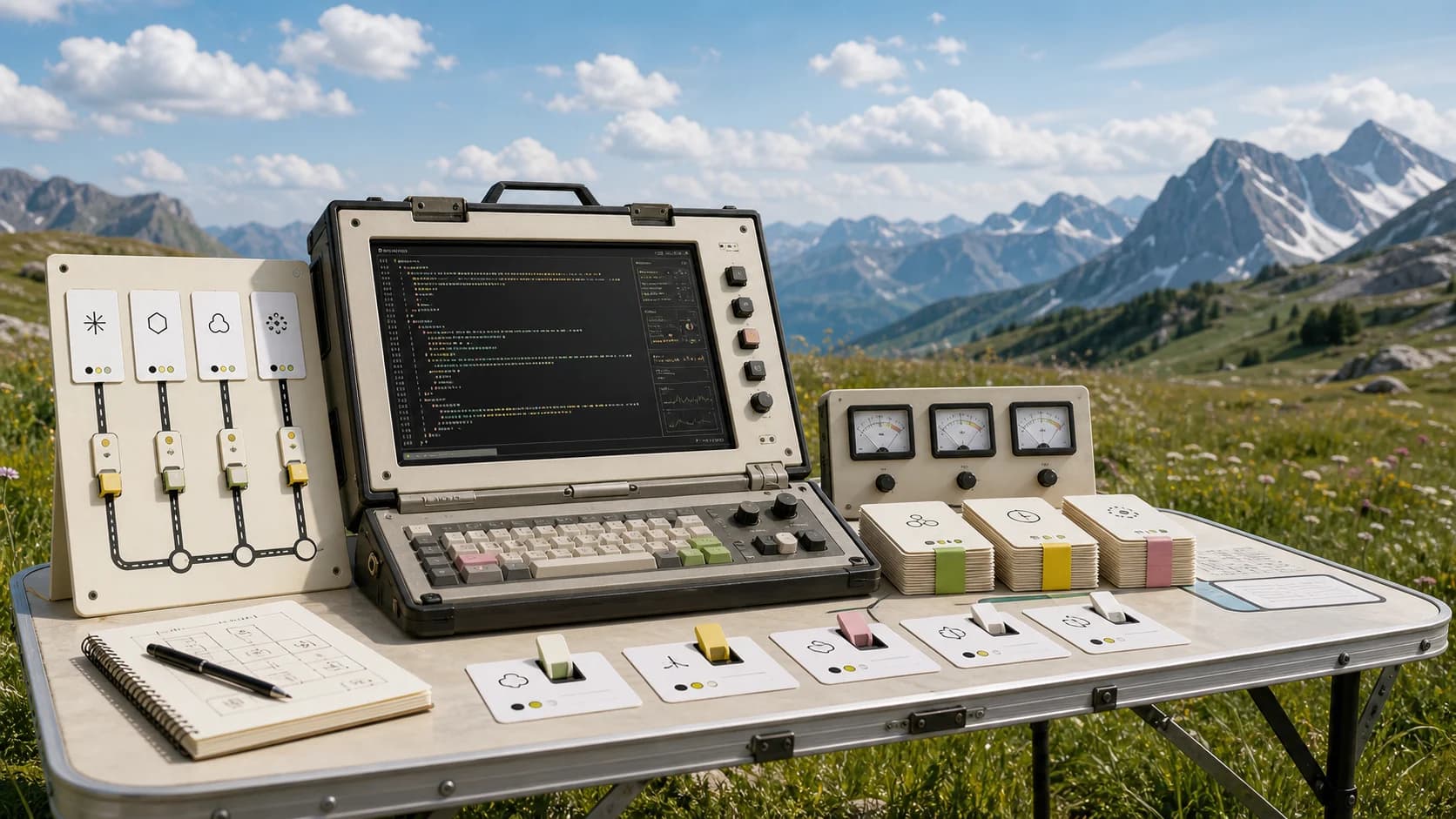
The company describes its mission as building "the multiplexer for all work." They are starting with a terminal multiplexer, but the stated vision goes much further: a durable session layer that spans local development, remote access, coding agents, background jobs, production applications, live debugging, shared terminals, incident response, and multiplayer work.
The announcement came through a personal blog post by Hashimoto and the Superlogical website, both published simultaneously. Hashimoto made a point of noting he wrote the announcement himself: "No AI! Hand-written, real, and authentic."
The team: a HashiCorp-Vercel-Heroku lineage#
Superlogical's founding team is unusually deep for a seed-stage developer tools company:
- Mitchell Hashimoto - Creator of Ghostty. Co-founded HashiCorp and created Vagrant, Terraform, Vault. Served as CEO and CTO through HashiCorp's IPO.
- Jack Pearkes - First HashiCorp employee, VP of Engineering and VP of R&D.
- Alasdair Monk - Head of Experience at Poolside, VP of Design at Vercel, senior design leader at HashiCorp and Heroku. Two decades of developer-facing design.
- Hector Simpson - Designed apps, services, and agentic experiences at Poolside, Heroku, HashiCorp, and Vercel.
The investors are equally notable: Notable Capital, Amplify Partners, and angel investors including Aaron Levie (Box CEO), Patrick Collison (Stripe CEO), Tobias Lutke (Shopify CEO), Guillermo Rauch (Vercel CEO), and Armon Dadgar (HashiCorp co-founder).
What they are actually building#
The concrete first product is a terminal multiplexer - think tmux or zellij, but modern. Sessions will be accessible through web and native macOS/iOS applications. Sharing a live session with other people is built in from the start. Hashimoto says they are addressing the common papercuts of existing multiplexers: "making scrollback, selection, and scrolling all work natively."
The multiplexer is built on libghostty, the MIT-licensed terminal library Hashimoto's team extracted from Ghostty. He was explicit that Ghostty remains an independent non-profit project whose "mission, governance, license, technical goals, and roadmap do not change." Superlogical consumes the same public building block available to everyone else and will continue upstreaming shared work.
Beyond the terminal multiplexer, the vision is deliberately larger. Superlogical's website describes a future where interactive work (a person at a keyboard), automatic work (CI, background jobs), and production work (deployed systems) all share one underlying session layer. The three-part plan is: (1) build an incredible multiplexer, (2) make everything in it composable, (3) make it safe and operable in production.
From the archive
Buzz: Block's Agent-Native Messaging Layer on Nostr
Jul 29, 2026 • 9 min read
OpenAI Open-Sourced Codex Security: What HN Thinks
Jul 29, 2026 • 7 min read
Document-Borne AI Worms Self-Propagate Through Copilot for Word: What HN Thinks
Jul 29, 2026 • 9 min read
Fable 5 Effort Levels vs Switching Models: When to Dial and When to Change
Jul 29, 2026 • 8 min read
What HN is saying#
The HN discussion was the second-most-commented story on the front page (411 comments) and reflects the range of reactions you would expect when a famous builder announces a new company with substantial funding.
Excitement about the team. The most-upvoted sentiment was trust in the founder. One top commenter wrote: "This is an incredible idea. I would usually be skeptical that such an engineering-focused tool would 'make it,' but Mitchell Hashimoto is one of the very few people I think can pull it off." Another added: "This guy is the inventor of quite a bit of architecture software supporting modern systems. I think it will be fine."
The "why not k8s?" question. Several commenters asked how a "durable session around work" differs from what Kubernetes already does. The replies pointed out that k8s handles orchestration and scheduling but does not provide the human-facing session layer for interactive and agent-driven work. One commenter synthesized it well: "K8s is just the last 100 meters."
Funding questions. Multiple commenters questioned why a billionaire would take venture funding. Others pointed out the practical reasons: accountability, recruiting, and strategic advice. One commenter noted: "Had it been hyper growth startup you would be looking at a16z or other bigger names." The investor list reads more like an advisory board of domain experts.
Skepticism about scope. Some commenters wondered whether a terminal multiplexer is the right starting point for such an ambitious vision. Others pointed to existing tools like tmux and zellij, asking what new ground Superlogical could cover. The counterargument: a terminal multiplexer is the narrow foundation for a broad vision, and the team has the track record to make it work.
The "ssh superlogical.jobs" moment. One commenter discovered the hiring page is accessible via ssh superlogical.jobs - a terminal-appropriate touch that generated a thread of approval.
Why it matters#
A terminal multiplexer may sound like a narrow starting point for a funded company, but it sits at an increasingly important intersection. As terminal agents become the portable runtime surface for AI development, the multiplexer layer is where human sessions, agent sessions, CI jobs, and production debugging converge. A modern multiplexer that handles scrollback, history, sharing, and reconnection natively removes friction that every developer using terminal-based coding agents hits daily.
Hashimoto's work on Ghostty proved that there is appetite for rethinking foundational developer tools when they are fast, well-crafted, and open. Superlogical is extending that same thesis to the session layer - the connective tissue between the tools, environments, and agents a developer touches in a day.
The timing is telling. A year ago, a "terminal multiplexer company" would have raised eyebrows even with this team. In mid-2026, with AI agents running in terminals, developers managing multi-session workflows across local and remote machines, and the line between interactive and automated work blurring daily, the problem feels more real than it did when tmux was written in 2007.
Sources#
- Superlogical announcement - company website
- Mitchell Hashimoto's personal post on Superlogical - personal reflection and context
- Hacker News discussion (411 comments) - community reaction
- Ghostty non-profit announcement - Hashimoto's post on Ghostty's transfer to a non-profit
- libghostty documentation - the terminal library Superlogical builds on
Continue Reading#
- Mitchell Hashimoto on Building Ghostty in Zig - Our earlier interview analysis covering Hashimoto's terminal work and Zig choice
- Terminal Agents Are the New Developer Runtime - Why terminals matter more than ever as AI agent surfaces
- Warp Open-Sources Its Agentic Terminal Stack - Another terminal company making moves in the agent era
- Git Worktrees and Parallel Agent Development - Managing multi-session development workflows with agents
- DevDigest Redesign 2026 - How we rebuilt our own developer-facing surface
- Warp 2.0: The Agentic Development Environment
Read next
Mitchell Hashimoto on Building Ghostty in Zig: Simplicity, Control, and Terminal Performance
The HashiCorp co-founder explains why he chose Zig over Rust for Ghostty, the technical challenges of terminal emulator development, and what systems programming looks like in 2026.
7 min readTerminal Agents Are the New Developer Runtime
Terminal agents like Claude Code, Codex CLI, OpenCode, Copilot CLI, and DeepSeek-TUI are converging on the same runtime layer: permissions, sandboxing, rollback, diagnostics, subagents, receipts, and cost controls.
9 min readWarp Open Sourced the Terminal. The Real Story Is Agent Operations
Warp going open source is not just a terminal story. It is a signal that AI coding tools are shifting from chat UX toward agent operations, where planning, execution, review, and feedback loops live close to the shell.
8 min readShare
Developers Digest
Technical content at the intersection of AI and development. Building with AI agents, Claude Code, and modern dev tools - then showing you exactly how it works.
300+ videos30K+ GitHub stars850+ articles
Related Tools
AI CodingAgent

OpenAI Codex
OpenAI's coding agent for terminal, cloud, IDE, GitHub, Slack, and Linear workflows. Reads repos, edits files, runs comm...
View ToolAI Coding

Aider
Open-source AI pair programming in your terminal. Works with any LLM - Claude, GPT, Gemini, local models. Git-aware ed...
View ToolAI FrameworksEssential

Vercel AI SDK
The TypeScript toolkit for building AI apps. Unified API across OpenAI, Anthropic, Google. Streaming, tool calling, stru...
View ToolAI FrameworksNew

Claude Agent SDK
Anthropic's Python SDK for building production agent systems. Tool use, guardrails, agent handoffs, and orchestration. R...
View ToolApps from Developers Digest
Developer Tools
Hue
Change your lights without leaving the terminal. `hue dim` just works.
View AppDeveloper Tools
DD CLI
One CLI to install, configure, and update every DD tool.
View AppDeveloper ToolsIn Progress
Skill Builder
Turn a one-liner into a working Claude Code skill. From idea to installed in a minute.
View AppRelated Guides
Guide
Terminal CLI - Claude Code
The primary command-line entry point for Claude Code sessions.
Claude CodeGuide
Claude Code Setup Guide
Configure Claude Code for maximum productivity -- CLAUDE.md, sub-agents, MCP servers, and autonomous workflows.
AI AgentsGuide
MCP Servers Explained
What MCP servers are, how they work, and how to build your own in 5 minutes.
AI AgentsRelated Videos
Related Posts
7 min read
News
Mitchell Hashimoto on Building Ghostty in Zig: Simplicity, Control, and Terminal Performance
The HashiCorp co-founder explains why he chose Zig over Rust for Ghostty, the technical challenges of terminal emulator...
9 min read
AI Coding
Terminal Agents Are the New Developer Runtime
Terminal agents like Claude Code, Codex CLI, OpenCode, Copilot CLI, and DeepSeek-TUI are converging on the same runtime...
8 min read
Warp
Warp Open Sourced the Terminal. The Real Story Is Agent Operations
Warp going open source is not just a terminal story. It is a signal that AI coding tools are shifting from chat UX towar...

8 min read
Design Systems
We Redesigned Developers Digest: The Applied Story of Rebuilding a 1000-Page Site in a Day
We retired the playful cream-and-pill design system for a hard-edged neutral, Vercel-inspired contract, and rebuilt the...
7 min read
Claude Code
Git Worktrees + Claude Code: The 2026 Playbook for Running Parallel Agents Without Context Switching
Running multiple Claude Code agents on the same repo causes branch collisions and stash chaos - git worktrees fix this b...
7 min read
Claude Code
Agent-Manager: A Tmux TUI for Running Claude Code, Codex, and OpenCode Side by Side
Agent-Manager wraps tmux into a Go TUI that groups AI coding agents by project, shows live status for each, and lets you...
Build with the member tools

Get Smarter About AI Dev
New tutorials, open-source projects, and deep dives on coding agents - delivered weekly.
One email per weekReal code, not theoryFree forever