Inkling: Thinking Machines Lab Drops a 975B Open-Weights Model
TL;DR
A new American open-weights frontier model with multimodal capabilities, 1M token context, and competitive benchmarks.
Official Sources#
| Resource | Link |
|---|---|
| Inkling Announcement | thinkingmachines.ai/news/introducing-inkling |
| Hacker News Discussion | news.ycombinator.com/item?id=48924912 |
| Model on Hugging Face | huggingface.co/thinkingmachines/inkling |
| Tinker Playground | tinker.thinkingmachines.ai/playground |
Last updated: July 15, 2026
Thinking Machines Lab just released Inkling, a 975 billion parameter open-weights model that represents the most capable American-made open model to date. With multimodal capabilities across text, images, and audio, plus a 1 million token context window, it enters a market dominated by Chinese open-weights models like GLM 5.2 and DeepSeek V4.
The Model at a Glance#
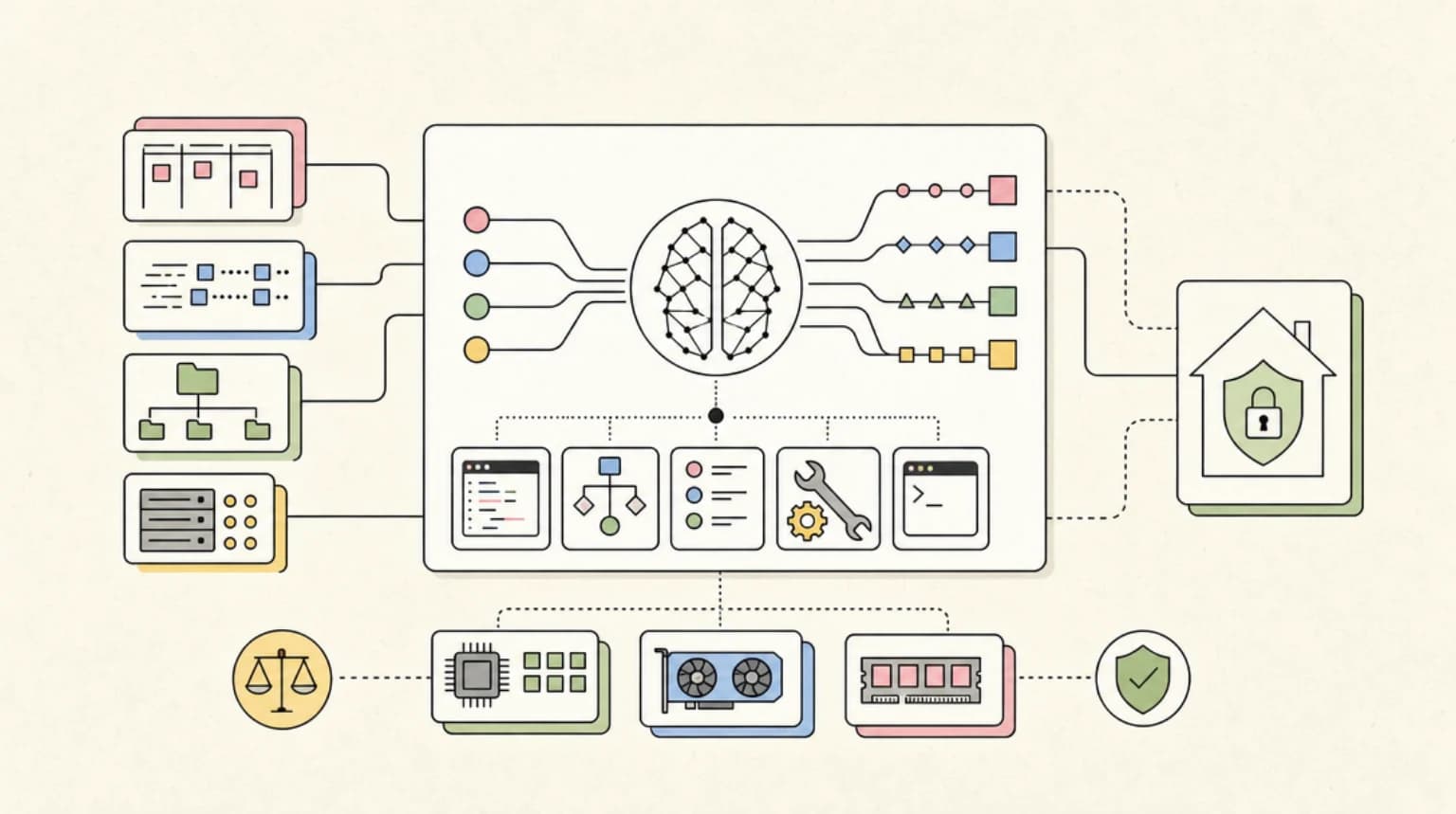
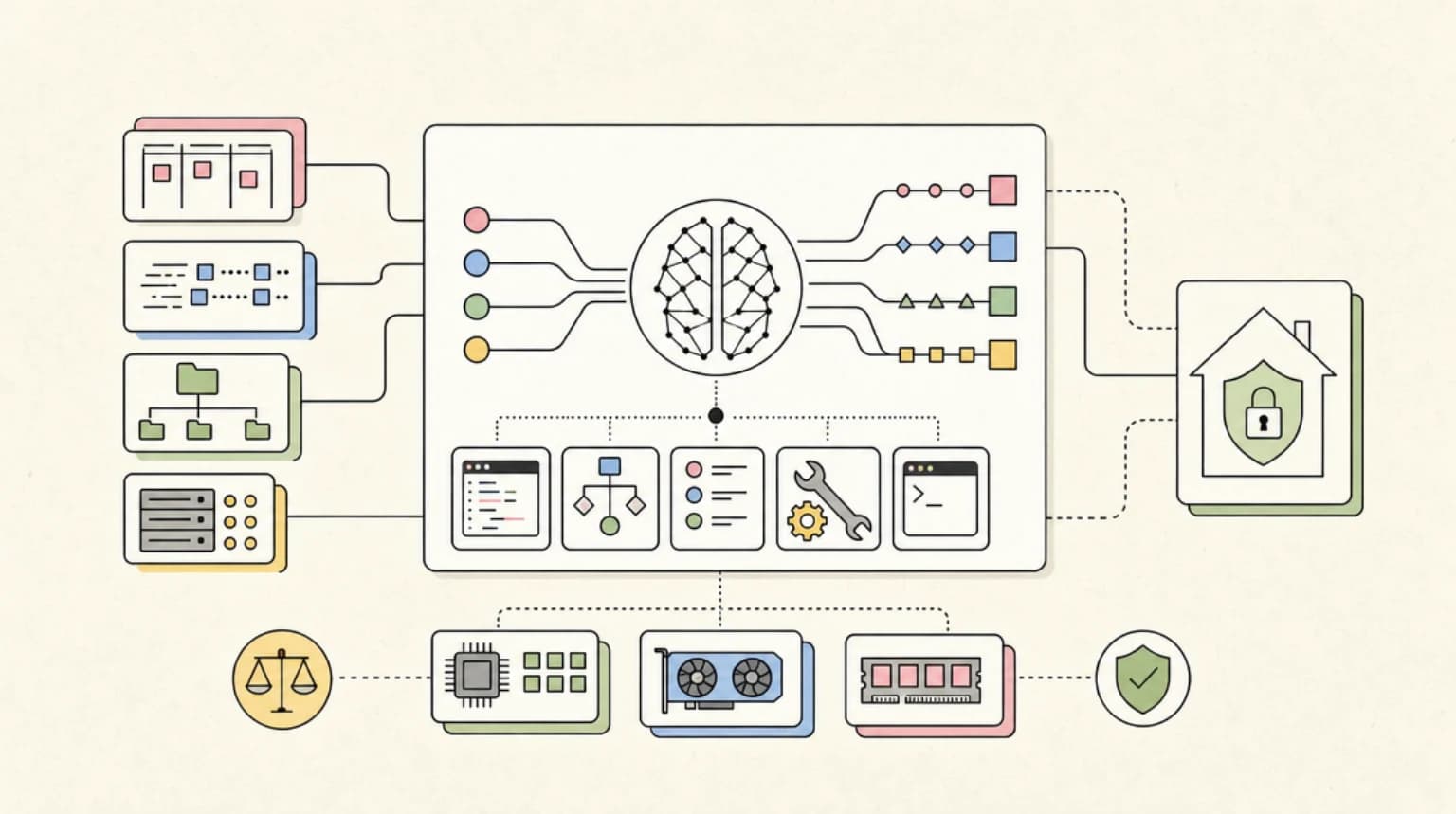
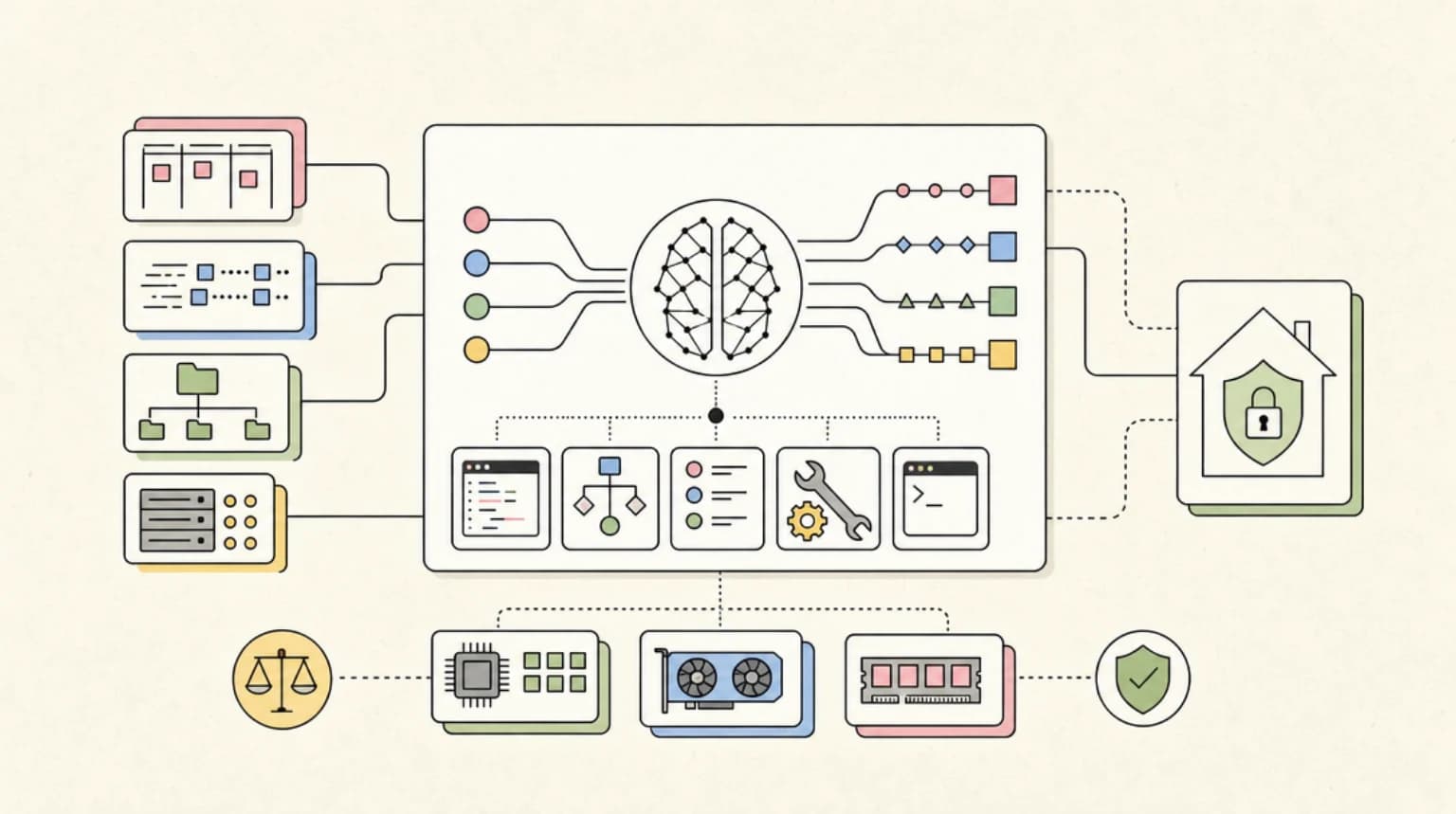
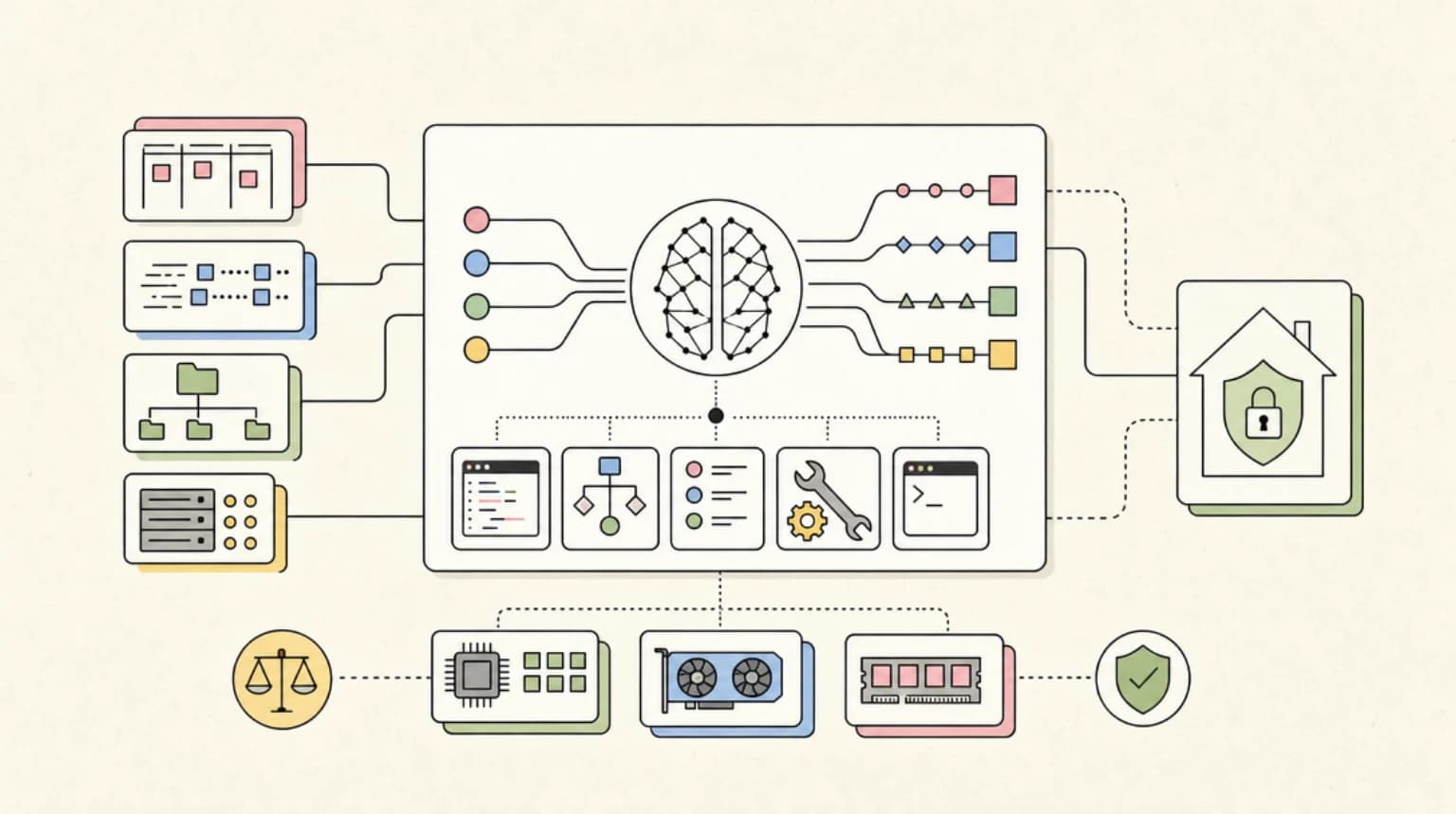
Inkling uses a Mixture-of-Experts architecture with 975B total parameters and 41B active per forward pass. The MoE configuration runs 256 routed experts plus 2 shared experts per layer, with 6 routed experts active per token. The architecture interleaves sliding-window and global attention layers at a 5:1 ratio with 8 KV heads.
Key specs:
- Context window: 1 million tokens
- Training data: 45 trillion tokens (text, images, audio, video)
- Architecture: MoE transformer with relative positional embeddings
- Smaller variant: Inkling-Small at 276B total / 12B active (preview)
Benchmark Performance#
The benchmarks position Inkling as competitive with frontier models on reasoning tasks:
| Benchmark | Score |
|---|---|
| AIME 2026 | 97.1% |
| GPQA Diamond | 87.2% |
| Humanity's Last Exam (text) | 29.7% |
| Humanity's Last Exam (with tools) | 46.0% |
| SWEBench Verified | 77.6% |
| Terminal Bench 2.1 | 63.8% |
| MMMU Pro | 73.5% |
| VoiceBench | 91.4% |
| FORTRESS Adversarial | 78.0% |
The 78% FORTRESS score is notable as the highest among open-weights models tested for adversarial robustness.
Multimodal Capabilities#
Unlike most open-weights models that focus on text, Inkling handles audio natively via dMel spectrograms and encodes images as 40x40 pixel patches. This makes it immediately useful for applications that need to process voice or visual inputs without bolting on separate models.
The VoiceBench score of 91.4% and MMMU Pro of 73.5% suggest the multimodal training actually worked rather than being a marketing checkbox.
Training Approach#
The technical writeup reveals some interesting choices:
- Optimizer: Hybrid strategy using Muon for large matrix weights and Adam for other parameters
- Post-training: Initial supervised fine-tuning on synthetic data, followed by large-scale async RL across 30M+ rollouts
- Efficiency focus: Achieves comparable performance using ~1/3 the tokens of competitors
The 30 million rollout number for RL is substantial and suggests they took the reinforcement learning phase seriously rather than treating it as a quick polish.
What HN is Saying#
The Hacker News discussion (440+ points, 100+ comments) shows a mix of cautious optimism and skepticism.
The positive takes:
The most upvoted sentiment frames this as America getting back in the open-weights race. One commenter noted: "America needs its own DeepSeek or Z.ai, a lot of people root for open Chinese models to win because they have no other choice. Thinking Machines might be it."
Several commenters appreciated the multimodal capabilities, particularly the audio support: "It's nice to see a strong long context open weights model that is multi-modal. There are many applications that will benefit from the strength in audio here."
The skepticism:
The main criticism concerns competitive positioning. With GLM 5.2 already available and performing slightly better on most coding benchmarks, the value proposition for a larger model is unclear. One commenter asked bluntly: "If it's ~30% bigger and not as good as GLM 5.2, why would I tinker with this model?"
Others pointed to the $2B raise at $12B valuation, comparing debut benchmark rankings unfavorably to models from smaller labs.
The practical concerns:
Multiple commenters noted the model isn't yet available on OpenRouter or other common inference providers, making real-world testing difficult. The Hugging Face weights require significant hardware - even the smaller 276B/12B active variant would need quantization to fit on consumer hardware.
Where It Fits#
Thinking Machines positions Inkling as "a good open-weights base for customization" rather than claiming benchmark dominance. The integration with their Tinker platform for fine-tuning suggests they're targeting organizations that need specialized models rather than raw benchmark performance.
The Apache 2.0 licensing (with an Acceptable Use Policy) keeps it genuinely open, though the AUP adds some restrictions typical of responsible AI releases.
API Access#
Inkling is available through several providers:
- Tinker platform (50% introductory discount)
- TogetherAI
- Fireworks
- Modal
- Databricks
- Baseten
The model has also been integrated into vLLM, SGLang, llama.cpp, and Hugging Face Transformers through partnerships with the respective development teams.
The Competitive Landscape#
For developers choosing between open-weights models, the current landscape looks like:
| Model | Architecture | Active Params | Strengths |
|---|---|---|---|
| GLM 5.2 | Dense | ~32B | Coding, speed |
| DeepSeek V4 | MoE | ~37B | Reasoning, cost |
| Qwen 3.6 | Dense | 27B | Multilingual |
| Inkling | MoE | 41B | Multimodal, context |
Inkling's 1M context and native audio/vision support differentiate it, but the larger active parameter count means higher inference costs compared to competitors.
Developer Implications#
If you're running local inference, the 276B/12B Inkling-Small variant (currently preview) is the more realistic option. At 2-bit quantization it might fit in 128GB, making it theoretically runnable on high-end consumer hardware.
For API-based workloads, the multimodal capabilities are the main draw. If your application needs to process audio alongside text without managing multiple models, Inkling is worth evaluating.
The Tinker fine-tuning platform adds value for teams building specialized applications, though you'll need to weigh the lock-in against the convenience.
What's Next#
The release of Inkling-Small weights will be the real test of adoption. A model that can run on a DGX Spark or high-end workstation would open much broader experimentation than the full 975B version.
For now, Inkling represents a meaningful entry from an American lab in a space dominated by Chinese open-weights models. Whether it gains traction depends on how quickly inference providers optimize for it and whether the multimodal capabilities prove useful in practice.
Continue Reading#
- Apertus: Europe's Answer to AI Sovereignty - and Why HN Is Skeptical
- CAPA Benchmark: Why Coding Agents Should Learn Your Habits Across Sessions
- Detecting LLM Text with Classical ML: TF-IDF Still Works
Sources#
Get the next deep dive like this in your inbox
One email a week on News and the rest of the AI dev stack. Free.
Read next
Inkling-Small: Thinking Machines Ships a 12B-Active Open Model That Beats Its Big Sibling on Agent Work
Inkling-Small is a 276B-parameter MoE with 12B active per token, Apache 2.0, and open weights. It beats the 975B Inkling on SWEBench Verified (80.2), HLE (31.6), and tool use at a quarter of the size and a third of the output price.
8 min readKimi K3 Weights Land on HuggingFace: 2.8T Open Frontier Model You Can Actually Download
Moonshot AI released the full Kimi K3 weights on HuggingFace today - 2.8T parameters, 1M context, native MXFP4 quantization, ~1.63TB download. The HN community reaction, what the license really says, and why this matters for the open-weights AI market.
7 min readKimi K3 Drops: Moonshot's 2.8T Parameter Frontier Model Takes on GPT-5.6 and Fable 5
Moonshot AI releases Kimi K3 with 2.8 trillion parameters, 1M context window, and Delta Attention architecture. Here's what developers need to know about pricing, performance, and where it fits in the frontier model landscape.
6 min readNew here? Start with
Technical content at the intersection of AI and development. Building with AI agents, Claude Code, and modern dev tools - then showing you exactly how it works.