Ornith-1.0: What an Open Source Self-Improving Coding Model Actually Means
TL;DR
DeepReinforce AI released Ornith-1.0, a family of open-source coding models claiming self-improvement. The HN thread reveals a mix of skepticism and genuine interest - here is what the model actually does and whether the hype holds up.
A new name in open-source coding models#
DeepReinforce AI dropped Ornith-1.0 on GitHub this week, and the Hacker News thread quickly accumulated over 200 points and 40 comments. The headline claims the model family is "self-improving" - a phrase that immediately raises eyebrows in a space where overpromising has become the norm.
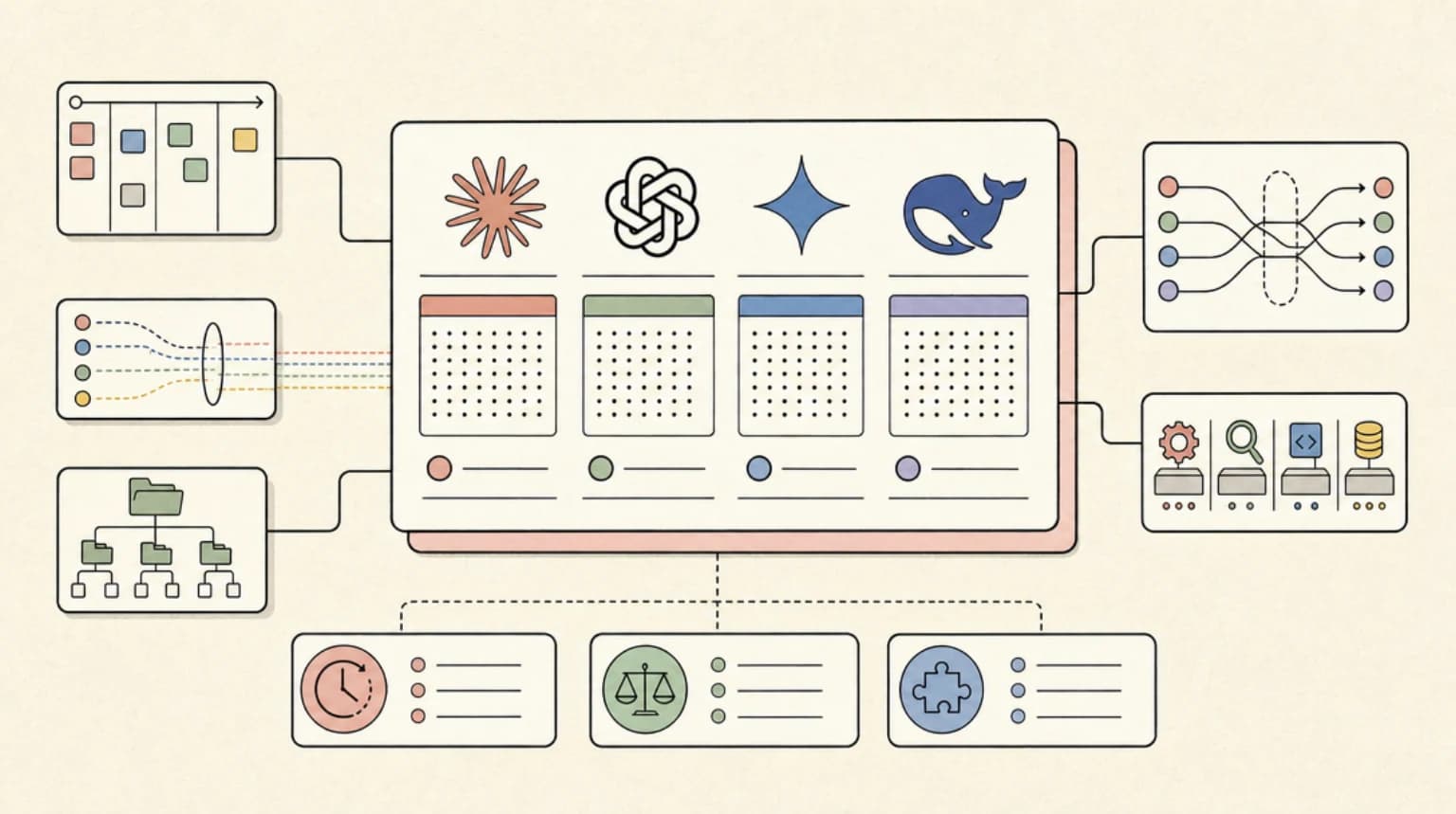
The model family ships in four sizes: 9B-Dense, 31B-Dense, 35B-MoE, and 397B-MoE. They are built on top of Gemma 4 and Qwen 3.5 foundations, released under the MIT license. The dense 9B fits on a single 80GB GPU, while the larger MoE variants require multi-GPU tensor parallelism.
What "self-improving" actually means#
Let me be direct: Ornith-1.0 does not improve itself during inference. The weights do not change when you run it. The "self-improving" label refers to the training methodology, not the deployment behavior.
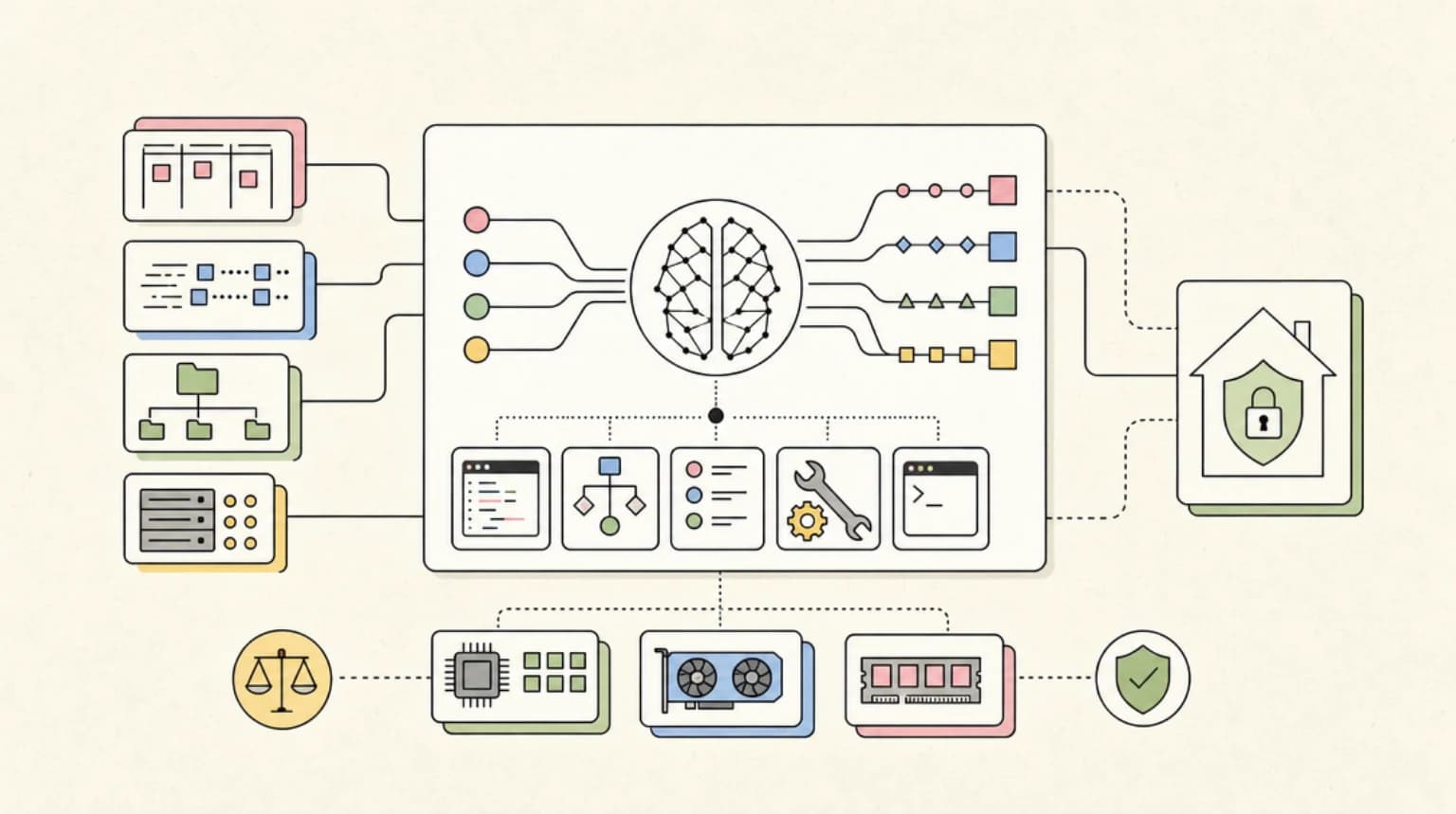
According to DeepReinforce's documentation, Ornith uses a reinforcement learning approach that jointly optimizes two components: the scaffolding that drives rollouts and the solution rollouts themselves. In practical terms, the model learns to generate both its answers and the task-specific harnesses that guide how those answers are produced.
This is different from most RL-for-coding approaches where humans design the evaluation harnesses and the model just learns to produce better solutions within that fixed structure. Ornith learns the structure too.
Simon W caught this distinction immediately in the HN thread:
It doesn't self-improve, that's a misleading headline. As far as I can tell they trained it by running their own reinforcement learning on top of Qwen and Gemma 4 - so the "self-improving" is about their training process, not how you use the weights.
This is the accurate framing. The term "self-improving" describes the training loop, not runtime behavior.
What HN is saying#
The Hacker News discussion split into three camps.
The skeptics pointed out that this looks like another benchmaxxed fine-tune. One commenter put it bluntly: "These are simply benchmaxxed versions of either Qwen or Gemma 4." Another noted that the model "fails at benchmarks" and "long session tool calls sucks and hallucinate a lot."
The LocalLLM community's reputation came up repeatedly. One commenter observed that "the local LLM community is now teeming with erstwhile crypto and NFT hucksters who've brought the culture of hype from their former communities with them." Whether or not that is fair to everyone building local models, it does explain some of the reflexive skepticism.
The cautiously interested noted that this is the first Qwen fine-tune that has not been immediately rejected by the LocalLLM community. One user reported: "Based on my limited usage, it is good, gives creative solutions to coding problems. I don't expect 9-35B models to one-click create full apps."
Another commenter shared a more specific observation: "From what I personally tested Ornith-1.0 35B is slightly better than Qwen-3.6 35B. The part that I find interesting is that the model is way faster than Qwen3.6 35B. It seems Ornith produce a smaller chain of thought. On my test it can be 3 time faster to produce the answer."
Speed improvements in chain-of-thought models matter. If Ornith produces equally good solutions with less verbose reasoning, that is a real win for practical use.
The critics of benchmarks questioned the evaluation methodology entirely. One commenter noted that the benchmark "ranks Kimi K2.6 and K2.7 Code near the bottom. Both are below Ornith 35B. It ranks Gemma 4 26B much higher than GLM-5.2. The results don't make much sense."
This is a recurring problem in the open-source model space. Benchmarks are gamed, and results that contradict real-world experience are common.
The benchmark claims#
DeepReinforce published performance numbers across several evaluation suites:
| Model | SWE-Bench Verified | Terminal-Bench 2.1 |
|---|---|---|
| Ornith 9B | 69.4% | - |
| Qwen3.5-9B | 53.2% | - |
| Ornith 35B | - | 64.2% |
| Qwen3.5-35B | - | 41.4% |
| Ornith 397B | 82.4% | - |
| Claude Opus 4.8 | 87.6% | - |
These are substantial claimed improvements over the base models. The 397B MoE variant allegedly approaches Claude Opus 4.8 on SWE-Bench Verified.
Take these with appropriate skepticism. SWE-Bench has become a target for optimization, and models trained specifically on similar distributions tend to overperform on benchmarks while underperforming on novel tasks.
Technical specifications#
The architecture is a reasoning model - it generates internal chain-of-thought before producing final answers. All variants support a 256K context window and emit well-formed function calls for tool use.
Runtime compatibility is broad: vLLM, SGLang, llama.cpp, and Ollama are all supported. The recommended inference settings are temperature=0.6, top_p=0.95, top_k=20 for typical deployment, though benchmarks used temperature=1.0.
One HN commenter raised the accessibility issue: "Us mere mortals cannot use this" - referring to the 80GB GPU requirement for even the smallest dense model. This is fair criticism. The quantized versions that appeared shortly after launch help somewhat, but the barrier to entry remains high compared to smaller models.
The tool-use problem#
An interesting critique emerged in the thread about testing methodology. One reviewer tested Ornith without tool access and found it "performs poorly in a chat without tools, exhibiting an enthusiasm for hallucination."
Another commenter pushed back:
How is that a serious phrase in '26? Testing a (clearly) agentic model without tool access and expecting it to work is crazy, no? What was he even testing?!
This is the right frame. Agentic coding models are designed to use tools - file systems, interpreters, search. Testing them without tools is like testing a car without wheels. The model may hallucinate tool outputs rather than admitting it cannot execute, but that says more about how it should be deployed than about its fundamental capability.
Should you try it?#
If you are already running local models for coding tasks and have the hardware, Ornith is worth testing against your actual workloads. The reports of faster chain-of-thought generation are interesting if they hold up.
If you are looking for a drop-in replacement for Claude or GPT-4 for general coding assistance, this probably is not it. The tool-use requirements and hallucination tendencies outside agentic harnesses make it a poor fit for casual chat use.
If you are evaluating open-source coding models for a self-hosted code assistant pipeline, add Ornith to your test matrix alongside Qwen 3.6 and Gemma 4. The proof will be in how it performs on your specific codebase and task distribution, not in benchmark tables.
The "self-improving" framing is marketing. The underlying approach - jointly optimizing solutions and scaffolding - is technically interesting but does not change how you deploy or use the model. Judge it on outputs, not on training methodology claims.
FAQ#
Is Ornith-1.0 actually self-improving?#
No, not during inference. The "self-improving" label describes the training methodology where the model learns to generate both solutions and the evaluation harnesses that guide those solutions. Once trained, the weights are fixed like any other model.
What hardware do I need to run Ornith-1.0?#
The dense 9B model requires an 80GB GPU. The larger MoE variants need multi-GPU tensor parallelism. Quantized versions are available for more accessible hardware, but the full-precision models have steep requirements.
How does Ornith compare to Qwen 3.6?#
Reports are mixed. Some users report it slightly outperforms Qwen 3.6 35B with faster chain-of-thought generation. Others say it hallucinates more in long sessions. Your results will depend on your specific use case.
Is Ornith good for general coding chat?#
No. It is designed for agentic use with tool access. Testing it as a chat model without tools produces poor results with frequent hallucinations. Deploy it in an agentic harness with proper tool access.
Continue Reading#
- Forge Shows the Local Agent Reliability Gap Is a Harness Problem
- Frame: An X11 Server Written in Assembly Using AI
- Running Gemma 4 26B at 5 Tokens/Sec on a 13-Year-Old Xeon With No GPU
Sources#
Get the next deep dive like this in your inbox
One email a week on News and the rest of the AI dev stack. Free.
Read next on local and open-weight models
Qwen3.6-27B Is the Local Coding Model to Test First
Qwen3.6-27B keeps pulling developers back because it sits in the awkward, useful middle: strong enough for real local coding tasks, small enough for serious workstation testing, and cheap enough to benchmark honestly.
8 min readGLM 5.2 Outperforms Claude Code on Semgrep's IDOR Vulnerability Benchmarks
Semgrep's security research team benchmarked LLMs on IDOR vulnerability detection. The open-weight GLM 5.2 beat Claude Code by 7 points at roughly one-sixth the cost.
6 min readLocal Qwen Is a Different Tool, Not a Worse Opus
Alex Ellis shares real production experience running local LLMs: $12k hardware investment, 2-3 month ROI, and why treating local models as Opus substitutes misses the point entirely.
7 min readNew here? Start with
Technical content at the intersection of AI and development. Building with AI agents, Claude Code, and modern dev tools - then showing you exactly how it works.