Forge Shows the Local Agent Reliability Gap Is a Harness Problem
TL;DR
Forge hit the Hacker News front page with a strong claim: small local models can become much more useful at tool-calling when the harness catches structural failures, retries intelligently, and controls context.
| Official Sources | |
|---|---|
| Forge GitHub Repository | Open-source reliability layer for self-hosted LLM tool-calling with Ollama, llama-server, Llamafile, and Anthropic backends |
| Forge ACM CAIS 2026 Demo | Academic demo page covering agentic reliability gap research |
| Show HN: Forge Thread | Hacker News discussion with methodology details and author responses |
| Instructor GitHub | Structured output enforcement library with Pydantic models and retries |
| llama.cpp Server Docs | Documentation for llama.cpp inference server backend |
| Ollama Documentation | Documentation for Ollama local model server |
Forge is interesting because it does not ask you to believe small models are secretly frontier models.
It asks a better question: how much agent failure is actually model failure, and how much is the missing harness around the model?
The Forge repo describes it as a reliability layer for self-hosted LLM tool-calling. The project supports Ollama, llama-server, Llamafile, and Anthropic backends. It can run as a workflow runner, middleware inside another loop, or an OpenAI-compatible proxy in front of a local model server.
That proxy shape matters. It means the product claim is not only "use this framework." It is closer to: put a reliability shim between your coding assistant, local model, or internal agent and the model server, then make structural failure recoverable.
If you have been following the DevDigest agent reliability thread, this fits neatly beside long-running agents need harnesses, the agent reliability cliff, and why benchmarks are not enough for agent memory. The model matters. The wrapper matters too.
The News Hook#
Forge landed on Hacker News as a Show HN thread with the headline guardrails take an 8B model from 53% to 99% on agentic tasks. At the time I checked it on May 20, 2026, the thread had hundreds of points and a long discussion around the methodology, what "guardrails" means, and whether this is just smart retry logic.
There is also an accepted ACM CAIS 2026 demo page for "Forge: Closing the Agentic Reliability Gap Between Self-Hosted and Frontier Language Models." The demo page frames the core problem as multi-step agentic workflow reliability: even a high per-step success rate compounds badly when the workflow needs several tool calls in a row.
The repo README now gives a more conservative current benchmark summary than the HN headline: it says the current top self-hosted configuration scores 86.5% across a 26-scenario eval suite, with 76% on the hardest tier. That distinction is important. The launch hook is dramatic, but the durable lesson is not a single headline number. The durable lesson is the failure taxonomy.
What Forge Actually Adds#
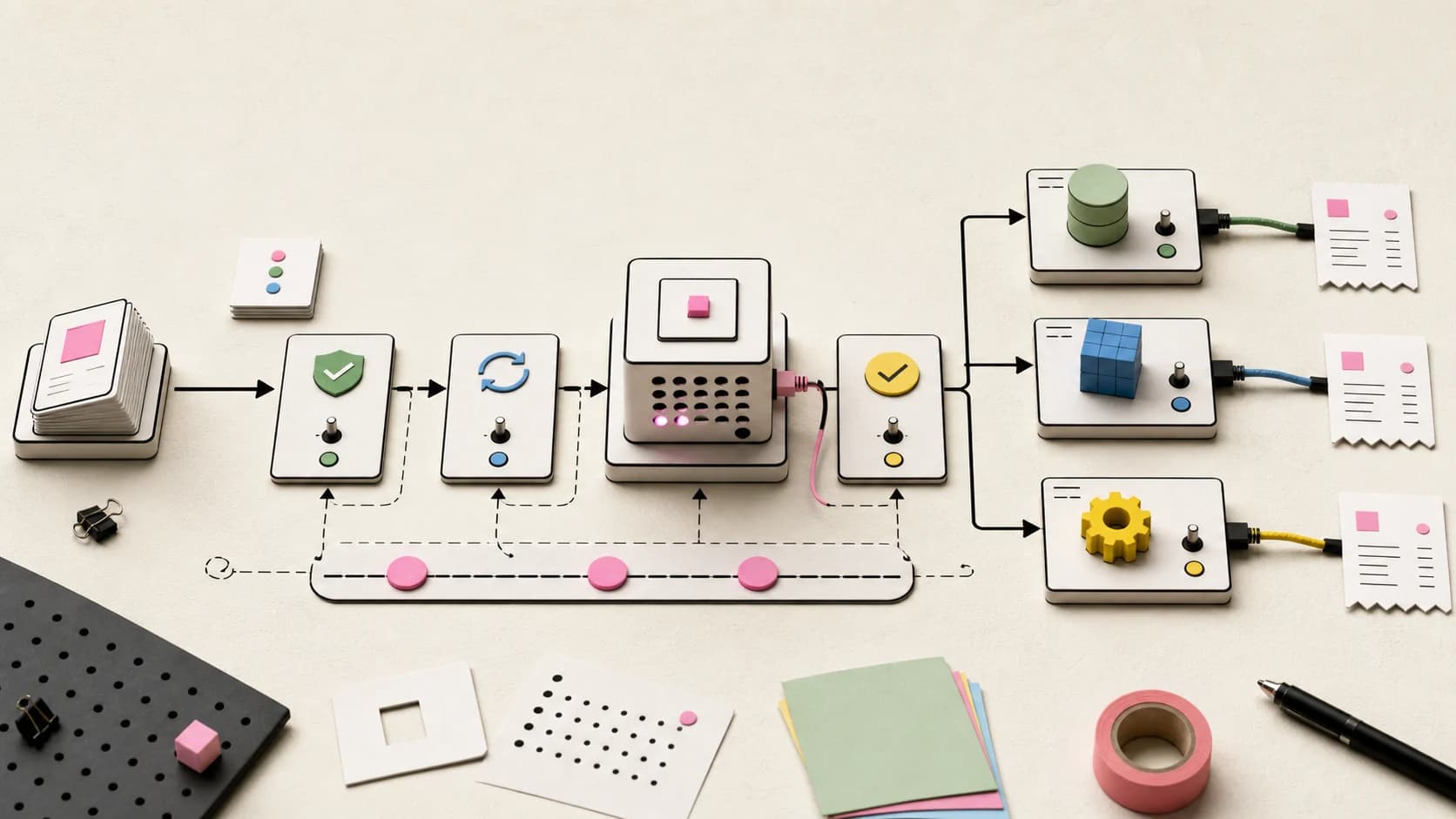
Forge wraps the loop around a tool-calling model. The README lists three modes:
- WorkflowRunner for building directly on Forge.
- Guardrails middleware for adding Forge's validation and retries to your own loop.
- Proxy server for pointing OpenAI-compatible clients at a local model through Forge.
The guardrail layer focuses on structural failures:
- the model returns text when it needed to call a tool
- the model calls a tool with malformed arguments
- the model skips a required step
- the model treats "tool ran but found nothing" as equivalent to "tool succeeded"
- the context grows past what the local backend can handle efficiently
This is not a magic reasoning upgrade. It is more like making tool-call mistakes visible to the model in a format it can recover from. One HN explanation from the author framed it as catching the failure, injecting a helpful error into the conversation, and letting the model try again with the right structure.
That is why Forge feels closer to an agent operating system primitive than another agent framework. It is less about composing fancy workflows and more about keeping boring workflow mechanics from collapsing.
The Take: Local Models Need Mechanical Sympathy#
The useful spin here is mechanical sympathy for local models.
Frontier agents hide a lot of harness quality. Claude Code, Codex, Cursor, and other coding agents are not just raw model calls. They have file policies, tool schemas, retries, context selection, approvals, diff review, and output shaping. When a small local model fails at the same workflow, it is tempting to blame the weights.
Sometimes that is correct. Small models still lose on hard planning, deep codebase reasoning, and ambiguous product judgment.
But Forge is evidence that many failures are lower-level:
- The tool call was almost right.
- The JSON shape was wrong.
- The model forgot a prerequisite.
- The backend handled function calling differently.
- The local server silently fell off the happy path.
Those are harness problems. If your local model is failing because it needs one structured retry, buying a bigger model is the expensive fix.
This is also why free Claude Code model gateway tradeoffs are more subtle than "route cheap tasks to cheap models." You need to know which tasks are cheap because the model can solve them, and which tasks are cheap only after the harness catches predictable failure modes.
The Counterargument#
The obvious pushback is that evals can flatter the framework.
HN commenters asked about methodology, production coding tasks, and whether the benchmark is measuring real agent quality or a narrower recovery loop. That is the right skepticism. A model that recovers from malformed tool calls inside a constrained benchmark is not automatically good at building a feature across a messy repo.
Forge's author acknowledged that the eval is deliberately scoped as a stress test of the recovery loop. That is a good answer, but it also limits the claim.
The correct conclusion is not:
Local 8B agents are solved.
The correct conclusion is:
Local agents need a different benchmark stack, because the model, backend, tool schema, retry loop, and context manager are one system.
That is a much more useful blog post than a victory lap.
Where This Fits Against Instructor, LangChain, and Agent SDKs#
Forge overlaps with other tools, but not perfectly.
Instructor popularized the pattern of structured output enforcement with Pydantic models and retries. That is adjacent to Forge's retry and validation loop, especially when the failure is malformed output.
LangChain and LangGraph are broader orchestration layers. They help you compose workflows, state, tools, retrievers, and agents. Forge is narrower: keep a local tool-calling loop reliable under repeated structural pressure.
The OpenAI Agents SDK and similar hosted-agent stacks solve a different problem for many teams. They give you a clean first-party runtime around frontier models. Forge is more interesting when you are trying to make self-hosted or hybrid inference reliable enough for repeatable work.
That is the product gap: local inference is not just a model download. It needs a runtime contract.
The Practical Checklist#
If you are experimenting with local coding agents, the Forge discussion suggests a checklist:
- Track tool-call failure separately from reasoning failure. Do not lump malformed JSON, skipped prerequisites, and bad plans into one "model failed" bucket.
- Measure backend behavior. Ollama, llama-server, and Llamafile can expose different behavior even with similar weights.
- Add structured retries before switching models. A targeted retry can be cheaper than a larger model.
- Make "found nothing" a first-class failure state. Empty data is not success if the next step depends on a real result.
- Budget context for hardware. A local agent that spills out of GPU memory is not slow by personality. It is slow because the runtime lost the hardware path.
- Keep a frontier baseline. Compare against a hosted model so you know when the local stack is improving and when it is just being graded on a curve.
That checklist is the bridge from demo to useful engineering practice.
Why This Is Worth Writing About#
The agent conversation keeps drifting toward model leaderboards. Forge pulls it back toward systems design.
For developers, that is the more actionable lane. You cannot train the next frontier model this afternoon. You can add validation. You can make retries explicit. You can log tool failures. You can separate backend quirks from model limitations. You can decide when a local model is good enough and when it should hand off to a frontier model.
That is the post: the local-agent future will not be won by small models alone. It will be won by small models inside runtimes that understand how agents actually fail.
FAQ#
What is Forge and what does it do?#
Forge is an open-source reliability layer for self-hosted LLM tool-calling. It wraps local models running on Ollama, llama-server, Llamafile, or Anthropic backends and adds structured retries, validation, and context management. Forge can run as a workflow runner, middleware inside your own agent loop, or an OpenAI-compatible proxy in front of a local model server. The goal is to make small local models more reliable at multi-step agentic tasks by catching and recovering from structural failures.
How much does Forge improve local model reliability?#
The Forge repository reports that its top self-hosted configuration scores 86.5% across a 26-scenario evaluation suite, with 76% on the hardest tier. The Hacker News launch headline claimed guardrails take an 8B model from 53% to 99% on agentic tasks, but that headline number comes from a specific benchmark stress-testing the recovery loop. The practical takeaway is that structured retries and validation can significantly improve local agent reliability, though the exact gains depend on your workload and failure modes.
What kinds of failures does Forge catch?#
Forge focuses on structural tool-calling failures: the model returns text when it needed to call a tool, the model calls a tool with malformed arguments, the model skips a required step, the model treats empty results as success, and the context grows past what the backend can handle efficiently. These are harness-level problems rather than reasoning failures. Forge catches the failure, injects a helpful error into the conversation, and lets the model retry with the correct structure.
How is Forge different from LangChain or Instructor?#
Instructor focuses on structured output enforcement with Pydantic models and retries for malformed output. LangChain and LangGraph are broader orchestration layers for composing workflows, state, tools, and agents. Forge is narrower than both: it specifically keeps a local tool-calling loop reliable under repeated structural pressure. Think of Forge as an operating system primitive for local agents rather than a complete framework.
Do I need Forge if I use Claude Code or Cursor?#
Frontier agents like Claude Code, Codex, and Cursor already include harness quality: file policies, tool schemas, retries, context selection, approvals, and output shaping. You do not need Forge for hosted agents. Forge is useful when you are running self-hosted models through Ollama, llama-server, or Llamafile and want to add the same reliability primitives that frontier agents take for granted.
What backends does Forge support?#
Forge supports Ollama, llama-server, Llamafile, and Anthropic backends. The proxy mode means you can point any OpenAI-compatible client at a local model through Forge, adding validation and retries without changing your existing code. Backend behavior can vary even with similar model weights, so Forge helps normalize the reliability surface across different inference servers.
Is Forge enough to make small models as good as frontier models?#
No. Small models still lose on hard planning, deep codebase reasoning, and ambiguous product judgment. Forge catches structural failures like malformed JSON and skipped prerequisites - it does not upgrade reasoning quality. The useful conclusion is that many local agent failures are harness problems that can be fixed without buying a bigger model, but the model still needs to be capable enough for the underlying task.
Continue Reading#
Get the next deep dive like this in your inbox
One email a week on AI Agents and the rest of the AI dev stack. Free.
Read next on local and open-weight models
Long-Running Agents Need Harnesses, Not Hope
A long-running coding agent is only useful if the environment around it can queue tasks, capture logs, checkpoint state, verify behavior, limit cost, and recover from failure.
9 min readThe Agent Reliability Cliff: Why Your 10-Step Chain Only Succeeds 20% of the Time
The math of agent pipelines is brutal. 85% reliability per step compounds to about 20% at 10 steps. Here is why long chains collapse in production, and the six patterns the field has converged on to fight the decay.
9 min readFree Claude Code Is Really a Model Gateway Bet
The trending Free Claude Code repo is not just about avoiding API bills. It points at a bigger developer-tool pattern: model gateways for AI coding agents.
7 min readNew here? Start with
Technical content at the intersection of AI and development. Building with AI agents, Claude Code, and modern dev tools - then showing you exactly how it works.