Local Qwen Is a Different Tool, Not a Worse Opus

TL;DR
Alex Ellis shares real production experience running local LLMs: $12k hardware investment, 2-3 month ROI, and why treating local models as Opus substitutes misses the point entirely.
A post from Alex Ellis hit the front page of Hacker News this morning with 263 points and 128 comments. The thesis is simple but underappreciated: local Qwen models are not inferior substitutes for Claude Opus. They are different tools for different jobs. The discussion that followed is one of the more grounded conversations about local LLMs I have seen this year.
Last updated: June 18, 2026
The Core Argument#
Ellis runs a production software business and invested roughly $12,000 USD in an RTX 6000 Pro with 96GB VRAM to run local models. The hardware paid for itself in 2-3 months through two concrete revenue streams: analyzing confidential customer telemetry (work that could not go to cloud APIs) and detecting license underreporting.
The headline claim that gets thrown around - "Qwen 27B is only 12% behind Opus on SWE-bench" - gets Ellis's skepticism. Benchmarks are optimizable. Since they are public, models can be tuned to score well on them. What actually matters is how the model performs on your specific workload.
From the article:
Benchmarks are a moving target, and since they are widely available, it is possible to educate and tune a model to obtain a higher score.
For reference, the numbers being discussed are Qwen 3.6 27B at 77.2% on SWE-bench Verified versus Claude Opus 4.8 at 88.6%. That gap matters more on some tasks than others. Our Qwen 3.6 27B dense coder deep dive covers what that specific checkpoint is good at, and Fable 5 versus Opus 4.8 frames a similar tradeoff between a cloud flagship and an alternative model.
Where Local Models Actually Work#
Ellis identifies several workloads where local inference wins clearly:
Privacy and data sovereignty. Enterprise customers with sensitive data cannot send it to third-party APIs. Full stop. No amount of API quality makes up for a compliance violation.
Fixed cost economics. Cloud API pricing is unpredictable at scale. Local hardware is a capital expense with predictable operating costs. For high-volume inference, the math often favors owning the metal.
Vendor risk protection. Ellis cites Anthropic's sudden removal of Fable 5 access as a concrete example. When your business depends on a model, owning the weights eliminates a category of risk.
Revenue-generating analysis. The most interesting example: analyzing customer telemetry to detect license underreporting. This work generates direct revenue but requires processing data that cannot leave your infrastructure.
From the archive
Mellum2 Developer Guide: JetBrains' Open-Source Coding Model
Jun 18, 2026 • 7 min read
Midjourney Built a Full-Body Scanner: The Image-Generation Company's Strangest, Most Revealing Bet Yet
Jun 18, 2026 • 12 min read
Noam Shazeer Joins OpenAI After Two Years Back at Google
Jun 18, 2026 • 5 min read
AI Model Routing: Why the Orchestration Layer Is the Next Big Play Next to the Labs
Jun 17, 2026 • 12 min read
Where Local Models Fail#
The article is honest about the limitations. Local models - including the best Qwen checkpoints - have severe reliability issues on complex tasks:
- Infinite looping on long-horizon work
- Hallucinations and arithmetic failures
- Cannot be left unsupervised for open-ended coding
Ellis describes them as "incredibly early" and requiring operational discipline. You cannot hand a local model a vague task and walk away. You need to scope tasks narrowly, monitor execution, and intervene when things go wrong.
The takeaway: local models are specialists, not generalists. Use them for bounded, well-defined problems. Keep cloud models for the unbounded creative work.
What HN Is Saying#
The Hacker News discussion is unusually substantive. Several threads stand out.
The early PC analogy. User usernomdeguerre compared local LLMs to early personal computers: "I believe that local models are a necessary extension of the personal computer and I imagine that one could have had similar criticisms of early personal computers." The power consumption and noise of a 3090 or 5090 mirrors early DOS machines. The question is whether local inference follows the same improvement curve.
Privacy trumps capability for many use cases. User i_idiot pushes back on the "most people need SOTA" framing: "When I run that qwen model in my measly 4070 12 GB for my personal email agent... I need privacy more than anything else. It does a great job." For bounded tasks where the model is good enough, keeping data local is the deciding factor.
The hybrid model dream. User theshrike79 describes the ideal workflow: "My dream would be a local model that can do, say, 80% of the day to day tasks... and most importantly - the ability to go 'this task is beyond my skills' and refer to a Big Boy Online Model." Several commenters noted that Claude's Advisor feature already does something like this, but open harnesses could implement the same routing. Our free Claude Code model gateway tradeoffs piece looks at a related pattern for routing between free and paid models.
Hardware efficiency is improving. User regularfry reports getting 40-50 tokens per second from Qwen 3.6 27B on a 4090 limited to 350W with the MTP changes. That translates to roughly 8.75 joules per token - still power hungry, but improving.
Benchmarks do not capture the full picture. User glerk makes the point that prompting technique differs by model: "If you play with these models long enough, you realize there is more to them than just 'model X is smarter than model Y'... They are different tools and the prompting technique is different. It is very much like playing an instrument." User theshrike79 extends this to harnesses: "We should not just measure the power of the raw LLM, harnesses matter more and more."
The ROI Question#
The most concrete number in Ellis's post is the payback period: 2-3 months on a $12,000 hardware investment. That math depends heavily on your use case. If you have high-volume inference needs on sensitive data, local hardware can pay for itself quickly. If your workload is sporadic and not privacy-sensitive, API costs may never justify the capital expense.
The RTX 6000 Pro with 96GB VRAM is an interesting hardware choice. It sits between consumer GPUs (24GB on a 4090) and datacenter cards (80GB on an H100). For the Qwen 27B workload - roughly 22GB at Q4_K_M quantization - you could run on a 4090, but the extra headroom allows running multiple models simultaneously or handling longer contexts without swapping.
Practical Takeaways#
-
Stop comparing benchmarks in isolation. The 77% vs 88% gap on SWE-bench tells you less than whether the model handles your specific task reliably.
-
Local models are tools, not replacements. Treat them like a screwdriver, not a Swiss Army knife. Narrow scope, well-defined inputs, supervised execution.
-
The privacy premium is real. For many enterprises, the ability to keep data on-premises is not a nice-to-have. It is a compliance requirement.
-
Hardware ROI depends on volume. $12,000 is a lot of API calls. If you are not doing high-volume inference, the payback period stretches.
-
The hybrid future is here. The winning architecture is probably local models for routine work with cloud escalation for complex tasks. The tooling to make this seamless is still immature.
Continue Reading#
Sources#
- Local Qwen isn't a worse Opus, it's a different tool - Alex Ellis's original post
- Hacker News discussion - 128 comments, 263 points
- SWE-bench Verified Leaderboard - Current benchmark standings
- Best Local Coding LLMs in 2026 - Our deep dive on local model options
Read next
The Best Local Coding LLMs in 2026: Run Enterprise-Grade AI Without the Cloud
Choosing a local coding LLM in 2026 means balancing benchmark performance, hardware cost, and the compliance pressure to keep code off third-party servers. Here is what to run and on what hardware.
8 min readQwen3.6-27B Is the Local Coding Model to Test First
Qwen3.6-27B keeps pulling developers back because it sits in the awkward, useful middle: strong enough for real local coding tasks, small enough for serious workstation testing, and cheap enough to benchmark honestly.
8 min readFree Claude Code Is Really a Model Gateway Bet
The trending Free Claude Code repo is not just about avoiding API bills. It points at a bigger developer-tool pattern: model gateways for AI coding agents.
7 min readShare
Developers Digest
Technical content at the intersection of AI and development. Building with AI agents, Claude Code, and modern dev tools - then showing you exactly how it works.
300+ videos30K+ GitHub stars850+ articles
Related Tools
AI CodingDaily Driver

Claude Code
Anthropic's agentic coding CLI. Runs in your terminal, edits files autonomously, spawns sub-agents, and maintains memory...
View ToolAI Coding

Aider
Open-source AI pair programming in your terminal. Works with any LLM - Claude, GPT, Gemini, local models. Git-aware ed...
View ToolAI Coding
Z
Zed
High-performance code editor built in Rust with native AI integration. Sub-millisecond input latency. Built-in assistant...
View ToolAI ModelsDaily Driver

Claude
Anthropic's AI. Opus 4.6 for hard problems, Sonnet 4.6 for speed, Haiku 4.5 for cost. 200K context window. Best coding m...
View ToolRelated Guides
Guide
Model Aliases - Claude Code
Use opus, sonnet, haiku, and best to switch models easily.
Claude CodeGuide
OpusPlan Alias - Claude Code
Hybrid mode: Opus for planning, Sonnet for execution.
Claude CodeGuide
1M Token Context - Claude Code
Extended context window for Opus and Sonnet on supported plans.
Claude CodeRelated Videos

Claude Opus 5 in 8 Minutes
Anthropic released Claude Opus 5, described as a thoughtful, proactive model approaching frontier intelligence at about half the price of Fable, and the video reviews the announcement, benchmarks, and...
Video·
Claude Opus 4.7 in 5 Minutes
Anthropic Releases Claude Opus 4.7: Benchmarks, Vision Upgrades, Memory, Pricing & New Claude Code Features Anthropic has released Opus 4.7, and the video covers the announcement, benchmark results, ...
Video·
Claude Opus 4.6 in 10 Minutes
Exploring Claude Opus 4.6: Features, Benchmarks, Anthropic's Latest Frontier Model In this video, I delve into the details of Claude Opus 4.6, highlighting key features and performance benchmarks. Th
Video·
Related Posts
8 min read
local llm
The Best Local Coding LLMs in 2026: Run Enterprise-Grade AI Without the Cloud
Choosing a local coding LLM in 2026 means balancing benchmark performance, hardware cost, and the compliance pressure to...

8 min read
Qwen
Qwen3.6-27B Is the Local Coding Model to Test First
Qwen3.6-27B keeps pulling developers back because it sits in the awkward, useful middle: strong enough for real local co...
7 min read
Claude Code
Free Claude Code Is Really a Model Gateway Bet
The trending Free Claude Code repo is not just about avoiding API bills. It points at a bigger developer-tool pattern: m...
7 min read
AI Models
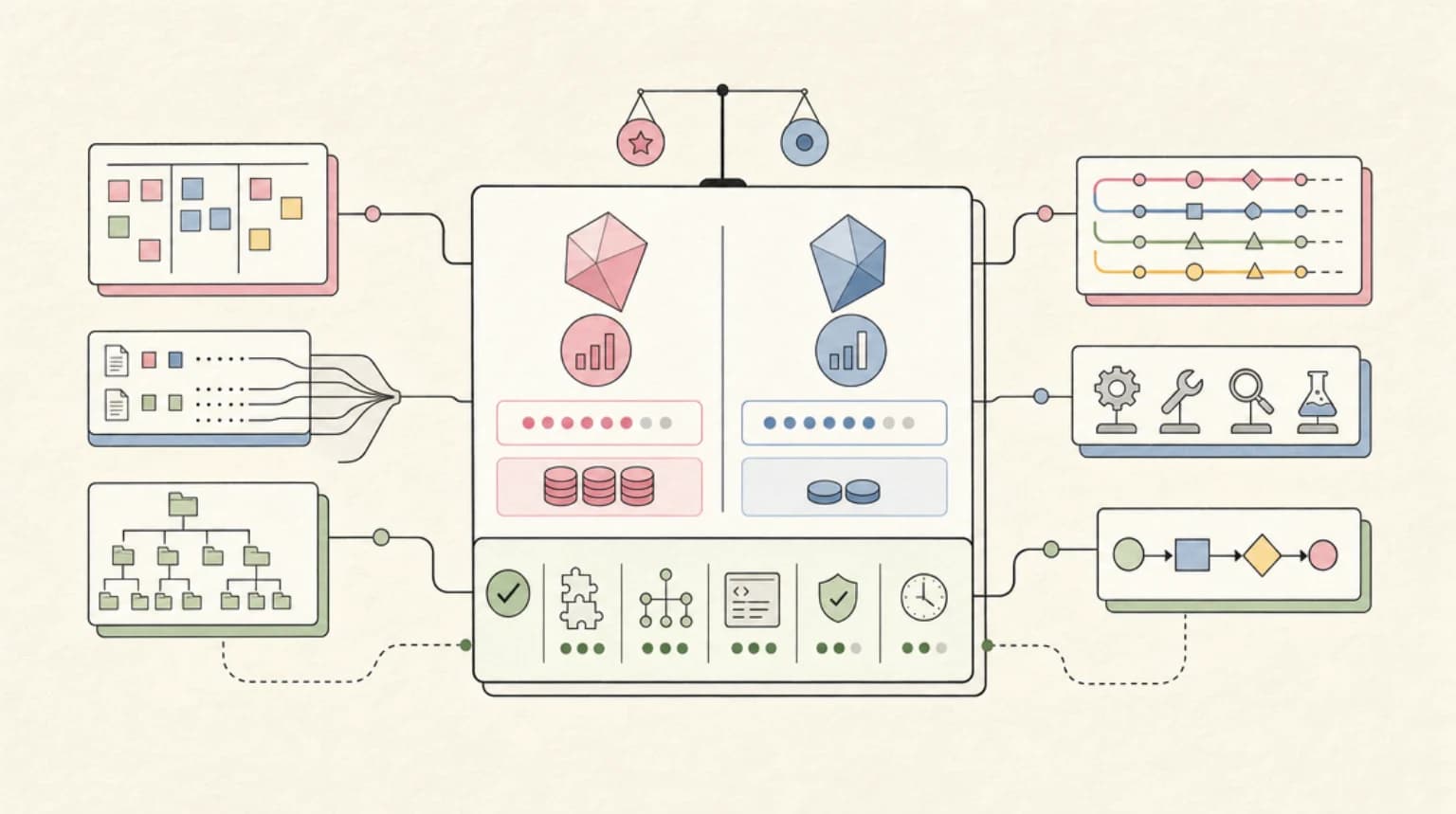
Fable 5 vs Opus 4.8: A Data-Driven Decision Guide for Engineering Teams
Fable 5 posts an 80.3% SWE-Bench Pro score and costs 2x Opus 4.8 - here is the task-profile scoring guide that tells you...

9 min read
News
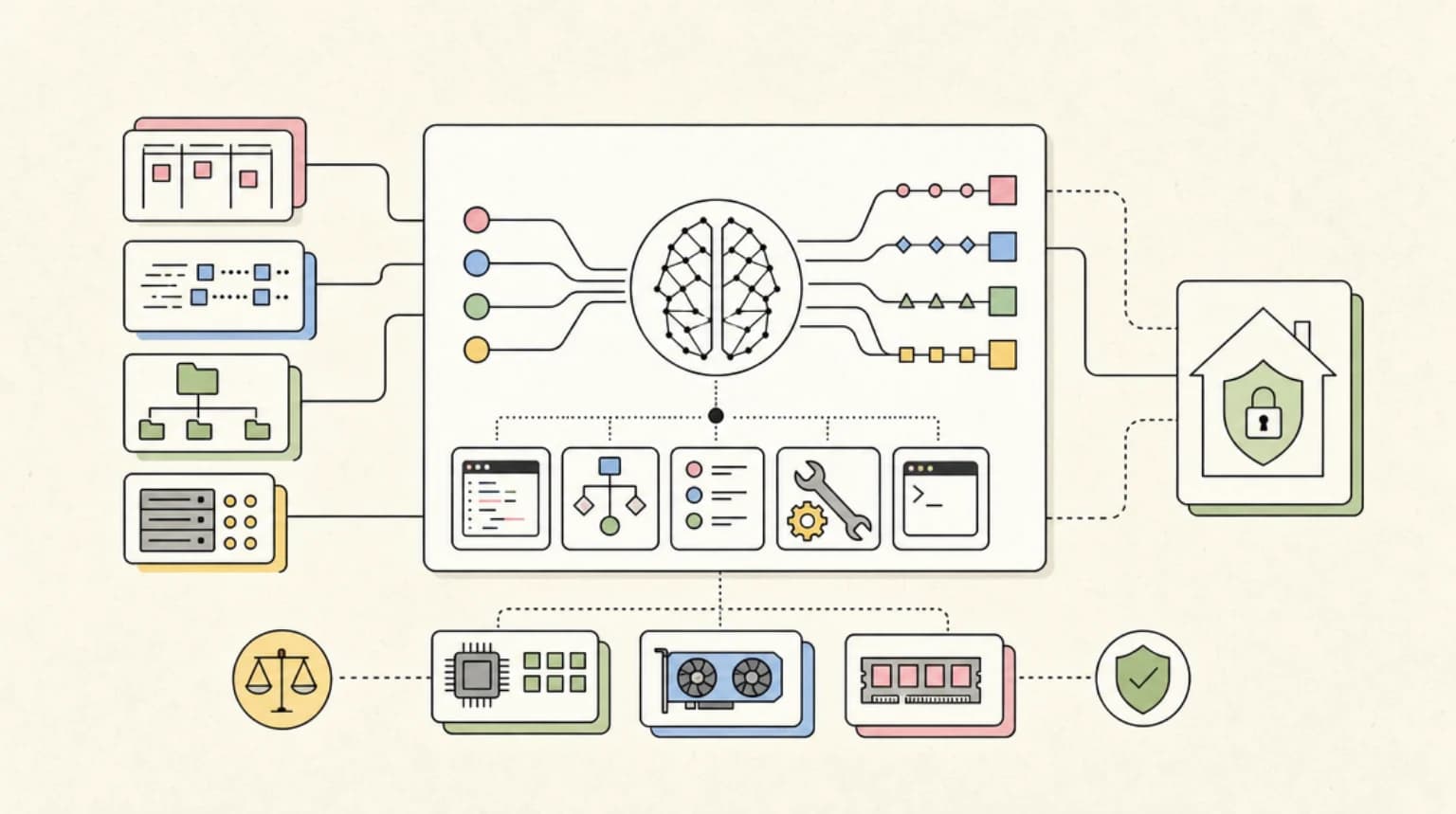
Jamesob's Guide to Running SOTA LLMs Locally: The Hardware and Config That Actually Works
A detailed breakdown of jamesob's viral local LLM guide covering the $2k and $40k hardware paths, critical BIOS settings...
8 min read
News
TurboFieldfare: Running Gemma 4 26B in 2 GB of RAM on Any M-Series Mac
TurboFieldfare is a custom Swift and Metal inference engine that runs Google's 26B-parameter Gemma 4 MoE model in roughl...
Build with the member tools

Get Smarter About AI Dev
New tutorials, open-source projects, and deep dives on coding agents - delivered weekly.
One email per weekReal code, not theoryFree forever