GLM 5.2 Outperforms Claude Code on Semgrep's IDOR Vulnerability Benchmarks

TL;DR
Semgrep's security research team benchmarked LLMs on IDOR vulnerability detection. The open-weight GLM 5.2 beat Claude Code by 7 points at roughly one-sixth the cost.
Update (August 14, 2026): These results were measured on GLM 5.2. Z.ai has since shipped GLM-5.3 - same base model, scaled-up post-training, and vendor benchmarks up across the board - at the same per-token price. Nobody has rerun Semgrep's IDOR suite on 5.3 yet, but since the cost side of the cost-per-finding math is unchanged, it is the obvious rerun candidate once independent testing lands.
Semgrep's security research team published benchmark results that caught Hacker News's attention: the Chinese open-weight model GLM 5.2 beat Claude Code on IDOR (Insecure Direct Object Reference) vulnerability detection - and did it at roughly one-sixth the cost per finding.
The headline number: GLM 5.2 scored 39% F1 versus Claude Code's 32%, with no scaffolding or multi-agent system. Just a prompt and a model.
The Benchmark Setup#
Semgrep tested multiple models on a specific security task: finding IDOR vulnerabilities in real, open-source applications. IDOR is a common web vulnerability where an application exposes internal identifiers (like user IDs or order numbers) without proper authorization checks, letting attackers access other users' data by manipulating those identifiers.
The researchers held several things constant:
- The same IDOR dataset (real applications from prior research)
- The same evaluation method (F1 scoring)
- The same system prompt
What varied was the model and the harness (the wrapper code that orchestrates the model).
The Results#
| Rank | Model | Harness | F1 Score |
|---|---|---|---|
| 1 | Semgrep Multimodal (GPT 5.5) | Custom Semgrep | 61% |
| 2 | Semgrep Multimodal (Opus 4.8) | Custom Semgrep | 53% |
| 3 | GLM 5.2 | Pydantic AI | 39% |
| 4 | Claude Code (Opus 4.6) | Claude SDK | 37% |
| 5 | Claude Code (Opus 4.8/4.7) | Claude SDK | 28% |
The key insight: GLM 5.2 with minimal guidance (just a prompt via Pydantic AI) outperformed Claude Code by 7 points. The cost? Approximately $0.17 per vulnerability found - about one-sixth what frontier models cost.
Semgrep's own multimodal pipeline with GPT 5.5 still wins overall at 61%, but that system includes endpoint discovery, code filtering, and other scaffolding. The comparison shows what raw model capability looks like versus engineered systems.
What HN Is Saying#
The thread drew 59+ comments with strong opinions on both sides.
The skeptics called it marketing. Several commenters noted the narrow scope: "It reads like an ad. Secondly these are 'just' IDORs, arguably the easiest class of vulnerabilities. Thirdly it compares to GPT 5.5 and Opus 4.8. No, we don't have Mythos at home."
The critique is valid - Semgrep explicitly noted this evaluates a single task and may not generalize to other vulnerability types like SSRF.
The open-weight advocates pushed back. Multiple commenters argued that the benchmark's limitations don't diminish its value. One wrote: "GLM5.2 is in the room with us, today. Mythos is not. And for us in the EU, it's even more complicated, as Mythos might be with us in the room one day, and go poof the next day, on the whims of political entities that we have 0 control over."
Another: "In my experience, GLM 5.2 is extremely good at finding vulnerabilities, and more importantly, unlike Opus, I've never seen it refuse a command."
The export control discussion emerged. One commenter predicted: "GLM export controls incoming? I predict Commerce will force OpenRouter, HuggingFace to take some open models down within the next few months."
This sparked a thread about the absurdity of the US trying to export-control a Chinese model. Others noted that any such restrictions would only affect American companies while attackers continue using whatever tools they want: "If that happens it'll be an absolute disaster. Imagine a scenario where Anthropic and OpenAI prohibit most US companies from using their latest models because of safety... And meanwhile attackers use equivalent open source models to attack US companies."
The harness vs model distinction came up. A sharp commenter pointed out: "Claude Code is an agent harness, not an LLM. Claude is a brand (or group of models), not an LLM." The benchmark title conflates these - but the article author acknowledged this and argued Claude Code pricing is the best proxy for amortized inference costs.
Practical experiences surfaced. One developer shared weekend results: "I have taken another look on these open models after the fiasco of Fable and GPT 5.6 this weekend and... GLM-5.2 truly is a good workhorse model for daily programming. I consider myself a heavy user of LLMs and a seasoned developer. A typical session for me with GPT is usually over a hundred dollars... Two days later and 20 dollars poorer I have what I need: a multimodal agent written in rust that has access to my homelab."
From the archive
OpenAI's June API Updates Are Really a Control-Plane Upgrade
Jun 28, 2026 • 8 min read
Vercel AI SDK 7: The Production Agent Upgrade
Jun 28, 2026 • 9 min read
Grok Build Developer Guide: xAI's Terminal Coding Agent (June 2026)
Jun 27, 2026 • 9 min read
Perplexity Bumblebee: Developer Guide to the Open Source Supply Chain Scanner
Jun 27, 2026 • 7 min read
The Technical Context#
Several technical points emerged from both the article and discussion:
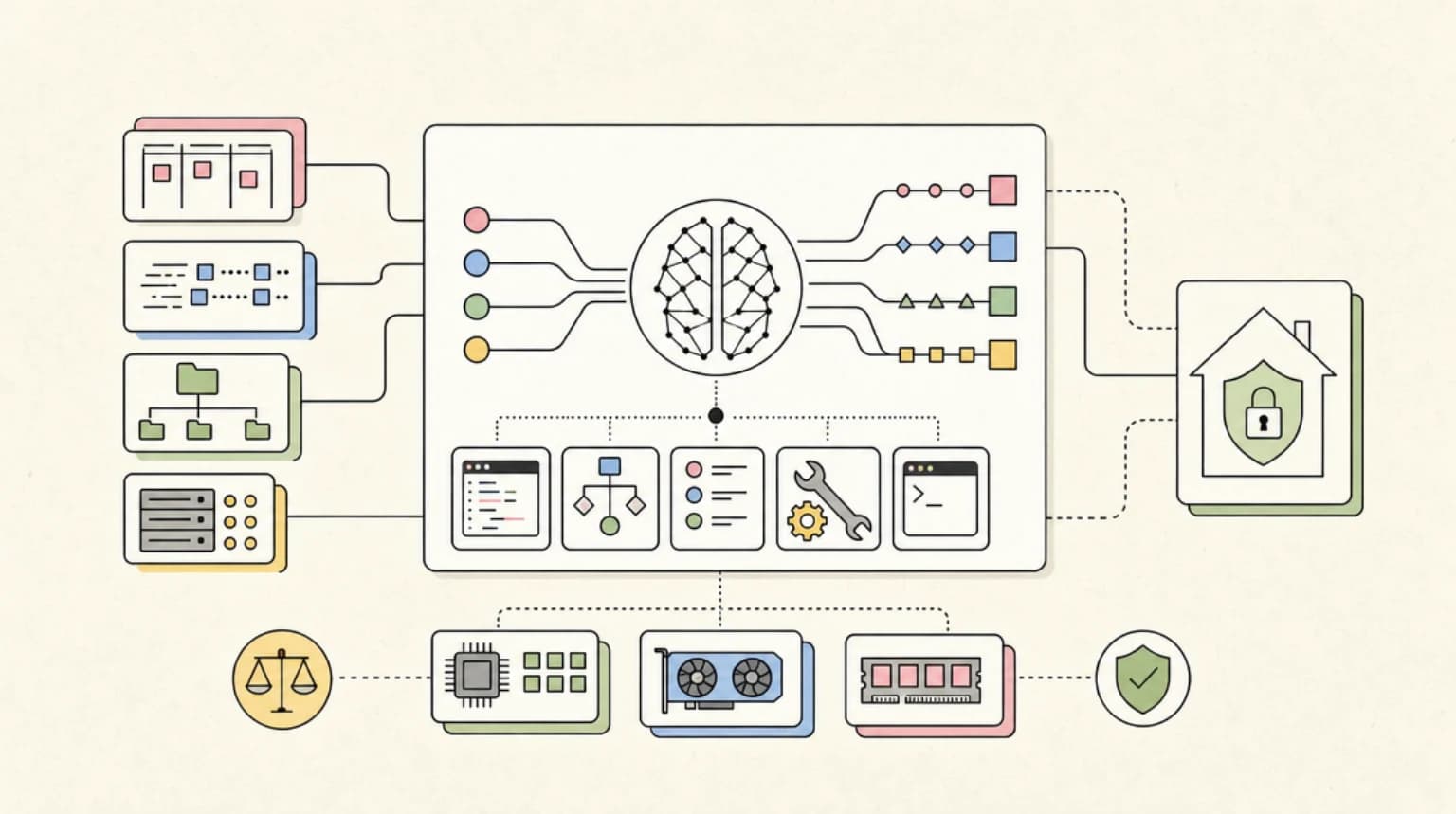
GLM 5.2 is massive. At 753 billion parameters, running it locally requires serious hardware. Commenters discussed 8x RTX 6000 setups costing $80-100k. For most developers, API access through providers like Fireworks or OpenRouter makes more sense than local deployment.
The scaffolding gap is real. Semgrep's 61% result with GPT 5.5 includes endpoint discovery, code filtering, and multi-agent orchestration. GLM 5.2's 39% is with essentially zero scaffolding. The question is whether wrapping GLM 5.2 in similar tooling would close that gap.
Safety guardrails may affect results. One commenter noted that Claude Code with Opus 4.8 actually performed worse (28%) than with older Opus versions (37%). This could be due to increased safety restrictions on newer models - a recurring theme where safety training potentially reduces capability on security research tasks.
Self-training loops are emerging. A security researcher noted: "These numbers seem pretty low compared to what I was able to achieve specifically around windows kernel... GLM 5.2 is already capable enough to assist in self-training which is similar to what we saw happen with frontier models and they appear to be getting there at a significantly lower cost than OpenAI/Anthropic."
Why This Matters#
The benchmark reveals a few important trends:
Open weights are catching up. Not across the board, not on every task, but on specific workloads - including security-relevant ones - open models now compete with frontier providers. At 39% F1 versus 28-37%, GLM 5.2 isn't just close; it's ahead of Claude Code on this task.
Cost matters for security. At $0.17 per vulnerability versus $1+ for frontier models, the math changes for automated security scanning. You can run six times as many scans for the same budget, or cover six times as much code.
The model vs system distinction is blurring. What beats what depends heavily on the harness. Semgrep's multimodal pipeline with GPT 5.5 destroys everything else at 61%, but that's a product, not a raw model capability. As agentic tooling improves, the "which model wins" question becomes less important than "which system architecture wins."
Regulatory risk is emerging. The thread's discussion of potential export controls on Chinese AI models reflects growing tension between open-source AI development and national security concerns. Whether such controls would be effective (or even enforceable) is debatable, but the fact that people are discussing it signals a shift.
The Bottom Line#
Semgrep's benchmark is narrow - one vulnerability type, one evaluation method - but the signal is clear: open-weight models have reached competitive parity on at least some security tasks, at a fraction of frontier model costs.
For security teams doing automated vulnerability scanning, the implication is worth exploring. GLM 5.2 through providers like Fireworks offers a cost-effective alternative that - on this specific task - outperforms Claude Code.
For the broader AI development community, it's another data point in the ongoing debate about open versus closed models. The capability gap that justified frontier model pricing is narrowing faster than some expected.
Continue Reading#
- Clawk: Disposable Linux VMs for Coding Agents Without Cloud Bills
- Cloudflare OS: The Open Source Agent Workspace That Treats Apps Like Files
- Echo Claims Fable-Level Results at One-Third the Cost Using Open-Weight Models
Sources#
Read next
Colibri: Running GLM 5.2 on a 32GB Laptop with Disk Streaming and Expert Offloading
A solo developer built a 1,300-line C inference engine that runs the 744B GLM 5.2 model on consumer hardware by streaming routed experts from disk. Here's how it works.
6 min readVulnerability Reports Are Not Special Anymore
Filippo Valsorda argues that LLMs have ended the era of treating security researchers with kid gloves. When anyone can discover vulnerabilities with an AI, the old coordinated disclosure model breaks down.
7 min readClawk: Disposable Linux VMs for Coding Agents Without Cloud Bills
Open-source tool gives Claude Code, Codex, and other agents their own isolated Linux VM on your machine - network firewall included, no cloud account required.
6 min readShare
Developers Digest
Technical content at the intersection of AI and development. Building with AI agents, Claude Code, and modern dev tools - then showing you exactly how it works.
300+ videos30K+ GitHub stars850+ articles
Related Tools
AI CodingDaily Driver

Claude Code
Anthropic's agentic coding CLI. Runs in your terminal, edits files autonomously, spawns sub-agents, and maintains memory...
View ToolAI Coding
Z
Zed
High-performance code editor built in Rust with native AI integration. Sub-millisecond input latency. Built-in assistant...
View ToolAI Models

DeepSeek
Open-source reasoning models from China. DeepSeek-R1 rivals o1 on math and code benchmarks. V3 for general use. Fully op...
View ToolAI Coding

Cline
Open-source autonomous coding agent inside VS Code. Creates files, runs commands, and can use a browser for UI testing a...
View ToolApps from Developers Digest
Developer ToolsPlus $20/mo
Skills Pro
Unlock pro skills and share private collections with your team.
View AppDeveloper ToolsPlus $20/mo
Hookyard Pro
Pro hooks for Claude Code. Private bundles, team sync, one-click install.
View AppDirectories
AI Models
Pick a model in 30 seconds. Built for the answer, not the marketing.
View AppRelated Guides
Guide
Claude Code Complete Course
A complete, citation-backed Claude Code course with setup, prompting systems, MCP, CI, security, cost controls, and capstone workflows.
ai-developmentGuide
Claude Code Setup Guide
Configure Claude Code for maximum productivity -- CLAUDE.md, sub-agents, MCP servers, and autonomous workflows.
AI AgentsGuide
Getting Started with Claude Code
Install Claude Code, configure your first project, and start shipping code with AI in under 5 minutes.
Getting StartedRelated Videos
Zed: The Open Source Agentic IDE - Use Claude Code, Codex & Gemini CLI in one place
Check out Zed here! https://zed.dev In this video, we dive into Zed, a robust open source code editor that has recently introduced the Agent Client Protocol. This new open standard allows...
Video·
OpenAI Open Sources Codex: The CLI Coding Agent
Exploring Codex: AI Coding in Terminal In this video, I explore Codex, a new lightweight CLI tool for AI coding that runs in the terminal. This tool, possibly a response to Anthropic's CLI,...
Video·
(Open Source) Chat2DB 3.0: AI SQL Client now with Claude3.7 & DeepSeek
Try Chat2DB for free: https://bit.ly/4hEyHq4 #AI #SQL #DataScience #opensource Chat2DB AI: Latest Features Unveiled Hey everyone! In this video, I'll walk you through the latest updates...
Video·
Related Posts
8 min read
News
Mozilla's State of Open Source AI Report: The Gap Is 3%, But Deployment Remains the Real Problem
Mozilla's inaugural report reveals open models now match closed AI on capability, but only 51% reach production. The har...
7 min read
News
AI Voice Fraud Needs Three Seconds of Your Voice
Voice cloning now requires just 3 seconds of audio to impersonate someone. With $893M in reported losses, detection has...

6 min read
News
xAI Open-Sources Grok Build After Data Exfiltration Scandal
Days after getting caught uploading entire codebases to xAI servers, Grok Build is now open source on GitHub. The HN com...
6 min read
AI Agents
Clawk: Disposable Linux VMs for Coding Agents Without Cloud Bills
Open-source tool gives Claude Code, Codex, and other agents their own isolated Linux VM on your machine - network firewa...
6 min read
News
Mesh LLM: Run 235B Models Across Your Home Lab with iroh
A new distributed inference system pools GPU resources across multiple machines and exposes them through a single OpenAI...
6 min read
News
Ghost Font: Text That Humans Can Read But AI Cannot
A new experimental technology encodes messages in video using motion-based steganography, exploiting how AI models proce...
Build with the member tools

Get Smarter About AI Dev
New tutorials, open-source projects, and deep dives on coding agents - delivered weekly.
One email per weekReal code, not theoryFree forever