Using Claude Code for a Second Opinion on MRI Scans - What Actually Happened
TL;DR
A developer fed 266MB of DICOM MRI data to Claude Code Opus for a second opinion on a shoulder diagnosis. The AI disagreed with the doctor. HN radiologists weighed in.
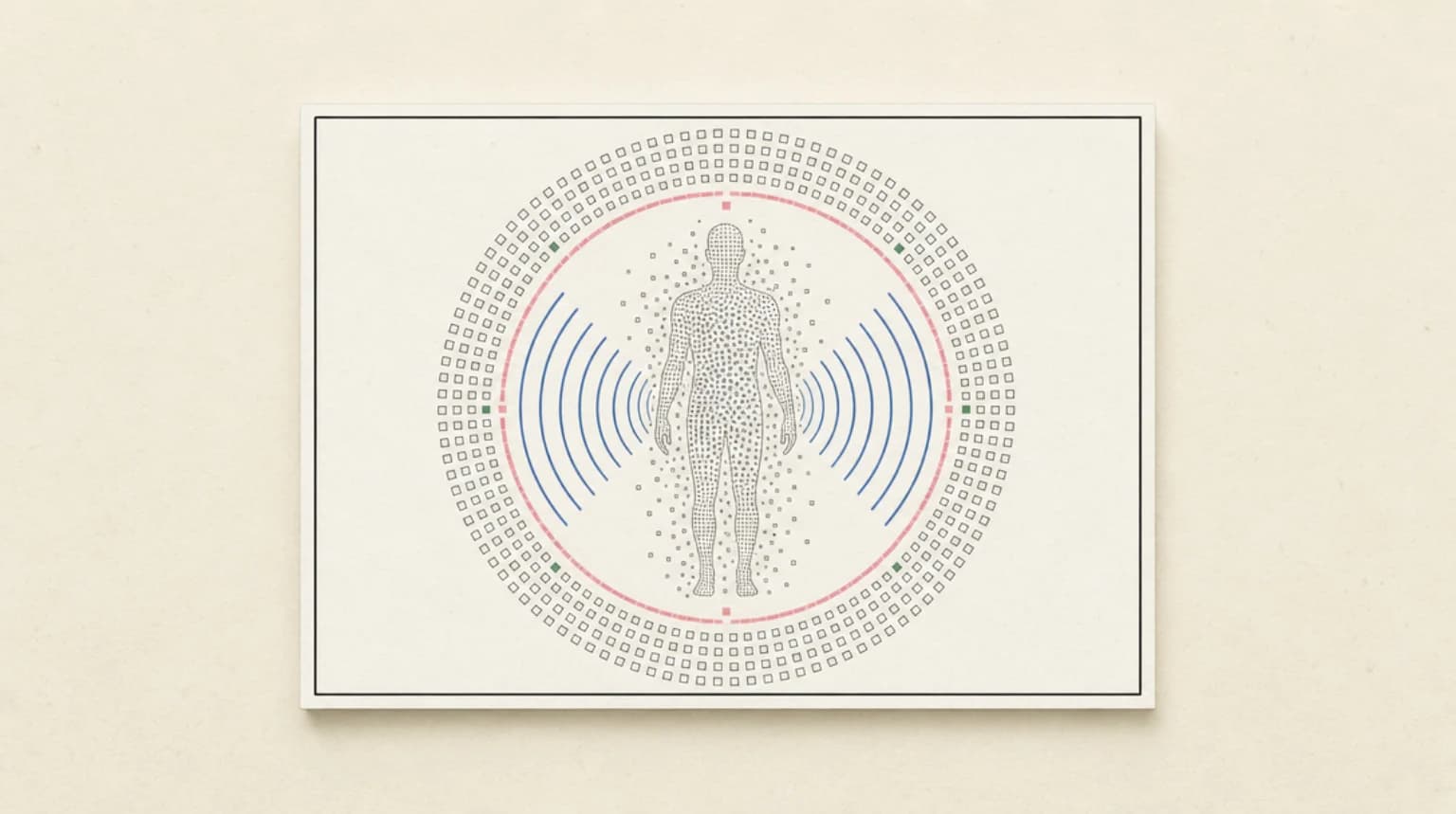
A developer named Antoine recently published an experiment that caught fire on Hacker News: he fed 266MB of DICOM MRI data from his right shoulder into Claude Code (Opus 4.8) to get a second opinion on his orthopedist's diagnosis.
The result? The AI disagreed with the human doctor. And the ensuing HN discussion - with actual radiologists weighing in - reveals a lot about where AI medical imaging stands today.
What Antoine Did#
The setup was straightforward. Antoine had been dealing with right shoulder pain for two to three weeks. His doctor diagnosed a "Grade III (>50%-width) partial-thickness tear at the apical insertion" of the subscapularis tendon - a significant rotator cuff injury that typically leads to aggressive treatment.
Rather than accept this at face value, Antoine:
- Exported his full MRI as DICOM files (266MB, hundreds of individual files)
- Pointed Claude Code at the data
- Let the AI install necessary packages for medical image analysis
- Gave minimal clinical context: just "right shoulder pain for 2-3 weeks"
Claude developed a methodical analysis strategy, writing code to process the imaging data and examining it from multiple perspectives.
The Disagreement#
Here's where it gets interesting. The human radiologist saw a significant partial tear. Claude Code reported an "intact tendon" - essentially no tear at all.
When Antoine had Claude arbitrate between the two readings (providing both reports plus clinical test results), the AI concluded with "moderate-to-high confidence" that the evidence favored its own reading: "Mild insertional tendinosis; NO discrete partial- or full-thickness tear."
Antoine was left in diagnostic limbo. As he put it, the AI second opinion suggested the human-recommended treatment plan was "premature and more intervention-heavy than the facts seemed to justify." But he also acknowledged uncertainty about fully trusting AI for medical interpretation.
What HN Is Saying#
The thread exploded with 368+ comments, and the discussion divided into several camps.
Radiologists pushed back hard. One actual radiologist commented: "I can't really weigh in without seeing the full 3D MRI dataset." They pointed out a critical technical detail - ultrasound (which Antoine had also gotten) isn't great for detecting calcification and will miss small calcifications that would show on X-ray or MRI.
Multiple commenters noted that MRI is a 3D medium, and slicing it incorrectly can miss features entirely: "I would not be at all surprised if one could slice an MRI the wrong way to produce a 2D image that fails to show a feature that exists in the source data."
The "Claude is bad at images" camp appeared. Several commenters argued that Claude specifically underperforms on image understanding compared to other frontier models. One wrote: "Claude is the worst FM at image understanding. Prior to gpt-5.4 the only usable models were Gemini and Qwen."
Others countered that Claude handles some image types well, particularly PDF-to-markdown conversion and document understanding - but medical imaging is a different beast.
The sonography vs radiology distinction came up. A cardiac sonographer offered perspective: "Medical imaging is one of those things everyone thinks is simple because they don't know what they don't know. Any comment that doesn't start with 'I'm a radiologist' should be taken with a grain of salt."
The "AI second opinions help catch missed things" camp. Some shared stories of AI helping catch procedural errors or outdated treatment plans. One person described using AI-generated questions to push a GP who was mishandling their mother's care - and it worked.
The "this is a nightmare for doctors" camp. Multiple commenters argued that patients approaching doctors with AI-generated diagnoses creates friction: "Nightmare because users approach LLMs with the false confidence that they're always right, and present LLM outputs as fact to Doctors who have to waste time explaining that it's wrong most of the time."
From the archive
GLM 5.2 Outperforms Claude Code on Semgrep's IDOR Vulnerability Benchmarks
Jun 28, 2026 • 6 min read
OpenAI's June API Updates Are Really a Control-Plane Upgrade
Jun 28, 2026 • 8 min read
Vercel AI SDK 7: The Production Agent Upgrade
Jun 28, 2026 • 9 min read
Grok Build Developer Guide: xAI's Terminal Coding Agent (June 2026)
Jun 27, 2026 • 9 min read
The Technical Reality#
Several important technical points emerged from the discussion:
MRI complexity matters. 2D MRI scans have gaps between slices (typically 10% of slice thickness). 3D scans don't have gaps but are slower and more prone to movement artifacts. The voxels in 3D scans might be 1mm x 1mm x 1mm - which sounds precise until you realize subtle tears can be smaller than that.
Prompting affects diagnosis. One researcher noted: "Subtle changes in prompts can cause different diagnosis." The exact wording you use when asking an AI about medical images meaningfully changes the output.
Modality matters. When a radiology report says something "isn't present," there's always an implicit caveat that the finding isn't present within the context of that specific imaging modality. An ultrasound saying "no calcifications" and an X-ray showing calcifications can both be correct - the ultrasound just can't see small ones.
Why This Matters for Developers#
This isn't really a story about whether you should trust AI for medical diagnosis (you shouldn't, not yet, not without human verification). It's a story about the current frontier of multimodal AI and where the edges are.
A few takeaways:
The capability gap is real but narrowing. Two years ago, asking any LLM to analyze raw DICOM files would have been absurd. Now Claude Code can install packages, write analysis code, and produce a structured medical reading. The reading might be wrong, but the workflow exists.
Domain expertise still matters. The radiologists in the thread could immediately identify limitations that a non-specialist wouldn't know to ask about - 2D vs 3D acquisition, slice gaps, modality-specific blind spots. AI doesn't yet surface these caveats reliably.
Second opinions have value, even imperfect ones. Antoine's doctor recommended shockwave therapy for a condition that recent clinical guidelines say doesn't respond to it (rotator cuff tendinopathy without calcification). Even if Claude's diagnosis is wrong, the friction of having a second opinion made Antoine dig deeper.
The probabilistic nature cuts both ways. As one commenter put it: "Not quite. An LLM generates text that would likely follow... A patient in pain with a bone protruding from their shin has a... 'broken leg.' The more training data, the more questions it can answer with a reasonable degree of probability of accuracy."
The counterpoint: "It can be helpful in your understanding the choices made by asking questions and thus in reassurance, but it requires something most people lack: understanding you are likely wrong since you are just collecting information without understanding it."
The Bigger Picture#
What's notable about this story isn't that Claude Code can read MRIs (it can, sort of). It's that the experiment is now cheap and accessible enough that a solo developer can run it on a weekend, publish results, and get hundreds of HN comments including feedback from actual radiologists.
That feedback loop - AI output, expert critique, public discussion - is how capabilities actually improve. The radiologist comments are training data for the next iteration of these models, whether directly or through the discourse they generate.
For now, the prudent approach is obvious: AI as a thinking aid, not a replacement for professional judgment. But the gap is closing faster than the medical establishment is adapting.
Antoine ended his post in diagnostic limbo, uncertain whether to trust the AI or the doctor. That uncertainty is probably the healthiest response right now.
This is not the first time Claude has been pointed at medical imaging - see our earlier look at Midjourney and AI-generated medical scanner concepts for a different angle on AI and imaging. For more on what Claude Code can and cannot do reliably outside coding tasks, see what Hacker News gets right about AI coding agents.
Continue Reading#
Sources#
- Original article by Antoine
- Hacker News discussion (368+ comments)
Read next
Claude Code's Extended Thinking Is a Summary - What That Means for You
A developer discovered that Claude Code's thinking output is summarized, not the raw reasoning. Here's what Anthropic's docs actually say - and why it matters.
5 min readAnthropic Removed 80% of Claude Code's System Prompt. Here Is What They Learned.
Anthropic cut 80% of Claude Code's system prompt for Opus 5 and Fable 5 with zero regression on coding evals. The post landed on HN with 197 points and 133 comments. Here is what the article says, what HN thinks, and what it means for your agent harness.
7 min readSetting Up a Spare Mac for Claude Code: The Full Remote Control Guide
A step-by-step guide to configuring an isolated Mac that Claude Code can fully control remotely - from SSH and Dispatch to phone-based control with Remote Control.
7 min readShare
Developers Digest
Technical content at the intersection of AI and development. Building with AI agents, Claude Code, and modern dev tools - then showing you exactly how it works.
300+ videos30K+ GitHub stars850+ articles
Related Tools
AI CodingDaily Driver

Claude Code
Anthropic's agentic coding CLI. Runs in your terminal, edits files autonomously, spawns sub-agents, and maintains memory...
View ToolAI Coding
Z
Zed
High-performance code editor built in Rust with native AI integration. Sub-millisecond input latency. Built-in assistant...
View ToolAI Models

Claude Opus 4.7
Anthropic's flagship reasoning model. Best-in-class for coding, long-context analysis, and agentic workflows. 1M token c...
View ToolAI Coding
C
Conductor
Mac app for running parallel Claude Code, Codex, and Cursor agents in isolated workspaces. Watch every agent work at onc...
View ToolApps from Developers Digest
Developer ToolsPlus $20/mo
Skills Pro
Unlock pro skills and share private collections with your team.
View AppDeveloper ToolsPlus $20/mo
Hookyard Pro
Pro hooks for Claude Code. Private bundles, team sync, one-click install.
View AppDeveloper Tools
Agent Hub
Every coding agent in one window. Stop alt-tabbing between Claude, Codex, and Cursor.
View AppRelated Guides
Guide
Claude Code Setup Guide
Configure Claude Code for maximum productivity -- CLAUDE.md, sub-agents, MCP servers, and autonomous workflows.
AI AgentsGuide
Claude Code Complete Course
A complete, citation-backed Claude Code course with setup, prompting systems, MCP, CI, security, cost controls, and capstone workflows.
ai-developmentGuide
Getting Started with Claude Code
Install Claude Code, configure your first project, and start shipping code with AI in under 5 minutes.
Getting StartedRelated Videos

Generate Videos in Codex + Claude Code with This...
Check out HeyGen! https://heygen.1stcollab.com/developersdigest The video introduces HeyGen, an AI video generation platform with a rich API and a CLI that lets developers create, fetch, and manipula...
Video·
10x Design in Claude Code and Codex
Try Higgsfield: https://higgsfield.ai/s/higgsfield-general-campaign-developersdigest-juDMTi AI coding agents can build entire websites in minutes, but the default results often still look generic and...
Video·
Self Improving Applications with Claude Code & Codex
Build a Self‑Improving Next.js App: Supabase + Vercel Eve + GitHub Issues + Agent Loops Check out Supabase: https://supabase.plug.dev/1wWOTGS The video demonstrates how to build and deploy a self-im...
Video·
Related Posts
7 min read
Claude Code
Agent-Manager: A Tmux TUI for Running Claude Code, Codex, and OpenCode Side by Side
Agent-Manager wraps tmux into a Go TUI that groups AI coding agents by project, shows live status for each, and lets you...
8 min read
News
The New AI Superpowers: Focus and Followthrough
AI makes you 2-100x faster on every task. So why are developers burning out more than ever? The HN discussion on Rick Ma...
7 min read
News
Anthropic Removed 80% of Claude Code's System Prompt. Here Is What They Learned.
Anthropic cut 80% of Claude Code's system prompt for Opus 5 and Fable 5 with zero regression on coding evals. The post l...
9 min read
News
Terence Tao Digests the Jacobian Conjecture Counterexample: How Claude Fable 5 Broke an 87-Year-Old Math Problem
Terence Tao published a deep mathematical digestion of the Jacobian conjecture counterexample discovered by Claude Fable...
7 min read
News
Setting Up a Spare Mac for Claude Code: The Full Remote Control Guide
A step-by-step guide to configuring an isolated Mac that Claude Code can fully control remotely - from SSH and Dispatch...
6 min read
News
What AI Did to Stack Overflow, Visualized in One Graph
A Stack Exchange data query shows Stack Overflow's question volume dropped 65% since 2017, with a sharp acceleration aft...
Build with the member tools

Get Smarter About AI Dev
New tutorials, open-source projects, and deep dives on coding agents - delivered weekly.
One email per weekReal code, not theoryFree forever