LangSmith Fleet Turns Agent Ops Into On-Call Work
TL;DR
LangChain's June LangSmith updates point to a practical agent-ops pattern: Fleet templates, on-call triage, computer use, Slack interrupts, MCP auth, traces, and eval progress all belong in one operator loop.
Last updated: June 29, 2026
LangChain's June newsletter reads like a normal product roundup: Fleet On-Call Copilot, computer use in Fleet, voice traces, experiment status tracking, Slack notifications, Deep Agents rubrics, and a deployment course.
The more interesting read is that LangSmith is turning agent operations into on-call work.
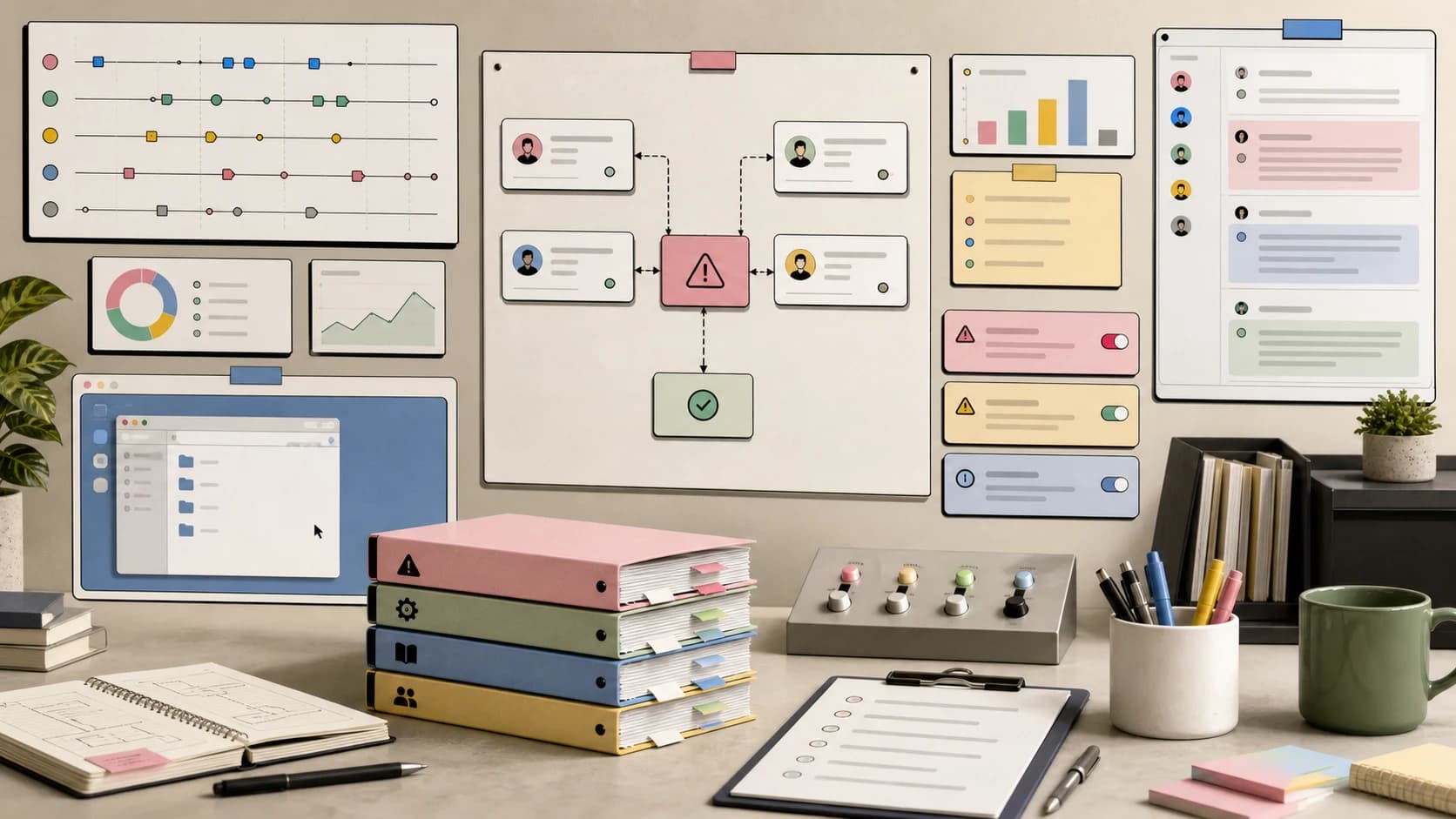
That matters because the next useful agent surface is not another blank chat box. It is an operator loop that can read traces, inspect runbooks, use a sandboxed computer, pause for human approval, notify the right Slack thread, and turn production behavior into evals. If you have been following the Developers Digest thread on agent reliability, local traces, and debugging agent workflows, this is the same argument with a hosted platform attached.
LangSmith Fleet is not just "no-code agents." It is LangChain's bet that the agent runtime, observability layer, and operations surface are becoming one product.
What changed in June#
The official June 2026 LangChain newsletter highlights five LangSmith updates that fit together:
| Update | Practical meaning |
|---|---|
| Fleet On-Call Copilot | A prebuilt agent template for triaging alerts with code, traces, and runbooks |
| Computer use in Fleet | Agents can operate an isolated virtual computer for files, code, and authenticated API calls |
| Voice traces | Audio debugging gets trace-level visibility into active spans |
| Experiment status tracking | Long eval runs expose live progress instead of opaque waiting |
| Slack notifications for Engine | Agent-improvement issues can land where teams already work |
The LangSmith changelog fills in the operational details around that story. Fleet picked up MCP OAuth improvements, protocol-version handshakes, Slack interrupt notifications, custom OAuth callback support, agent sharing controls, access profile creation from chat, and fixes for long-running agent runs that previously cut off after 60 seconds.
Individually, these are product improvements. Together, they look like a control surface for agent work.
That is the right direction. A production agent is not a chat transcript. It is a running system with identity, tools, traces, retries, costs, approvals, incidents, evals, and humans in the loop.
The useful concept is agent on-call#
Most teams already know how to run software on call:
- alert fires
- dashboard opens
- runbook gets checked
- owner investigates
- mitigation is proposed
- update is posted
- post-incident work becomes tickets or tests
Agents need the same shape. The difference is that the agent can participate in the investigation instead of only producing a summary after the fact.
That is what makes the On-Call Copilot template interesting. The newsletter describes it as an agent that works through code, traces, and runbooks to triage alerts and draft updates for review. The review part is important. This is not "the agent fixes production while everyone sleeps." It is "the agent gathers evidence, proposes a read, and hands it to the human operator."
That is a healthier pattern than full autonomy for most teams. It keeps the agent inside a role the organization already understands: first responder assistant, not unbounded production actor.
It also matches the lesson from long-running agents need harnesses. Reliability improves when the agent has a loop around it: scoped tools, receipts, checkpoints, evals, and a reviewer who can see what happened.
Computer use makes the sandbox a first-class operator tool#
The other June feature that matters is computer use in Fleet.
LangChain's Fleet overview docs frame Fleet as a no-code platform for creating and managing agents from templates, connected accounts, approvals, and chat surfaces. The newsletter adds that Fleet agents can now use an isolated virtual computer for code, files, and authenticated API calls.
That is a big boundary change.
Traditional agent tools are API-shaped. The model calls searchTickets, getTrace, createPullRequest, or sendSlackMessage. Computer use adds a broader escape hatch: the agent can operate software surfaces that do not have clean APIs, or that require stateful file and browser workflows.
That is powerful, but it changes the safety model:
| Old question | New question |
|---|---|
| Which API tools can the agent call? | Which applications and files can the virtual computer reach? |
| Which token did the tool use? | Which authenticated sessions exist inside the sandbox? |
| Did the tool return the expected shape? | Can the action be replayed from screenshots, files, and traces? |
| Can we revoke this connector? | Can we reset or snapshot the whole work environment? |
The sandbox becomes part of the control plane. That connects directly to sandboxed agents as a control surface and OpenAI's June API control-plane upgrades. The recurring theme is simple: if agents can act, the environment they act inside needs to be inspectable.
Traces are becoming the shared language#
LangSmith's advantage is that LangChain has spent years making traces the center of the workflow.
For simple chat apps, traces are nice. For production agents, traces are table stakes. You need to know:
- which instruction the agent followed
- which tool it called
- which result came back
- where latency accumulated
- where cost accumulated
- where a human interrupted or approved the run
- whether the same failure repeats across users
The June updates reinforce that. Voice traces add span-level visibility to audio interactions. Experiment status tracking makes evaluation progress visible while runs are still executing. Engine issue notifications put agent-improvement work into Slack. Changelog entries around trace retention and feedback correction keep tightening the observability workflow.
That is the right kind of boring.
The hard part of agent ops is not generating a trace. It is making the trace useful enough that a human can debug the system faster than they could by reading logs and guessing. That is the bar I would use when comparing LangSmith against local OTEL-style tooling, TraceTrail-style replays, or a homegrown event log.
From the archive
Using Claude Code for a Second Opinion on MRI Scans - What Actually Happened
Jun 28, 2026 • 7 min read
GLM 5.2 Outperforms Claude Code on Semgrep's IDOR Vulnerability Benchmarks
Jun 28, 2026 • 6 min read
Vercel AI SDK 7: The Production Agent Upgrade
Jun 28, 2026 • 9 min read
Grok Build Developer Guide: xAI's Terminal Coding Agent (June 2026)
Jun 27, 2026 • 9 min read
MCP auth is an operations feature, not a demo feature#
The Fleet changelog also calls out remote MCP authorization improvements.
Fleet now handles MCP servers whose authorization server requires client-secret authentication at the token endpoint. It also sends the negotiated MCP protocol version during the handshake and during tool calls, so servers that require newer protocol behavior can accept requests cleanly.
That sounds niche until you try to run agents across a real organization.
MCP is attractive because it turns tools into a common interface. It is risky because every connector is also a permission boundary. If the auth flow is brittle, users work around it. If the protocol negotiation is invisible, failures look like model failures. If the connecting application is shown as a raw client ID instead of a recognizable app, humans approve things they do not understand.
This is why MCP zero-touch OAuth and agent capability ledgers keep coming up. Tool access is not plumbing. It is the runtime permission model.
Fleet's recent MCP work is a sign that agent platforms are moving past "can the model call a tool" toward "can an admin understand and govern which tool got called, by whom, through which authorization flow."
The opposing view: this may be too much platform#
There is a reasonable counterargument: agent teams may not want their builder, fleet manager, tracing system, eval runner, deployment surface, sandbox, Slack integration, and improvement engine inside one vendor platform.
That concern is real.
LangSmith is most compelling if your stack already uses LangChain or LangGraph, your team wants a managed operations surface, and you are comfortable with a hosted product becoming the source of truth for traces and evals. If you are building a lightweight TypeScript app, Vercel AI SDK 7 may be a cleaner fit. If your main goal is local-first inspection, a smaller tracing tool may be faster. If your organization requires custom retention, network isolation, or self-hosting, every managed feature needs a procurement and security review.
The second risk is abstraction drift. A Fleet agent that can use Slack, Gmail, MCP servers, Salesforce, and a virtual computer is useful only if the permissions stay understandable. Once the tool graph gets too broad, the operator loses the thread.
The mitigation is not to avoid platforms. It is to keep each agent role narrow:
- one job
- one owner
- one approval policy
- one trace project
- one eval set
- one incident class
Broad agent platforms work best when the agents themselves stay boring.
How I would evaluate Fleet#
If I were testing LangSmith Fleet for an engineering team, I would not start with a generic "company assistant."
I would start with one operational workflow:
- Pick a recurring alert class with decent runbooks.
- Create a Fleet agent that can read the relevant traces, docs, and issue history.
- Give it read-only access first.
- Require human approval for every external action.
- Have it draft the incident update and suggested next step.
- Convert accepted and rejected drafts into eval examples.
- Track whether time-to-triage improves without increasing false confidence.
That last point is the whole game. The metric is not "the agent answered." The metric is whether the agent made the operator faster while leaving better evidence behind.
For teams already running LangGraph, LangSmith Deployment, or LangSmith evals, Fleet can become the human-facing layer on top of that machinery. For teams still comparing frameworks, pair this with LangChain vs Vercel AI SDK and managed agents vs LangGraph vs DIY before committing.
The bigger pattern#
The agent market is converging on the same product shape from different directions.
OpenAI is adding identity, admin controls, moderation scores, prompt-cache retention policy, and Secure MCP Tunnel. Vercel is adding typed tool context, workflow durability, approvals, realtime, and telemetry to AI SDK 7. LangChain is adding Fleet, on-call templates, computer use, trace improvements, MCP auth, Slack interrupts, and deployment education.
Different stacks, same direction: agents need operations surfaces.
That is the piece worth paying attention to. The next wave of agent tooling will not be won only by better model calls. It will be won by the systems that make agent work observable, governable, interruptible, and easy to improve after production behavior exposes the weak spots.
LangSmith Fleet is one of the clearest examples of that shift because it starts where teams already feel pain: alerts, traces, runbooks, Slack, evals, and approvals.
That is not glamorous. It is useful.
FAQ#
What is LangSmith Fleet?#
LangSmith Fleet is LangChain's no-code platform for creating, sharing, and managing AI agents. It supports templates, connected accounts, approvals, chat surfaces, Slack, MCP servers, and managed agent workflows inside the broader LangSmith platform.
What is the Fleet On-Call Copilot?#
Fleet On-Call Copilot is a LangSmith template introduced in the June 2026 newsletter. It is designed to triage alerts using code, traces, and runbooks, then draft updates for human review.
Does LangSmith Fleet replace LangGraph?#
No. LangGraph is the orchestration runtime for building stateful agent workflows. Fleet is a higher-level management and no-code surface for creating and operating agents. Teams can use Fleet alongside LangGraph, LangSmith Deployment, tracing, and evals.
Why does computer use matter for Fleet agents?#
Computer use lets a Fleet agent operate inside an isolated virtual computer for code, files, and authenticated API calls. That expands what the agent can do, but it also makes sandbox permissions, replayability, and approvals more important.
Is LangSmith Fleet only useful for LangChain teams?#
It is most natural for teams already using LangChain, LangGraph, or LangSmith, but the operational pattern applies broadly. Any production agent stack needs traces, evals, approvals, tool permissions, incident workflows, and a way to improve from real behavior.
Continue Reading#
Sources#
- LangChain: June 2026 LangChain Newsletter, checked June 29, 2026.
- LangSmith Fleet documentation, checked June 29, 2026.
- LangSmith changelog, checked June 29, 2026.
- LangSmith usage documentation, checked June 29, 2026.
- LangSmith full-platform self-hosting documentation, checked June 29, 2026.
Read next
Agentic AI Reliability Is a Systems Problem
The Bayer and Thoughtworks PRINCE case study is a useful reminder that reliable agentic AI comes from context routing, traces, evals, monitoring, and human review, not from a better prompt alone.
7 min readLocal OpenTelemetry Traces Are Agent Receipts
AI agent work needs local observability. OpenTelemetry, OTLP, Vercel AI SDK telemetry, and lightweight trace viewers give developers receipts for model calls, tool use, latency, errors, and cost before anything goes to production.
9 min readHow to Debug AI Agent Workflows
AI agents fail in ways traditional debugging cannot catch. Here are the tools and patterns for finding and fixing broken agent loops, tool failures, and context issues.
9 min readShare
Developers Digest
Technical content at the intersection of AI and development. Building with AI agents, Claude Code, and modern dev tools - then showing you exactly how it works.
300+ videos30K+ GitHub stars850+ articles
Related Tools
AI Frameworks

LangChain / LangGraph
Most popular LLM framework. 100K+ GitHub stars. Chains, RAG, vector stores, tool use. LangGraph adds stateful multi-agen...
View ToolAI CodingAgent

OpenAI Codex
OpenAI's coding agent for terminal, cloud, IDE, GitHub, Slack, and Linear workflows. Reads repos, edits files, runs comm...
View ToolAI Frameworks
C
Composio
Gives AI agents access to 250+ external tools (GitHub, Slack, Gmail, databases) with managed OAuth. Handles the auth and...
View ToolAI Frameworks

OpenAI Agents SDK
Lightweight Python framework for multi-agent systems. Agent handoffs, tool use, guardrails, tracing. Successor to the ex...
View ToolApps from Developers Digest
Developer ToolsIn Progress
Skill Builder
Turn a one-liner into a working Claude Code skill. From idea to installed in a minute.
View AppDeveloper ToolsIn Progress
Workflow Autopilot Builder
Define AI-assisted business automations without locking the workflow to one vendor.
View AppDeveloper ToolsIn Progress
Agent Workflow Hub
Queue and organize repeatable agent workflows before they become production automations.
View AppRelated Guides
Guide
Claude Code Setup Guide
Configure Claude Code for maximum productivity -- CLAUDE.md, sub-agents, MCP servers, and autonomous workflows.
AI AgentsGuide
MCP Servers Explained
What MCP servers are, how they work, and how to build your own in 5 minutes.
AI AgentsGuide
AI Agent Frameworks Compared: LangGraph vs CrewAI vs Mastra vs CopilotKit
Deep comparison of the top AI agent frameworks - LangGraph, CrewAI, Mastra, CopilotKit, AutoGen, and Claude Code.
AI AgentsRelated Videos

Buzz: Open-Source Collaboration for Humans + AI Agents
Buzz by Block: Open-Source Slack-Style Collaboration for Humans + AI Agents (Demo & Setup) Check out Arcade: https://arcade.dev.plug.dev/xiDRwlA Repo: https://github.com/block/buzz The video introd...
Video·
Agents 101: How to Build and Deploy Anything with AI Agents
Build Anything with Vercel, the Agentic Infrastructure Stack Check out Vercel: https://vercel.plug.dev/cwBLgfW The video shows a behind-the-scenes walkthrough of how the creator rapidly builds and d...
Video·
TRAE: Custom AI Agents That Actually Understand Your Codebase
Check out Trae here! https://tinyurl.com/2f8rw4vm In this video, we dive into @Trae_ai a newly launched AI IDE packed with innovative features. I provide a comprehensive demonstration...
Video·
Related Posts
7 min read
AI Agents
Agentic AI Reliability Is a Systems Problem
The Bayer and Thoughtworks PRINCE case study is a useful reminder that reliable agentic AI comes from context routing, t...
9 min read
OpenTelemetry
Local OpenTelemetry Traces Are Agent Receipts
AI agent work needs local observability. OpenTelemetry, OTLP, Vercel AI SDK telemetry, and lightweight trace viewers giv...
9 min read
AI Agents
How to Debug AI Agent Workflows
AI agents fail in ways traditional debugging cannot catch. Here are the tools and patterns for finding and fixing broken...
9 min read
AI Agents
Long-Running Agents Need Harnesses, Not Hope
A long-running coding agent is only useful if the environment around it can queue tasks, capture logs, checkpoint state,...

5 min read
LangChain
LangChain vs Vercel AI SDK: Which TypeScript AI Framework Should You Use?
Two popular frameworks for building AI apps in TypeScript. Here is when to use each and why most Next.js developers shou...

8 min read
OpenAI
OpenAI's June API Updates Are Really a Control-Plane Upgrade
OpenAI's June 2026 API changelog looks like scattered platform plumbing. Read together, moderation scores, workload iden...
Build with the member tools

Get Smarter About AI Dev
New tutorials, open-source projects, and deep dives on coding agents - delivered weekly.
One email per weekReal code, not theoryFree forever