Vulnerability Reports Are Not Special Anymore
TL;DR
Filippo Valsorda argues that LLMs have ended the era of treating security researchers with kid gloves. When anyone can discover vulnerabilities with an AI, the old coordinated disclosure model breaks down.
Filippo Valsorda, the cryptography engineer behind the Go cryptography standard library and age encryption, published an essay this week arguing that vulnerability reports no longer deserve special treatment. The reason: LLMs can now find vulnerabilities "as good as almost any security researcher."
The post sparked a 170+ comment discussion on Hacker News, with maintainers, security researchers, and vendors all weighing in on whether the old coordinated disclosure model still makes sense in 2026.
The Core Argument#
Valsorda's thesis is straightforward. Vulnerability reports historically received privileged treatment because security researchers provided two scarce resources:
- Valuable insight into potential vulnerabilities
- Confidentiality allowing fixes before public disclosure
In exchange, maintainers offered responsiveness and public credit.
Both sides of this bargain have eroded. LLMs can now perform vulnerability discovery at scale. The insight isn't scarce anymore. And confidentiality matters less when any attacker can run the same LLM analysis independently and find the same bugs.
"The insight is not scarce and precious anymore," Valsorda writes. If an AI found the vulnerability, there's no reason to assume attackers haven't already found it too.
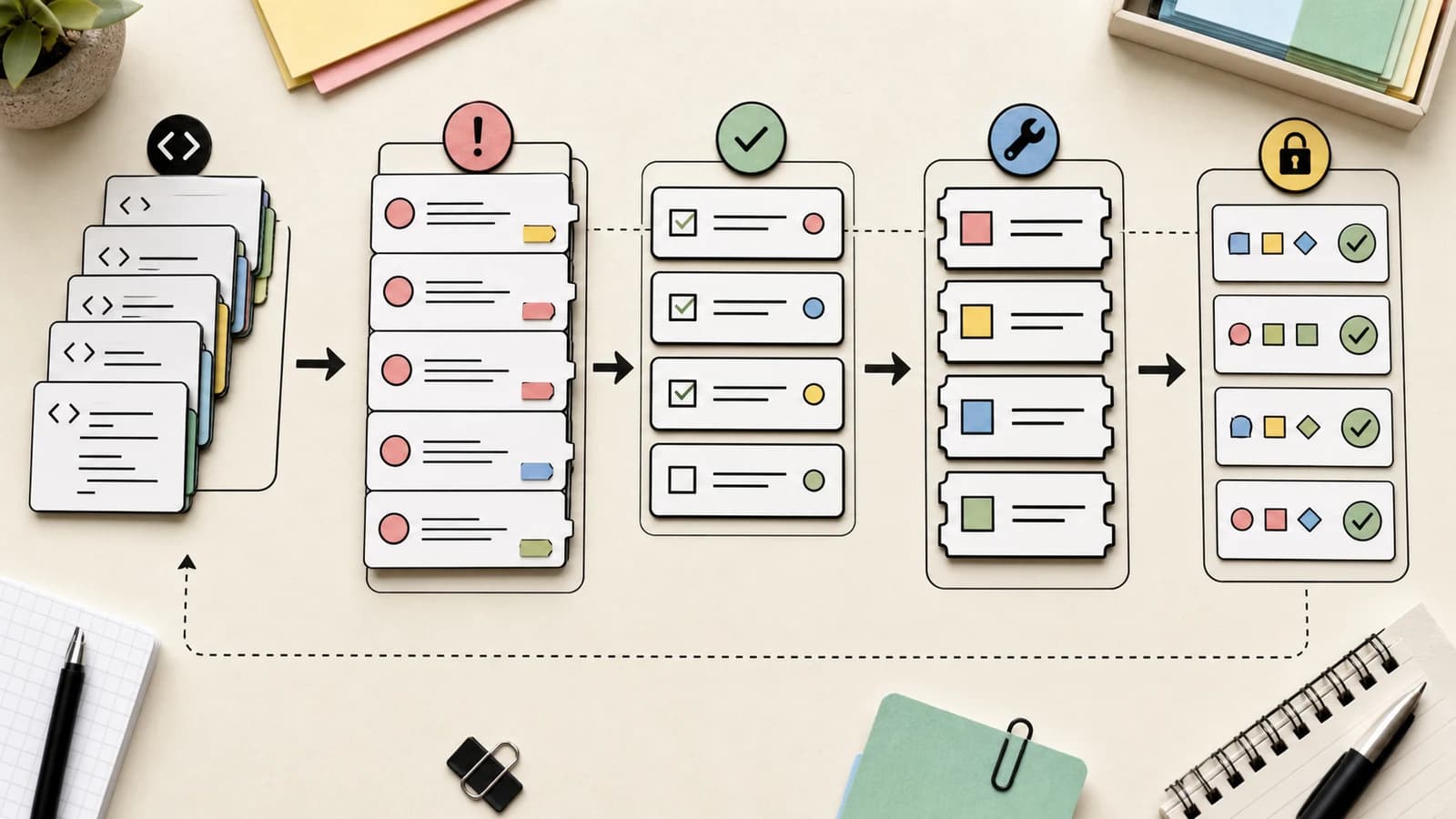
The practical conclusion: maintainers should prioritize rapid triage and remediation over courteous researcher communication. Implement LLM-based scanning in your CI/CD pipeline. Reserve special treatment only for unusually severe cases or highly-trusted sources.
What HN is Saying#
The thread surfaces both validation of the problem and pushback on the solution.
Maintainers confirm the spam problem is real. One maintainer of a vulnerability disclosure program reports that submissions went from 5 per month to 5 per day since January 2026. "These are clearly AI-generated and extremely low quality (albeit well-written). The rules of the program aren't read." They're considering shutting down the program entirely.
Dependabot fatigue compounds the issue. Several developers describe getting 100+ vulnerability alerts per week, mostly for dev dependencies or issues that don't affect their actual attack surface. "Half of them for dev dependencies," one writes. The signal-to-noise ratio has collapsed.
ReDoS is the poster child for broken scoring. Multiple commenters point to regex denial-of-service vulnerabilities that get marked as 10/10 severity despite being in build-time code that never sees untrusted input. "We got 116 github dependabot alerts this week. Half of them for dev dependencies."
The payment friction idea emerges. One commenter suggests requiring a small payment to submit vulnerability reports, refunded on valid findings. This triggers immediate pushback: "Why would anyone pay money to have a chance of being arrested?" The legal risks of security research already create friction - adding financial friction could discourage legitimate researchers entirely.
Supply chain concerns complicate the dev-dependency dismissal. Several commenters note that dev dependencies are still attack vectors - SolarWinds was compromised through its build tooling. "Developer's machines and cicd systems are high value targets." Dismissing dev dependency alerts entirely isn't risk-free.
Some question the AI capability claim. Not everyone agrees that LLMs can find vulnerabilities as well as skilled researchers. The counterargument: AI-generated reports are mostly garbage, suggesting the discovery capability isn't actually that strong. Valsorda's framing may overstate where we are today while being correct about the trajectory.
Read the full discussion at Hacker News.
From the archive
Agent Identity Is the Missing Security Layer for AI Workflows
Jun 23, 2026 • 7 min read
Agent PR Governance: The New Rules for Copilot Reviews
Jun 23, 2026 • 8 min read
Agent Sandbox Architecture: How to Choose the Right Runtime Boundary
Jun 23, 2026 • 8 min read
Agent Workflows as Code: Why State Machines Beat Prompt Checklists
Jun 23, 2026 • 8 min read
What This Means for Developers#
If you maintain open source software or run a vulnerability disclosure program, this shift creates practical problems:
Triage becomes the bottleneck. When anyone can generate plausible-looking vulnerability reports, filtering real issues from AI-generated noise becomes the core challenge. Quality scoring, source reputation, and automated validation become more important than manual review of every submission.
The AI-found vulnerability paradox. If AI can find a bug, assume adversaries have already found it. This changes disclosure timelines - you may want to patch faster and skip the courtesy dance.
Bug bounty economics shift. Programs that pay per valid bug create incentives for volume submissions. Expect more platforms to adopt filtering mechanisms like video reproduction requirements, reputation gating, or even the controversial payment friction model.
Run your own scans. If LLMs can find your vulnerabilities, you should be running those scans yourself before researchers (or attackers) do. Integrate security scanning into CI/CD rather than relying on external reports.
Dev dependency alerts still matter, sometimes. Don't dismiss all dev dependency vulnerabilities, but do context-aware triage. A ReDoS in your test framework is different from malicious code in a build tool.
The Broader Shift#
Valsorda's essay is part of a larger pattern: AI commoditizing expertise-based workflows. Security research joins code review, penetration testing, and other traditionally specialized domains where AI tools are compressing the skill curve.
This doesn't mean security researchers are obsolete. The hardest vulnerabilities - novel attack classes, complex chains, hardware-level exploits - still require human expertise. But the long tail of straightforward vulnerability discovery is increasingly automatable.
For maintainers, this means the volume of incoming reports will keep growing while the average quality drops. The workflows designed for a world of scarce, thoughtful security researchers need to adapt to a world of abundant, mechanical scanning.
The old model assumed vulnerability reporters were partners deserving special treatment. The new model may need to assume they're noise until proven otherwise - and design systems accordingly.
Continue Reading#
- Distilling an LLM on One GPU: Offline Top-K Logits and a Fused Chunked KL Loss
- Fable 5 Effort Levels vs Switching Models: When to Dial and When to Change
- The Fable 5 Orchestrator Playbook: One Smart Model Managing Cheap Workers
Sources#
- Vulnerability reports are not special anymore - Filippo Valsorda
- HN Discussion (170+ comments)
- Scanii Vulnerability Disclosure Program Rules (example of video reproduction requirement)
Read next
GLM 5.2 Outperforms Claude Code on Semgrep's IDOR Vulnerability Benchmarks
Semgrep's security research team benchmarked LLMs on IDOR vulnerability detection. The open-weight GLM 5.2 beat Claude Code by 7 points at roughly one-sixth the cost.
6 min readCursor 0day: Why a 7-Month-Old Vulnerability Is Still Unpatched
Security researchers disclosed a Cursor vulnerability that auto-executes malicious git.exe files from repos - after waiting 7 months with no fix. Here's what developers need to know.
7 min readWhy Price Per 1M Tokens Is a Misleading Metric for LLM Costs
Comparing LLMs by token pricing alone can lead you to choose worse, more expensive models. Cost per task tells the real story.
6 min readShare
Developers Digest
Technical content at the intersection of AI and development. Building with AI agents, Claude Code, and modern dev tools - then showing you exactly how it works.
300+ videos30K+ GitHub stars850+ articles
Try These Tools
Related Tools
AI Models

DeepSeek V3.2
DeepSeek's reasoning-first model built for agents. First model to integrate thinking directly into tool use. Ships along...
View ToolAI Frameworks

Outlines
Constrained generation library for LLMs. Uses finite state machines to mask invalid tokens during generation. Guarantees...
View ToolLocal AI

Ollama
The easiest way to run LLMs locally. One command to pull and run any model. OpenAI-compatible API. 52M+ monthly download...
View ToolLocal AI

LM Studio
Desktop app for discovering, downloading, and running local LLMs. Clean chat UI, OpenAI-compatible API server, and autom...
View ToolApps from Developers Digest
Developer ToolsIn Progress
QA Orchestrator
Turn product knowledge into browser QA plans, executable checklists, and release reports.
View AppDeveloper ToolsIn Progress
Key Vault
Document API key ownership, rotation context, and integration notes without storing secrets.
View AppSaaS ProductsIn Progress
Menu Visualizer
Generate polished food photos, social posts, specials, menus, and flyers from a menu item.
View AppRelated Guides
Guide
Claude Code Complete Course
A complete, citation-backed Claude Code course with setup, prompting systems, MCP, CI, security, cost controls, and capstone workflows.
ai-developmentGuide
Getting Started with DevDigest CLI
Install the dd CLI and scaffold your first AI-powered app in under a minute.
Getting StartedGuide
Claude Code Setup Guide
Configure Claude Code for maximum productivity -- CLAUDE.md, sub-agents, MCP servers, and autonomous workflows.
AI AgentsRelated Videos
Related Posts
8 min read
News
Mozilla's State of Open Source AI Report: The Gap Is 3%, But Deployment Remains the Real Problem
Mozilla's inaugural report reveals open models now match closed AI on capability, but only 51% reach production. The har...
7 min read
News
AI Voice Fraud Needs Three Seconds of Your Voice
Voice cloning now requires just 3 seconds of audio to impersonate someone. With $893M in reported losses, detection has...
6 min read
News
Ghost Font: Text That Humans Can Read But AI Cannot
A new experimental technology encodes messages in video using motion-based steganography, exploiting how AI models proce...

8 min read
News
AI Tutor Shows 0.71-1.30 SD Effect Size in Dartmouth Statistics Course
A new study from Dartmouth measures the impact of an AI tutoring platform on introductory statistics performance. Full e...
6 min read
AI
Why Price Per 1M Tokens Is a Misleading Metric for LLM Costs
Comparing LLMs by token pricing alone can lead you to choose worse, more expensive models. Cost per task tells the real...

6 min read
News
GLM 5.2 Outperforms Claude Code on Semgrep's IDOR Vulnerability Benchmarks
Semgrep's security research team benchmarked LLMs on IDOR vulnerability detection. The open-weight GLM 5.2 beat Claude C...
Build with the member tools

Get Smarter About AI Dev
New tutorials, open-source projects, and deep dives on coding agents - delivered weekly.
One email per weekReal code, not theoryFree forever