Developer Fired by Google for Building Google Workspace CLI

TL;DR
Justin Poehnelt spent seven years at Google building open-source developer tools. His CLI went viral, hit #1 on Hacker News, and got him fired two days before Google announced their own version.
Two months ago, Justin Poehnelt was fired by Google. His offense: creating a CLI tool for Google Workspace that went viral, hit #1 on Hacker News, accumulated thousands of GitHub stars, and attracted many thousands of users in just a couple of days.
The timing made it worse. Two days before his termination, Google announced at Cloud Next 2026 that an official Workspace CLI was in development.
What Happened#
Poehnelt spent nearly seven years on Google's Workspace Developer Relations team. His job involved building open-source layers and abstractions over Google APIs - exactly the kind of work the team was designed to do. The CLI tool he created, gws, provides unified command-line access to Google Drive, Gmail, Calendar, and other Workspace APIs.
When the tool went viral, it caught leadership by surprise. Directors and leaders asked what they could learn from the project. Then legal started grilling him about why Google's logo and brand colors appeared on a Google Workspace GitHub code repository.
According to Poehnelt, the core issue was fear of disruption - not about his CLI specifically, but about what AI agents meant for Workspace as a product. The CLI made Workspace APIs accessible in a way that AI coding assistants and automation tools could easily consume, the same instinct behind Google's own skills-as-agent-playbook approach and its WebMCP browser standard for letting agents call web functions directly.
What HN is Saying#
The Hacker News thread has 340+ comments and surfaces several angles on the story.
The process question dominates. Multiple former Googlers confirm that Google has strict OSS release processes. The debate is whether Poehnelt followed them. He claims the process is "not clearly documented and always changing" and that he had approval through the internal launch system (Ariane/Launcher2) with the engineering bit flipped by his manager. Others point to Google's public OSS release documentation as evidence the rules were clear.
The branding issue is murky. The GitHub organization googleworkspace displays Google's logo on all its repositories - that's an org-level setting, not something Poehnelt added. The README includes the standard "This is not an officially supported Google product" disclaimer. But releasing a viral product with official-looking branding without the full corporate launch review is risky at any large company.
20% time is invoked nostalgically. Several commenters see this as evidence that Google's famous 20% time culture is dead. "Google has gone from encouraging 20% time to firing people for doing it," writes one commenter. Others push back: 20% time never meant bypassing launch approvals, and this appears to be less about side projects and more about proper channels.
The AI disruption angle resonates. The CLI made Google Workspace APIs trivially accessible to AI agents. One commenter notes: "Your tool is something that made Workspace so much more useful to me personally... Getting fired for making a product more useful to customers is quite ironic." Another adds that paired with a Claude skill, it saved significant time creating meeting notes - exactly the kind of AI-native workflow that Workspace apparently wasn't ready to officially support.
Corporate politics gets blamed. "Good ideas are now risky because it steps on the toes of someone's fiefdom," writes one commenter. Another: "They've been GE'd." The general sentiment is that something broke in how Google handles internal innovation.
Read the full discussion at Hacker News.
From the archive
Vulnerability Reports Are Not Special Anymore
Jun 24, 2026 • 7 min read
Agent Identity Is the Missing Security Layer for AI Workflows
Jun 23, 2026 • 7 min read
Agent PR Governance: The New Rules for Copilot Reviews
Jun 23, 2026 • 8 min read
Agent Sandbox Architecture: How to Choose the Right Runtime Boundary
Jun 23, 2026 • 8 min read
The Bigger Picture#
This situation illustrates a recurring tension in big tech: the gap between what developer relations teams are supposed to do (build tools that make platforms accessible) and what product teams want to control (the timing, branding, and narrative around new capabilities).
It also highlights how AI is changing developer tools. A CLI that exposes APIs cleanly isn't just a convenience anymore - it's infrastructure for AI agents. When every developer has access to coding assistants that can call arbitrary APIs, making those APIs easily callable becomes a strategic decision.
For developers working at large companies, the lessons are practical:
Document your approvals. If you have sign-off, make sure it's on record and that you understand exactly what scope it covers.
Understand branding implications. Using company GitHub orgs, logos, or anything that could make your project look official creates liability. Even "not officially supported" disclaimers may not be enough if the visual presentation suggests otherwise.
Consider timing. A project that goes viral right before your company announces a competing official version creates an awkward situation for everyone - especially if your project is better received.
Recognize disruption risk. If your side project enables use cases that threaten existing business models (like AI agents automating away SaaS seats), expect friction from stakeholders who see the threat before they see the opportunity.
The Tool Itself#
The Google Workspace CLI (gws) is still available at github.com/googleworkspace/cli. It provides command-line access to Workspace APIs in a format that works well with AI coding tools, in the same spirit as the open-source MCP servers worth installing in 2026 that plug agents into other everyday developer surfaces. Whether Google eventually releases their own version or claims this one remains unclear.
For now, it serves as a case study in what happens when developer tools become too useful too fast.
Sources#
Read next
Superlogical: Mitchell Hashimoto's New Company Building a Multiplexer for All Work
Mitchell Hashimoto (Vagrant, Terraform, Ghostty) launched Superlogical - a new company building a terminal multiplexer that aspires to unify local dev, remote access, agents, and production work. The 703-point HN discussion went deep on the vision, the team, and whether the problem is real.
9 min readClawk: Disposable Linux VMs for Coding Agents Without Cloud Bills
Open-source tool gives Claude Code, Codex, and other agents their own isolated Linux VM on your machine - network firewall included, no cloud account required.
6 min readMitchell Hashimoto on Building Ghostty in Zig: Simplicity, Control, and Terminal Performance
The HashiCorp co-founder explains why he chose Zig over Rust for Ghostty, the technical challenges of terminal emulator development, and what systems programming looks like in 2026.
7 min readShare
Developers Digest
Technical content at the intersection of AI and development. Building with AI agents, Claude Code, and modern dev tools - then showing you exactly how it works.
300+ videos30K+ GitHub stars850+ articles
Related Tools
AI FrameworksEssential

Vercel AI SDK
The TypeScript toolkit for building AI apps. Unified API across OpenAI, Anthropic, Google. Streaming, tool calling, stru...
View ToolAI CodingFree

Gemini CLI
Google's open-source coding CLI. Free tier with Gemini 2.5 Pro. Supports tool use, file editing, shell commands. 1M toke...
View ToolAI Models

OpenRouter
Unified API for 200+ models. One API key, one billing dashboard. OpenAI, Anthropic, Google, Meta, Mistral, and more. Aut...
View ToolAI Models

Gemini
Google's frontier model family. Gemini 2.5 Pro has 1M token context and top-tier coding benchmarks. Gemini 3 Pro pushes...
View ToolApps from Developers Digest
Related Guides
Related Videos
Antigravity: Google's NEW Agentic Editor in 7 Minutes
Exploring Google Antigravity: The Future of Agentic IDEs ? In this video, we explore Google Antigravity, a new agent-centric IDE created by some members of the original Windsurf team. The...
Video·
Gemini CLI in 6 Minutes: Google's Free and Open-Source Coding Assistant
Google's Free and Open-Source Coding Assistant In this video, we explore Google's newly released Gemini CLI, a free and open-source competitor to Claude Code. Learn how to get started with...
Video·
Google's Gemini 2.5 Pro in 4 Minutes
Exploring Google Gemini 2.5 Pro: The Future of AI in 2025 In this episode, we dive into the latest release from Google AI Labs, the Gemini 2.5 Pro experimental model. As the leading state-of-the-a...
Video·
Related Posts

9 min read
News
Superlogical: Mitchell Hashimoto's New Company Building a Multiplexer for All Work
Mitchell Hashimoto (Vagrant, Terraform, Ghostty) launched Superlogical - a new company building a terminal multiplexer t...
8 min read
News
TurboFieldfare: Running Gemma 4 26B in 2 GB of RAM on Any M-Series Mac
TurboFieldfare is a custom Swift and Metal inference engine that runs Google's 26B-parameter Gemma 4 MoE model in roughl...
9 min read
News
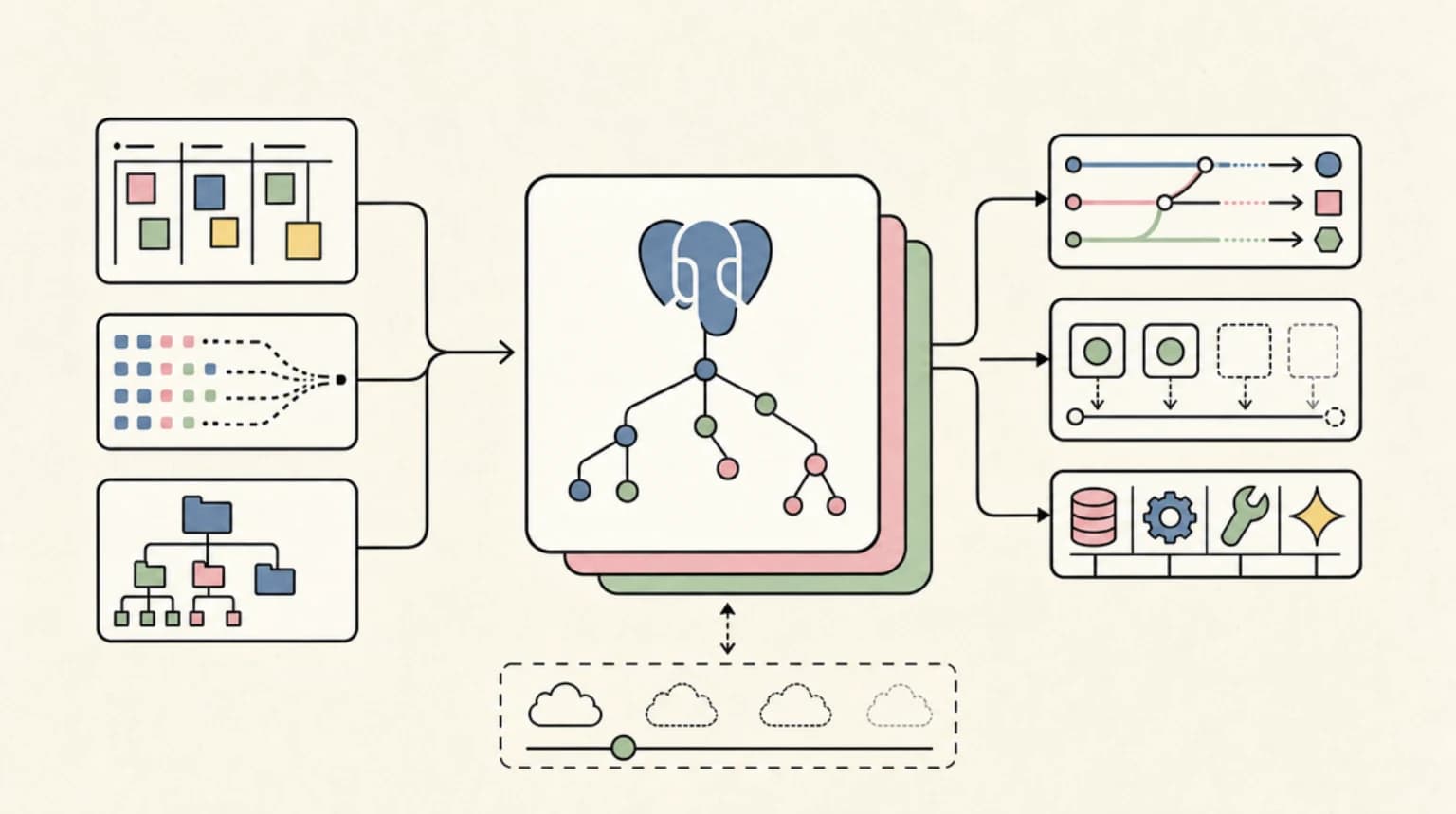
PGSimCity: A 3D Interactive City That Visualizes How PostgreSQL Works
PGSimCity is an explorable 3D city that models PostgreSQL internals - shared buffers, WAL, autovacuum, checkpoints, and...
9 min read
News
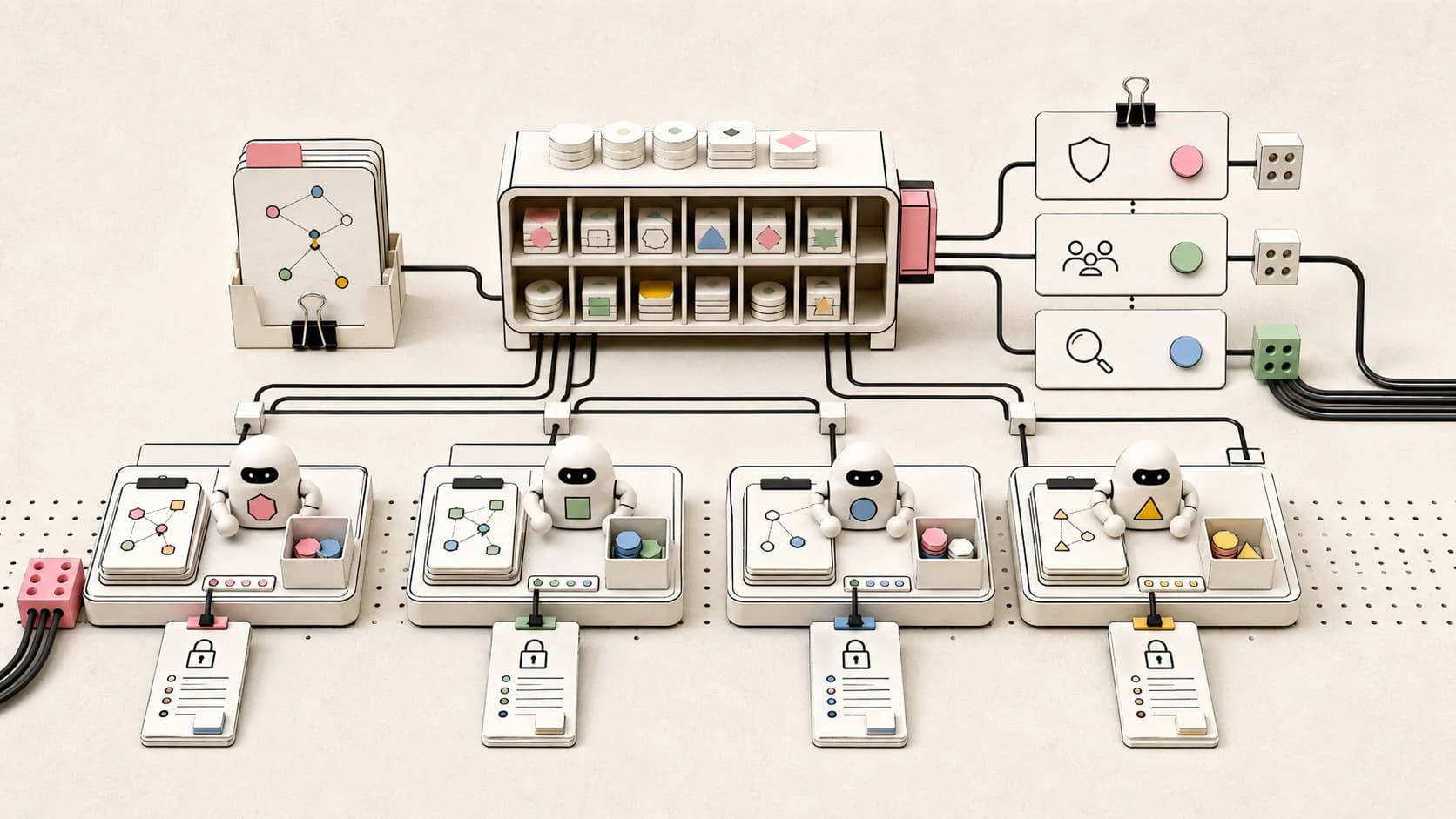
Debian Debates LLM Usage: Four Proposals, One Fork in the Road
Debian is voting on four proposals to regulate LLM-generated contributions - from an outright ban to full acceptance. Th...
5 min read
News
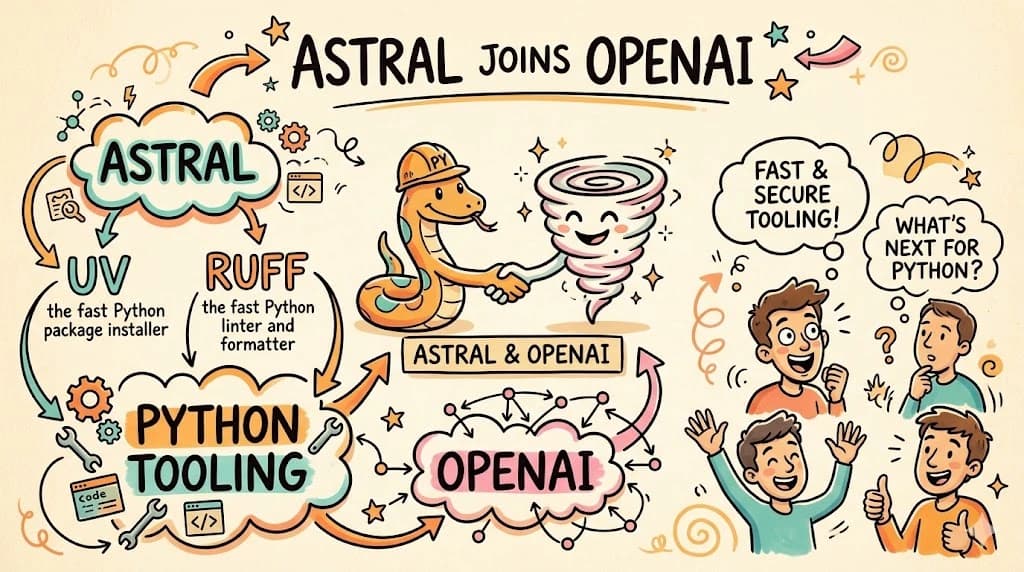
Ruff v0.16.0: 413 Default Rules, Markdown Formatting, and What Zero-Config Linting Means for Python
Ruff v0.16.0 ships 413 default rules (up from 59), Markdown code-block formatting, and a new ruff: ignore system. Here i...

6 min read
News
How My Images Are Dithered - Simulating Halftone Printing with ImageMagick
A technical deep dive into AM halftoning with ImageMagick hit the HN front page at 195 points. We break down the techniq...
Build with the member tools

Get Smarter About AI Dev
New tutorials, open-source projects, and deep dives on coding agents - delivered weekly.
One email per weekReal code, not theoryFree forever