Agent Identity Is the Missing Security Layer for AI Workflows
TL;DR
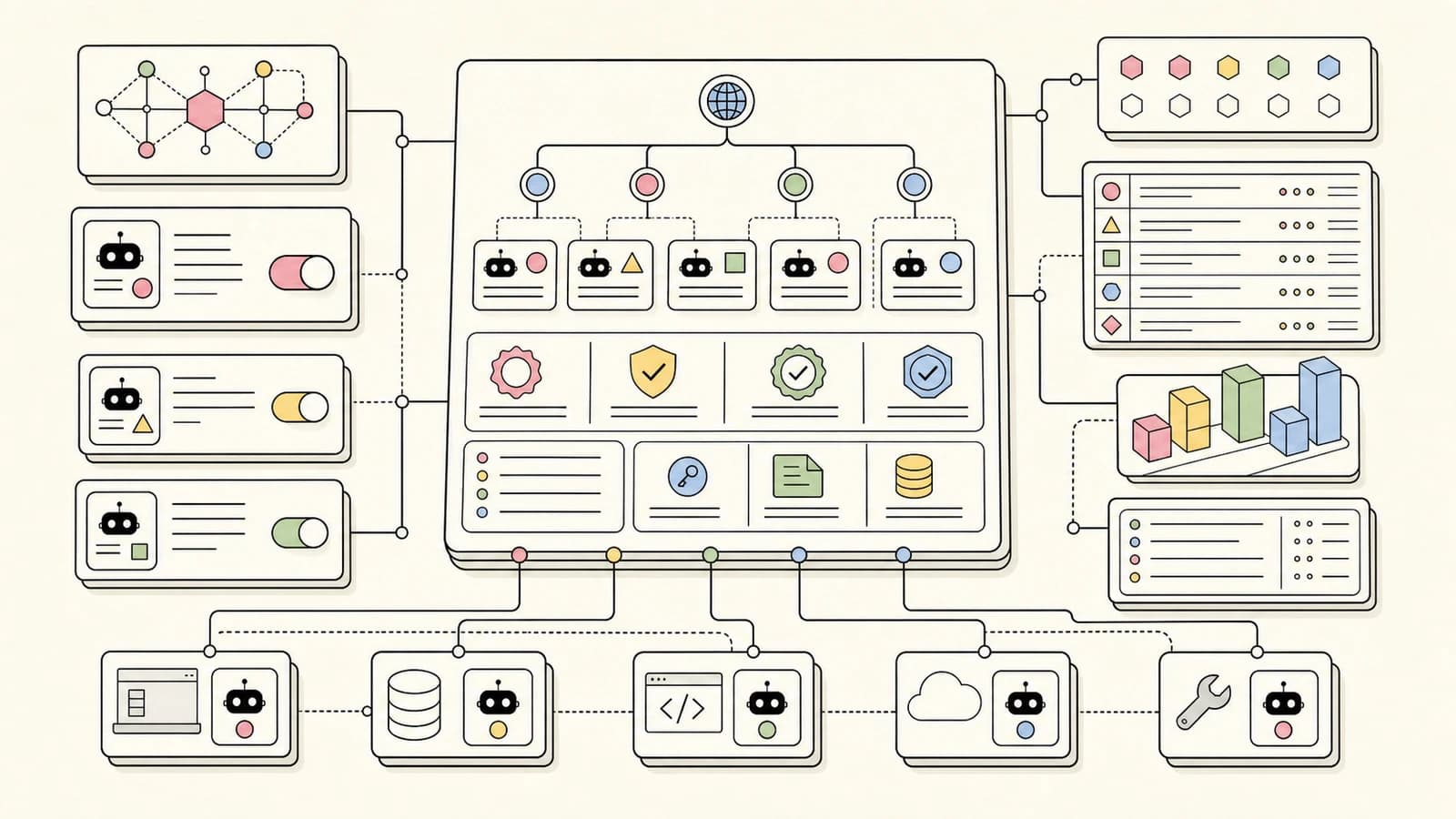
The Linux Foundation's Agent Name Service proposal points at a real gap in AI agent infrastructure: agents need verifiable identity, scoped capabilities, revocation, and audit trails before they can safely act across tools.
Official Sources#
| Source | Description |
|---|---|
| Linux Foundation ANS Announcement | Official announcement of Agent Name Service for AI agent identity |
| Model Context Protocol Specification | MCP protocol spec governing tool connections |
| OAuth 2.0 Security Best Current Practice (RFC 9700) | OAuth security guidance for authorization flows |
| OpenID Connect Core | Identity layer on OAuth 2.0 for authentication |
| SPIFFE Identity Standard | Service identity framework for workloads |
The Linux Foundation announced its intent to launch the Agent Name Service, or ANS, as trusted identity infrastructure for AI agents.
The short version: agent identity is becoming a platform problem.
The proposal describes an open standard built on DNS so agents can discover each other, verify identity, advertise capabilities, and establish trust relationships across organizations. That sounds abstract until you connect it to the tools developers are already wiring into agents: MCP servers, Slack connectors, code hosts, ticket systems, browsers, databases, and production logs.
Last updated: June 30, 2026
Google Trends was light on AI/developer signals during this pass. The only clean trend-led post today was Cerebras and AI inference demand. This one came from Hacker News and the Linux Foundation source, but it fits the same filter: a fresh story only matters here if it changes how developers build or operate AI workflows.
Why Agent Identity Matters#
Most agent security conversations start too late.
Teams ask whether the model is safe, whether a prompt is well written, or whether a tool call should be approved. Those questions matter, but they assume the system already knows who the agent is and what it is allowed to do.
That assumption breaks down fast.
Imagine three agents interacting with the same company systems:
| Agent | Legitimate job | Risk without identity |
|---|---|---|
| release agent | open PRs, summarize CI, request approval | can be confused with a human committer or another automation |
| support agent | read tickets and propose replies | may access customer records outside its scope |
| security agent | inspect logs and dependency changes | may be allowed to perform actions meant only for analysis |
If those agents are only "the thing behind this API key," governance gets messy. You cannot cleanly answer which agent acted, which task authorized it, which tools it touched, and whether its privileges should still exist tomorrow.
That is why agent identity belongs next to the agent containment capability ledger. A capability ledger says what an agent can touch. Identity says which agent is asking, how that claim is verified, and whether the request is still valid.
DNS Is Boring in the Right Way#
The Linux Foundation framing matters because ANS is not pitched as another app-specific registry. It is pitched as open infrastructure that builds on DNS.
That is a pragmatic direction. DNS is already the internet's boring naming substrate. Developers understand domains, records, ownership, delegation, and lookup. Security teams understand that DNS is not magic, but it is a durable place to start for discoverability and administrative control.
For agents, a naming layer could eventually answer questions like:
- What organization controls this agent identity?
- Which public key or verification material is associated with it?
- Which capabilities does it advertise?
- Which endpoint or protocol should another system use to reach it?
- Has this identity been revoked or rotated?
- Is this the same agent that acted in a previous workflow?
Those answers do not make the agent safe by themselves. They make safety enforceable.
That distinction matters. We just covered how cybersecurity skills for AI agents can become runtime infrastructure only when paired with provenance, tests, and abuse boundaries. Agent identity has the same shape. A name is useful only when the runtime can tie it to policy and logs.
From the archive
Agent PR Governance: The New Rules for Copilot Reviews
Jun 23, 2026 • 8 min read
Agent Sandbox Architecture: How to Choose the Right Runtime Boundary
Jun 23, 2026 • 8 min read
Agent Workflows as Code: Why State Machines Beat Prompt Checklists
Jun 23, 2026 • 8 min read
AI's Affordability Crisis Is Really an Agent Cost Accounting Problem
Jun 23, 2026 • 8 min read
Identity Is Not Authorization#
The easiest mistake is treating identity as the whole security model.
It is not.
A verified agent can still be over-permissioned. A legitimate agent can still be prompt-injected. A known identity can still perform the wrong action if the surrounding workflow is sloppy.
The better model is layered:
- Identity: who is this agent?
- Scope: what is it allowed to access?
- Intent: what task is it currently executing?
- Evidence: what inputs and approvals led to the action?
- Revocation: how do we shut it down or rotate trust?
- Audit: can we reconstruct what happened?
This is the same reason permissions, logs, and rollback matter for coding agents. The identity layer tells you which agent opened the pull request. The permission layer tells you whether it was allowed to touch those files. The log layer tells you why it did so. The rollback layer lets you recover when the answer was wrong.
Without all four, identity becomes a nice label on an unsafe system.
The MCP Connection#
MCP made this problem more urgent.
Once agents can connect to tool servers, identity is no longer just a UI concern. It becomes part of protocol trust.
If an agent calls a local file server, a Slack connector, a database helper, and a code-review tool in the same task, every hop needs a defensible answer to the same questions:
- Is this the expected agent?
- Is the user or organization behind it known?
- Is the current task allowed to use this tool?
- Are the requested scopes narrower than the agent's total identity?
- Can the tool log the action against the right actor?
That connects directly to MCP zero-touch OAuth. OAuth can help authorize a tool connection, but the broader system still needs stable agent identity and task-level boundaries. Otherwise, every connector becomes another place where "trusted automation" turns into ambient authority.
It also connects to prompt injection in agent apps. If untrusted content can steer an agent, then downstream tools should not blindly trust "the agent said so." They should evaluate identity, scope, source, and task context together.
What Developers Should Build Now#
You do not need to wait for ANS to become mature before improving your agent stack.
Start with a local identity model:
- Give each agent a stable name and owner.
- Separate agent identity from human identity.
- Give each workflow a task id.
- Log every tool call with agent id, user id, task id, and approval source.
- Keep capability grants narrow and time-bound.
- Add revocation paths for agents, keys, connectors, and tasks.
- Treat public agent instructions, repo config, and connector descriptions as untrusted until reviewed.
If you are connecting tools for the first time, use the agent security checklist before connecting tools before adding another connector. The checklist forces the basic questions that identity infrastructure eventually needs to answer automatically.
For production teams, the next useful artifact is a small agent registry:
| Field | Why it matters |
|---|---|
| agent id | stable actor for logs and review |
| owner | team accountable for behavior |
| allowed tools | prevents ambient access |
| default scopes | keeps connectors narrow |
| task types | blocks identity reuse across unrelated workflows |
| key material | enables verification and rotation |
| expiration | forces cleanup |
| incident contact | gives security teams a real handoff |
That registry can be a markdown file, database table, internal admin page, or policy-as-code config. The important part is that agent identity becomes explicit before the workflow scales.
The Practical Take#
Agent identity is not exciting because it lets agents talk to each other.
It is exciting because it makes agent behavior accountable.
The next generation of AI workflows will not be one chatbot calling one tool. It will be many agents acting across many services with different scopes, owners, and risk levels. In that world, "the model did it" is not an audit trail.
The useful question for every new agent workflow is now:
Can we prove which agent acted, why it was allowed, what it saw, what it changed, and how to revoke that trust?
If the answer is no, identity is not a nice-to-have. It is the missing layer.
FAQ#
What is Agent Name Service?#
Agent Name Service is a Linux Foundation announced effort to establish trusted identity infrastructure for AI agents, using DNS-based naming ideas for discovery, verification, and trust.
Why do AI agents need identity?#
Agents need identity so systems can distinguish one automated actor from another, apply scoped permissions, log actions correctly, and revoke trust when a workflow changes or fails.
Does identity make AI agents safe?#
No. Identity is only one layer. Agents still need scoped permissions, task boundaries, audit logs, approval paths, and revocation mechanisms.
How does agent identity relate to MCP?#
MCP makes tool access easier, which makes identity more important. Tool servers need to know which agent is calling, what task it is executing, and what scopes it should have.
Continue Reading#
- Point Your Agent at Developers Digest
- Encrypted Chain-of-Thought Is Not Private: New Paper Decodes Reasoning Traces From Anthropic, OpenAI, and Google APIs
- Vercel Passport Is GA: Deployments That Know Who Your Users Are
Sources#
Read next
AI Agent Containment Needs a Capability Ledger
Anthropic's Claude containment writeup points to the next security layer for coding agents: deterministic capability ledgers, not another approval prompt.
9 min readThe Agent Security Checklist I Use Before Connecting Tools
Before an AI agent gets tools, files, APIs, MCP servers, or deployment access, decide what it can read, write, call, log, and roll back.
8 min readPermissions, Logs, and Rollback for AI Coding Agents
AI coding agents become safer when permissions, logs, and rollback are designed as one system. Here is the operating loop I would put around any agent that can edit code, run tools, or open pull requests.
9 min readShare
Developers Digest
Technical content at the intersection of AI and development. Building with AI agents, Claude Code, and modern dev tools - then showing you exactly how it works.
300+ videos30K+ GitHub stars850+ articles
Related Tools
InfrastructureOpen source

E2B
Open-source cloud sandboxes for AI agents. Isolated environments that start in under 200ms, run code in Python, JavaScri...
View ToolAI Frameworks
C
Composio
Gives AI agents access to 250+ external tools (GitHub, Slack, Gmail, databases) with managed OAuth. Handles the auth and...
View ToolAI Frameworks

Mastra
TypeScript-first AI agent framework. Agents, tools, memory, workflows, RAG, evals, tracing, MCP, and production deployme...
View ToolMCP Tools

Glama
Largest MCP server directory with 17,000+ servers. Security grading (A/B/C/F), compatibility scoring, and install config...
View ToolApps from Developers Digest
SaaS Products
Overnight Agents
Spec out AI agents, run them overnight, wake up to a verified GitHub repo.
View AppDeveloper ToolsIn Progress
MCP Lens
Replay every MCP tool call to find why your agent went sideways.
View AppDeveloper ToolsIn Progress
Key Vault
Document API key ownership, rotation context, and integration notes without storing secrets.
View AppRelated Guides
Guide
Claude Code Complete Course
A complete, citation-backed Claude Code course with setup, prompting systems, MCP, CI, security, cost controls, and capstone workflows.
ai-developmentGuide
Claude Code Setup Guide
Configure Claude Code for maximum productivity -- CLAUDE.md, sub-agents, MCP servers, and autonomous workflows.
AI AgentsGuide
MCP Servers Explained
What MCP servers are, how they work, and how to build your own in 5 minutes.
AI AgentsRelated Videos

Buzz: Open-Source Collaboration for Humans + AI Agents
Buzz by Block: Open-Source Slack-Style Collaboration for Humans + AI Agents (Demo & Setup) Check out Arcade: https://arcade.dev.plug.dev/xiDRwlA Repo: https://github.com/block/buzz The video introd...
Video·

Agents 101: How to Build and Deploy Anything with AI Agents
Build Anything with Vercel, the Agentic Infrastructure Stack Check out Vercel: https://vercel.plug.dev/cwBLgfW The video shows a behind-the-scenes walkthrough of how the creator rapidly builds and d...
Video·
TRAE: Custom AI Agents That Actually Understand Your Codebase
Check out Trae here! https://tinyurl.com/2f8rw4vm In this video, we dive into @Trae_ai a newly launched AI IDE packed with innovative features. I provide a comprehensive demonstration...
Video·
Related Posts
9 min read
AI Agents
AI Agent Containment Needs a Capability Ledger
Anthropic's Claude containment writeup points to the next security layer for coding agents: deterministic capability led...
8 min read
AI Security
The Agent Security Checklist I Use Before Connecting Tools
Before an AI agent gets tools, files, APIs, MCP servers, or deployment access, decide what it can read, write, call, log...
9 min read
AI Security
Permissions, Logs, and Rollback for AI Coding Agents
AI coding agents become safer when permissions, logs, and rollback are designed as one system. Here is the operating loo...
8 min read
AI Security
Prompt Injection in Agent Apps: The Practical Version
Prompt injection stops being an abstract LLM risk once an agent can call tools. The practical defense is data boundaries...

8 min read
MCP
Zero-Touch OAuth Is the MCP Feature Enterprises Were Waiting For
MCP's new enterprise-managed authorization flow is not just less login friction. It moves agent tool access into identit...
8 min read
AI Agents
Cybersecurity Skills for AI Agents Are Becoming Runtime Infrastructure
A GitHub-trending library of Anthropic cybersecurity skills points at the next agent security layer: framework-mapped pl...
Build with the member tools

Get Smarter About AI Dev
New tutorials, open-source projects, and deep dives on coding agents - delivered weekly.
One email per weekReal code, not theoryFree forever