Cerebras Stock Is a Public Test of AI Inference Demand
TL;DR
Google Trends put CBRS stock on the board after Cerebras' first public-company earnings. The developer takeaway is not a trade. It is that AI inference demand is now being priced, questioned, and audited in public.
CBRS stock showed up in the United States Google Trends feed today after Cerebras reported its first earnings as a public company.
That is not just a finance story.
For developers, it is a useful signal that AI inference infrastructure has crossed into a more measurable phase. The market is not only asking whether a chip company has a better architecture. It is asking whether fast inference can become durable revenue, how much margin the compute buildout consumes, and whether large AI customers turn into a repeatable business rather than one dramatic backlog number.
Last updated: June 23, 2026
This is not investment advice. The more useful lens for Developers Digest is operational: what does public-market scrutiny reveal about the infrastructure layer underneath coding agents, chat apps, model routers, and AI-native products?
What Happened#
Google Trends' US daily feed surfaced cbrs stock today with related coverage around Cerebras' first earnings report since its IPO.
The numbers in current market coverage point in the same direction:
| Signal | What it suggests |
|---|---|
| Q1 revenue came in around $193 million in multiple reports | demand for non-GPU AI infrastructure is real enough to measure publicly |
| year-over-year revenue growth was reported in the low-to-mid 90% range | the category is still in rapid expansion mode |
| shares fell after hours despite the revenue beat | investors are looking past growth and into margins, concentration, and execution risk |
| guidance for the next quarter was above several analyst expectations | buyers still appear to be pulling compute capacity forward |
The tension is the story. Cerebras can show strong revenue growth and still face pressure because AI infrastructure is expensive to build, hard to forecast, and exposed to a small number of very large customers.
That is the same pattern developers feel one layer up. AI products can look magical in a demo and still run into token budgets, latency ceilings, approval loops, review queues, and vendor concentration.
The Developer Angle#
Cerebras is already in the Developers Digest tools directory as an AI infrastructure provider. The product pitch is simple: wafer-scale systems and very fast inference, exposed through developer-facing APIs and partnerships.
The public-market version of that pitch is less simple.
Developers care about:
- time to first token
- output tokens per second
- model availability
- OpenAI-compatible APIs
- reliability during spikes
- price per million tokens
- enough capacity for real users
Public investors care about:
- revenue growth
- gross margin
- customer concentration
- capex intensity
- backlog quality
- guidance
- whether large AI contracts convert into profitable recurring demand
Those lists are now connected.
If a provider has to spend aggressively to serve inference demand, that can eventually affect pricing, rate limits, model availability, enterprise contracts, and which workloads get priority. If one or two strategic customers dominate demand, that can affect roadmap incentives. If the economics improve, developers get a larger menu of fast inference options.
That is why CBRS stock belongs in an AI developer publication. The ticker is just the visible part of the infrastructure question.
Why Fast Inference Matters#
Fast inference is not only a vanity benchmark.
It changes product shape:
- voice agents feel conversational instead of staged
- coding agents can iterate through tests faster
- model routers can afford retries and fallbacks
- UI copilots can respond before users context-switch
- long-running agents can spend less wall-clock time waiting on model output
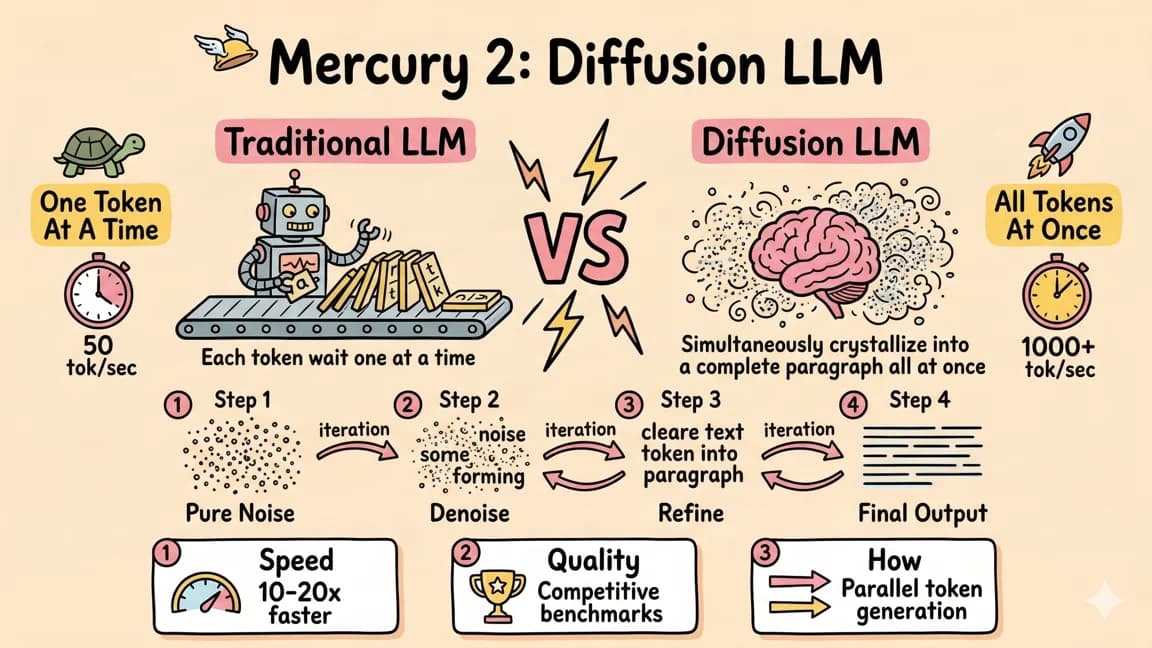
We saw a related pattern in diffusion language models: speed can come from architecture, not only hardware. We saw it again in Windsurf's SWE model infrastructure, where fast serving changes how an AI coding tool feels in the editor.
Cerebras represents the hardware-heavy version of the same bet. If inference becomes cheap and fast enough, product teams can design around agent loops instead of treating every model call as a scarce event.
The hard part is that cheap, fast, reliable, and profitable do not automatically arrive together.
From the archive
Claude Outages Are a Workflow Design Problem
Jun 23, 2026 • 7 min read
Anthropic Claude Tag Turns Slack Into a Shared Agent Workspace
Jun 23, 2026 • 8 min read
Codex-Maxxing: How to Run Long-Running Codex Workflows Without Losing the Plot
Jun 23, 2026 • 8 min read
Cybersecurity Skills for AI Agents Are Becoming Runtime Infrastructure
Jun 23, 2026 • 8 min read
The Market Is Asking the Right Questions#
The useful market pushback is not "AI is fake."
It is more specific:
- Can non-GPU infrastructure scale without destroying margin?
- Are large AI customers durable customers or launch-window accelerants?
- Does speed command a premium, or does it quickly get competed away?
- How much capacity must be built before revenue arrives?
- Do developers route meaningful workloads to specialized providers, or keep defaulting to model vendors and hyperscalers?
Those are also product questions.
If you are building an AI app, model routing is no longer just about picking the smartest model. It is about matching latency, cost, reliability, and vendor risk to the task.
A fast inference provider can be the right answer for:
- real-time coding suggestions
- voice interfaces
- high-volume batch summarization
- agent loops with many short turns
- retrieval workflows where model latency dominates database latency
It may be the wrong answer if the workload needs a model that is unavailable, a compliance posture the vendor cannot support, or a cost profile that only works at promotional pricing.
What to Watch Next#
For developers, the next Cerebras questions are practical:
- Does the API remain easy to integrate into OpenAI-compatible stacks?
- Do latency and throughput claims hold under normal developer workloads?
- How many production models are actually available?
- Does pricing stay predictable as public-company pressure increases?
- Do OpenAI, AWS, or other large partnerships improve capacity for everyone, or absorb the best capacity first?
Those are the same questions any team should ask before moving traffic to a specialized inference provider.
The finance section matters here too. The site now has market pages where readers can continue from the article into public-company data. For this story, the useful follow-up is CBRS filings, CBRS market cap, and the broader markets filings feed.
The goal is not to turn Developers Digest into a stock-picking site. It is to make the infrastructure layer easier to inspect when the companies behind that layer become public.
My Take#
Cerebras' first earnings report is a useful reminder that the AI stack has two scoreboards now.
One scoreboard is technical: latency, throughput, model quality, API ergonomics, and developer trust.
The other is financial: revenue growth, margins, backlog, customer concentration, and capital intensity.
For the next wave of AI infrastructure, both scoreboards matter. Developers may not care about every quarterly number, but they should care when those numbers explain why an API is fast, cheap, rate-limited, repriced, deprioritized, or suddenly strategic.
Google Trends catching CBRS stock is a small signal. The bigger signal is that AI inference is no longer only a benchmark chart. It is a public-market operating system constraint.
FAQ#
Why is Cerebras relevant to developers?#
Cerebras sells AI infrastructure and inference capacity. If fast inference becomes easier to buy through APIs, developers can build lower-latency agents, coding tools, voice interfaces, and high-volume AI workflows.
Is this a stock recommendation?#
No. This post uses the public-market reaction as an infrastructure signal. It is not investment advice and does not recommend buying or selling CBRS.
What did Google Trends show?#
The United States Google Trends daily RSS feed surfaced cbrs stock on June 23, 2026, with related news coverage about Cerebras' first public-company earnings report.
What should developers watch after Cerebras earnings?#
Watch API availability, real-world latency, pricing stability, supported models, reliability during traffic spikes, and whether large strategic customers affect capacity for normal developer workloads.
How does this connect to model routing?#
Model routing is about assigning each task to the right provider. A specialized inference provider can be valuable when speed matters, but teams still need fallbacks, cost controls, and a clear policy for vendor concentration.
Sources#
Fetched June 23, 2026.
Read next
Model Routing Recipes: Practical Config Patterns to Cut AI Spend
A code-heavy field guide to model routing. Real, runnable-style configs for tiering tasks by complexity, routing simple work to open-weights, reserving frontier models for hard reasoning, building failover chains, and keeping prompt caches warm with OpenRouter, LiteLLM, and Factory Router.
11 min readDiffusion Language Models: How Mercury Changed the LLM Speed Game
Inception Labs launched Mercury, the first commercial-grade diffusion large language model. It generates over 1,000 tokens per second on standard Nvidia hardware by replacing autoregressive generation with a coarse-to-fine diffusion process.
7 min readWindsurf SWE-1.5 Launches Same Day as Cursor 2.0
On October 29th, both Cursor and Windsurf dropped their first in-house models on the same day. Composer vs SWE-1.5. Here's what the benchmarks actually show.
8 min readShare
Developers Digest
Technical content at the intersection of AI and development. Building with AI agents, Claude Code, and modern dev tools - then showing you exactly how it works.
300+ videos30K+ GitHub stars850+ articles
Related Tools
Infrastructure

Cerebras
Wafer-scale AI inference at 3,000+ tokens/sec. The WSE-3 chip has 4 trillion transistors and 900K AI cores. 20x faster t...
View ToolInfrastructure

Together AI
Fastest inference for open-source models. 200+ models via unified API. Ranks #1 on speed benchmarks for DeepSeek, Qwen,...
View ToolInfrastructure

Replicate
Run 50,000+ ML models with a simple API. No infrastructure management. Pay-per-second billing. Deploy custom models with...
View ToolInfrastructure

Groq
LPU-powered inference delivering 500-1,000+ tokens/sec. Purpose-built chip with on-chip SRAM instead of HBM. 5-10x faste...
View ToolRelated Guides
Related Videos

Related Posts
11 min read
pricing
Model Routing Recipes: Practical Config Patterns to Cut AI Spend
A code-heavy field guide to model routing. Real, runnable-style configs for tiering tasks by complexity, routing simple...
7 min read
Diffusion Models
Diffusion Language Models: How Mercury Changed the LLM Speed Game
Inception Labs launched Mercury, the first commercial-grade diffusion large language model. It generates over 1,000 toke...

8 min read
Windsurf
Windsurf SWE-1.5 Launches Same Day as Cursor 2.0
On October 29th, both Cursor and Windsurf dropped their first in-house models on the same day. Composer vs SWE-1.5. Here...

12 min read
AI Coding
AI Coding Tools Pricing Comparison 2026
Complete pricing breakdown for every major AI coding tool. Claude Code, Cursor, Copilot, Windsurf, Codex, Augment, and m...
8 min read
enterprise
Enterprise AI Coding Budget Blowouts: What Uber and Microsoft Teach Us
Uber burned through its entire 2026 AI tools budget by April. Microsoft is canceling Claude Code licenses company-wide....
7 min read
News
Cloudflare Runs Kimi and GLM at Scale: FP8 KV Caches, INT4 Weights, and a Cache Safety Net
Cloudflare published the serving playbook behind Workers AI running Moonshot Kimi K2.6 and Zhipu GLM 5.2: FP8 KV caches...
Build with the member tools

Get Smarter About AI Dev
New tutorials, open-source projects, and deep dives on coding agents - delivered weekly.
One email per weekReal code, not theoryFree forever