Anthropic Claude Tag Turns Slack Into a Shared Agent Workspace
TL;DR
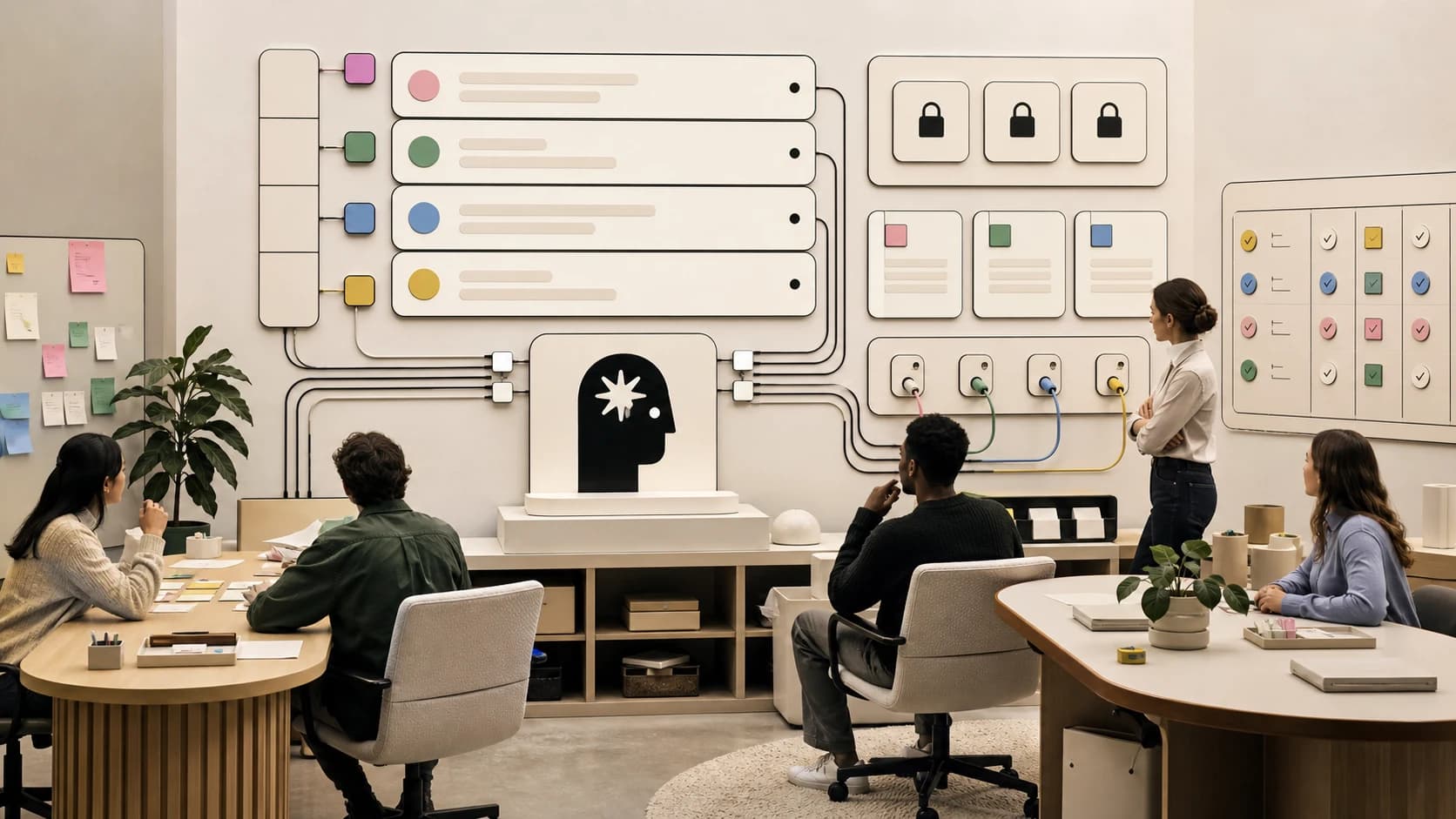
Claude Tag is Anthropic's new Slack-based beta for Team and Enterprise users. The important shift is not chat convenience - it is shared agent identity, channel context, and team-visible work.
Anthropic released Claude Tag today, and the easy headline is "Claude comes to Slack." That undersells it.
The more interesting shift is that Claude is becoming a team-visible participant in the place where work already gets assigned, debated, and handed off. Instead of asking an AI assistant a private question, a channel can tag Claude into a shared thread, give it context from the conversation, and let the team see the result.
That changes the shape of agent work.
Last updated: June 23, 2026
Claude Tag is in beta for Team and Enterprise customers. Anthropic describes it as a Slack integration where you mention @Claude in channels or direct messages, then Claude works through the task and responds in-thread. The setup is admin-controlled, channel-scoped, and tied to tool access that administrators define. Anthropic also says Claude Tag replaces the previous Claude in Slack app and currently works with Opus 4.8.
The product detail matters, but the real question for developers is larger:
What happens when the default interface for an agent is not a private chat window, terminal session, or API call, but a shared team channel?
What Anthropic Actually Shipped#
Based on Anthropic's launch post and docs, Claude Tag gives Slack workspaces a first-party way to invoke Claude in normal Slack conversations. The basic flow is intentionally simple:
- A workspace admin installs and configures Claude Tag.
- A user mentions
@Claudein Slack. - Claude reads the relevant thread or channel context available to it.
- Claude replies in Slack so the team can review, continue, or correct the work.
Anthropic positions it around everyday team work: summarizing threads, answering questions, drafting follow-ups, turning scattered discussion into action items, and helping teams keep momentum without leaving Slack.
That sounds familiar because Slack has had AI features and bot integrations for years. The difference is the Anthropic-native identity and model surface. Claude Tag connects Claude directly to a shared collaboration layer, rather than forcing every team to build its own Slack bot, OAuth flow, prompt wrapper, and permission model.
The boldest line in the launch post is Anthropic's own internal usage claim: the company says 65% of its product team's code is created by its internal version of Claude Tag. Treat that as vendor-reported evidence, not a neutral benchmark. Still, it tells you how Anthropic wants teams to understand the product: not as a notification bot, but as a multiplayer agent interface for real work.
For a developer team, this is not just another chatbot. It is a new place for agent work to start.
Why Slack Is a Serious Agent Surface#
Most teams already treat Slack as a semi-structured operating system:
| Work Pattern | What Slack Already Holds |
|---|---|
| Incident response | timeline, owners, symptoms, links, decisions |
| Product planning | requirements, debates, launch notes, objections |
| Code review escalation | PR links, reviewer context, blockers |
| Customer support | issue summaries, screenshots, account details |
| Daily operations | reminders, handoffs, status, follow-ups |
That context is usually trapped in human conversation. Agents can operate on it only when someone manually copies the useful parts into a prompt.
Claude Tag reduces that copying step. A team can bring Claude to the thread where the context already exists.
This pairs with the broader Anthropic pattern we covered in Claude Code remote control: Claude is moving from one private prompt box toward many operational surfaces. Remote sessions, scheduled tasks, managed agents, and now Slack mentions all point in the same direction. The assistant is becoming ambient infrastructure around the team's work loop.
The Useful Developer Workflows#
The obvious use cases are summaries and drafts. The better ones are workflow handoffs.
1. Incident Threads#
During an incident, Slack usually becomes the source of truth before the postmortem exists. Claude Tag can help turn the live thread into:
- a timeline
- current hypothesis
- commands already tried
- open questions
- next owner
- customer-facing update draft
The important detail is that the answer happens in the same thread. Other engineers can correct Claude immediately, which is safer than one person privately asking an assistant and pasting back a polished summary that nobody can audit.
2. PR and Release Coordination#
Developer teams already paste GitHub, Linear, Jira, Sentry, and deploy links into Slack. Claude Tag can sit on top of that coordination layer:
- summarize the current blocker
- list which links still need action
- draft a release note from the discussion
- extract follow-up tasks
- identify who made which decision
It does not replace CI, code review, or release tooling. It makes the messy conversation around those tools more legible.
This is exactly the kind of boundary we discussed in Claude Code routines vs managed agent schedules: recurring and operational agent work needs the right identity, trigger, and review surface. Slack is a natural trigger and review surface for team-visible work.
3. Support-to-Engineering Handoffs#
Support and solutions teams often have the best customer context, while engineering has the fix path. Slack is where that context gets compressed, sometimes badly.
Claude Tag can help turn a long support thread into:
- reproduction steps
- impacted accounts
- observed symptoms
- suspected subsystem
- missing evidence
- escalation note for engineering
The win is not that Claude knows the product perfectly. The win is that it can create a first draft of the handoff in the same place the people with context are already talking.
4. Meetingless Planning#
Teams that avoid meetings often replace them with long Slack threads. That works until the thread becomes too long to re-enter.
A channel-native Claude can summarize the current decision, arguments for each option, unresolved objections, and suggested next step. That is especially useful when the alternative is another meeting where everyone replays the thread from memory.
From the archive
Codex-Maxxing: How to Run Long-Running Codex Workflows Without Losing the Plot
Jun 23, 2026 • 8 min read
Cybersecurity Skills for AI Agents Are Becoming Runtime Infrastructure
Jun 23, 2026 • 8 min read
Envoy AI Gateway 1.0 Makes LLM Routing an Infrastructure Decision
Jun 23, 2026 • 8 min read
F3 Is a Reminder That File Formats Are Becoming Runtime Contracts
Jun 23, 2026 • 7 min read
The Governance Questions Matter More Than the Demo#
The demo version is easy: tag Claude, get a helpful answer.
The production version is more serious:
- Which channels can Claude access?
- Can Claude read private channels?
- What context does it receive from a thread?
- Can admins disable it for sensitive workspaces?
- What data retention policy applies?
- Are Slack messages used to improve models?
- How are user identities and audit logs handled?
- Can security teams review usage?
Anthropic says administrators can define which tools and information Claude can access in which channels, keep memories scoped to those channel-defined identities, set token-spend limits, and review a log of what Claude did and who requested each task. Those controls are the right shape. Teams still need to decide their own policy before putting Claude in sensitive channels.
The broader rule is stable: once an agent enters Slack, it enters the company's social and operational memory. That requires tighter policy than a personal assistant.
This is also why the feature fits into the Anthropic vs OpenAI developer experience comparison. Anthropic keeps pushing toward opinionated work surfaces: Claude Code, Team/Enterprise controls, managed agents, and now a first-party Slack presence. OpenAI has its own connector and agent platform story, but Anthropic's product direction is increasingly about embedding Claude where work already happens.
Slack Connector vs MCP Server#
Developers may ask why this matters if Slack MCP servers already exist.
The answer is that they solve different problems.
An MCP Slack server gives an agent tool access to Slack. Claude Tag gives Slack users a first-party way to summon Claude inside Slack.
| Approach | Starts From | Best For |
|---|---|---|
| Slack MCP server | agent runtime | agent reads/posts Slack as one tool among many |
| Claude Tag | Slack thread | humans bring Claude into shared team context |
| Custom Slack bot | internal app | bespoke workflows and strict company-specific policy |
If you are building an internal agent platform, an MCP server or custom bot may still be the right path. If your team already uses Claude and wants shared Slack-native assistance without building the integration layer, Claude Tag is the simpler product move.
For deeper protocol context, start with our complete MCP server guide. MCP is the tool interface story. Claude Tag is the collaboration surface story.
The Risk: Slack Becomes Another Prompt Dump#
The strongest counterargument is that Slack is already noisy. Adding an AI participant can make it worse.
Bad Claude Tag usage will look like this:
- every thread gets summarized whether it needs it or not
- people tag Claude instead of reading the thread
- sensitive context gets pulled into channels too casually
- action items appear without clear owners
- teams accept polished summaries without checking facts
That is not a model problem. It is a workflow problem.
The best teams will create simple norms:
- Tag Claude when there is a concrete output needed.
- Ask for receipts, not vibes.
- Keep sensitive channels out unless policy is clear.
- Assign a human owner to every Claude-generated action list.
- Treat summaries as drafts until someone validates them.
This is the same principle behind agent workspaces needing filesystem contracts. Shared agents need boundaries. In Slack, the boundary is not a directory. It is a channel, thread, audience, and retention policy.
My Take#
Claude Tag is not important because Slack needed another assistant. It is important because team agents need shared interfaces.
Private chat is good for exploration. Terminals are good for implementation. APIs are good for production systems. Slack is good for coordination, context, and accountability.
That makes it a natural home for a certain class of agent work:
- summarize
- hand off
- triage
- draft
- extract decisions
- keep a shared thread moving
The mistake would be asking Slack Claude to become the whole agent platform. The opportunity is narrower and more useful: make the messy human coordination layer easier to convert into reviewed, assigned, trackable work.
For engineering teams, that is enough to matter.
FAQ#
What is Claude Tag?#
Claude Tag is Anthropic's Slack-based beta that lets Team and Enterprise users mention Claude from Slack and get responses in the conversation context.
Is Claude Tag the same as a Slack MCP server?#
No. A Slack MCP server gives an agent tool access to Slack from an agent runtime. Claude Tag starts inside Slack, so humans can bring Claude into a shared team thread directly.
Who can use Claude Tag?#
Anthropic says Claude Tag is available in beta for Team and Enterprise customers. Admin setup and access controls should be checked against the current Anthropic docs before rollout.
What is the best developer use case?#
Incident summaries, PR coordination, support-to-engineering handoffs, and planning-thread synthesis are the strongest early use cases because they already happen in Slack and benefit from shared review.
What should teams decide before enabling it?#
Decide which channels Claude can access, what data retention policy applies, how usage is audited, and when a human must validate Claude's output before it becomes an action item.
Sources#
Fetched June 23, 2026.
Read next
Claude Code: Remote Control, Auto Memory, Plugins & More
Anthropic dropped a batch of updates across Claude Code and Cowork - remote control from your phone, scheduled tasks, plugin repos, auto memory, and stats showing 4% of GitHub public commits now come from Claude Code.
5 min readClaude Code Routines vs Managed Agents Schedules: Where Recurring Agent Work Should Live
Claude Code Routines and Managed Agents scheduled deployments both run Claude on a schedule - here is how the triggers, pricing, and limits differ, and which one fits your recurring agent work.
9 min readAnthropic vs OpenAI: Developer Experience Compared
Two platforms, two philosophies. Here is how Anthropic and OpenAI compare on APIs, SDKs, documentation, pricing, and the actual experience of building with each.
8 min readShare
Developers Digest
Technical content at the intersection of AI and development. Building with AI agents, Claude Code, and modern dev tools - then showing you exactly how it works.
300+ videos30K+ GitHub stars850+ articles
Related Tools
AI CodingDaily Driver

Claude Code
Anthropic's agentic coding CLI. Runs in your terminal, edits files autonomously, spawns sub-agents, and maintains memory...
View ToolAI FrameworksNew

Claude Agent SDK
Anthropic's Python SDK for building production agent systems. Tool use, guardrails, agent handoffs, and orchestration. R...
View ToolAI Models
Claude Opus 4.7
Anthropic's flagship reasoning model. Best-in-class for coding, long-context analysis, and agentic workflows. 1M token c...
View ToolAI ModelsNew
Claude Fable 5
Anthropic's first generally available Mythos-class model, released June 9, 2026. 1M context, 128K max output, $10/$50 pe...
View ToolApps from Developers Digest
Developer ToolsIn Progress
Skill Builder
Turn a one-liner into a working Claude Code skill. From idea to installed in a minute.
View AppDeveloper Tools
Agent Hub
Every coding agent in one window. Stop alt-tabbing between Claude, Codex, and Cursor.
View AppDeveloper ToolsIn Progress
Subagent Studio
Design subagents visually instead of editing YAML by hand.
View AppRelated Guides
Guide
Claude Code Setup Guide
Configure Claude Code for maximum productivity -- CLAUDE.md, sub-agents, MCP servers, and autonomous workflows.
AI AgentsGuide
AI Agent Frameworks Compared: LangGraph vs CrewAI vs Mastra vs CopilotKit
Deep comparison of the top AI agent frameworks - LangGraph, CrewAI, Mastra, CopilotKit, AutoGen, and Claude Code.
AI AgentsGuide
Agent Teams - Claude Code
Coordinate multiple Claude Code instances with a shared task list.
Claude CodeRelated Videos
Anthropic's Cowork: Claude Code for the Rest of Your Work
In this video, we dive into Anthropic's newly launched Cowork, a user-friendly extension of Claude Code designed to streamline work for both developers and non-developers. This discussion includes an
Video·
Anthropic's Claude Opus 4.5 in 5 Minutes
In this video, we dive into Anthrop's latest release, Claude Opus 4.5, touted as the best model for coding agents and computer use. We review the blog post and significant announcements, such...
Video·
Anthropic’s Claude Haiku 4.5 in 6 Minutes
Anthropic releases Claude Haiku 4.5, a faster, more cost-effective model for coding tasks, rivaling previous models and competitors. While maintaining similar performance to Claude Sonnet 4,...
Video·
Related Posts
5 min read
Claude Code
Claude Code: Remote Control, Auto Memory, Plugins & More
Anthropic dropped a batch of updates across Claude Code and Cowork - remote control from your phone, scheduled tasks,...
9 min read
claude-code
Claude Code Routines vs Managed Agents Schedules: Where Recurring Agent Work Should Live
Claude Code Routines and Managed Agents scheduled deployments both run Claude on a schedule - here is how the triggers,...
8 min read
Anthropic
Anthropic vs OpenAI: Developer Experience Compared
Two platforms, two philosophies. Here is how Anthropic and OpenAI compare on APIs, SDKs, documentation, pricing, and the...
12 min read
MCP
The Complete Guide to MCP Servers
Everything you need to know about Model Context Protocol - how it works, how to install servers, how to build your own,...
8 min read
AI Agents
Agent Workspaces Need Filesystem Contracts
GitHub's latest agent workspace trend points at a boring but important primitive: agents need explicit filesystem contra...
8 min read
ai-agents
Claude Managed Agents Public Beta: What's Actually Available vs What's Gated
Claude Managed Agents is in public beta with solid sandboxing and session persistence - but the headline orchestration f...
Build with the member tools

Get Smarter About AI Dev
New tutorials, open-source projects, and deep dives on coding agents - delivered weekly.
One email per weekReal code, not theoryFree forever