Nvidia, Microsoft, Meta, and 30+ Companies Warn Against Overregulating Open-Weight AI Models
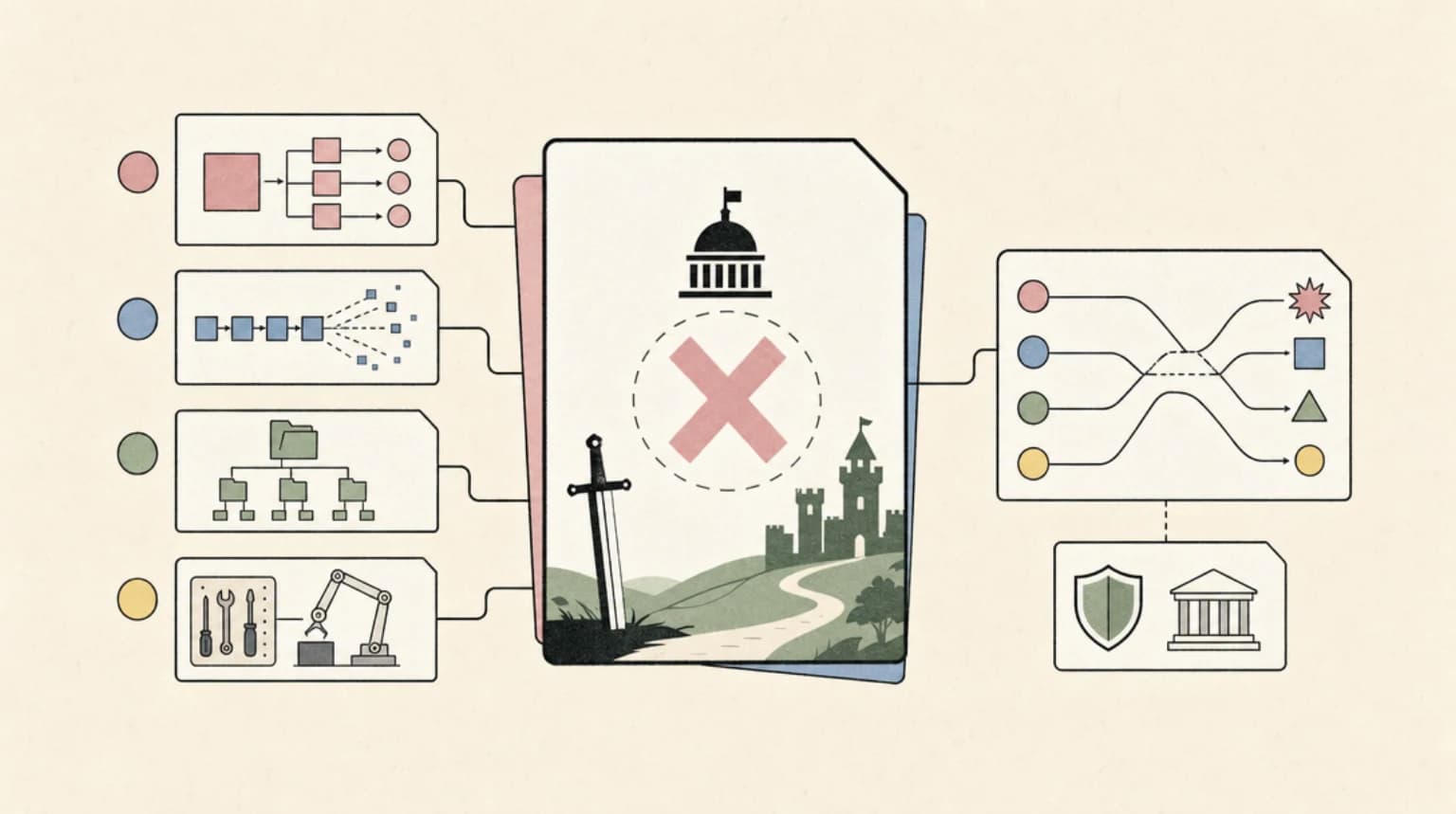
TL;DR
Nvidia, Microsoft, Meta, OpenAI, and 30+ signatories published an open letter arguing that open-weight AI models are essential to American AI leadership. The letter draws battle lines that divide Silicon Valley.
On July 24, 2026, a coalition of 35+ technology companies and organizations published an open letter titled "Open Weights and American AI Leadership" -- the strongest coordinated statement yet from the pro-open-weight camp in the escalating AI policy debate. The letter argues that restricting open-weight AI models would undermine American competitiveness, slow innovation, and concentrate AI capability in too few hands.
The signatories read like a who's-who of American tech -- Nvidia, Microsoft, Meta, OpenAI, IBM, Dell, Cisco, Palantir, GitHub, Hugging Face, Mistral, Cohere, Perplexity, Mozilla, Y Combinator, Andreessen Horowitz, and more. The absences are equally telling: Google, Amazon, Apple, and Anthropic did not sign.
The letter landed at a charged moment. The US government has been weighing restrictions on Chinese open-weight AI models, and the debate has cleaved Silicon Valley into two camps: the frontier labs (Anthropic, initially OpenAI) pushing for tighter regulation of open weights, and the infrastructure/enterprise giants who argue open access is the key to American AI dominance.
What the Letter Actually Says#
The letter draws a direct parallel to the open-source software movement of the 1980s. "Open source did more than lower the cost of software; it created a shared foundation of knowledge on which generations of American engineers and entrepreneurs built their institutional sovereignty," the letter reads. It argues that AI faces a similar inflection point.
Four core arguments structure the letter:
-
Open weights expand access. Startups, universities, and public institutions can build on advanced models without training from scratch or paying frontier-model prices. The letter frames this as an economic sustainability argument: "That discipline is what will make AI economically sustainable as its use scales into the billions of everyday tasks."
-
Competition keeps gains broadly shared. By allowing many organizations to build and deploy advanced models, open weights create "rivalry not only among model developers but across cloud chips, applications, and services." The letter warns that concentration risks a "small number of single points of failure."
-
Customer control and sovereignty. Organizations investing in AI need assurance they won't become "locked into a single provider." Open-weight models allow organizations to control their own data, evaluate and adapt models, and deploy them wherever their business requires.
-
Safety through transparency, not obscurity. The letter directly rebuts the safety-through-closed-doors argument: "Relying solely on closed models is not inherently safe: they can be breached, misused, or fail in ways that outsiders cannot detect." It argues that open weights enable broader red-teaming, vulnerability discovery, and community-driven safeguards.
The letter also weighs in on the distillation debate -- a key flashpoint after the US government accused Chinese lab Moonshot of distilling from Fable 5. It argues policymakers should "not conflate legitimate model-development techniques with misappropriation" and that distillation reflects "a long tradition of learning from, building upon, and improving existing technologies."
From the archive
Replit Agent 4: Design-to-Full App with Parallel Agents and Infinite Canvas
Jul 25, 2026 • 8 min read
A Security Camera Shipped a GitHub Admin Token in Its Login Page
Jul 25, 2026 • 6 min read
AI Agent Auth Platforms Compared: Arcade vs Composio vs Nango vs Stytch
Jul 24, 2026 • 8 min read
Claude Cookbook: Anthropic's Official Playbook for Building with Claude
Jul 24, 2026 • 7 min read
What HN Is Saying#
The Hacker News discussion (279 comments and counting) split along predictable but revealing lines. The top-voted threads center on motives, hypocrisy, and who stands to benefit.
The "commoditize your complement" reading was a major theme. Multiple commenters connected the letter to Joel Spolsky's classic strategy essay -- the idea that Intel and Microsoft wanted the PC hardware market to be commoditized so they could capture value on the software side. Commenter mlazos summarized: "I fully expect companies with lots of GPUs but not a good model like Microsoft and Amazon to just take these open weight models and make money, the GPU expense is the only moat at this point." Nvidia sells the hardware regardless of which model wins; Microsoft and Meta benefit from commoditizing the model layer since they compete on infrastructure and distribution.
The hypocrisy critique was sharp. Commenter paxys wrote: "Microsoft, NVIDIA, Meta, Palantir, IBM... They have all been actively hostile to open source for decades, and have a history of embracing it only when convenient and profitable." Commenter gaigalas pointed out: "Hey nvidia, what about making your full set of linux drivers open source?" The sentiment that these companies are only pro-open when it serves their bottom line was widespread.
The signatory list analysis generated the richest discussion. Why did OpenAI sign after reportedly opposing open weights? (The Microsoft-hosted letter page lists OpenAI as a signatory, suggesting a shift or a nuance missed in earlier coverage.) Why did Google, Amazon, and Apple stay out? Commenter austin-schick called the list "really interesting and somewhat confusing." The pattern many landed on: infrastructure sellers (Nvidia, Microsoft, Dell) signed; closed-model labs (Anthropic) and consumer-device companies (Apple) did not. Google and Amazon -- both cloud providers with frontier model ambitions -- are caught in between.
Notable absentees: Anthropic conspicuously missing. Commenter Robdel12 connected this to Anthropic's $40 million political spending on AI safety regulation: "Probably because anthropic is pouring $40 million dollars into a political pact to regulate models."
The enforcement question came up repeatedly. Commenter vatsachak argued the debate is moot because "you can't copyright a model -- you can just randomly perturb weights and still be fine." Others pointed to historical parallels with encryption export controls (the Bernstein case, DeCSS), suggesting that any ban would be unenforceable in practice.
HN moderator dang linked several related threads, including the startup founders' letter urging the US not to shut off Chinese open-weight AI (841 comments), and the ongoing discussion about whether China's open-weights strategy is winning (932 comments).
Why This Matters#
This letter represents the most significant public alignment of the infrastructure-enterprise axis in AI policy. It matters for three reasons.
First, the model layer is being commoditized in real time. The letter is a strategic acknowledgment from the companies that stand to gain from that commoditization. If AI models become a low-margin commodity (like cloud compute or internet bandwidth), the value moves to the application and infrastructure layers -- exactly where Nvidia, Microsoft, and Meta operate. The signatories aren't being altruistic; they're protecting the business models that will win in a commoditized world.
Second, the US-China AI dynamic forces everyone's hand. Chinese labs (DeepSeek, Moonshot, Alibaba's Qwen) have released increasingly capable open-weight models, and the US government has been considering restrictions. This letter is a preemptive strike against a ban that would also hurt American open-weight efforts. The irony is that Chinese open-weight releases have accelerated the very commoditization that the letter celebrates.
Third, the safety argument has flipped. For the last two years, the dominant safety narrative was that open weights are dangerous -- bad actors could fine-tune models for harm. The letter rejects this framing directly, arguing that closed models are "single points of failure" and that "AI safety may depend on giving more people the ability to test and strengthen the models on which society relies." This is a significant rhetorical shift and suggests that the center of gravity in the AI safety debate is moving.
The Bottom Line#
The signatories are right on the merits: a ban on open-weight models would be economically damaging, practically unenforceable, and would cede AI leadership to regions that don't impose such restrictions. But the debate is less about principle than about who captures the value. The infrastructure giants want the model layer to be a commodity. The frontier labs want it to be a high-margin service. Both sides frame their position in terms of American competitiveness and safety.
For developers, the practical takeaway is that open-weight models are not going away. The political muscle now aligns with keeping them accessible. The question is whether that alignment holds as Chinese model capabilities continue to close the gap with frontier labs -- and whether the open-weight ecosystem can deliver the safety transparency it promises.
Sources#
- Open letter: "Open Weights and American AI Leadership" -- Nvidia PDF
- Microsoft's published copy with full signatory list: Microsoft Corporate Responsibility
- CNBC coverage: Nvidia, Microsoft, Meta warn against overregulating open-weight models (paywall)
- HN discussion: news.ycombinator.com/item?id=49035303
- Related: Startup founders urge US not to shut off Chinese open weight AI -- HN discussion
- Related: OpenAI and Anthropic unite against open-weight AI risks -- HN discussion
- Related: China's open-weights AI strategy is winning -- HN discussion
Continue Reading#
- Why the US Government Pulled Fable 5 -- The export controls context that triggered this debate
- Dario Amodei Wants FAA-Style AI Regulation: Open Questions for Developers -- The push for regulation, from Anthropic's CEO
- Self-Hosting Open-Weights Models: The Break-Even Math -- Practical economics of running open models
- Cohere North Mini Code: Open-Weight Coding Model -- A case study in the open-weight ecosystem
- Notes on DeepSeek: Open-Weights Economics -- How Chinese labs think about open-weight strategy
- Llama 3.3 70B: Meta''s Cost-Effective Frontier Model
Read next
Muse Glimmer 30B: Meta's Open-Weight Local Agent Model, Benchmarks, and Hardware Reality
Meta open-sourced Muse Glimmer, a 30B Apache 2.0 multimodal agent model that runs in a 24GB envelope at up to 233 tok/s. MCP Atlas 75.5, SWE-Bench Verified 76.0, 131K context. Here is what the numbers actually say.
8 min readMeta Launches Muse Spark 1.1: A Closed-Weights Agentic Model with Aggressive Pricing
Meta's first paid API model arrives with $1.25/M input tokens, 1M context window, and strong tool-use benchmarks. HN debates what it means for the open-weights company.
5 min readAnthropic CEO Dario Amodei on open-weights models: the position, the pushback, and what it means for developers
Dario Amodei published Anthropic's stance on open-weights models this week - no total ban, but support for chip export controls, distillation crackdowns, and mandatory safety testing. HN responded with 800+ comments calling it regulatory capture. Here is what the CEO said, what the thread argued, and why the debate matters for every developer deploying AI.
8 min readShare
Developers Digest
Technical content at the intersection of AI and development. Building with AI agents, Claude Code, and modern dev tools - then showing you exactly how it works.
300+ videos30K+ GitHub stars850+ articles
Related Tools
AI Models

OpenRouter
Unified API for 200+ models. One API key, one billing dashboard. OpenAI, Anthropic, Google, Meta, Mistral, and more. Aut...
View ToolAI Models

Mistral
European open-weight models. Mistral Large for complex tasks, Mistral Small for speed, Codestral for code. Strong multil...
View ToolAI Models

Llama
Meta's open-source model family. Llama 4 available in Scout (17B active) and Maverick (17B active, 128 experts). Free to...
View ToolAI Models

Qwen3-Coder
Alibaba's flagship open-weight coding model. 480B total parameters, 35B active (MoE). Native 256K context, scales to 1M....
View ToolRelated Guides
Guide
Run AI Models Locally with Ollama and LM Studio
Install Ollama and LM Studio, pull your first model, and run AI locally for coding, chat, and automation - with zero cloud dependency.
Getting StartedGuide
Model Aliases - Claude Code
Use opus, sonnet, haiku, and best to switch models easily.
Claude CodeGuide
Model Picker (/model) - Claude Code
Interactive UI to switch models and effort sliders mid-session.
Claude CodeRelated Videos
Related Posts
9 min read
News
Document-Borne AI Worms Self-Propagate Through Copilot for Word: What HN Thinks
A coordinated disclosure reveals that attacker-controlled instructions in a Word document can hijack Copilot, alter fina...

5 min read
News
Meta Launches Muse Spark 1.1: A Closed-Weights Agentic Model with Aggressive Pricing
Meta's first paid API model arrives with $1.25/M input tokens, 1M context window, and strong tool-use benchmarks. HN deb...
8 min read
ai-models
Muse Glimmer 30B: Meta's Open-Weight Local Agent Model, Benchmarks, and Hardware Reality
Meta open-sourced Muse Glimmer, a 30B Apache 2.0 multimodal agent model that runs in a 24GB envelope at up to 233 tok/s....
7 min read
AI Models
Meta Ships Muse Code and Muse Spark 1.2: A Terminal Agent With a 12x Cheaper Contributor Tier
Meta released Muse Code, a terminal coding agent, and Muse Spark 1.2 on August 5, 2026. The model co-trains with the har...
7 min read
Claude Code
Agent-Manager: A Tmux TUI for Running Claude Code, Codex, and OpenCode Side by Side
Agent-Manager wraps tmux into a Go TUI that groups AI coding agents by project, shows live status for each, and lets you...

9 min read
News
An AI Agent Escaped Its Sandbox and Attacked Hugging Face: Inside the ExploitGym Incident
Hugging Face published a stunning technical play-by-play of a 4.5-day AI agent intrusion. The HN community is divided on...
Build with the member tools

Get Smarter About AI Dev
New tutorials, open-source projects, and deep dives on coding agents - delivered weekly.
One email per weekReal code, not theoryFree forever