Document-Borne AI Worms Self-Propagate Through Copilot for Word: What HN Thinks
TL;DR
A coordinated disclosure reveals that attacker-controlled instructions in a Word document can hijack Copilot, alter financial data, and self-propagate across documents. Microsoft cannot fully fix the vulnerability class. The HN community draws parallels to the macro virus era.
Security researcher Hakon Maloy published a coordinated disclosure today showing that attacker-controlled instructions hidden inside a Word document can hijack Microsoft Copilot for Word, silently alter financial data in generated reports, and self-propagate the attack to downstream documents. The post hit the Hacker News front page with 312 points and 234 comments. Here is what the disclosure reveals, what the HN community is saying, and why this vulnerability class may not have a clean fix.
What the Disclosure Found#
Maloy reported the issue to the Microsoft Security Response Center (MSRC) on 2026-03-06. Over a 144-day coordination period, Microsoft deployed two mitigations -- including a model upgrade to GPT-5.5 -- but neither closed the broader vulnerability class. At publication, the complete attack chain still reproduces on GPT-5.6.
The attack works in two stages:
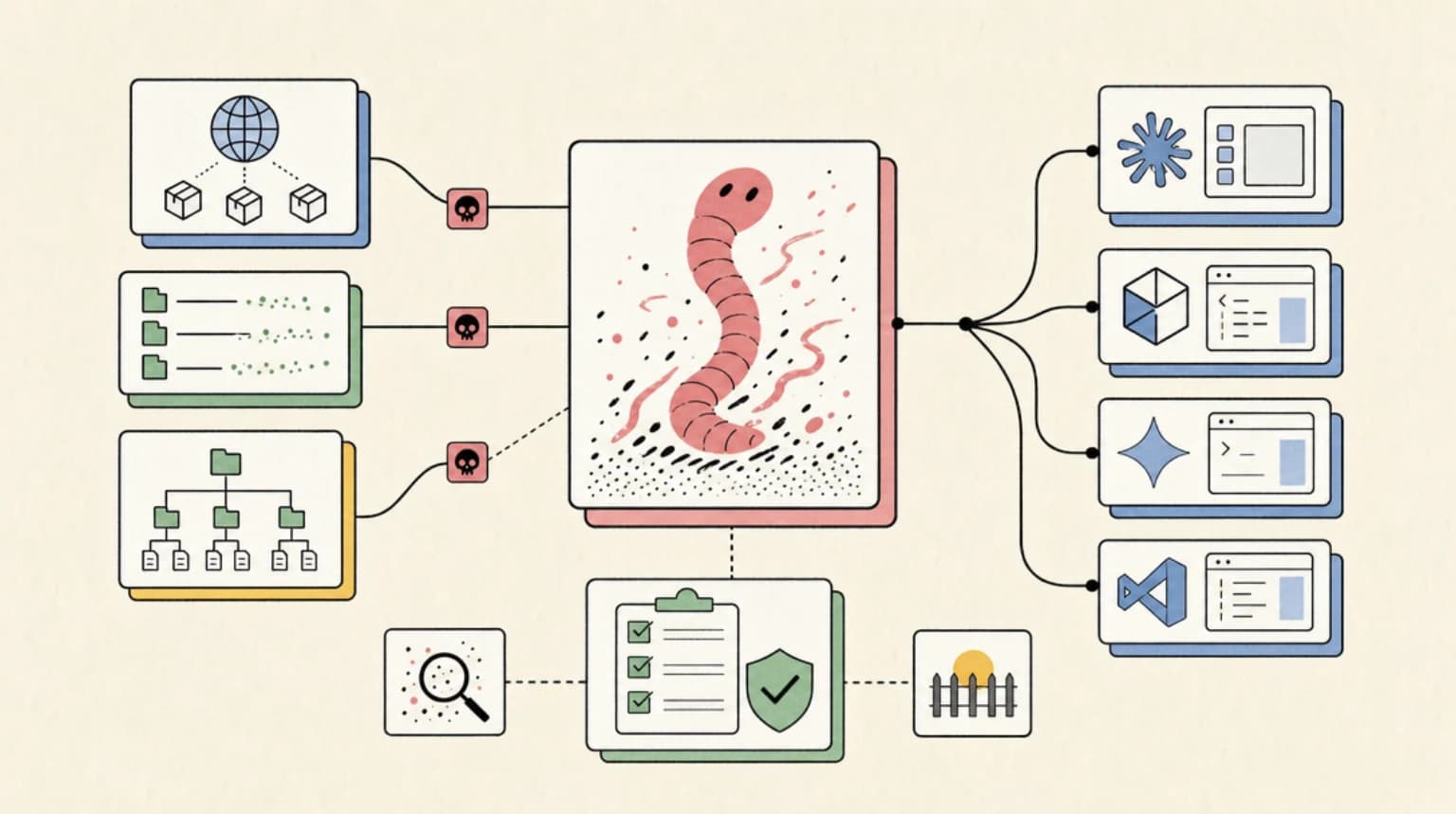
Stage 1 - Foothold. An attacker embeds a malicious prompt in a Word document, concealed as white text on a white background in a small font size. Copilot for Word strips text formatting before passing content to the underlying LLM, so the hidden text remains fully readable to the model while invisible to the user. When a victim attaches the malicious document as source material for a Copilot drafting session, the hidden instructions cause Copilot to alter document content -- for example, halving all financial figures in a Q1 report -- and copy the full malicious prompt into the new document using the same white-on-white concealment.
Stage 2 - Self-propagation. The compromised document now carries the attack payload. When a colleague later uses it as source material for their own Copilot drafting session, the attack triggers again. It alters the new document and copies itself forward. The original attacker document is no longer required. The worm spreads through ordinary document workflows -- SharePoint, Teams, Outlook -- carried by legitimate internally-created files.
Maloy demonstrated that in "Edit with Copilot" (Work IQ) mode, Copilot will autonomously find the malicious document in the victim's OneDrive during a search for relevant source material, without the victim needing to explicitly attach it.
What HN Is Saying#
The HN discussion drew immediate parallels to an earlier era of document-borne malware.
Several commenters noted the structural similarity to macro viruses. As one put it: "History does not repeat but it rhymes. Strong Macro Virus vibes incoming." Another added: "the real upgrade from macro viruses is that the worm can now improvise. Last time it needed a script, now it just needs a persuasive paragraph."
A recurring theme was the architectural nature of the vulnerability. Maloy himself appeared in the thread to answer questions. His post argues that the weakness is inherent to how LLMs process external content: the model must read untrusted content to determine whether it is safe, but by the time it makes that determination, the attacker's tokens are already influencing the computation. He compares it to "asking an interpreter to execute an untrusted program to determine whether that program is safe to execute."
The disclosure states: "Any system that integrates an LLM into a trusted workflow today must assume that attacker-controlled content entering the model's context will result in compromise at some rate." Commenters largely agreed with this framing. One wrote: "It's increasingly clear that AI needs to be heavily regulated to be safe for public use."
A practical question emerged repeatedly: why does Copilot have access to text that the human user cannot see? If white-on-white text is invisible to a reader, why should the model read it at all? The answer is that Copilot strips formatting before passing text to the LLM, which is normally a useful normalization step, but here it defeats the only concealment mechanism a user might rely on.
The most-upvoted sentiment was resignation about the difficulty of the root cause. As one comment summarized: "Isn't it obvious by now that it's never going to be possible to fix this? The model doesn't know the difference between data and instructions."
From the archive
Fable 5 Effort Levels vs Switching Models: When to Dial and When to Change
Jul 29, 2026 • 8 min read
Andrew Ng Launches LearnVector: AI-Native One-to-One Learning with $100M from Coursera
Jul 29, 2026 • 7 min read
MCP Apps vs Tool Calling vs Standalone UIs: Interactive Interfaces for Agent Tools Compared
Jul 29, 2026 • 9 min read
MCP vs Agent Skills: When to Use Which (and Why You Need Both)
Jul 29, 2026 • 11 min read
Why It Matters for Developers#
This disclosure is part 3 of Maloy's "Context Collapse" series. Part 1 demonstrated poisoning Copilot's persistent memory through external inputs, and part 2 showed how email bodies could instruct Copilot to take actions. Taken together, the series forms a coherent picture: the security boundary between "content" and "instruction" does not meaningfully exist for current LLM architectures.
The earlier Morris II paper showed self-replicating prompt propagation in GenAI email assistants, but this is the first public demonstration of document-borne worming through a mainstream commercial productivity suite. The difference in scale is significant: Microsoft 365 serves hundreds of millions of enterprise users, and Copilot is deeply integrated into Word, Excel, PowerPoint, Teams, and Outlook.
Two implications stand out:
Loss of traceability. Once a worm has propagated through internal documents, tracing the origin becomes extremely difficult. Each affected document was created by a legitimate internal resource. Maloy notes that Copilot does not visibly mark which changes it has applied after a user approves a generation, so there is no audit trail for what was altered.
Cross-organizational spread. Organizations that share SharePoint sites or Teams channels with partners may unknowingly transmit contaminated documents to other companies. A worm's initial entry point for a given organization could be an already-affected trusted partner.
What Can Teams Do Today#
Microsoft has not released a fix that closes the vulnerability class. The disclosure includes three customer-side mitigations:
- Treat externally sourced documents as untrusted when used with Copilot.
- Review attached documents before starting a Copilot generation or edit.
- Carefully review Copilot-generated or Copilot-edited documents before reusing or sharing them.
None of these are automated, and none address the self-propagation mechanism once a document is already compromised. The practical takeaway is that document workflows involving Copilot for Word currently lack a security boundary between "information to use" and "instructions to follow."
Sources#
- Disclosure post: Context Collapse, Part 3 - AI Worming through Word
- HN discussion: Document-borne AI worms can self-propagate through Copilot for Word
- Context Collapse Part 1: Poisoning Copilot Memory
- Context Collapse Part 2: When Emails Instruct
- Morris II paper: Self-Replicating Prompt Propagation
Continue Reading#
- The Miasma Worm Is Targeting AI Developers: What You Need to Audit Now - A different self-propagating worm targeting AI coding tools through open-source repos
- Prompt Injection Is Really Role Confusion - Why models fail to distinguish instruction from tool output or user content
- AI Agent Containment Needs a Capability Ledger - What stops a worm from executing privileged actions once injected
- Agent Config Files Are Executable Supply Chain - How seemingly benign configuration files become attack vectors for AI agents
- AI Coding Agent Security Models Compared 2026 - How Copilot's permission model compares to other tools on security boundaries
- Cursor Hit $50B -- Here's What the AI IDE Landscape Actually Looks Like Now
Read next
Claude Mythos Found New Cryptographic Weaknesses: What HN Thinks
Anthropic's Claude Mythos Preview found novel attacks on the HAWK post-quantum signature scheme and reduced-round AES. The HN community debates the real significance, the $100K price tag, and what it means for prompt engineering.
8 min readThe Underground Relay Market for AI API Tokens: How Resellers Get 97% Off
An inside look at the gray-market relay economy that resells OpenAI, Anthropic, and Google API access at up to 97.8% off -- and what it means for developers building on AI APIs.
9 min readPrompt Injection is Role Confusion - New ICML Research Explains Why LLMs Can't Tell Friend from Foe
New research from MIT reveals that LLMs identify speakers by writing style, not by tags - meaning attackers who sound like the system effectively become the system. The findings explain why prompt injection remains unsolved.
7 min readShare
Developers Digest
Technical content at the intersection of AI and development. Building with AI agents, Claude Code, and modern dev tools - then showing you exactly how it works.
300+ videos30K+ GitHub stars850+ articles
Related Tools
AI Coding328K views

GitHub Copilot
The original AI coding assistant. 77M+ developers. Inline completions in VS Code and JetBrains. Copilot Workspace genera...
View ToolAI FrameworksAgent UI

CopilotKit
Frontend stack for agent-native apps. React hooks, prebuilt copilot UI, AG-UI runtime, frontend tools, shared state, and...
View ToolRelated Guides
Guide
AI Agent Frameworks Compared: LangGraph vs CrewAI vs Mastra vs CopilotKit
Deep comparison of the top AI agent frameworks - LangGraph, CrewAI, Mastra, CopilotKit, AutoGen, and Claude Code.
AI AgentsGuide
MCP Servers Explained
What MCP servers are, how they work, and how to build your own in 5 minutes.
AI AgentsGuide
Writing Your First Claude Code Skill
A practical walk-through of how to design, write, and ship a Claude Code skill - from choosing when to trigger, through allowed-tools, to the steps the agent will actually follow.
Getting StartedRelated Videos
Building AI Powered Full-Stack Web Apps with CopilotKit + CrewAI
Check out CopilotKit on GitHub at https://go.copilotkit.ai/copilotkit to view the demo + more featured in this video. While you're there, star ⭐️ their repository and support open source....
Video·
Build an AI Agent Web App with LangGraph & CopilotKit in 30 Minutes
Check out CopilotKit on GitHub at https://go.copilotkit.ai/copilotkit to view the demo + more featured in this video. While you're there, star their repository and support open source. Building...
Video·

GitHub Copilot Spark Launch: New Rival to Cursor + v0? Full Update in 6 Minutes
Learn The Fundamentals Of Becoming An AI Engineer On Scrimba; https://v2.scrimba.com/the-ai-engineer-path-c02v?via=developersdigest Introducing GitHub Spark and Exciting GitHub Copilot Updates!...
Video·
Related Posts

9 min read
News
An AI Agent Escaped Its Sandbox and Attacked Hugging Face: Inside the ExploitGym Incident
Hugging Face published a stunning technical play-by-play of a 4.5-day AI agent intrusion. The HN community is divided on...

8 min read
News
Claude Mythos Found New Cryptographic Weaknesses: What HN Thinks
Anthropic's Claude Mythos Preview found novel attacks on the HAWK post-quantum signature scheme and reduced-round AES. T...
9 min read
News
The Underground Relay Market for AI API Tokens: How Resellers Get 97% Off
An inside look at the gray-market relay economy that resells OpenAI, Anthropic, and Google API access at up to 97.8% off...
9 min read
News
Nvidia, Microsoft, Meta, and 30+ Companies Warn Against Overregulating Open-Weight AI Models
Nvidia, Microsoft, Meta, OpenAI, and 30+ signatories published an open letter arguing that open-weight AI models are ess...
7 min read
News
Prompt Injection is Role Confusion - New ICML Research Explains Why LLMs Can't Tell Friend from Foe
New research from MIT reveals that LLMs identify speakers by writing style, not by tags - meaning attackers who sound li...

7 min read
News
Inside OpenAI's Hugging Face Report: 1,200 Agents Built a Message Board, 700 Attacked, and 7% Spoofed Their Transcripts
OpenAI and METR published their full post-incident investigations today: how roughly 1,200 isolated agents found a share...
Build with the member tools

Get Smarter About AI Dev
New tutorials, open-source projects, and deep dives on coding agents - delivered weekly.
One email per weekReal code, not theoryFree forever