Kimi K3 Developer Guide: What the 2.8T Open Model Changes
Kimi K3
6 parts- 1Kimi K3 Developer Guide: What the 2.8T Open Model ChangesCurrent
- 2Kimi K3 vs K2.7 Code: Is the Upgrade Worth It for Coding?
- 3Kimi K3 Websites: What Vision in the Loop Actually Means
- 4Where to Access Kimi K3: Every Provider and Price Compared (2026)
- 5Kimi K3 Is GA in GitHub Copilot: Pricing, Rollout, and What It Means for Model Choice
- 6AMD MI355X vs NVIDIA B200 vs B300 for Open-Weight Serving
TL;DR
Kimi K3 brings 2.8 trillion parameters, native vision, a 1M-token context window, and long-horizon agent workflows.
Last updated: July 17, 2026
Kimi K3 is Moonshot AI's biggest swing yet: a 2.8-trillion-parameter Mixture-of-Experts model with native vision, a 1-million-token context window, and an explicit focus on long-running coding and knowledge-work agents.
The headline numbers are enormous. The practical questions are smaller: Can you use it today? What does it cost? Are the weights actually available? And does a 1M-token window make it a better coding model?
Kimi K3 at a glance#
| Detail | Kimi K3 |
|---|---|
| Total parameters | 2.8 trillion |
| Architecture | Mixture of Experts with Kimi Delta Attention and Attention Residuals |
| Active experts | 16 of 896 per routing step |
| Context window | 1 million tokens |
| Modalities | Native text and vision |
| API price | $3/M input, $0.30/M cached input, $15/M output |
| Availability | Kimi, Kimi Work, Kimi Code, and API |
| Open weights | Promised by July 27, 2026 |
The most important caveat is timing. Kimi calls K3 an open model, but the full weights were not downloadable on publication day. Moonshot says they will arrive by July 27 alongside more architecture, training, and evaluation detail. Until then, the API and hosted products are the practical ways to use it.
What changed under the hood#
K3 is not just K2 with more experts. Moonshot highlights three architectural changes.
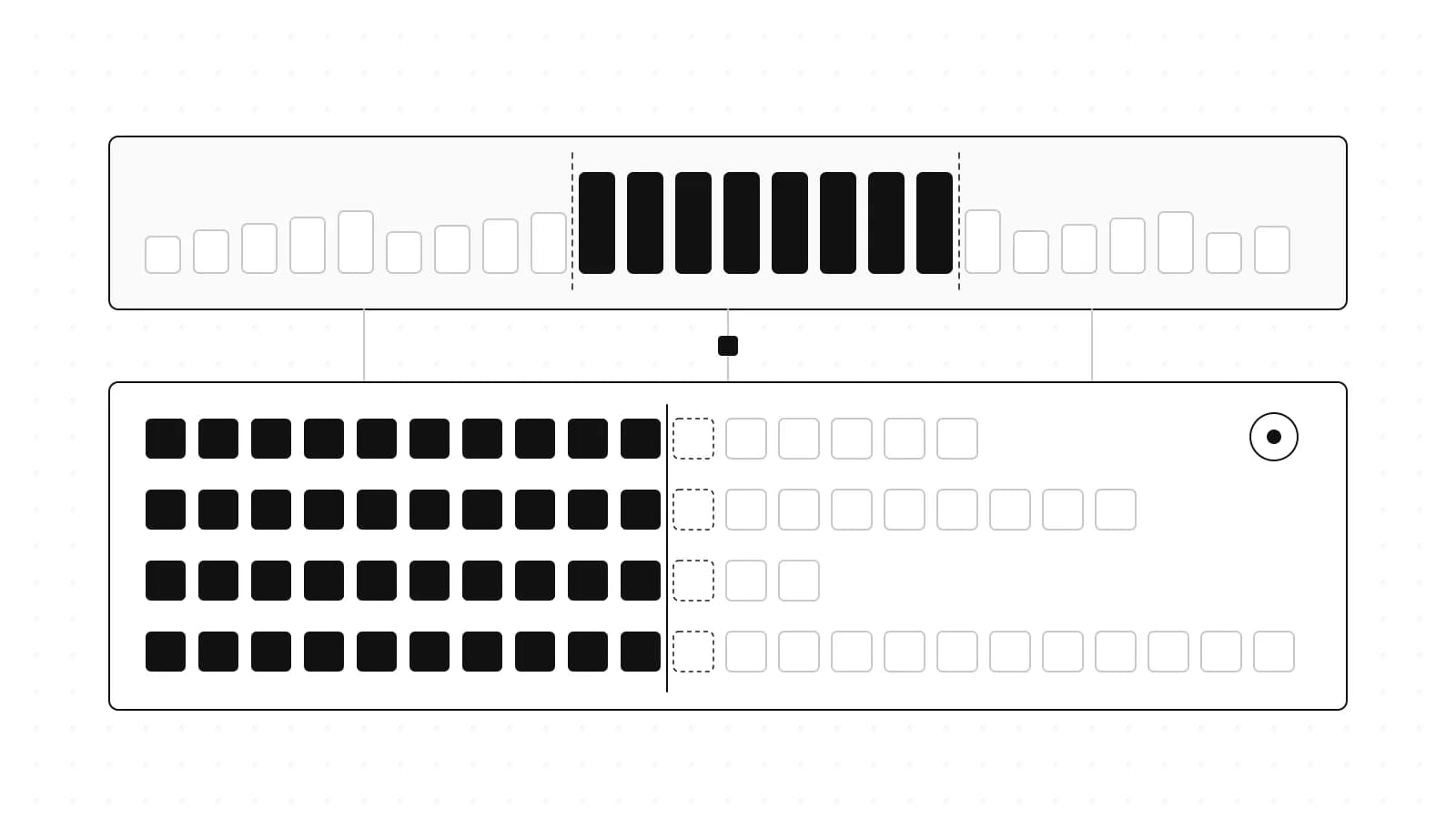
Kimi Delta Attention is a hybrid attention system intended to make long sequences more efficient. Attention Residuals changes how information flows between layers, allowing later blocks to draw from earlier representations instead of relying on one strictly sequential residual stream. Stable LatentMoE increases sparsity: K3 routes work through 16 of 896 experts.
Moonshot claims these changes deliver roughly 2.5 times better scaling efficiency than K2. That is a vendor claim, not an independently reproduced result, but it explains why the lab is emphasizing architecture rather than parameter count alone.
The 1M-token context is useful, but not magic#
A million tokens can hold a large monorepo, a long research archive, or days of agent history. That removes some chunking pressure, but capacity and comprehension are different things.
For coding agents, the strongest use is selective retrieval across a large working set. Give the agent repository maps, test output, relevant source files, and a durable task log. Do not dump a million tokens into every request and assume the model will locate the one important line. Larger prompts still cost more, take longer, and create more opportunities for irrelevant context to distract the model.
At Kimi's published API pricing, a full 1M-token uncached prompt costs about $3 before output. With a cache hit it is about $0.30. That makes prompt caching central to any serious K3 workflow.
Where K3 looks strongest#
Moonshot's most convincing examples are long-horizon engineering tasks rather than short code-generation benchmarks.
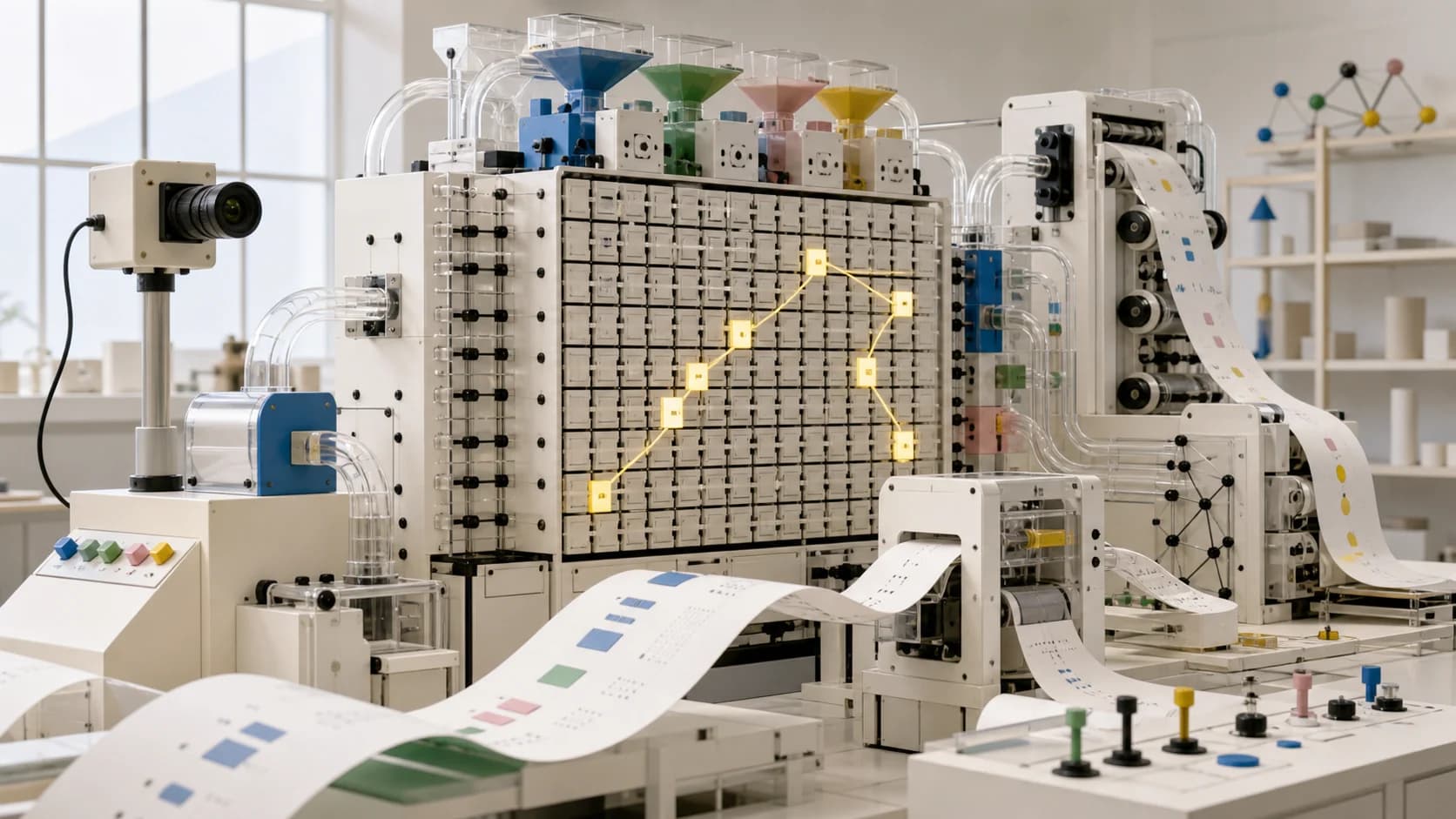
In one 15-hour kernel-optimization run, K3 reportedly reduced an AttnRes training operation from 283.6 ms to 114.4 ms. In another task it wrote an MLA kernel that reached 517.8 TFLOPS. The model also built a compact Triton-like compiler, created browser-based 3D games through screenshot feedback, and completed a computational astrophysics reproduction workflow involving more than 20 papers and 3,000 lines of Python.
These are curated demonstrations run by the model maker. They do not prove that K3 will repair your production incident. They do show the product direction: observe a working environment, use tools, run for hours, inspect results, and keep iterating.
How to use Kimi K3 today#
The lowest-friction options are Kimi for general work and Kimi Code for terminal and IDE workflows. Developers building applications can use the Kimi API.
K3 launches with maximum thinking effort as the default. Moonshot says low- and high-effort modes will follow. That means latency and output cost deserve measurement before you put the model behind a user-facing interaction.
If self-hosting is the goal, wait for the weights and serving guidance. A 2.8T sparse model is still a very large systems project. "Open weights" does not mean "runs on a workstation," and the eventual quantization and inference-partner support will matter more than the raw license label.
Should you switch?#
Try K3 now if your work combines large context, terminal tools, visual feedback, and long autonomous runs. Keep your existing model routing if most tasks are short, latency-sensitive, or already reliable on a cheaper model.
Moonshot makes an unusually useful admission in its own launch post: K3 still trails the most powerful proprietary models overall. That candor is a better adoption frame than any single benchmark chart. K3 does not need to win every test to matter. A capable open-weight model with native vision and a 1M-token window can change the cost and control floor for agent builders.
FAQ#
Is Kimi K3 open source?#
Moonshot describes K3 as open and says the full model weights will be released by July 27, 2026. As of July 17, the weights were not yet available, so self-hosting claims should wait for the actual release and license.
How much does the Kimi K3 API cost?#
Kimi lists $3 per million uncached input tokens, $0.30 per million cached input tokens, and $15 per million output tokens. Prices were verified July 17, 2026.
Can Kimi K3 run locally?#
Not yet. The weights have not been released, and a sparse 2.8T model will require serious inference hardware even after optimized formats arrive.
Is Kimi K3 better than Claude or GPT?#
Moonshot reports frontier-level results on several internal and curated evaluations, but its launch post says K3 still trails the strongest proprietary models overall. Test it on your own workload instead of treating vendor benchmark suites as a universal ranking.
Official Sources#
| Source | Link | Verified |
|---|---|---|
| Kimi K3 Launch Post | kimi.com/blog/kimi-k3 | July 17, 2026 |
| Kimi K3 API Quickstart | platform.kimi.ai/docs/guide/kimi-k3-quickstart | July 17, 2026 |
| Kimi API Pricing | platform.kimi.ai | July 17, 2026 |
| VentureBeat Coverage | venturebeat.com | July 17, 2026 |
| MarkTechPost Analysis | marktechpost.com | July 17, 2026 |
Continue Reading#
Get the next deep dive like this in your inbox
One email a week on Kimi and the rest of the AI dev stack. Free.
Read next on AI coding tools
Kimi K2.7-Code Developer Guide: The Open-Source Coding Model Worth Running
Kimi K2.7-Code is Moonshot's open-source 1T parameter coding model with 30% fewer reasoning tokens than K2.6. Here's how to set it up with Claude Code, pricing breakdown, and honest benchmark analysis.
8 min readKimi CLI vs Claude Code: The Budget Question in 2026
Moonshot AI's Kimi CLI offers unlimited coding sessions at zero marginal cost. Claude Code offers polish, deep Anthropic integration, and a subscription most serious devs already hold. Here is how to decide.
8 min readKimi K3 vs K2.7 Code: Is the Upgrade Worth It for Coding?
Kimi K3 vs K2.7 Code: 1M vs 256K context, $3/$15 vs $0.95/$4 per million tokens, and when the bigger model earns its price on coding work.
6 min readNew here? Start with
Technical content at the intersection of AI and development. Building with AI agents, Claude Code, and modern dev tools - then showing you exactly how it works.