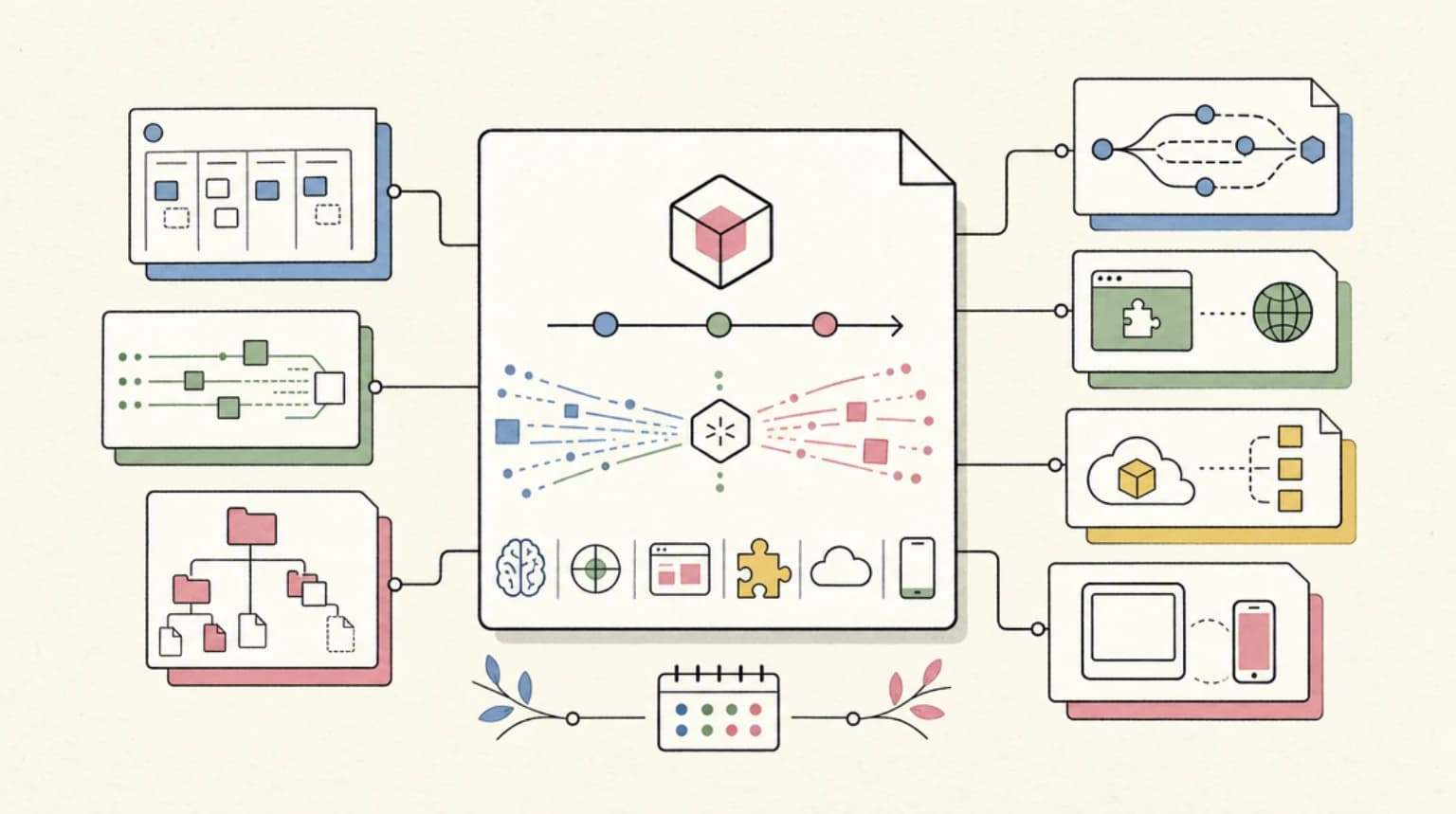
Harness Handbook Shows the Missing Map for Coding Agents
TL;DR
A July 2026 paper from Tencent Hunyuan turns agent harnesses into behavior-level maps. The useful lesson for builders is simple: code search is not enough when one behavior spans prompts, tools, state, permissions, and runtime policy.
| Research notes | |
|---|---|
| Primary paper | arXiv:2607.13285 |
| Hugging Face signal | #1 HF paper of the day on July 16, 2026 |
| Project page | Harness Handbook |
| Code | Ruhan-Wang/Harness_Handbook |
| Google Trends check | Attempted July 16, 2026 for agent harness, AI agent framework, AI coding agent, agent evaluation, and agent memory. Google returned HTTP 429 through pytrends, so no numeric Trends rows are used here. |
Last updated: July 16, 2026
The next bottleneck for coding agents is not only model quality. It is finding the right code to change.
That sounds mundane until you look at a real agent harness. A deletion policy is not one function. It may be shaped by a system prompt, a tool wrapper, a sandbox, a permission cache, a retry path, a UI confirmation state, and a fallback command parser. A coding agent can search for delete, but that does not prove it found the behavior.
That is why Harness Handbook, a July 2026 paper from Tencent Hunyuan that hit Hugging Face Papers, is worth reading. The useful idea is not "make docs for your agent framework." It is "map behavior to code evidence before you ask an agent to edit the system."
This fits the thread we have been tracking across long-running agent harnesses, Flue and the harness layer, agent eval receipts, and SkillHone decision history. The model is only one part of the product. The harness decides what the model sees, remembers, invokes, retries, approves, and reports.
Harness Handbook adds a missing layer: a behavior-level manual that tells humans and agents where a behavior actually lives.
The Take#
Code search is a weak interface for changing agent behavior.
Search is still useful. Static indexes are useful. Long context is useful. But none of those automatically answer the question a developer actually has:
Where is this behavior implemented?
The Harness Handbook paper calls that problem behavior localization. In plain English, it is the gap between the request and the file tree. A user asks for a behavior change: "make the agent ask before deleting a file," "log every shell command before execution," "stop retrying after three failed tool calls," or "route large edits through review." The repo is organized by modules, not behaviors. The implementation may be scattered across prompts, tool schemas, runtime state, guardrails, command policies, and UI code.
That mismatch is where many coding-agent edits go wrong.
The agent does not only need more context. It needs a better map.
What Harness Handbook Proposes#
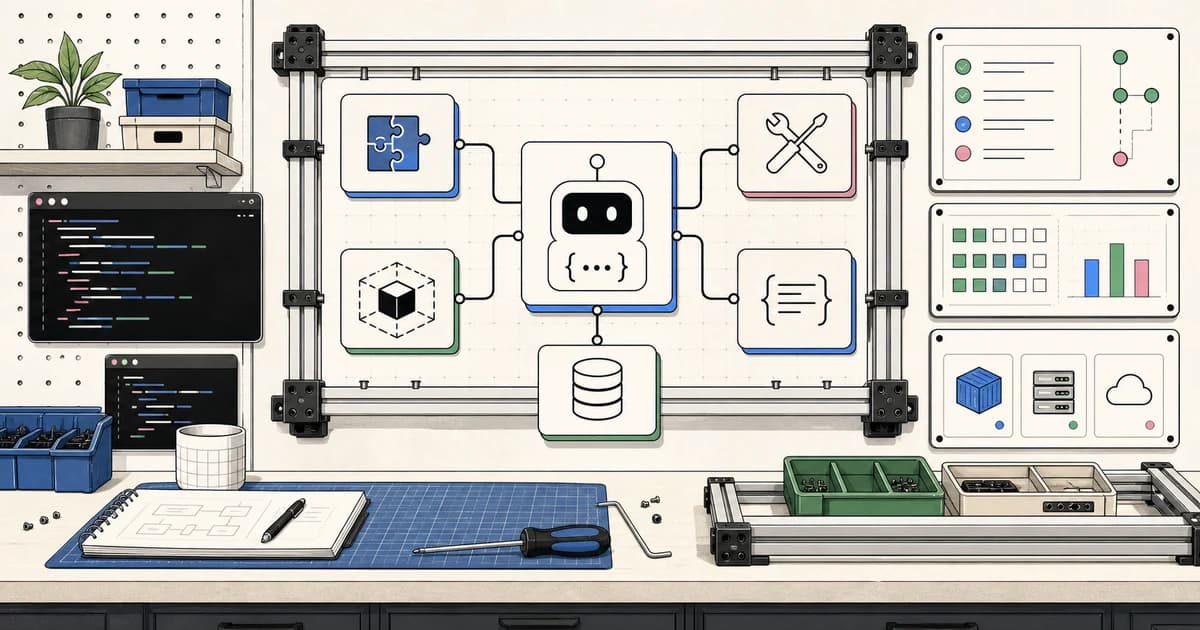
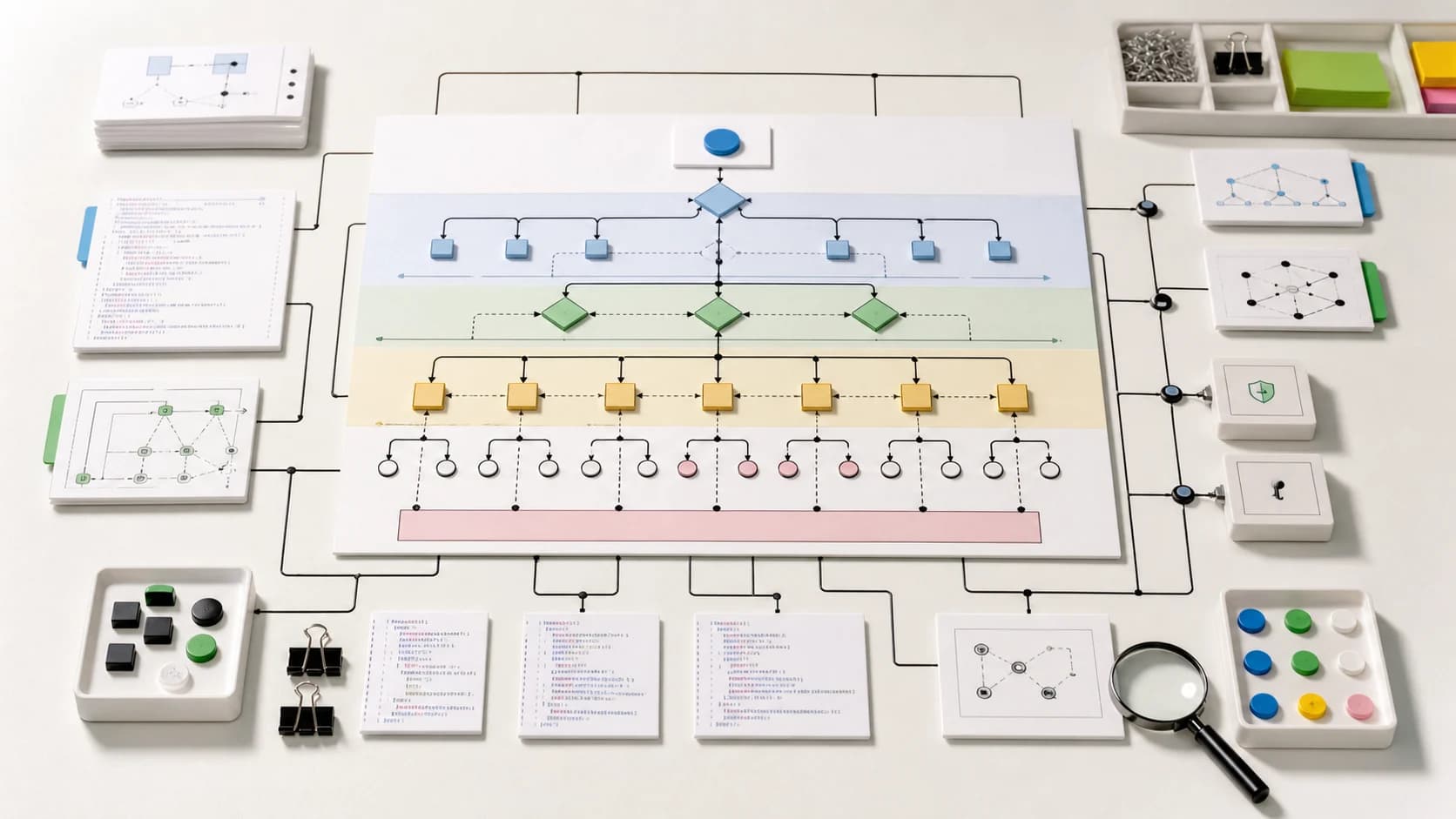
Harness Handbook builds a three-level representation of an agent harness.
The first level gives the system-level flow. The second level breaks the system into behavior units. The third level opens a specific behavior unit and links its triggers, state changes, execution paths, exception paths, and implementation evidence back to source code.
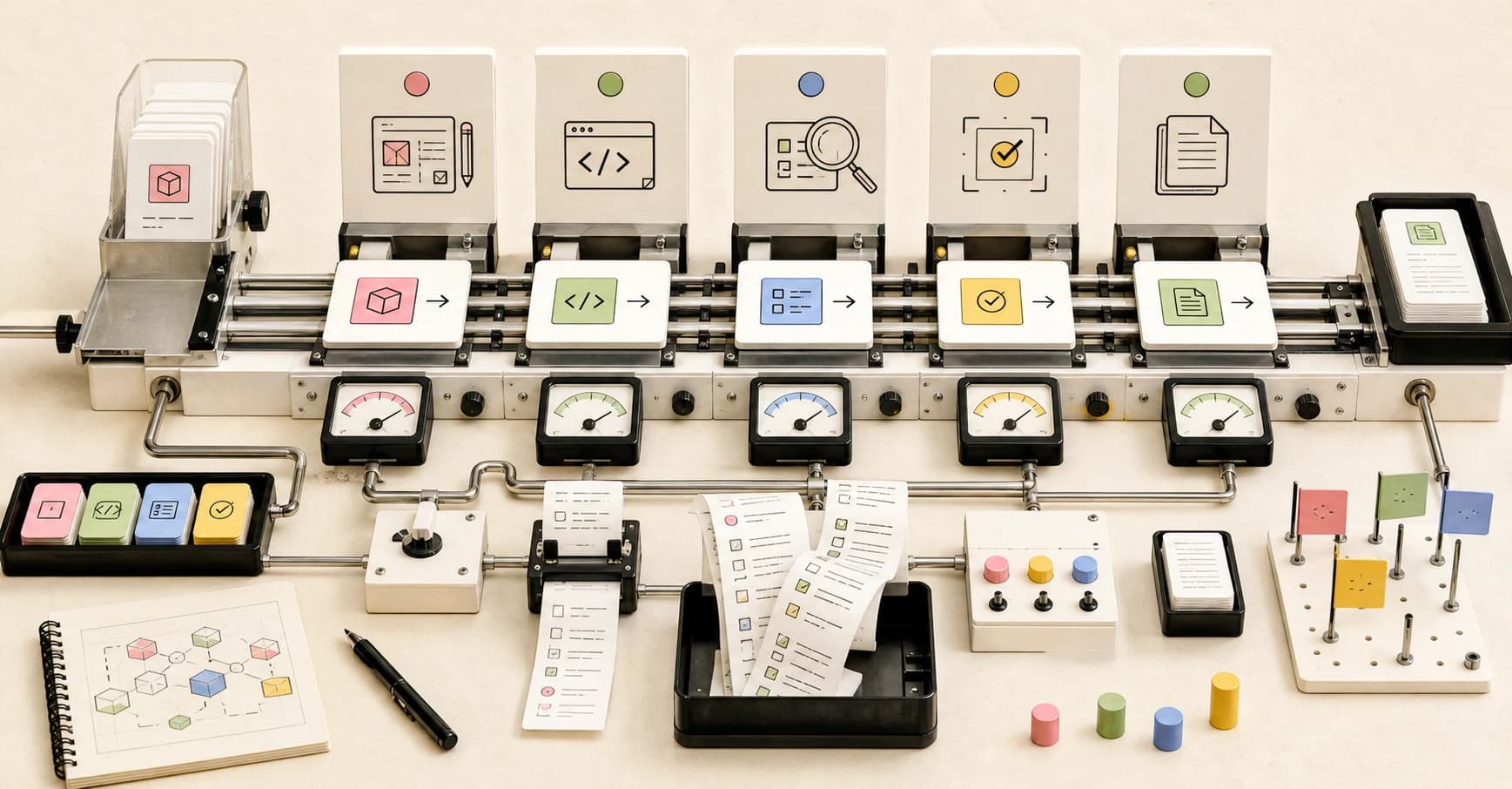
The paper pairs that representation with Behavior-Guided Progressive Disclosure, or BGPD. The workflow is deliberately narrow:
- Start from a behavior question.
- Locate the relevant behavior unit.
- Open the implementation evidence for that behavior.
- Verify candidate locations against the current source.
- Turn the evidence into an edit plan.
That is a different shape from "stuff the repo into context and hope the planner finds it." It is closer to a map-and-receipts workflow. The handbook helps the agent find the likely behavior chain, but the repository remains the source of truth.
The project page gives a concrete example around confirming before file deletion. That behavior can involve prompt instructions, permission configuration, confirmation state, tool execution, and bypass paths. A keyword search can find fragments. A behavior map is supposed to show the chain.
Why This Matters for Codex, Claude Code, and Local Agent Stacks#
Most teams adopting coding agents are adding harness features faster than they are documenting them.
You start with a model call. Then you add tools. Then file access. Then a sandbox. Then approvals. Then a memory file. Then subagents. Then CI. Then a browser. Then a Slack trigger. Then a retry loop. Six months later, "how does this behavior work?" is no longer obvious from the folder structure.
That is the same operational lesson behind OpenAI's Harness Engineering writeup, which we covered in the June Codex changelog analysis. The agent harness becomes the engineering system. Once that happens, the harness itself needs architecture, tests, and documentation that agents can use without guessing.
The Harness Handbook paper is especially interesting because it evaluates on two open-source harnesses, including Codex. The authors describe Codex-scale structure as thousands of files, tens of thousands of functions, and a dense code graph. That is exactly the environment where a naive "find the file and patch it" plan starts to break down.
This also explains why agent evals need baseline receipts. If you cannot localize the behavior, you cannot cleanly evaluate the change. The diff may pass tests while still missing a bypass path. The agent may edit the obvious wrapper while the real decision happens in state restoration, retry logic, or a policy fallback.
The Opposing View#
The obvious pushback is that this is documentation overhead.
That pushback is reasonable. Most teams do not need a generated behavior handbook for a small script, a single-purpose chatbot, or an internal workflow with five files. A good README, good tests, and direct code ownership are enough.
There is also a trust problem. A generated handbook can become stale. It can overstate what the code guarantees. It can turn into another artifact that humans stop checking. If the map is not grounded in source evidence and refreshed alongside code changes, it becomes a fancy hallucination surface.
The paper's answer is important: prose is not the authority. Code evidence is. The handbook is useful only when it narrows search and points back to verifiable implementation sites.
That is the standard builders should copy.
Do not ask an agent to trust generated docs. Ask it to use the docs as a routing layer, then verify against code.
A Practical Version You Can Build Now#
You do not need to reproduce the full paper to use the idea.
For a production agent harness, start with a lightweight behavior map:
| Behavior | Evidence to link |
|---|---|
| Tool approval | Permission config, UI state, command wrapper, denial path |
| File mutation | Write APIs, sandbox boundaries, diff preview, rollback path |
| Retry policy | Tool-call loop, failure classifier, budget counter, stop condition |
| Memory update | Memory files, compaction logic, privacy filter, human-review path |
| Subagent delegation | Task router, context packet, result schema, merge policy |
| Final answer | test evidence, artifact links, source citations, unresolved risks |
Each row should answer three questions:
- What user-visible behavior does this control?
- Which files and functions implement it?
- Which tests or receipts prove it still works?
That simple table is already better than a repo tour. It gives a coding agent a behavior-first entry point and gives reviewers a checklist for whether the change boundary is plausible.
For bigger systems, generate the first draft. Use static analysis, rg, route maps, call graphs, tests, and agent-assisted summaries. But keep the rule strict: every claim must link to code, a test, a trace, or a source document.
What to Watch#
Harness Handbook is a research prototype, not a drop-in production standard. The GitHub repo is small today, and the useful question is whether the method survives contact with messy private agent stacks, stale docs, generated code, plugins, and organization-specific security policies.
Still, the direction is right.
The agent ecosystem has spent a year arguing about frameworks, swarms, skills, MCP servers, and model routing. The next serious layer is behavior evidence. If agents are going to maintain agent harnesses, they need a way to reason about what the harness does before they edit how it does it.
That is the durable idea here:
The file tree tells you where code lives. The behavior map tells you how the agent runs.
FAQ#
What is Harness Handbook?#
Harness Handbook is a research system that turns an AI agent harness into a behavior-level manual. It organizes prompts, state, tools, permissions, execution paths, and source evidence around behaviors rather than only around files.
Why does this matter for coding agents?#
Coding agents often receive behavior-level requests, but repositories are organized by modules. A behavior map helps the agent find the right implementation sites before planning an edit.
Is this better than code search?#
It is not a replacement for code search. It is a routing layer above code search. The handbook narrows the behavior path, then the agent still verifies source code directly.
Should every team build a Harness Handbook?#
No. Small harnesses can use simpler docs and tests. The idea becomes valuable when one behavior spans prompts, tools, state, permissions, runtime policy, and multiple modules.
What is the main risk?#
The main risk is stale generated documentation. A behavior map should never be treated as authority unless every claim links back to current code evidence and tests.
Continue Reading#
Sources#
- Harness Handbook: Making Evolving Agent Harnesses Readable, Navigable, and Editable, accessed July 16, 2026.
- Hugging Face Papers page for Harness Handbook, accessed July 16, 2026.
- Harness Handbook project page, accessed July 16, 2026.
- Ruhan-Wang/Harness_Handbook on GitHub, accessed July 16, 2026.
- GitHub Trending, accessed July 16, 2026.
- OpenAI Harness Engineering, accessed July 16, 2026.
Get the next deep dive like this in your inbox
One email a week on AI Agents and the rest of the AI dev stack. Free.
Read next on AI coding tools
Long-Running Agents Need Harnesses, Not Hope
A long-running coding agent is only useful if the environment around it can queue tasks, capture logs, checkpoint state, verify behavior, limit cost, and recover from failure.
9 min readFlue and the Agent Harness Layer
Flue is trending because it names the part of agent infrastructure that is becoming product-critical: the programmable harness around the model.
8 min readAgent Evals Need Baseline Receipts
Hex's data-agent lab shows the practical eval pattern AI teams should copy: compare candidates against stable baselines, keep receipts, and judge changes by task behavior.
8 min readNew here? Start with
Technical content at the intersection of AI and development. Building with AI agents, Claude Code, and modern dev tools - then showing you exactly how it works.