Six Paid Products in a Day: DD's Bet on Agent Infra for Small Teams

TL;DR
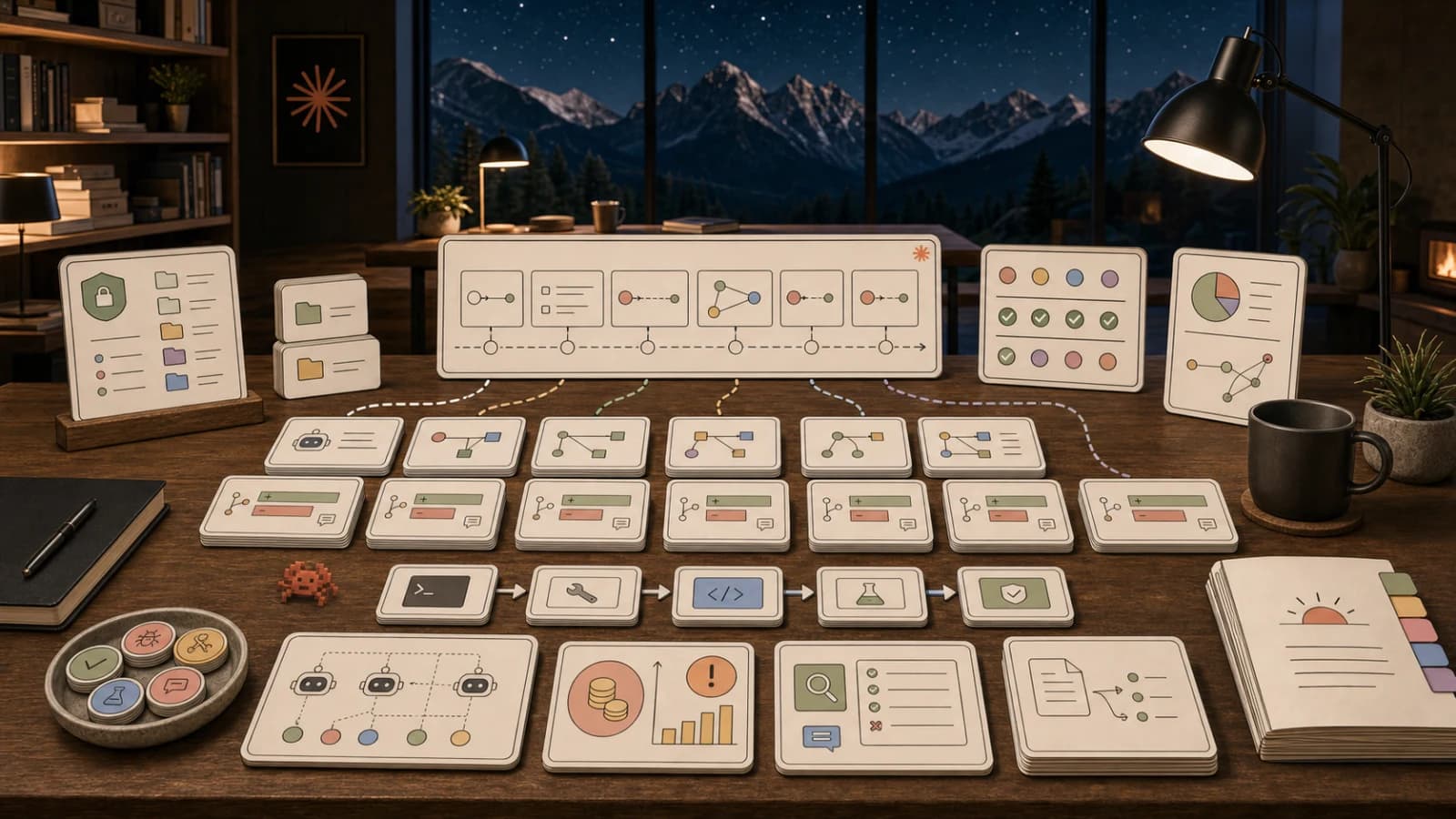
DD shipped six paid agent infra products for small teams in one day, at $20 a month each or $50 for the bundle. What each does and what is still alpha.
Last updated: April 28, 2026
We keep saying it. The agent infra layer for small teams does not exist yet.
Big shops have internal platforms. Solo devs scrape by with shell scripts and a prayer. The middle, the two to ten person team running real agent workloads in production, has nothing built for them. They are gluing together OpenTelemetry, half-finished MCP servers, a Notion doc full of prompts, and a billing alert that fires three days too late.
So today DD shipped six paid products at once. All of them target that exact gap. All of them are $20 a month. The bundle is $50 a month for the lot. There is also a teaser at the bottom for a seventh that is not quite ready to price.
Before the tour, the honest part. Most of these are alpha. Some are still in private repos while we tighten the rough edges. Clerk Billing is not fully wired yet, so for now there is one waitlist link instead of six checkout buttons. We will flip the switch when the plumbing is done. Posting now because shipping public beats polishing in private.
If you want the longer version of how all of this got built in one overnight session, we wrote that up too: 12 tools in one night with Claude Code.
The Thesis#
Agent infra for small teams. That is the whole pitch.
Not for hyperscalers. Not for hobbyists who can live without observability. For the team that has three agents running on a Hetzner box, a Claude Code workflow that touches production, and zero appetite for paying $400 a month per seat to a vendor that wants a SOC 2 review before they will return your call.
Each product solves one piece. The bundle solves the stack.
The Six#
1. agentfs: a filesystem your agents will not break#
Agents write to disk. Agents corrupt disk. Agents do it on Tuesday at 3am while you are asleep.
agentfs is a snapshot-aware filesystem layer. Every write goes through a journal. Every agent run gets a checkpoint. When the agent goes off the rails and rm -rf's your node_modules for the third time, you roll back in one command. Local first, with a sync mode for teams.
This is the most production-ready of the six. We have been dogfooding it on the DD app farm for two weeks. Public repo coming this week.
Read the deep dive: Introducing agentfs.
2. Skills Pro#
The DD Skills Marketplace is the free side: a public registry of Claude Code skills, the same way npm hosts packages. Search, install, share.
Skills Pro is the paid layer on top. Private skills for your team. Versioned releases with changelogs. A real CI pipeline that lints, tests, and benchmarks your skills before they ship to your team's machines. Plus the SkillForge runner which compiles new skills from your own codebase. We covered the runner side in the SkillForge CI and Cost Tape post.
If your team writes more than five skills, the manual approach falls over fast. Skills Pro is the answer.
3. Hookyard Pro#
Claude Code hooks are powerful. They are also a footgun. One bad pre-commit hook and the agent loops forever burning tokens. One bad post-tool hook and your repo is full of generated junk.
Hookyard is a hook registry plus runner. The free tier ships the public hooks. Hookyard Pro adds the team layer: private hooks, audit logs of every hook fire, an emergency kill switch when an agent gets stuck in a loop, and quota enforcement so a runaway hook cannot rack up a $400 bill overnight.
This pairs naturally with Cost Tape. Hookyard fires the hook. Cost Tape watches the meter.
4. MCPaaS Plus#
MCP servers are the new lambdas. Everyone is writing them. No one is operating them.
MCPaaS Plus is hosted MCP. You point it at a repo, it spins up the server with auth, rate limits, and structured logs. Plus it ships with MCP Lens integration, so when an agent calls a broken tool you get the full request and response, not a vague timeout.
The Plus tier adds private servers, custom domains, and pinned versions. Most teams hit the free tier ceiling within a week of using MCP seriously, so we are pricing the upgrade where it should be: cheap.
5. TraceTrail Plus#
Agents do weird things. Then they do them again, but only sometimes, and only in production.
TraceTrail records every step an agent takes: tool calls, model responses, retries, branch decisions. The free tier keeps seven days. TraceTrail Plus extends retention to ninety days, adds replay (rerun a past trace against a new prompt or model to see what would have changed), and ships diff view so you can compare two runs side by side.
This is the closest thing to a real debugger that exists for agents right now. If you have ever stared at a transcript wondering why the agent picked the wrong file, this is the tool.
Bonus: TraceTrail Plus integrates with PromptLock for prompt versioning, so every replay is tied to the exact prompt revision that ran.
6. Cost Tape Cloud#
The local Cost Tape CLI tracks token spend across every model, every CLI, every agent. Cost Tape Cloud is the team mode. Centralized dashboard. Per-developer breakdowns. Budget alerts that fire before the bill, not after.
We built this because we lived the $400 overnight bill. Once is a lesson. Twice is a budgeting failure. Cost Tape Cloud makes twice impossible.
If you only buy one product on this list, it pays for itself the first time it stops a bad run.
The Bundle#
Six products, $20 each, equals $120 a month if you buy them separately. The DD bundle is $50 a month, all six included. We can go that low because we are not paying enterprise sales reps and we are not running a marketing department.
The math is simple. If TraceTrail Plus prevents one bad debugging session, it pays for the whole bundle. If Cost Tape Cloud catches one runaway agent, it pays for the year.
The bundle is the right answer for any team running real agent workloads. Buying just one of these is fine, but the products compose. agentfs snapshots a run that TraceTrail recorded that Cost Tape priced that Hookyard kicked off from a hook stored in Skills Pro that called an MCP server hosted on MCPaaS Plus. The whole stack working together is the actual product.
The Honest Roadmap#
This is alpha. Not GA. Not even open beta on most of them. Here is the real status board.
- agentfs: closest to GA. Public repo this week. Production ready for solo use, team sync mode is alpha.
- Skills Pro: public marketplace is live. The Pro features (private skills, CI runner) are in private repo, working but rough.
- Hookyard Pro: free tier public. Pro tier in private alpha with three teams.
- MCPaaS Plus: free tier in public beta. Plus tier private, six servers running in production for DD itself.
- TraceTrail Plus: TraceTrail OSS is public. Plus features (90 day retention, replay, diff) are in private alpha.
- Cost Tape Cloud: local CLI is OSS. Cloud is private alpha, used internally for the DD app farm.
Clerk Billing is not yet wired. We are doing waitlist signups today and converting to paid checkout when billing is ready, which is days, not weeks. Founding members on the waitlist get the bundle at $30 a month for the first year.
Repos go public as each product hits a state we are not embarrassed to ship. Some this week. Some next month. The free tiers ship first. The Pro features unlock as they stabilize.
Want the broader catalog of what we have shipped this week? Check the ten tools for agent infrastructure post and the six more tools follow-up. There are a lot more pieces in flight.
If you want the curated list of skills that actually pull their weight inside Claude Code, the best Claude Code skills of 2026 is the right starting point.
Teaser: Agent Eval Bench Plus#
The seventh product is not on the price sheet yet, but it is too useful to leave out.
Agent Eval Bench is a benchmarking harness for your agents. Run a fixed task suite against your current setup. Get pass rates, cost per task, latency, and a regression view across runs. The Plus tier will add custom task packs, scheduled benchmarks, and CI integration so you catch agent regressions before merge.
We are still tuning the eval methodology. Pricing lands when the methodology is honest. Probably $30 a month, probably bundled at $60. Watch for the launch post.
The CTA#
One waitlist link, since Clerk Billing is not live yet:
You pick the bundle or any individual product when checkout flips on. Founding rate locks in for everyone on the list before launch day. We will email when each product is ready to use, in the order they ship, smallest blast radius first.
This is the bet. Agent infra for small teams. Six products today, more shipping every week. If you have been waiting for someone to build the layer that sits between "I wrote a shell script" and "I have a platform team," this is it.
Ship with us.
FAQ#
What six products did DD ship?#
agentfs, a snapshot-aware filesystem layer for agents; Skills Pro, private and versioned Claude Code skills with CI; Hookyard Pro, a team layer for Claude Code hooks; MCPaaS Plus, hosted MCP servers; TraceTrail Plus, longer trace retention with replay and diff view; and Cost Tape Cloud, team token-spend tracking with budget alerts.
Who are these agent infrastructure products for?#
The two to ten person team running real agent workloads in production. Big shops have internal platforms and solo devs get by with shell scripts, but the middle has been gluing together OpenTelemetry, half-finished MCP servers, prompt docs and late billing alerts.
Are the products generally available?#
No, most are alpha. agentfs is closest to GA, with team sync mode still alpha. Several free tiers are public while the paid features are in private alpha, and since Clerk Billing is not yet wired there is a single waitlist instead of checkout buttons.
What does agentfs do?#
Every write goes through a journal and every agent run gets a checkpoint, so when an agent corrupts files you can roll back in one command. It is local first, with a sync mode for teams. See Introducing agentfs for the deep dive.
Get the next deep dive like this in your inbox
One email a week on DD and the rest of the AI dev stack. Free.
Read next
12 Tools in One Night: An Honest Overnight Agent Report
An honest overnight Claude Code agent report: 12 new repos, 60 PRs, and three goofs, plus lessons on decomposition, verification, and pre-flight checks.
11 min read10 Tools We Built for Agent Infrastructure
Ten private tools shipped overnight - observability, skills, hooks, prompts, and evals - aimed at the agent infrastructure gap small teams keep falling into.
11 min readIntroducing agentfs: A Filesystem for AI Agents
agentfs is filesystem-shaped storage for AI agents. Postgres-backed on Neon, no cold starts, no exec by design. Pay-only plans start at twenty dollars.
9 min readNew here? Start with
Technical content at the intersection of AI and development. Building with AI agents, Claude Code, and modern dev tools - then showing you exactly how it works.