Briefing · Sunday, August 9, 2026
Auto Mode by Default, Redis Retired, and the 'Code Is Easy' Fight
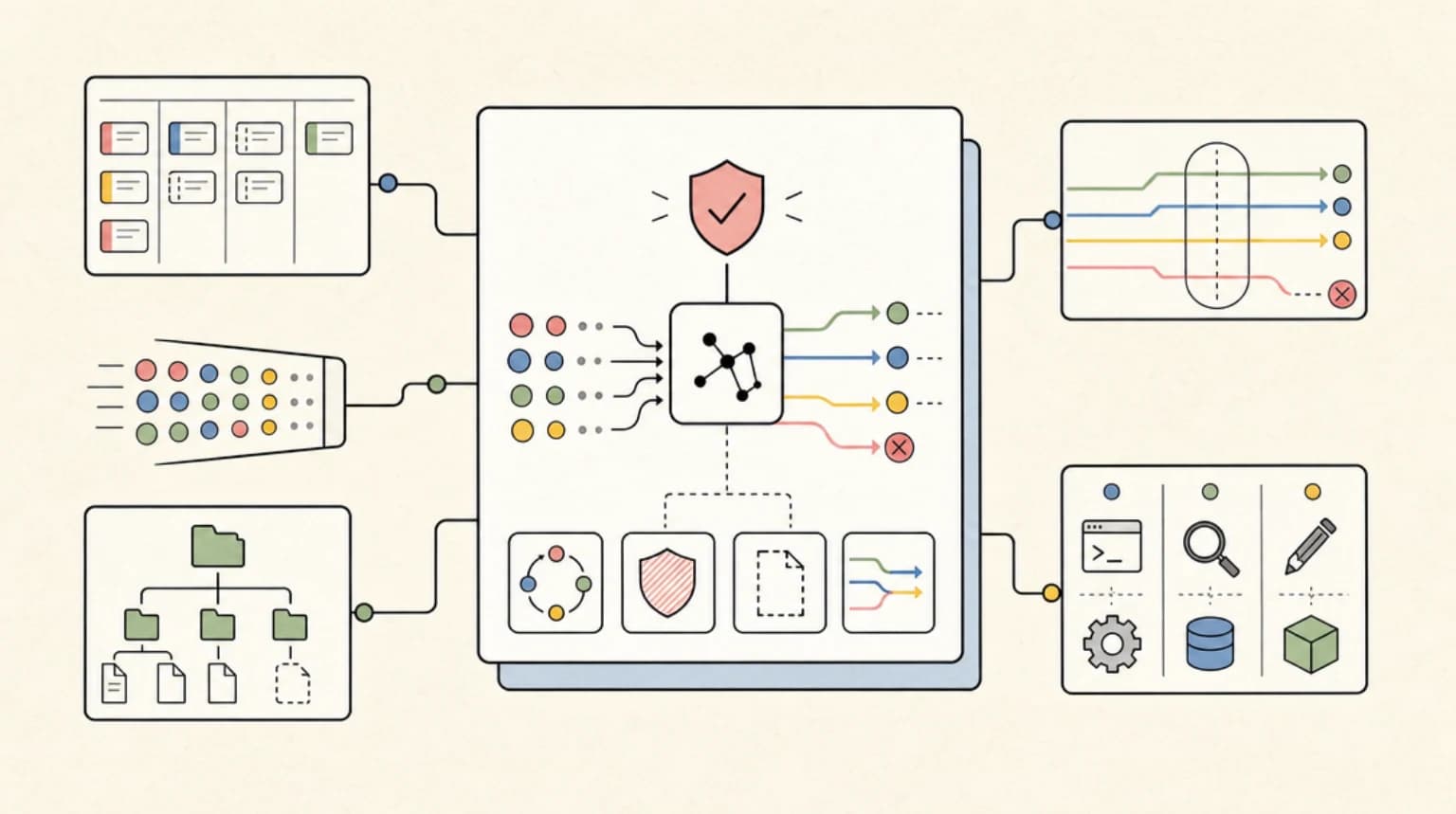
Good morning. It's Sunday, August 9, and we're covering Anthropic making auto mode the default permission setting in Claude Code, Shopify's account of retiring Redis for inventory reservations, and the 768-point argument over whether coding was ever the easy part.
The auto mode announcement comes with the strongest data point the coding agent safety debate has produced: in a 1,053-tester study, humans approved a swapped-in dangerous command 86.4% of the time, while auto mode blocked 89% of them. The "code was never the hard part" essay passed 750 points before lunch, and the Danish education ministry made oral defenses mandatory the same week.
In today's brief:
- Claude Code runs auto mode by default on Pro, Max, and Team plans from August 14, with classifier overhead now free and a third-party eval reporting zero successful prompt injections across 720 attempts
- Shopify moved inventory reservations from Redis to MySQL with SKIP LOCKED and one row per sellable unit, then found the real bottleneck was connections, not queries
- Senko Rasic's counter-essay to "code was never the hard part" crossed 768 points and 450 comments on HN
- Denmark makes oral defenses mandatory for at-home written assignments as its first AI-cheating measure, covering about 9,000 upper-secondary students
THE BIG ONE
Claude Code Auto Mode Becomes the Default on Pro, Max, and Team Plans
Starting August 14, new Claude Code sessions on Pro, Max, and Team plans will run in auto mode (announced August 7). If you have already set a different default yourself, you may get a one-time prompt asking whether to switch; if your default is pinned, nothing changes. Auto mode remains opt-in on Enterprise, the Claude API, Amazon Bedrock, Google Cloud's Agent Platform, and Microsoft Foundry for now, with Anthropic planning to make it the default across those within the coming month. The classifier's overhead tokens are no longer charged on Pro, Max, and Team plans, effective immediately.
The post is built around a striking study. Anthropic hired 1,053 paid testers through a research vendor; partway through each session, a single permission prompt was swapped for a clearly dangerous command, and the vendor recorded whether the tester approved it (nothing dangerous was actually run). The humans caught the dangerous command just 13.6% of the time (143 of 1,053), while auto mode blocked 89% (937 of 1,053). Head to head, auto mode blocked 800 commands that a human approved, while humans blocked only 6 that auto mode allowed. The gap widened with fatigue: humans blocked about 17% of dangerous commands early in a session, dropping to about 5% after 50 prior prompts, while auto mode's rate stayed flat. That tracks with the behavioral data Anthropic cites alongside it: users approve 97% of permission prompts, reject only 3% of them (versus 39% for plan-level approvals), 62% have used bypassPermissions or "don't ask again" at some point, and 25% of interactive sessions start in bypass mode.
Anthropic also commissioned Trajectory Labs to run 72 indirect prompt injection scenarios held out from Anthropic, 10 attempts each, across Claude Code v2.1.205 and Codex v0.144.5 as of July 17 (OpenAI has since shipped a newer Auto-review build that could change its numbers). None of the 720 attempts succeeded against Claude Fable 5, Opus 5, or Sonnet 5 running auto mode; GPT-5.6 Sol in Codex's Auto-review mode had a 5.83% attack success rate, and 19.03% in Full Access mode. An independent red team (Apollo Research) pushed the classifier's miss rate on adversarial attack sets from 12% to 7% through a find-fix-verify loop. Anthropic reports auto mode users ship about 25% more PRs, with Adobe, Nuro, Gusto, and Garner Health running it as their production default.
Simon Willison's reading is the right one: confirmation fatigue is real, and a human clicking "OK" every few steps is not doing meaningful review. But he notes that 11% gap, and his attack is the malicious package that exfiltrates data when your agent runs uvx fetch-model-files . on a project's instructions. No permission classifier can fully defend a system that executes code from untrusted sources. Our auto mode explainer walks the Shift+Tab cycle, hard-deny rules, and the fallback behavior (three blocks in a row, or twenty in a session, drops you back to manual approvals), and the approval fatigue piece covers why the human-in-the-loop defaults most teams still use are themselves the risk.
Why it matters: The most-used coding agent just moved its default security model from human approval to a classifier, and Anthropic's data argues that is safer than the status quo. Every agent vendor will be asked to justify its own permission UX against these numbers, and every team's agent governance policy now needs a position on auto mode.
ENGINEERING
Shopify Replaced Redis With MySQL for Inventory Reservations, and the Bottleneck Was Neither
Shopify's engineering blog published the full account of moving its oversell-protection system from Redis to MySQL (207 points, 120 comments on HN; the post dates from May but only surfaced on the front page yesterday). The context is real scale: Shopify powers over 14% of US ecommerce, and Black Friday 2025 peaked at $5.1 million in sales per minute, with every transaction touching inventory. The old Redis model stored a quantity key per item, but reservations lived in Redis while the inventory ledger lived in MySQL, so the claim step could not be atomic: payment could succeed without a ledger deduction, or a deduction could happen while the item stayed reserved.
The replacement uses one row per sellable unit instead of one row per item, with MySQL 8's SELECT ... FOR UPDATE SKIP LOCKED so concurrent checkouts skip locked rows instead of queuing on them. To keep tables bounded, Shopify maintains a pool of available rows capped at 1,000 per item/location combination, refilled from the ledger by a replenishment process, with an inline replenishment path (single lock, no thundering herd) for flash-sale exhaustion. Four implementation lessons follow: a composite primary key cut two row locks per reservation to one, READ COMMITTED avoided the gap and "supremum" locks that blocked replenishment on empty tables, consistent lock ordering killed reserve/claim deadlocks, and UNION ALL batching cut round trips for multi-item carts.
The real lesson is the last third of the post. In production they hit a throughput ceiling with acceptable query latency and idle CPU, so they added connection attribution: every SQL statement gets a comment tag like /* conn_tag:checkout_completion */, and the ProxySQL layer aggregates how long each business process holds connections. That immediately showed reservations were the straw that broke the camel's back, not the cause: other checkout code was holding connections in long transactions. Cleaning the checkout path removed 50% of reads and 33% of transactions on the primary database, and raising a conservatively-set InnoDB thread concurrency limit removed the ceiling. HN's thread spent most of its length on that instrumentation trick, and it is worth stealing regardless of stack.
Why it matters: "Reaching for Redis" is a habit, and this post shows MySQL 8-era SKIP LOCKED handling a mutual-exclusion workload at Shopify's peak while keeping ACID with the source-of-truth ledger. When your numbers stop adding up (low CPU, queuing threads), attribute connection holders before optimizing queries.
PULSE
"Code Was Never the Hard Part" Is an Insult, and the 450-Comment Thread Agrees
Senko Rasic's essay "Code was never the hard part" is an insult to all programmers was the most-argued-about thing on Hacker News yesterday, at 768 points and 450 comments (thread). His case is pointed: if coding is easy, why the decade of leetcode interviews, burnout, and 10x-culture recruiting? Why do Clean Code and SICP exist, and why is Fabrice Bellard a genius? And if deciding what to build is the hard part, why do product managers interview in ten steps and get paid less? He concedes the core of the position (talking to users and having stakeholder clarity is critical) and argues for both: deep understanding of the system and deep understanding of why it is being built.
The essay's practical half is aimed at engineers navigating the transition: seniors should invest in adjacent skills (user research, customer interviews, business strategy) rather than only deepening expertise, and juniors should deepen fundamentals (pointers, memory hierarchy, HTTP, algorithms) even if their day job does not need them yet. It closes with the line that has become the essay's shorthand: "don't outsource your understanding, judgement, empathy and taste to AI. Don't be a meat proxy." The HN thread is worth reading as a snapshot of where the profession actually stands, with the usual split between engineers who see review-and-delegation as the new core job and those who see the craft itself as the durable skill. Our take on what HN gets right about coding agents frames the same debate with the agent-economics data.
Why it matters: The "code is easy now" narrative is doing real work in vendor marketing and hiring discussions, and this is the strongest counter-argument the thread has produced. What engineers decide they are actually selling changes what they build, what they charge, and what they learn next.
POLICY
Denmark Makes Oral Defenses Mandatory for At-Home Written Assignments
Denmark's Ministry of Education announced (575 points on HN, via CNN) that an oral defense will be mandatory for all written assignments completed at home, effective immediately, as its first major response to AI-assisted cheating. The measure covers the roughly 9,000 students in the two-year HF (Higher Preparatory Examination) program, who submit major written work each year. The ministry is also urging schools to use screen-monitoring tools during exams, add firewalls to restrict content access, and move more assignments to supervised on-campus sessions.
Education Minister Magnus Heunicke was direct about why: "Unfortunately, we have a problem with students using AI to cheat in upper-secondary schools. Action is needed now." School-leader, teacher, and student associations welcomed the three initiatives while pressing for durable solutions, and the ministry says consultations will continue. The design choice matters for anyone building AI-era assessment tooling: the assignment artifact is no longer the thing being tested, the live conversation about it is. That is a structural shift, not a software tweak.
Why it matters: Denmark is an early mover on the pattern every education system will face: when home production becomes untrustworthy, verification moves to the person. Expect "defend your work" to become a recurring feature of AI-era assessment products and school software.
TOOLS WORTH A LOOK
- Claude Code cross-session messaging (free, in Claude Code, 131 points) - message your other running Claude Code sessions from inside the CLI: ask a long-running agent what it is doing, nudge it, or fetch its output without opening a second terminal. Multi-agent fleets just got a chat channel.
- LinkedIn Feed Blocker (free / OSS, 175 points) - a browser extension that replaces the LinkedIn feed with a simple search page, cutting the feed-driven loop without leaving the network where the actual signal lives.
- Triton: DirectX 11 driver for QEMU (free / OSS, 180 points) - UTM's new guest GPU driver gives Windows virtual machines hardware-accelerated graphics in QEMU-based VMs, a real upgrade for Windows-on-Mac and CI VM flows.
- Interactive solar eclipse map (free / OSS, 150 points) - eclipsefan.org renders the August 12 total eclipse path with live umbra, Besselian elements, and cloud projection layers, which is a nice working example of browser-3D data visualization for the biggest sky event of the year.
WHAT ELSE IS HAPPENING
- Fastmail offers an EU data region (421 points): Fastmail accounts can now keep mail data in the EU, adding a GDPR-friendly option to the "host your email somewhere that is not Google or Microsoft" decision.
- SAP stops most travel and hiring because of AI's soaring cost: the 404 Media follow-up to the Tokenpocalypse thread, with a major enterprise customer publicly pulling back on AI spend that outran its expectations.
- "My server is a phone now" (336 points): a single-board-maximalist home-lab writeup running a real server on an old phone, battery backup, cellular uplink, and all.
- _for-sale DNS records (398 points): a proposal for DNS records that advertise a domain as for sale, so buyers and brokers stop guessing who is actually willing to sell.
- Dithered QR codes (214 points): a deep-dive on why QR codes fail when dithered or printed with artistic effects, with failure cases and a correction path, useful for anyone shipping printed scannables.
- Os8088: a Mac-like OS for the IBM XT (175 points): a 16-bit era-appropriate desktop OS that runs on 8088-class machines, a reminder of how far the baseline hardware floor has moved.
FROM THE SITE
- Grok Imagine Image 2.0 ships - xAI's typography-aware image model is now Quality Mode on grok.com, ranked second worldwide on text-to-image and image-editing leaderboards, and a preview build is already callable through Vercel's AI Gateway before xAI's own API goes live.
- DeepMind open-sources WeatherNext Cyclones - the model adds a full day of lead time to tropical cyclone forecasts, a roughly decade-sized jump, and now the weights, code, and data feeds are public.
- GitHub Copilot's impact dashboard puts a dollar figure on agent-first development - cost per developer per month from real AI credit consumption, PR output per phase, and a salary selector, with our read on what the numbers actually measure.
- Make your coding agent talk - a complete one-hour build that pipes an agent run's summary into ElevenLabs text-to-speech and out as an MP3, so the debrief survives the scroll past.
Every link above goes to a primary source or our sourced coverage. Tomorrow's brief lands when the news does - subscribe to get it by email.
Get the next one in your inbox
The daily brief, delivered. Free, unsubscribe anytime.